Is Oak Good for Carving? Janka Hardness and Grain Risk
Oak is good for carving relief patterns, furniture details and Gothic style work, but its 1,290 to 1,360 Janka hardness and open, ring porous grain make it a poor first project for beginners. Push a dull gouge across oak’s grain and it splits and tears instead of shaving cleanly, ruining hours of work. This guide covers oak’s real hardness numbers, why the grain tears, red oak versus white oak, and which projects oak actually suits.
Quick Answer
Yes, with sharp tools and the right project. Oak’s Janka hardness (1,290 for red oak, 1,360 for white oak) runs about three times basswood’s 410, and its open grain tears under a dull blade. Oak suits relief carving, furniture detailing and larger sculptural work better than fine whittling or a beginner’s first project.
Is Oak Actually Good for Carving?
Oak carves well once you accept what it is: a hard, ring porous hardwood suited to bold relief work and furniture ornamentation, not delicate whittling. Its density holds crisp edges after the carving is finished and resists denting in daily use, which is why oak turns up in centuries old church pews, bosses and Gothic tracery. That same density means every cut takes more force, dulls edge tools faster, and rewards patience over speed.
The claim that oak is “easy to carve” and “perfect for beginners,” repeated on a lot of older wood carving pages, does not hold up against its actual numbers or grain behavior. Compared with the softwoods and low density hardwoods usually recommended for a first project, oak is genuinely one of the more demanding choices a new carver can pick up. For a full rundown of easier starting woods, see our guide to the best wood for carving.
Best Oak Carving Chisel Set Pick
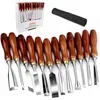 |
LWCUSNJ 12-Piece Wood Carving Chisel Set (CR-V Steel) A 12-piece gouge and chisel set built for hardwood, not a beginner whittling knife kit meant for basswood.
|
As an Amazon Associate we earn from qualifying purchases.
Oak’s Janka Hardness Compared to Other Carving Woods
The Janka hardness test measures how much force it takes to embed a steel ball halfway into a wood sample, and it is the closest thing carving has to an objective difficulty number. The table below lines up oak against the woods carvers reach for most often.
| Wood | Janka Hardness (lbf) | Carving Difficulty |
|---|---|---|
| Basswood | 410 | Easy, top beginner choice |
| Butternut | 490 | Easy |
| Black Walnut | 1,010 | Moderate |
| Red Oak | 1,290 | Hard |
| White Oak | 1,360 | Hard |
| Hard Maple | 1,450 | Very hard |
Red oak measures 1,290 lbf and white oak 1,360 lbf on the Janka hardness scale, versus 410 lbf for basswood — roughly three times harder. Source: The Wood Database.
Notice how far oak sits from basswood and butternut, the two woods most carving schools hand beginners on day one, and how much closer it sits to hard maple than to walnut. If you are curious how a fruitwood stacks up on the same scale, our guide to carving apple wood covers a mid hardness option worth comparing.
Why Oak’s Grain Causes Tearout When Carving
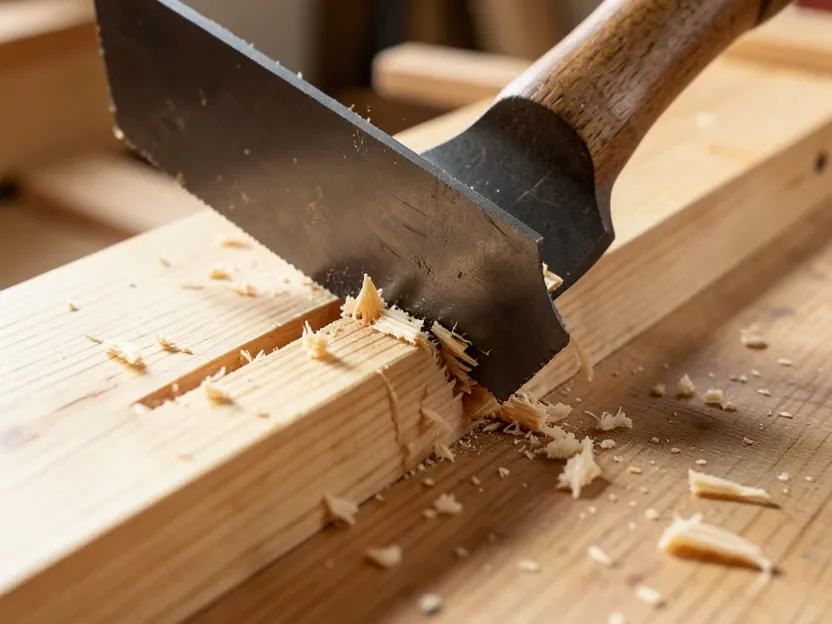
Oak is a ring porous hardwood, meaning it grows large, open vessels in its early season growth rings and much denser fiber in the late season growth. That alternating structure creates built in planes of weakness. A gouge or knife driven across those vessels, or against the grain instead of with it, catches on the open pores and splits the fibers ahead of the blade instead of slicing through them.
This is different from a wood like basswood or aspen, which grows a fine, even, diffuse porous structure with no strong grain direction to fight. That is exactly why straight, fine grained woods let carvers cut in almost any direction with far less risk of a surprise split, while oak punishes the same move.
“Oak carves nicely once you accept it isn’t basswood: keep the cut lines running with the grain, not across it, and touch up your edge far more often than you think you need to.”
Red Oak vs. White Oak for Carving
Not all oak behaves the same way under a blade. White oak develops tyloses, small membrane structures that plug its pores as the tree matures. That closed pore structure is the same reason white oak is watertight enough for whiskey and wine barrels, and it also gives carvers a slightly tighter, more even texture to work with. Red oak keeps its pores open its whole life, which is why red oak lumber can have air blown straight through the end grain of a board. Open pores mean red oak splits more readily along the grain and, on food adjacent projects, can hold moisture and residue that white oak resists.
If you are choosing oak specifically for a carving project and both species are available, white oak is the more forgiving pick. Straight grained, slower grown boards of either species carve more predictably than fast grown, heavily figured stock.
Best Tools and Techniques for Carving Oak
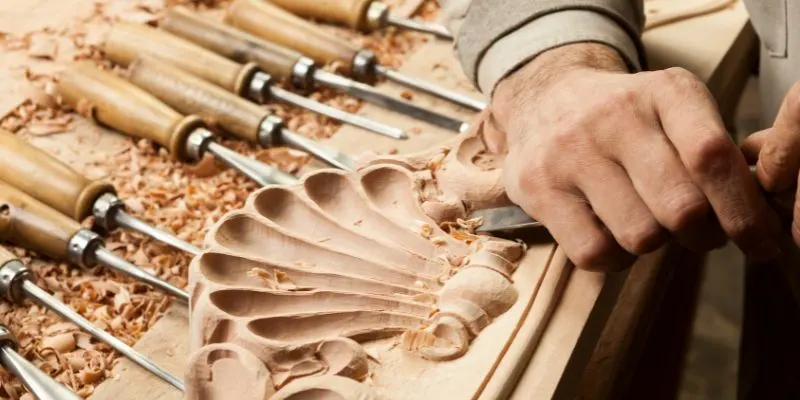
Oak rewards a different toolkit and approach than softer carving woods:
- Sharpen more than you think you need to: touch up the edge every few minutes of cutting, not once per session, since oak dulls steel far faster than basswood.
- Cut with the grain, not across it: orient each pass so the blade follows the direction of the fibers instead of crossing the open pores.
- Use a mallet-driven gouge for bulk removal: a controlled mallet strike manages oak’s resistance far better than forcing a hand-held knife through it.
- Take smaller bites: shallow, repeated cuts reduce the leverage that causes a chisel to catch and split the wood.
- Test cut on an offcut first: every board’s grain runs slightly differently, so a quick test pass on scrap reveals which direction will tear before you commit on the actual piece.
Should You Carve Oak Green or Kiln-Dried?
Moisture content changes how oak behaves under a blade almost as much as the species does. Green oak, cut within the last few weeks and still near its living moisture content, cuts noticeably softer than dried stock; the fibers haven’t stiffened yet, so a sharp gouge moves through it closer to how it moves through a mid-hardness wood like walnut. That’s the traditional appeal of green-wood carving: European oak roof bosses, corbels and structural carvings were historically often cut green, right after the tree was felled, rather than seasoned first.
The trade-off shows up later. Oak dries slowly and unevenly compared with most furniture woods, and a green-carved piece left to dry in normal room air will often check and crack along the same ring porous planes that cause tearout during cutting. Traditional green-wood carvers manage this by finishing the piece quickly, sealing the end grain with wax or a coat of finish to slow moisture loss, and letting the piece dry gradually rather than near a heat source.
Kiln-dried oak, the stock most carvers buy from a lumberyard, is dimensionally stable and won’t crack as it sits in your shop, but it costs you the easier cutting that green oak offers, going back to the full 1,290 to 1,360 Janka hardness discussed above. For furniture components and relief panels that need to stay flat and crack-free, kiln-dried stock is the safer choice. For rustic sculptural work where a few natural drying checks fit the finished look, freshly cut green oak is worth the extra care it needs afterward.
Common Mistakes When Carving Oak
Most oak carving disappointments trace back to a handful of repeated mistakes. Carving against the grain direction is the biggest one, since it is the single fastest way to trigger a tearout on an otherwise clean cut. A close second is working with tools that are merely “sharp enough” for softer wood; oak needs an edge closer to razor sharp than most beginners expect. Sharp 90 degree walls, like the border of a panel, are also a common failure point, since oak tends to split right along that straight edge under pressure rather than compress like a softer wood would.
Humidity swings cause the other major category of problems. Oak that dries too quickly after carving can crack along the same ring porous planes described above, so finished pieces should be brought to a stable indoor humidity gradually and sealed with a finish once carving is complete, not left exposed on a bench for weeks.
Best Projects for Oak Carving (and Ones to Skip)
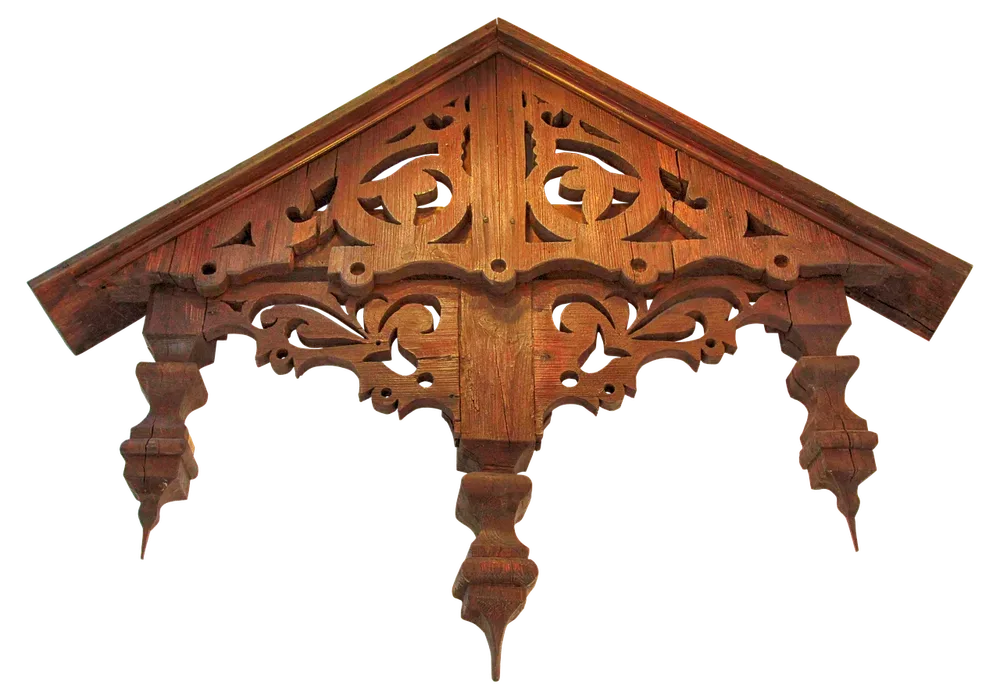
Oak’s strength and hardness make it a strong match for relief panels, furniture appliques, corbels, brackets, and larger sculptural pieces meant to take handling over decades. These are exactly the kinds of projects where oak’s Janka score and coarse grain read as durability and character rather than a liability.
Skip oak for spoons, bowls, and other kitchen items where red oak’s open pores create a real hygiene drawback, and skip it for fine detailed whittling where basswood or butternut will get a beginner to a finished piece with far less frustration. If you want a lower risk first project while you build technique, our simple wood carving design ideas are a better starting point than reaching straight for an oak board.
Frequently Asked Questions
Is oak good for carving spoons?
Not really. Red oak’s pores stay open along the grain, so a spoon bowl can trap moisture and food residue even after finishing. White oak’s closed pores (tyloses) make it a little safer, but cherry, maple and beech are still the better choice for anything that touches food.
What kind of oak is best for carving?
Straight grained, slow grown oak with minimal figure carves the most predictably. White oak’s tighter, closed pore structure is generally easier to control than red oak’s, and quarter sawn boards resist splitting better than flat sawn boards from the same log.
Do I need special tools to carve oak?
You need genuinely sharp tools rather than special ones. A dull edge that would merely struggle in basswood will chip out or catch in oak’s open grain. Mallet driven gouges are usually easier to control in oak than a hand pushed knife.
Is oak too hard for beginner carvers?
It’s not impossible, but most carving instructors still start students on basswood or butternut first. Oak’s 1,290 to 1,360 Janka hardness and grain tearout punish small technique mistakes that basswood simply forgives.
Conclusion
Oak is good for carving the projects that call for strength and a bold, coarse grain look: relief panels, furniture detail, and large sculptural work that needs to survive decades of handling. It is a poor pick for a first carving project or for fine detail work, since its 1,290 to 1,360 Janka hardness and open, ring porous grain punish dull tools and cross grain cuts with tearout and splitting. Choose white oak over red oak when both are available, keep your gouges genuinely sharp, and carve with the grain, and oak will reward the extra effort with a piece that holds its detail for generations.
Sponsored / affiliate links. As an Amazon Associate I earn from qualifying purchases. I may earn additional commission from eligible campaigns.