Does Particle Board Warp? Yes, and Moisture Is Almost Always Why
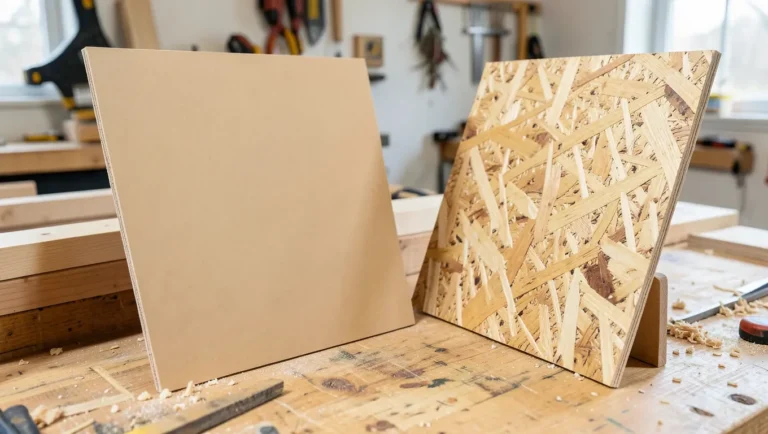
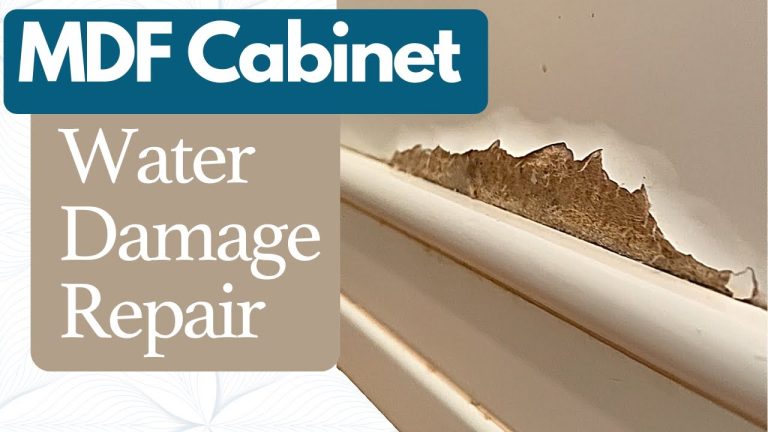
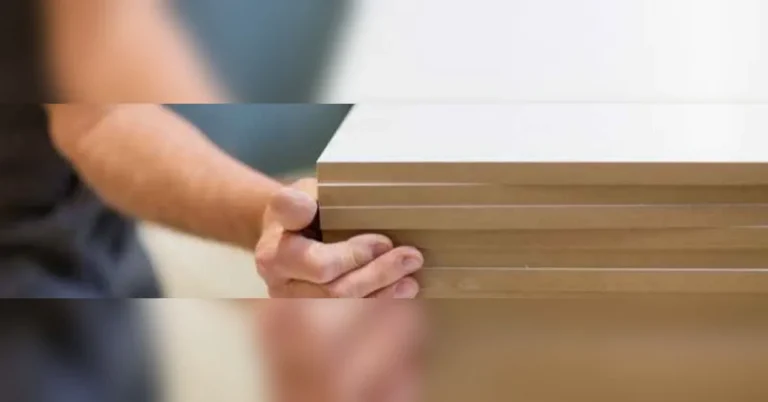
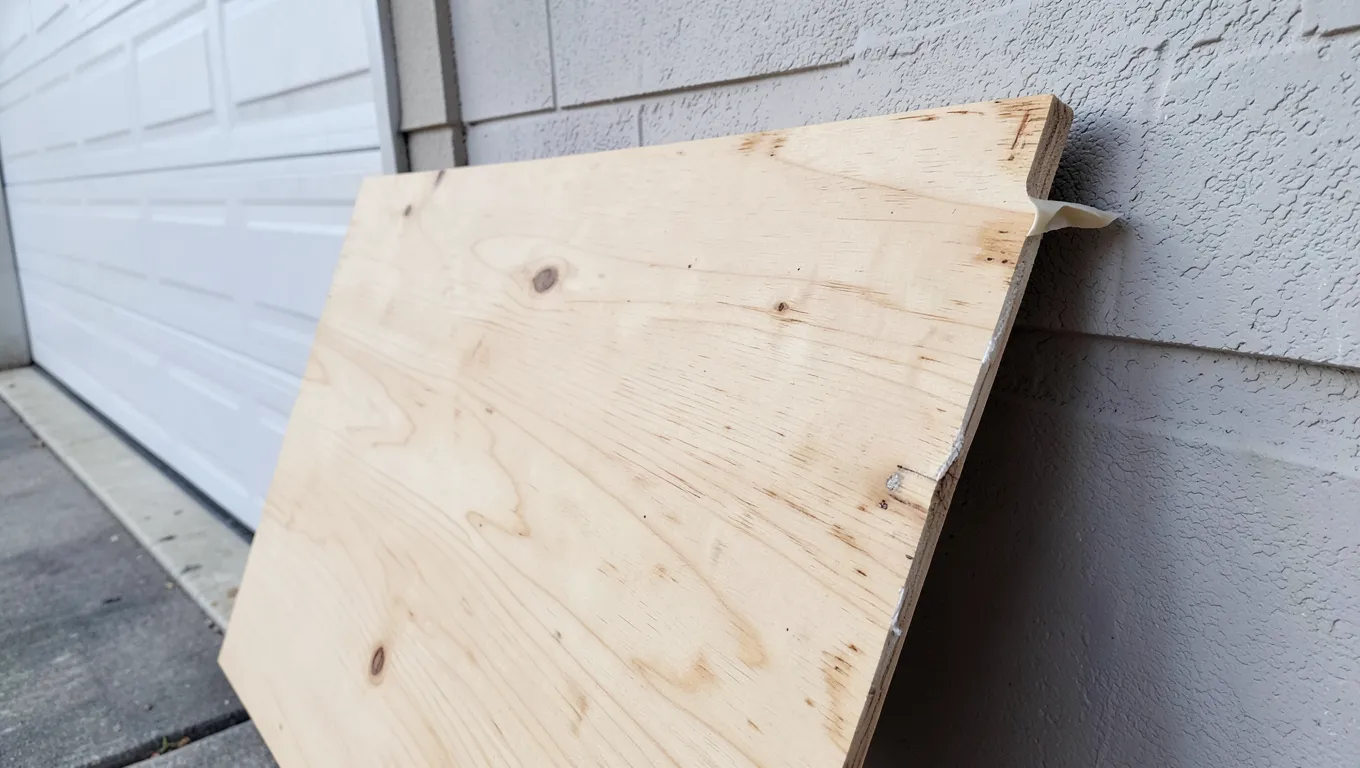
Yes, particle board warps, and moisture is almost always the cause. Particle board is made of wood chips and sawdust bonded with resin under heat and pressure, and unlike solid wood or plywood, it has no long wood fibers running through it to resist swelling. Once water gets into the panel, either from a spill, humidity, or a bathroom or kitchen environment, the particles swell unevenly and the board bows, and that swelling is permanent, not something that flattens back out as it dries.
Why Particle Board Warps More Than Plywood or Solid Wood
Best Way to Catch Warping Before It Starts
 |
General Tools MMD4E Moisture Meter for Wood – $38.83 Warping is a moisture problem you can measure before it becomes a visible problem, and this pin-type meter reads particle board, drywall, and framing lumber alike.
|
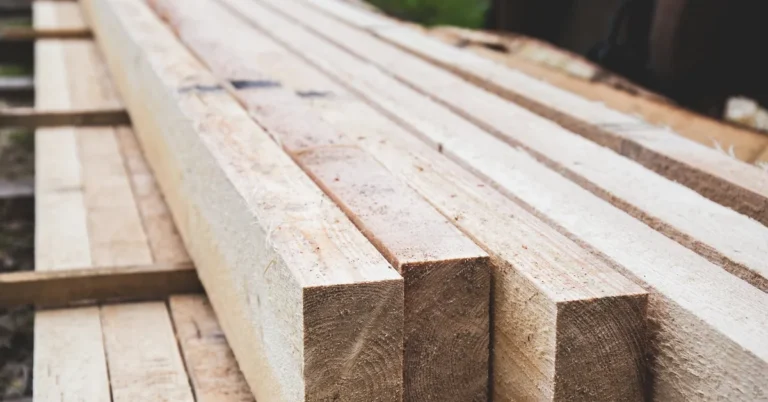
Solid wood and plywood both keep long wood fibers running in one or more directions, which gives the material something to resist bending along. Particle board has no such structure: it’s small wood chips glued together in a random, non-directional pattern, so when moisture gets between those chips, there’s nothing holding the panel’s shape against the swelling. The edges are usually the most vulnerable spot, since factory laminate or veneer typically seals the two large faces but leaves the raw, cut edges exposed unless they were specifically edge-banded.
The Most Common Causes
- Standing water or repeated spills on an unsealed edge, especially under sinks, near dishwashers, or on bathroom vanities.
- High ambient humidity in a garage, basement, or un-air-conditioned room, which particle board absorbs slowly over weeks or months.
- Uneven weight distribution, like heavy books stacked on one side of a shelf, which particle board’s weaker internal structure resists less than plywood of the same thickness.
- Direct contact with a damp floor or wall, which wicks moisture into the board from a single edge over time.
Can Warped Particle Board Be Fixed?
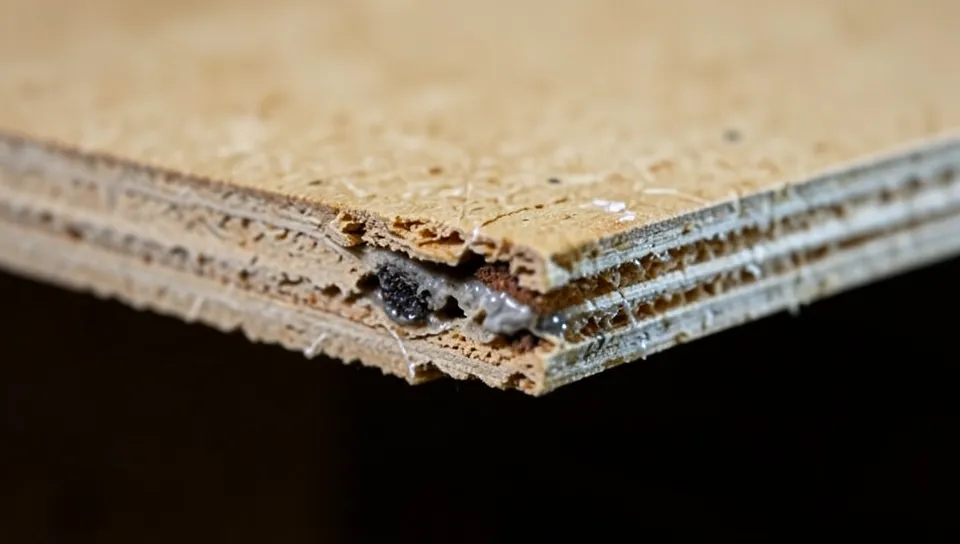
Once a particle board panel has visibly bowed or its edge has swollen and delaminated, it generally cannot be restored to flat. Unlike solid wood, which can sometimes be re-flattened with controlled moisture and clamping because its fibers are still intact, particle board’s swelling comes from the individual chips separating and expanding, which is a structural change, not just a surface issue. Sanding down a swollen edge only removes material and rarely restores strength or a clean look.
When Replacement Is the Realistic Answer
If the warp is minor and cosmetic, on the underside of a shelf that’s rarely seen, it may be fine to leave it. If it’s affecting how a cabinet door closes, how a countertop sits, or the structural integrity of a shelf under load, replacing that piece is usually faster and cheaper than trying to salvage it, especially since particle board sheet stock is inexpensive to begin with.
How to Prevent Particle Board From Warping
- Seal every cut edge with edge banding, laminate, or at minimum a few coats of polyurethane before installing the piece, especially in kitchens and bathrooms.
- Keep it away from direct water contact, particularly under sinks; use a moisture barrier or a plastic tray under any particle board cabinet base near plumbing.
- Control humidity in the room where it’s installed, ideally keeping relative humidity in the 30 to 50 percent range that most engineered wood products are rated for.
- Support it properly with enough shelf brackets or cabinet framing that the panel isn’t relying on its own stiffness to resist sagging under load.
- Check moisture content before finishing or installing a piece, particularly if it’s been stored in a garage or unconditioned space, since sealing in trapped moisture just delays the warp rather than preventing it.
Particle Board vs. MDF vs. Plywood for Moisture Resistance
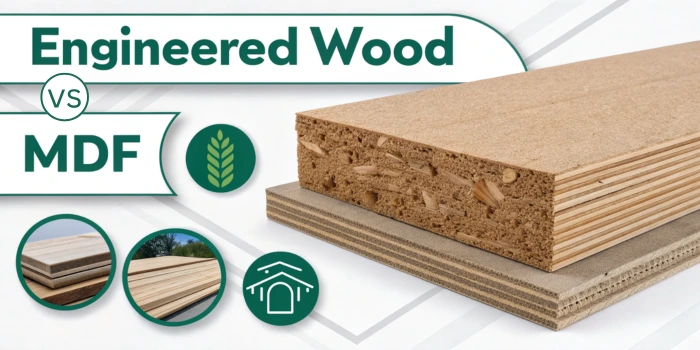
MDF (medium-density fiberboard) is denser and more uniform than particle board, which makes it machine more cleanly, but it’s actually similarly vulnerable to swelling at a cut edge since it’s also a resin-bonded engineered panel without long wood fibers. Plywood, built from cross-laminated wood veneers, resists warping far better than either particle board or MDF because each ply’s grain direction counteracts the others. For anything near consistent moisture, a bathroom vanity base, an outdoor-adjacent structure, or a mudroom bench, exterior-rated plywood or moisture-resistant (often green-tinted) particle board rated for those environments is worth the extra cost over standard interior particle board.
Frequently Asked Questions
Does particle board warp easily?
It warps more easily than plywood or solid wood because it has no long wood fibers to resist swelling. Moisture at an unsealed edge is the most common trigger.
Can you fix warped particle board?
Not usually. Once the wood chips inside the panel have swollen and separated, sanding or drying the piece doesn’t restore its original flatness or strength. Replacement is typically the realistic fix.
Is MDF better than particle board for avoiding warping?
MDF is denser and machines more cleanly, but it’s still an engineered panel without long wood fibers, so it’s similarly vulnerable to moisture at a cut edge. Plywood resists warping better than either one.
How do you keep particle board furniture from warping?
Seal every cut edge, keep the piece away from direct water contact and high humidity, and make sure it has adequate structural support so it isn’t sagging under its own load over time.
Bottom Line
Particle board does warp, and once it does, the damage is generally permanent because the swelling happens inside the panel’s structure, not just on its surface. Seal the edges, keep it dry, and support it properly, and standard interior particle board holds up fine for furniture, shelving, and cabinetry that isn’t exposed to standing water or high humidity.
Sponsored / affiliate links. As an Amazon Associate I earn from qualifying purchases. I may earn additional commission from eligible campaigns.
 FIXOSHEE Sturdy Solid Wood Board for Projects Rectangular Furniture Divider Panel for Home Decor Versatile Crafting Material Unfinished Wood Board
 MECCANIXITY MDF Wood Board for Crafts,3/18"(4mm) Thick Medium Density Fiberboard Unfinished Wood for DIY Projects, Art Classes, Carpentry, Painting (12 x 16 in,2Pcs)