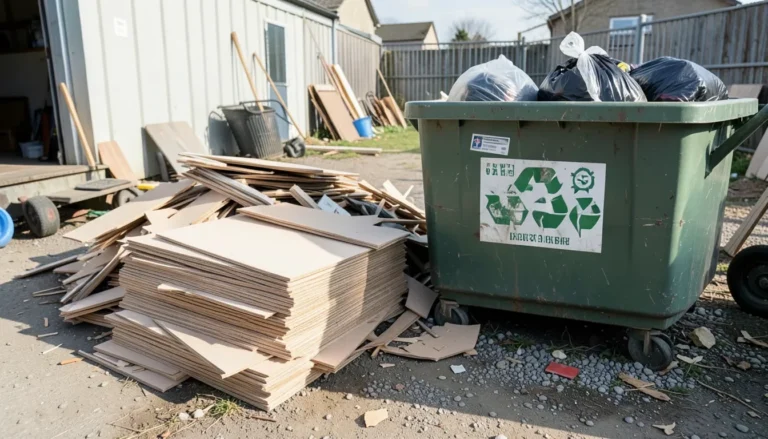
Is MDF Toxic? Only Unsealed Dust Is a Real Concern
MDF releases formaldehyde during manufacturing and whenever unsealed edges are cut or sanded — sealed, painted, or laminated MDF emits only trace amounts by comparison. The real exposure risk is airborne dust from a table saw or router, not a finished panel sitting in a room. This guide covers the actual CARB/EPA formaldehyde limits, which MDF grades are safest, and exactly when a dust mask isn’t enough.
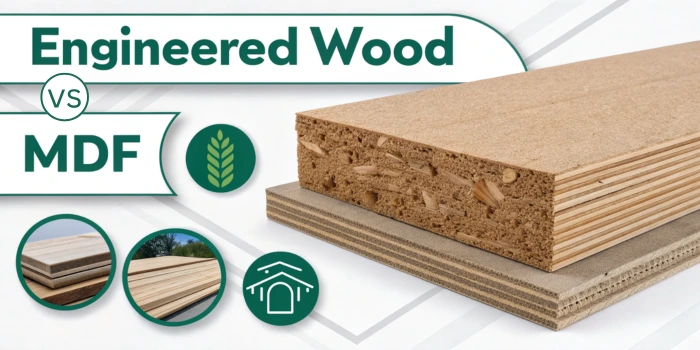
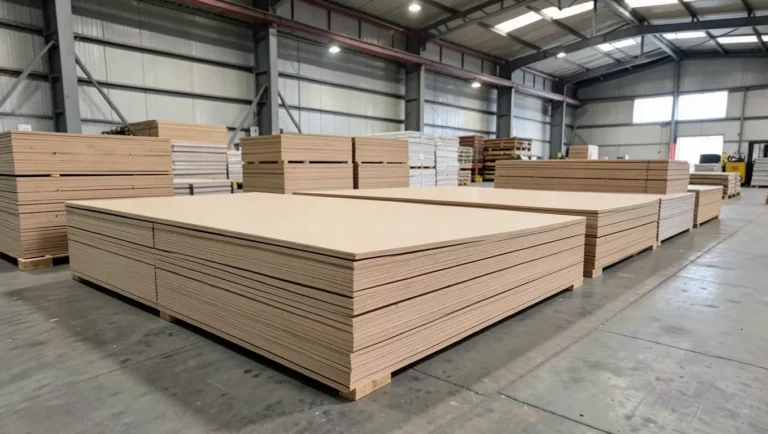
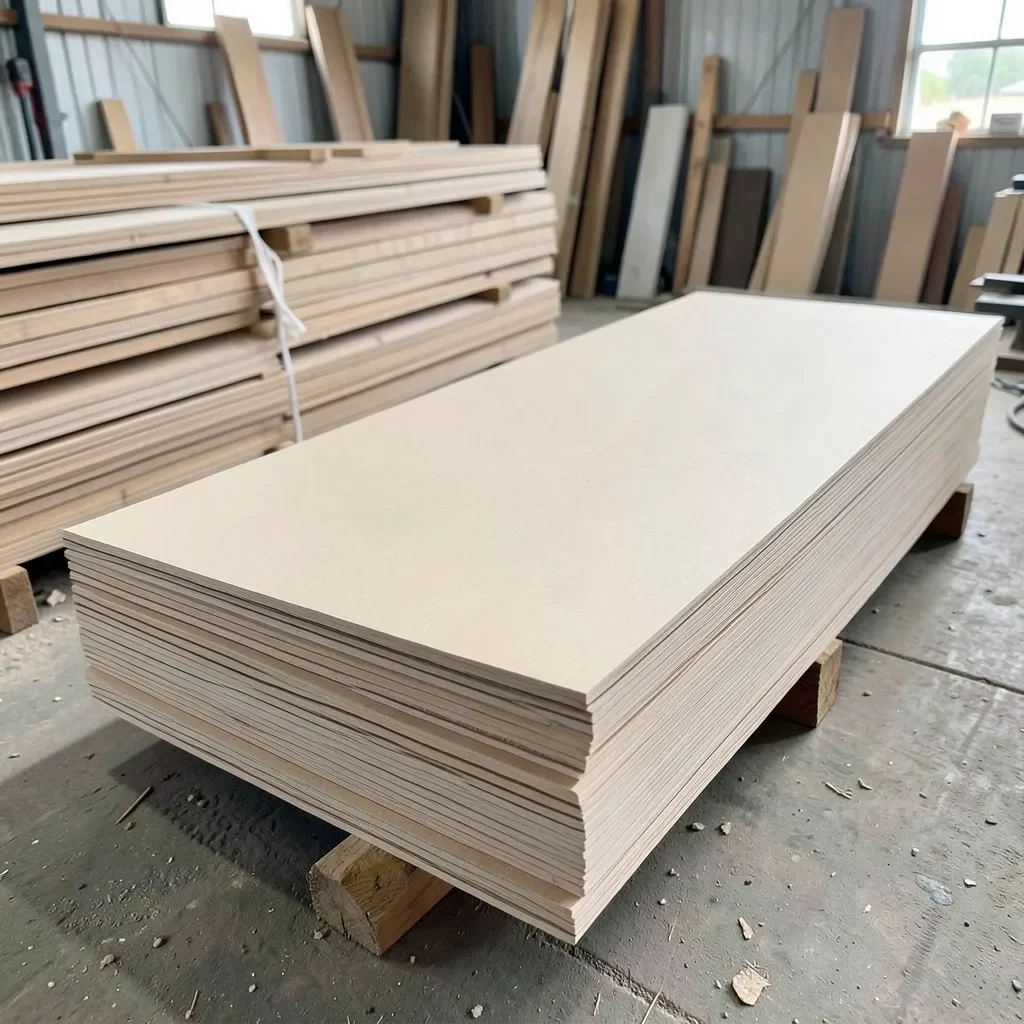
MDF (medium-density fiberboard) is wood fibers bonded with urea-formaldehyde resin and wax, pressed into sheets under heat. That resin is where the formaldehyde comes from — not the wood fiber itself. Every composite panel sold in the U.S. today, including MDF, plywood, and particleboard, is legally required to meet the same federal emission ceiling, so “is MDF toxic” really has two different answers depending on whether you’re asking about a sealed panel in your living room or raw dust in your lungs.
When MDF Actually Becomes a Real Risk: Cutting and Sanding
Best Dust Mask for Cutting MDF
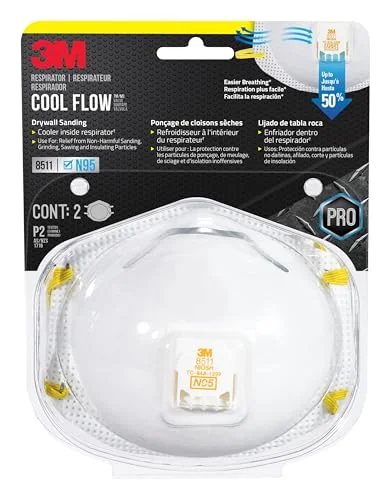 |
3M 8511 Cool Flow Valved N95 Respirator (2-Pack) – $8.72 A NIOSH-rated N95 with an exhale valve, built specifically for sanding and cutting dust — the exact exposure this guide flags as the real MDF risk.
|
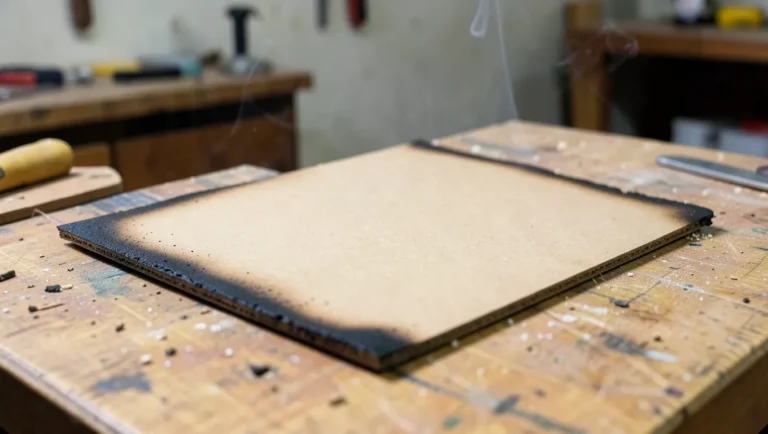
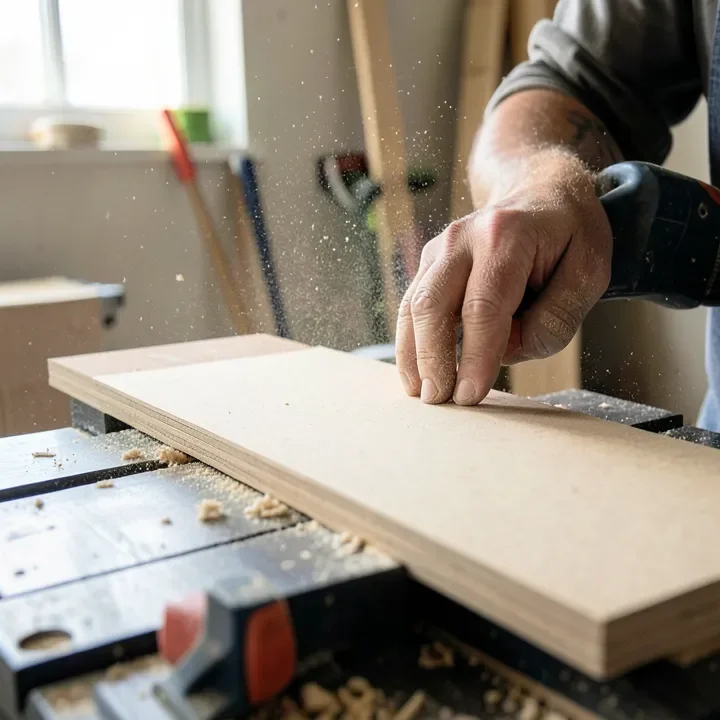
The exposure that actually matters for most woodworkers isn’t off-gassing from a finished panel — it’s the fine dust created when you cut, rout, or sand unsealed MDF. That dust carries both wood fiber and resin particulate small enough to reach deep into your lungs, and it’s released in far higher concentration than any panel emits sitting still.
A basic paper dust mask does not stop this. You need a NIOSH-rated N95 respirator at minimum, real dust collection at the source (a shop vac or dust collector hooked to the saw or router), and cross-ventilation or an exhaust fan pulling air out of the room — not just a cracked window. If you’re sanding MDF regularly indoors without any of that, that’s the actual health question worth solving, not whether a sealed cabinet is off-gassing.
How Much Formaldehyde Does MDF Actually Emit?
Since 2018, every composite wood panel sold in the U.S. — MDF included — has had to meet the same formaldehyde ceiling under two overlapping rules: California’s CARB Phase 2 and the EPA’s federal TSCA Title VI standard. Both cap standard MDF at 0.11 ppm and thin MDF (≤ 8mm) at 0.13 ppm, measured by large chamber test. A panel that doesn’t meet this can’t legally be sold as compliant composite wood in the U.S.
In practice that means a CARB2/TSCA VI-compliant sheet of MDF from a home center emits a small fraction of what MDF sold in the U.S. did in the 1990s, before these rules existed. Look for a CARB2 or TSCA Title VI compliance stamp on the panel’s edge or invoice — it’s required, not optional, on anything sold at a major retailer today.
📊 Standard MDF is capped at 0.11 ppm formaldehyde and thin MDF at 0.13 ppm under both CARB Phase 2 and EPA TSCA Title VI — Source: EPA, Formaldehyde Emission Standards for Composite Wood Products
Is Formaldehyde in MDF Actually Dangerous?
Yes, in the sense that the International Agency for Research on Cancer (IARC) classifies formaldehyde as a Group 1 carcinogen — the same category as asbestos and benzene — based on sufficient evidence linking heavy, prolonged occupational exposure to nasopharyngeal cancer. That classification is based on factory workers and embalmers breathing far higher concentrations for years, not someone with a CARB2-compliant bookshelf in their bedroom.
At lower, home-level concentrations, the documented risks are short-term irritation: burning eyes, a scratchy throat, headaches, or a stuffy nose, especially in a small, poorly ventilated room with a lot of new MDF furniture. OSHA sets the workplace exposure limit at 0.75 ppm averaged over 8 hours, with a 15-minute spike limit of 2 ppm — both far above what a sealed panel releases into a normal room, but a useful benchmark for anyone running an MDF-heavy shop full-time.
How to Reduce Formaldehyde Exposure From MDF at Home
- Seal every face and edge — primer, paint, laminate, or veneer on all six sides (including cut edges) traps most of the remaining formaldehyde inside the panel instead of letting it evaporate into the room.
- Ventilate new furniture for the first few weeks — off-gassing is highest right after manufacture and drops sharply over the following weeks to months, so extra airflow when a piece is brand new does the most good.
- Look for NAF or ULEF panels — “no added formaldehyde” (NAF) MDF uses a different resin system (often PVA or soy-based) and “ultra-low-emitting formaldehyde” (ULEF) panels test even below the CARB2/TSCA VI ceiling, both worth the upcharge for kids’ rooms or enclosed cabinetry.
- Keep humidity and heat moderate — formaldehyde off-gasses faster in hot, humid conditions, so a garage workshop in August releases more than a climate-controlled room.
MDF vs Plywood vs Particleboard: Formaldehyde Compared
All three are legally capped at the same CARB2/TSCA Title VI limits, but they aren’t identical in practice. MDF uses more resin per cubic foot than plywood because its fine fibers need more binder to hold together, which is why uncertified, imported MDF has historically tested higher than uncertified plywood. Particleboard sits in between — coarser wood chips need less resin than MDF’s fine fibers, but more than plywood’s veneer layers.
| Material | Formaldehyde Limit (CARB2/TSCA VI) | Best For |
|---|---|---|
| MDF | ≤ 0.11 ppm (≤ 0.13 ppm thin) | Smooth paint-grade panels, cabinet doors, molding |
| Plywood (hardwood) | ≤ 0.05 ppm | Structural panels, furniture carrying real wood grain |
| Particleboard | ≤ 0.09 ppm | Budget shelving, flat-pack furniture cores |
Frequently Asked Questions
Is MDF Still Carcinogenic?
The formaldehyde resin in MDF is a Group 1 carcinogen per IARC, but that classification is based on heavy occupational exposure, not the trace emissions from a CARB2/TSCA VI-compliant sealed panel. Sand or cut it unsealed indoors without a respirator and dust collection, and you’re creating real, avoidable exposure.
Does MDF Release Toxins Years After It’s Installed?
No, not meaningfully. Formaldehyde off-gassing is highest in the first few weeks after manufacture and drops sharply after that. A cabinet or shelf that’s been sealed and in your home for a year is releasing far less than it did when new.
Why Is MDF Banned in America?
MDF is not banned in the U.S. It’s regulated: every panel sold since 2018 must meet the EPA’s TSCA Title VI formaldehyde limit (the same numbers as California’s CARB Phase 2 rule). Non-compliant, uncertified MDF is what’s restricted, not MDF itself.
Is MDF Safe for Kids’ Furniture or Toy Boxes?
CARB2/TSCA VI-compliant MDF that’s fully sealed on every surface is considered safe for children’s furniture, and it’s what most major furniture brands use. Be more cautious with enclosed, poorly ventilated pieces like toy chests made from unsealed or uncertified imported MDF, since off-gassing concentrates in a closed box.
Is MDF Dust More Dangerous Than Regular Wood Dust?
Treat it as at least as serious. Wood dust itself is on IARC’s list as a nasal-cancer risk under chronic heavy industrial exposure, and MDF dust adds formaldehyde-bound resin particulate on top of that. Either way, an N95 respirator and real dust collection are the minimum for regular cutting or sanding, not optional extras.
Conclusion
Sealed, CARB2/TSCA VI-compliant MDF sitting in a finished room is not a meaningful health risk for most households. The real exposure that deserves attention is unsealed dust from cutting and sanding — wear a real respirator, hook up dust collection, and seal every face and edge once the piece is built. (Toxicity is a separate question from weather durability — see our guide on whether MDF can be used outside if you are planning an exterior project.)
Sponsored / affiliate links. As an Amazon Associate I earn from qualifying purchases. I may earn additional commission from eligible campaigns.