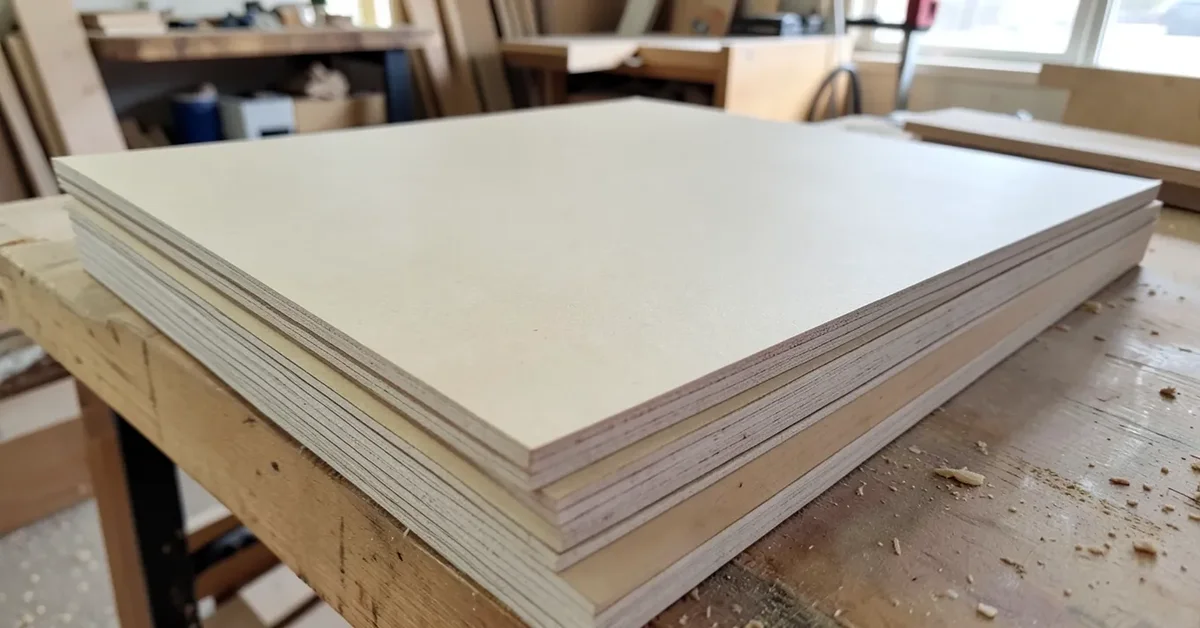
How Is MDF Made? The Real Manufacturing Process
MDF is made by breaking wood down into individual fibers (not chips), blending those fibers with resin and wax, then pressing the mixture flat under heat and extreme pressure until it fuses into a dense, uniform panel. That’s the short version. The more useful version explains why MDF cuts and machines the way it does, and it starts with the one thing that actually separates MDF from its closest lookalike, particleboard.
What MDF Actually Is (And Isn’t)
Best Protection When Cutting MDF
 |
3M Aura Particulate Respirator 9205+, N95, 3-Pack – $8.85 MDF dust is fine enough to bypass a cloth or surgical mask entirely; this is a real NIOSH-rated N95 built for sawing and sanding dust.
|
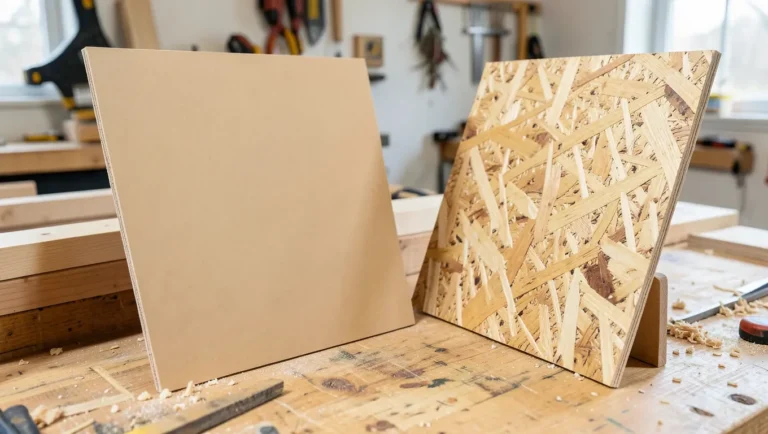
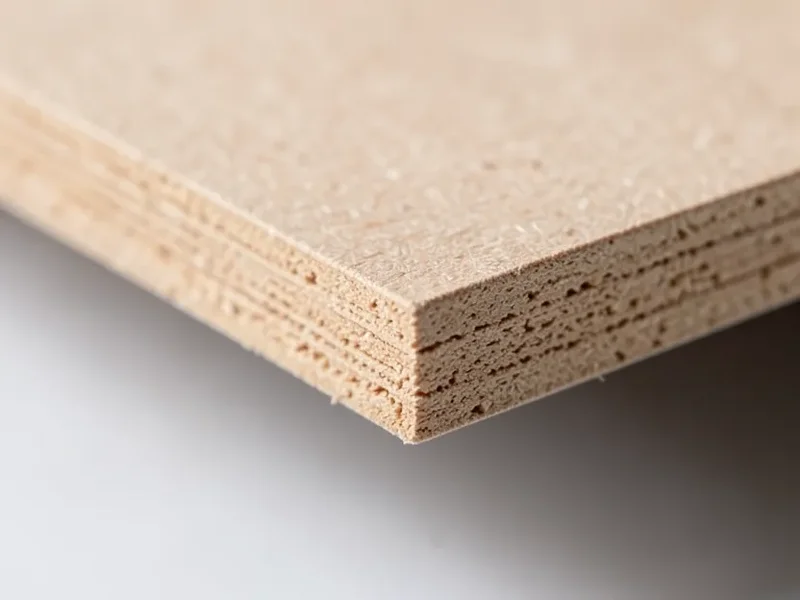
MDF stands for medium-density fiberboard, and the “fiber” part is the key distinction. Particleboard is made from wood chips and shavings glued together, so you can often see individual chip fragments if you look closely at a cut edge. MDF starts from wood that’s been mechanically broken all the way down to its individual cellulose fibers, essentially the same starting material as paper pulp, before it’s bonded with resin. That’s why an MDF edge looks uniform and almost felt-like under magnification instead of showing distinct wood chips, and why it machines and routes so much more cleanly than particleboard.
The wood fiber itself typically comes from softwood species like pine or spruce, sometimes blended with hardwood fiber, and a meaningful share of it is sawmill byproduct: chips, shavings, and offcuts left over from milling lumber for other products rather than trees harvested specifically for MDF. That’s a genuine, if partial, form of recycling within the wood industry, even though it isn’t post-consumer recycled furniture as some people assume.
From Log to Fiber: Chipping and Refining
Manufacturing starts with debarking, since bark contains grit and inconsistent material that would weaken the finished board. The debarked wood is chipped into small, uniform pieces, then those chips are steamed and fed through a machine called a refiner, which uses two grooved metal discs spinning at high speed to tear the softened chips apart into individual fibers rather than just cutting them smaller. This is the step that actually defines MDF; without true fiber-level refining, you’d end up with particleboard instead.
Blending With Resin and Wax
Once fiberized, the material is dried and blended with a synthetic resin, most commonly urea-formaldehyde, along with a small amount of wax to improve moisture resistance and paraffin to help the fibers flow evenly during forming. The resin content typically runs around 8 to 10 percent of the board’s weight. Getting this ratio right matters: too little resin and the panel won’t hold together under stress; too much adds cost and weight without a real strength benefit.
Forming the Mat and the Density Gradient Most Guides Skip
The resin-coated fiber is spread into a loose, fluffy mat on a moving belt, then lightly pre-pressed to squeeze out air and compact it before the real pressing stage. Here’s the detail most explanations leave out: MDF isn’t uniformly dense from face to face. During hot pressing, heat and moisture penetrate from the outer surfaces inward, which cures and compresses the fiber near the faces more than the fiber in the middle. The result is a density gradient, denser near both surfaces and slightly less dense at the core, even in a board that looks and feels perfectly uniform.
That gradient is actually useful. The dense outer layers are what let you rout a clean, crisp profile into an MDF edge without it crumbling, while the slightly softer core keeps the overall panel lighter than if it were dense all the way through. It’s also why a screw driven straight into the edge of thin MDF can strip out more easily than one driven through the face: you’re relying on that thinner, less dense edge zone to hold the threads.
Hot Pressing: Where the Board Actually Forms
The mat moves into a large press where heated platens, typically in the range of 350 to 400°F, clamp down under several hundred pounds of pressure per square inch. This heat and pressure cures the resin and permanently bonds the fibers into a solid panel in a matter of minutes. Modern mills mostly use continuous presses, which run the mat through a long heated tunnel between steel belts rather than pressing one panel at a time, allowing for a continuous, faster production run.
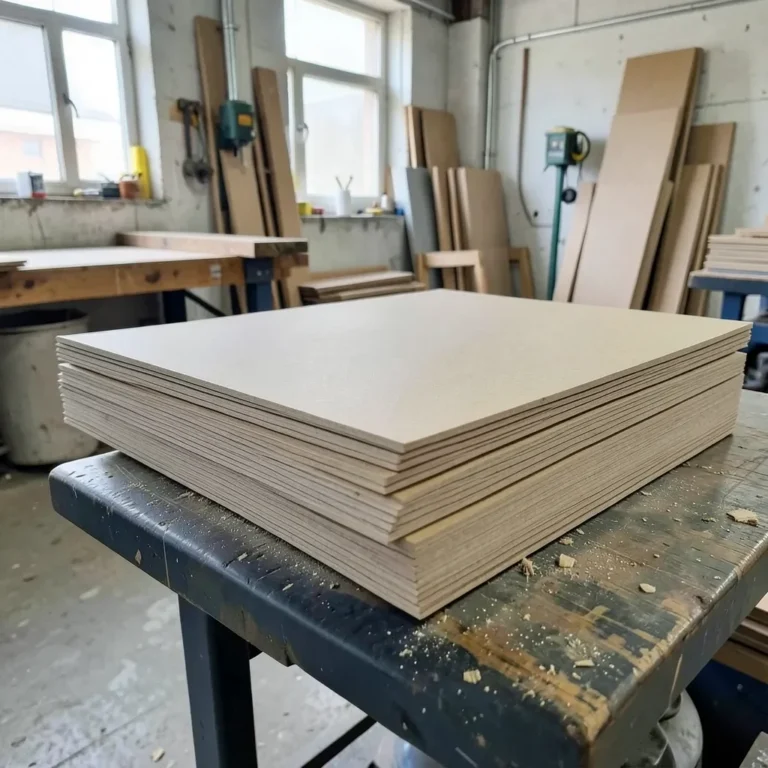
After pressing, the board is still hot and needs to cool and stabilize before it can be handled further; cooling too fast or stacking boards too soon can introduce warping that shows up later. Once stable, panels are sanded on both faces to final thickness and a smooth, paintable surface, then trimmed to standard sheet sizes.
How Melamine-Faced MDF Is Different
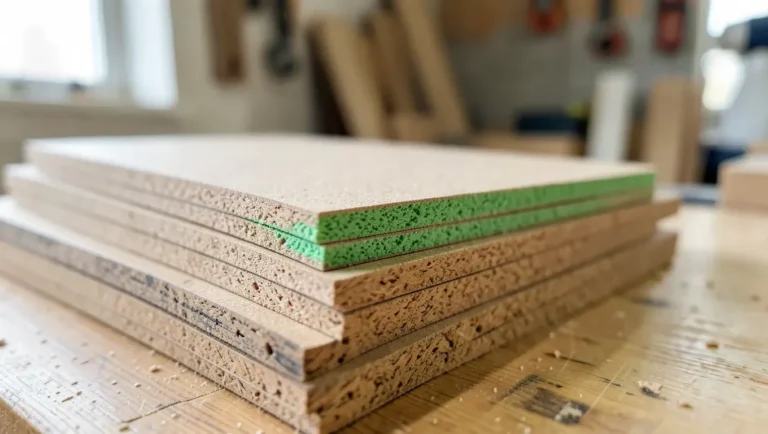
Standard MDF and melamine-faced MDF (the white or wood-grain panels used in flat-pack cabinetry) start out as the exact same core board. The melamine layer is a separate step: a resin-impregnated decorative paper is placed on each face of a finished MDF panel and fused on under heat and pressure in a short-cycle laminating press, similar in principle to the main hot-press step but applied afterward as a surface treatment rather than part of the core formation. This is why a chipped or water-damaged edge on melamine MDF furniture reveals plain MDF underneath; the white surface is a thin laminate, not a property of the core material itself.
Quality Control and Formaldehyde Standards
Finished panels go through density, bending strength, and internal bond testing, along with swelling tests that submerge a sample to check how much it expands when wet; MDF that swells excessively fails and doesn’t ship. Because the standard resin used is a formaldehyde-based adhesive, finished panels sold in the U.S. also have to meet formaldehyde emission limits set under the EPA’s TSCA Title VI rule (based on standards originally developed by California’s CARB program). Reputable suppliers label compliant sheets, and it’s worth checking for that labeling if formaldehyde off-gassing in an enclosed room is a concern for your project.
The Dust Safety Point Most Woodworkers Underestimate
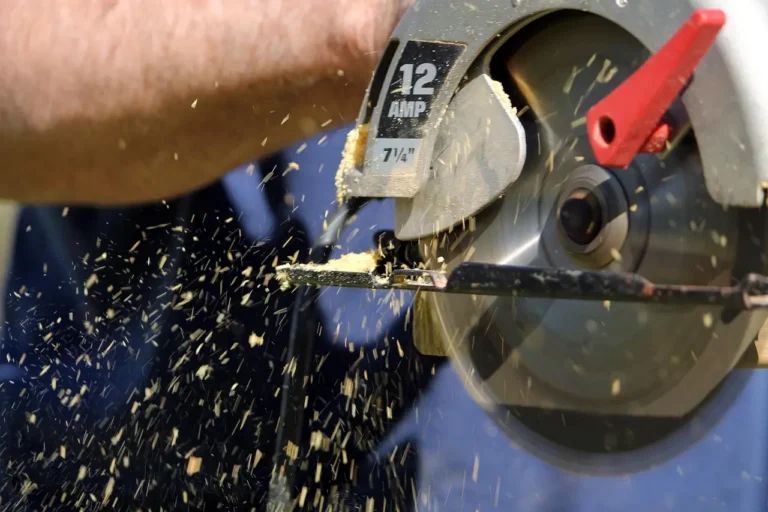
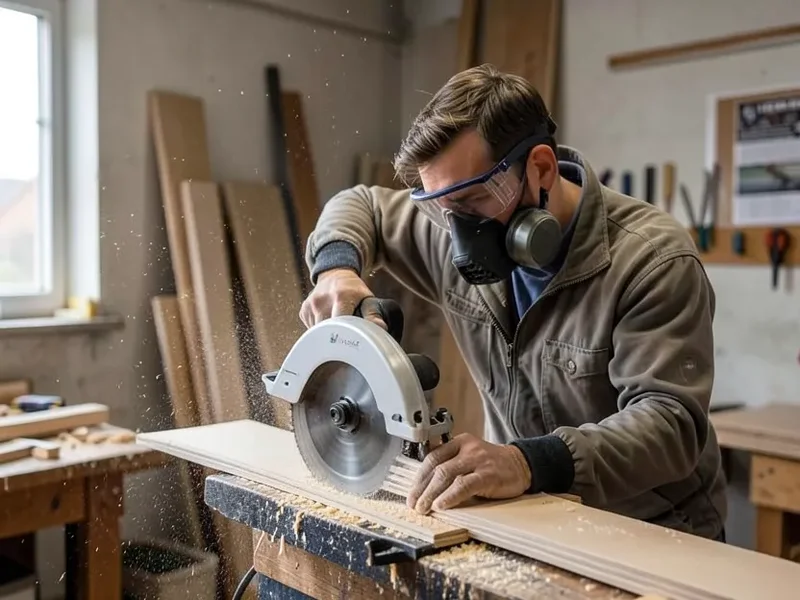
Because MDF is made of fully broken-down wood fiber rather than chips, cutting or sanding it produces a much finer, more airborne dust than solid wood does, and that dust carries residual formaldehyde-based resin along with it. A cloth or surgical-style mask does not filter particles this small; you need a NIOSH-rated N95 respirator or better, plus real dust collection at the saw or sander whenever possible, especially in an enclosed shop or garage. This gets skipped constantly because MDF feels like “just wood,” but the resin content is exactly what makes its dust a different, more serious inhalation hazard than sawdust from solid lumber.
Frequently Asked Questions
What is the process of making MDF board?
Wood is debarked, chipped, and refined into individual fibers, blended with resin and wax, formed into a loose mat, then hot-pressed under heat and high pressure until the resin cures and the fibers fuse into a solid, dense panel.
Is MDF stronger than plywood?
No. Plywood’s cross-laminated wood layers give it significantly better strength, especially for load-bearing or structural use. MDF’s advantage is a perfectly smooth, uniform surface that’s easier to paint and machine, which is why it’s chosen for cabinetry and trim rather than structural framing.
What is MDF made of?
MDF is made of wood fibers, mostly from softwood species and sawmill byproducts, bonded with a urea-formaldehyde resin (roughly 8 to 10 percent by weight) and a small amount of wax, then compressed under heat into a solid panel.
How is melamine-faced MDF made?
A finished MDF panel has resin-impregnated decorative paper fused onto each face in a separate laminating press, using heat and pressure. The core underneath is identical to standard MDF; only the surface layer differs.
Bottom Line
MDF earns its smooth, uniform, paintable surface from being broken all the way down to individual wood fibers before it’s rebonded with resin under heat and pressure, and that same fine-fiber structure is exactly why its dust deserves a real respirator rather than a paper mask. Understanding the density gradient built into every panel also explains why MDF routs so cleanly at the edges but needs different fastening approaches than solid wood or plywood.
Sponsored / affiliate links. As an Amazon Associate I earn from qualifying purchases. I may earn additional commission from eligible campaigns.