Why Is MDF Used for Furniture? (Cost, Stability, Machining)
Furniture makers choose MDF over solid wood mainly for three reasons: it costs roughly 30-50% less per sheet, its density (700-800 kg/m³ under the ANSI A208.2 standard) resists the warping solid lumber is prone to, and its grain-free surface cuts cleanly on a router without splintering. The tradeoff is moisture — MDF swells if it stays wet, so it belongs indoors only. This guide covers stability, cost, machining, and where MDF genuinely falls short.
What Is MDF?
MDF stands for Medium-Density Fiberboard. Manufacturers break down softwood and hardwood scraps into fine wood fibers, mix them with resin, and press the mat under heat until it forms a single flat panel with no grain and no knots. That uniform composition is what makes MDF cut, drill, and paint differently than solid lumber or plywood.
MDF is built for indoor furniture and cabinetry. Sustained moisture breaks down the resin bond and causes the panel to swell along its edges, which is why it’s rarely a good choice outdoors. For the full range of everyday MDF applications beyond furniture — trim, paneling, cabinetry — see our guide to what MDF is used for.
MDF Won’t Warp Like Solid Wood — Here’s the Stability Reason
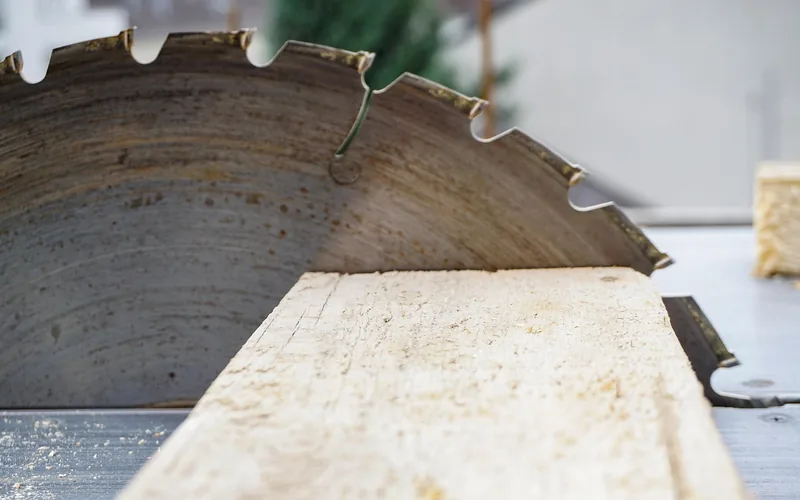
Dimensional stability is a material’s resistance to expanding, contracting, or cupping as humidity changes. Solid wood moves mainly across the grain as it absorbs and releases moisture, which is why a wide pine shelf can cup or bow over a season. MDF’s fibers are pressed in random orientation with no single grain direction, so that uneven cross-grain movement mostly disappears.
That’s the real reason MDF became the default core material for flat-panel furniture: a bookshelf or cabinet side loaded with weight stays flat instead of bowing the way a solid board can. It’s not indestructible, though — an unsupported MDF shelf longer than about 30 inches will sag under a full load of hardback books unless it’s braced or backed with a center support, the same rule that applies to particleboard.
“MDF doesn’t cup or twist the way a flatsawn pine board does after a humid summer in the shop — that’s the one thing I never have to worry about when I build MDF shelving. What I do watch is span length; past about 30 inches unsupported, I add a center cleat before it ever gets loaded with books.”
📊 Standard MDF panels run 700-800 kg/m³ (44-50 lbs/ft³) under the ANSI A208.2 specification — denser than most particleboard, which is a major reason MDF holds a flatter shape under load. Source: Composite Panel Association, ANSI A208.2
Cost-Effectiveness
MDF sheets typically cost less than hardwood plywood of the same thickness, and often less than a 3/4-inch plywood sheet at a home center. Manufacturers press MDF from sawmill byproduct — sawdust, chips, and leftover wood fiber — instead of milling whole veneer logs, so there’s far less raw material waste built into the price.
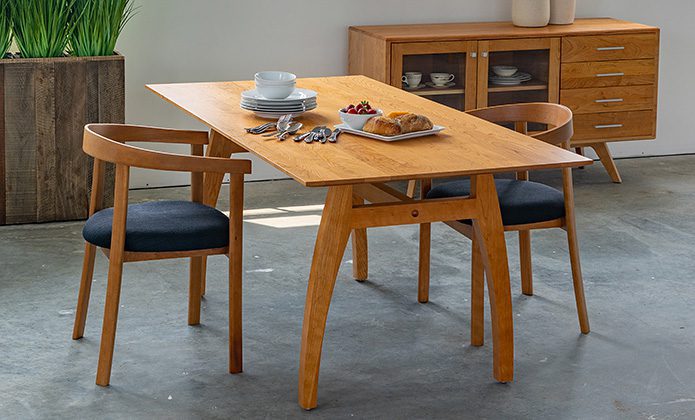
That lower core cost is why so much “wood” furniture is actually MDF with a thin hardwood veneer laminated on top: buyers get the look of solid oak or walnut at a fraction of the material cost, and manufacturers cut and finish faster because there’s no grain to match between panels.
A Smooth, Paint-Ready Surface
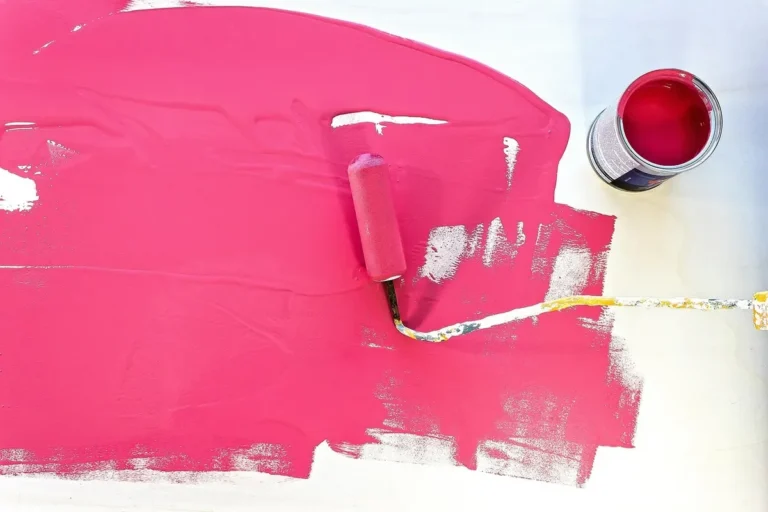
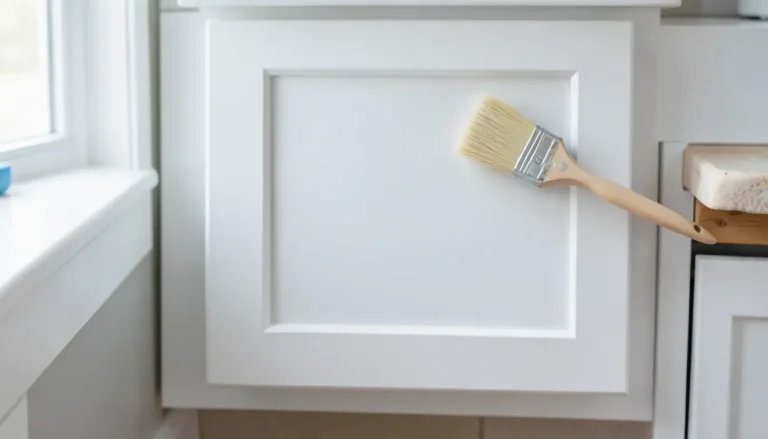
MDF has no grain, no knots, and no open pores, so paint and primer sit flat on top of it instead of soaking unevenly into end grain the way they do on solid wood. That’s why almost every painted kitchen cabinet door, shelving unit, or flat-panel dresser front on the market is MDF, not solid lumber — including most MDF cabinet doors.
Solid wood needs grain-filling primer and multiple coats to hide the wood’s natural texture before it looks fully smooth under paint. MDF skips that step entirely, which is a real labor and material savings for anyone finishing furniture at scale.
Easy to Machine — but Fastening Takes a Different Approach
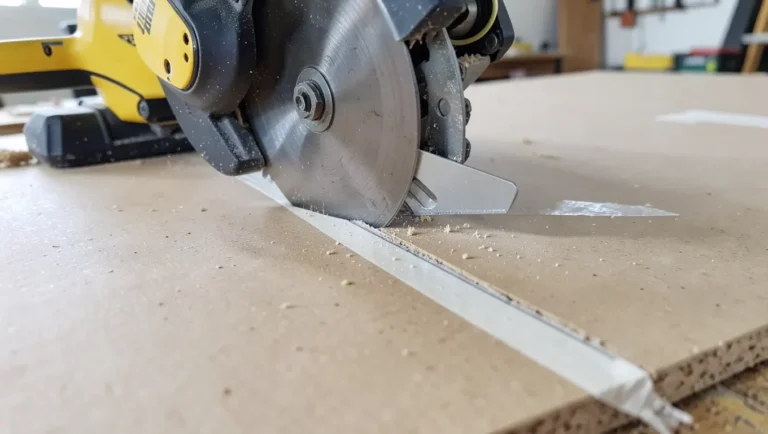
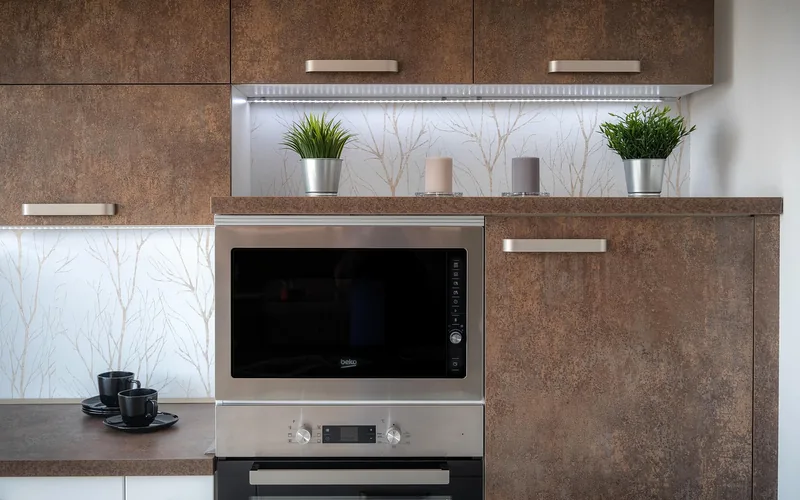
Because MDF has no grain direction, a router or jigsaw cuts a clean edge profile in any direction without the tear-out solid wood produces when you cut against the grain. Routers, scroll saws, and band saws all move through MDF smoothly, which is why it’s the material of choice for detailed cabinet door profiles and curved furniture edges.
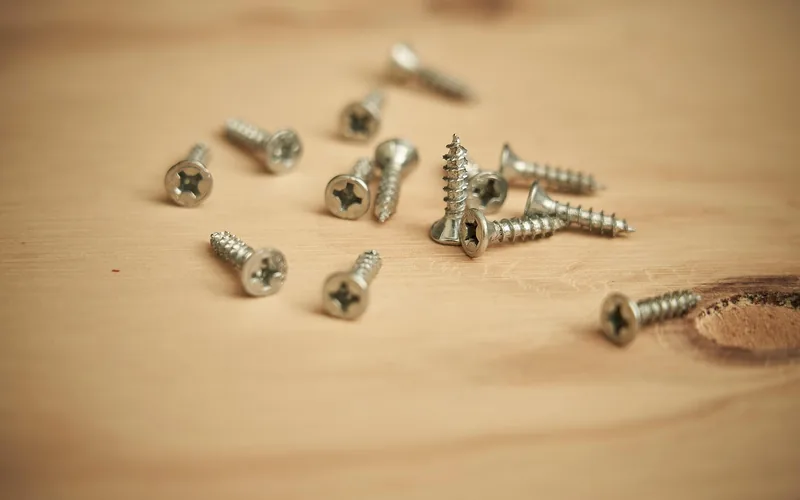
The tradeoff shows up at the fastener. Driving a standard wood screw straight into MDF’s edge strips the fiber almost immediately, because there’s no long wood grain for the threads to bite into — the same reason particleboard furniture loosens over time. Pre-drilling a pilot hole and using a coarse-thread screw designed for composite panels holds dramatically better than a standard wood screw driven straight in.
Best MDF Fastener Pick
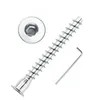 |
Confirmat Screws, M7 x 40mm (25-Pack) – $8.99 A hex-drive confirmat screw sized for joining MDF and particleboard panels — matches the pilot-hole-and-coarse-thread approach this guide recommends for MDF edges instead of a standard wood screw.
|
As an Amazon Associate we earn from qualifying purchases.
For pieces that will be glued rather than screwed — face frames, edge banding, built-up moldings — see our notes on choosing between glue or screws for MDF joints.
Environmental Angle
MDF is made from wood fiber that would otherwise be sawmill waste — sawdust, chips, and offcuts from lumber production — pressed into a usable panel instead of going to landfill or being burned. That doesn’t make it automatically “green” (the resin binder still contains formaldehyde, addressed below), but it does mean less whole-log timber is cut specifically to produce MDF panels compared to solid lumber furniture.
MDF vs. Plywood vs. Solid Wood, for Furniture Specifically
All three materials show up in furniture, but they’re not interchangeable. This table covers the furniture-specific tradeoffs; for the fuller pros-and-cons rundown of MDF as a material, see our MDF advantages and disadvantages guide.
| Factor | MDF | Plywood | Solid Wood |
|---|---|---|---|
| Paint finish | Smoothest — no grain to fill | Visible grain telegraphs through paint | Needs grain filler for a flat painted look |
| Screw-holding (edge) | Weak without a pilot hole + confirmat screw | Strong — layered grain resists pull-out | Strong along the grain |
| Warping resistance | High — no grain direction to move | High — cross-laminated layers | Lower — moves across the grain |
| Typical cost per sheet | Lowest | Mid to high | Highest |
Where MDF Shows Up in Furniture
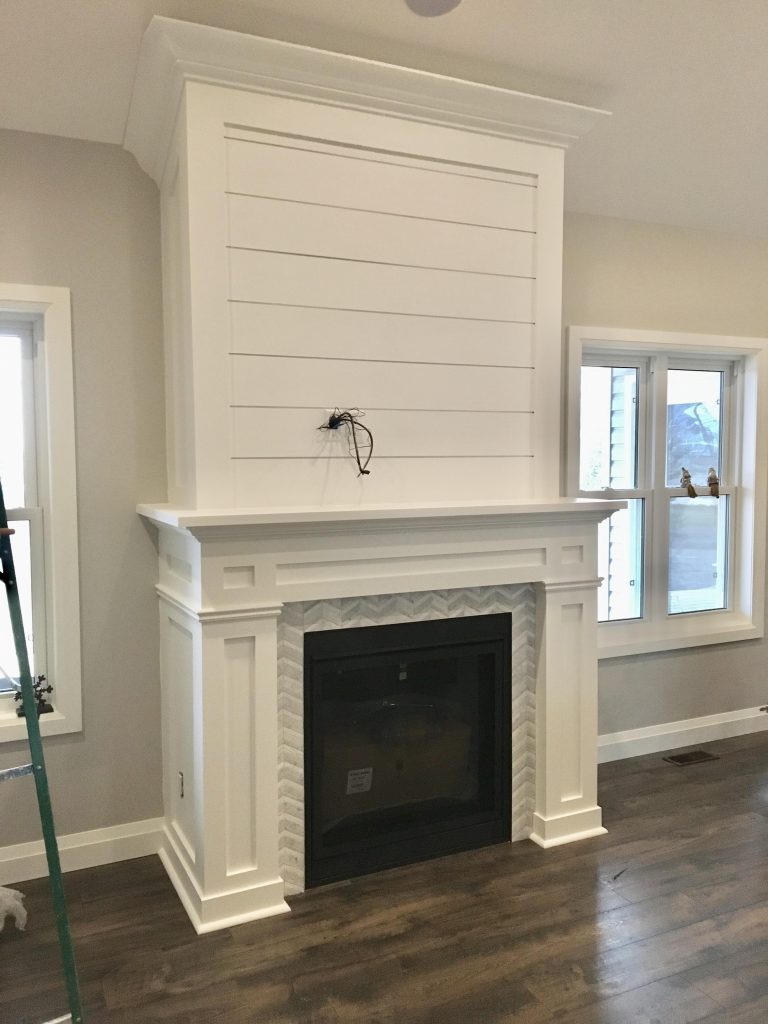
Inside furniture pieces, MDF is most common in flat-panel cabinet doors, dresser and drawer fronts, bookshelves, and the interior frames of upholstered pieces where the material is never seen. Painted furniture — nightstands, TV consoles, kids’ furniture — leans on MDF almost exclusively because of the smooth paint finish covered above.
It’s less common in load-bearing furniture frames like dining chairs or table legs, where solid wood or plywood’s grain strength handles racking stress better than MDF’s fiber structure.
Keeping MDF Furniture Looking Good
- Dust with a soft, dry cloth — avoid soaking the surface with water or all-purpose cleaner.
- Water damage shows up as swelling or crumbling at the edges first, since exposed MDF edges absorb moisture faster than the sealed face.
- Wipe spills immediately rather than letting them sit, especially near seams and edges.
- Keep MDF furniture out of direct sunlight and away from constant humidity (bathrooms, laundry rooms) to prevent fading and swelling.
- Use coasters and placemats on tabletops — the painted or veneered surface can dent under sustained weight or heat.
Frequently Asked Questions
Is MDF good quality for furniture?
Yes, for indoor furniture. MDF’s smooth, grain-free surface and dimensional stability make it a solid choice for painted cabinets, shelving, and flat-panel pieces. It’s less durable than solid wood under heavy impact and shouldn’t be used where it will get wet, but for the furniture types it’s designed for, it performs reliably for years.
Why is MDF banned in the US?
MDF is not banned in the US. The concern is formaldehyde emissions from the resin binder, which is why CARB2 and TSCA Title VI regulations set emission limits that certified MDF products must meet. Buying MDF or MDF furniture that carries a CARB2 or TSCA compliance label keeps formaldehyde exposure within regulated safety limits.
Why do people use MDF instead of solid wood?
Mainly cost and finish quality. MDF runs cheaper than solid wood per sheet, resists warping better than lumber does as humidity changes, and takes paint perfectly smooth with no grain-filling step. The tradeoff is lower impact resistance and vulnerability to standing moisture.
What are the disadvantages of MDF furniture?
MDF is heavier than comparable plywood, swells or crumbles if it stays wet, and doesn’t hold a standard wood screw well at the edge without a pilot hole and the right fastener. It’s also more brittle under a sharp impact than solid wood, and it can’t be sanded down and refinished multiple times the way solid lumber can.
Does MDF furniture last as long as solid wood?
Kept dry and away from heavy impact, MDF furniture commonly lasts 10-15 years or more, but solid wood furniture generally outlasts it because solid wood can be sanded and refinished repeatedly while MDF cannot. For furniture that’s painted once and expected to be replaced or updated on a decorating cycle rather than passed down, MDF’s shorter practical lifespan is rarely the deciding factor.
Can MDF hold screws without stripping?
Not with a standard wood screw driven straight in — MDF’s edge has no long grain for the threads to grip. Pre-drilling a pilot hole and using a coarse-thread confirmat or particleboard screw holds significantly better, which is the standard approach for MDF cabinet and furniture joints.
Conclusion
MDF earns its place in furniture on cost, paint-ready smoothness, and resistance to the warping solid wood is prone to — not because it’s a universal upgrade over lumber. It machines cleanly with a plane or router, but it needs the right screw at the edge and needs to stay dry. Used where it’s suited — painted cabinets, shelving, flat-panel furniture — it’s a genuinely practical material, not just a cheap substitute.
If you’re deciding whether to repaint or refresh an existing piece rather than build new, see our guide to repainting MDF furniture.
Sponsored / affiliate links. As an Amazon Associate I earn from qualifying purchases. I may earn additional commission from eligible campaigns.