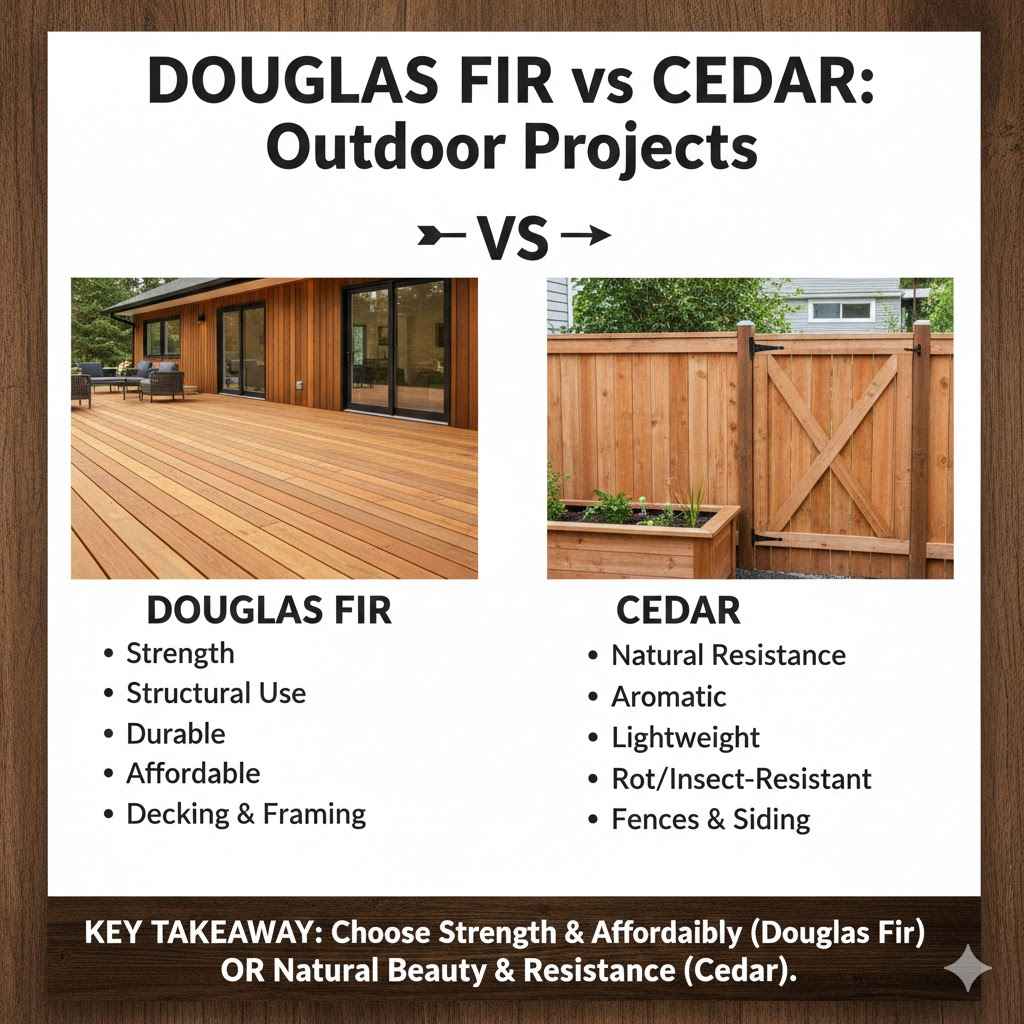
Douglas Fir vs Cedar Outdoor Projects
Picking the right wood for your outdoor projects can feel tricky, especially when you see options like Douglas Fir and Cedar. People often wonder which one is better for decks, fences, or furniture. It’s a common question for anyone starting out.
Don’t worry! We’ll break it down super simply to help you choose the best wood for your needs. We’ll look at what makes each wood great and where it shines.
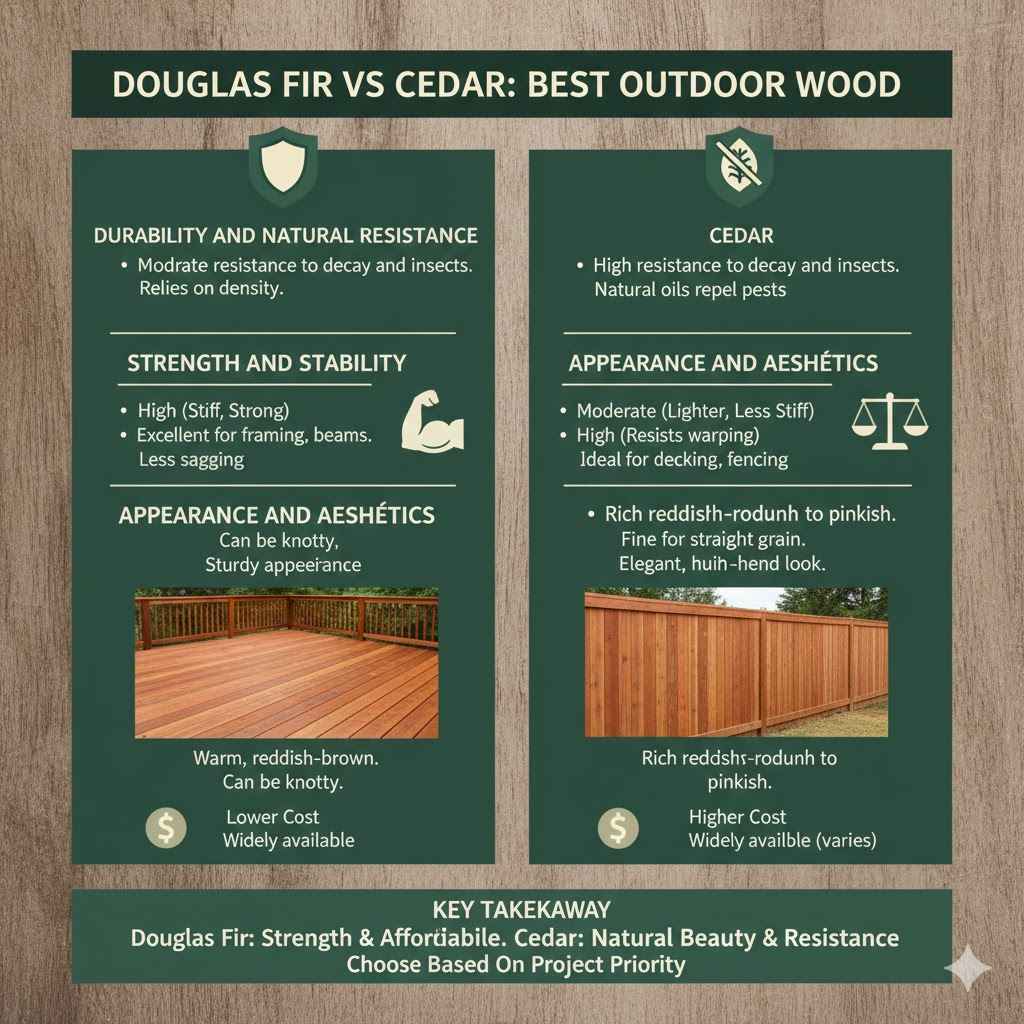
Douglas Fir vs Cedar Best Outdoor Wood
Choosing between Douglas Fir and Cedar for your outdoor construction can seem like a big decision. Both are popular and have unique strengths, making the choice challenging for beginners. This section will lay out the core differences, helping you see which wood best fits your project’s demands and your budget.
Durability and Natural Resistance
One of the most important factors for outdoor wood is how well it holds up against nature’s challenges. This means standing up to rain, sun, insects, and rot without falling apart quickly. Both Douglas Fir and Cedar offer good durability, but they achieve this in different ways.
Douglas Fir is known for its strength and stiffness. It’s a very dense wood, which helps it resist decay and insect attacks to a degree. However, it doesn’t have the same natural oils that Cedar does, making it a bit more prone to rot and pests if not properly treated and maintained.
Its strength makes it a good choice for structural elements where robustness is key.
Cedar, on the other hand, is naturally resistant to decay and insects. This is due to natural oils and tannins present in the wood. These compounds act as a shield, protecting the wood from the elements and common pests like termites and carpenter ants.
This natural protection means Cedar often lasts longer outdoors without the need for extensive chemical treatments, making it a popular choice for visible elements like fencing and decking where longevity and appearance are important.
Here’s a quick look at their natural resistance:
- Douglas Fir: Moderate resistance to decay and insects. Relies more on density for strength and some natural protection.
- Cedar: High resistance to decay and insects. Contains natural oils and tannins that repel pests and prevent rot.
When comparing these two, think about how much you want to rely on natural properties versus added treatments. Cedar’s inherent resilience often makes it the preferred choice for direct ground contact or areas with high moisture exposure.
Strength and Stability
The structural integrity of wood is vital for outdoor projects. You want something that can bear weight, withstand wind, and not warp or twist over time. Both Douglas Fir and Cedar offer different kinds of strength.
Douglas Fir is a very strong and stiff wood. It has a high strength-to-weight ratio, meaning it’s strong for how much it weighs. This makes it excellent for framing, beams, and other structural components that need to support significant loads.
It’s less prone to sagging than many other softwoods. This inherent strength means you might be able to use smaller dimensions of Douglas Fir compared to other woods for the same structural purpose, potentially saving on material costs.
Cedar is also a strong wood, but it’s not as stiff or strong as Douglas Fir. Its strength comes from its lighter weight and dimensional stability. Cedar tends to expand and contract less with changes in moisture and temperature compared to many other woods.
This stability is a major advantage for outdoor projects like decks and fences, as it means less warping, twisting, and cracking over time. While it might not be the first choice for heavy-duty structural beams, its stability makes it ideal for surfaces that are constantly exposed to the elements and need to maintain their shape and appearance.
Consider this comparison:
| Wood Type | Strength | Stability | Best Use Case |
|---|---|---|---|
| Douglas Fir | High (Stiff, Strong) | Moderate | Structural framing, beams |
| Cedar | Moderate (Lighter, Less Stiff) | High (Resists warping) | Decking, fencing, siding, outdoor furniture |
For projects where appearance and resistance to movement are paramount, Cedar often wins. For projects demanding sheer structural support, Douglas Fir is a superior choice.
Appearance and Aesthetics
How your outdoor project looks is just as important as how it performs. The visual appeal of the wood plays a big role in the overall charm of your garden or home.
Douglas Fir typically has a warm, reddish-brown color. It can have a fairly straight grain pattern, but it can also feature knots that add character. The color can darken over time with exposure to sunlight, often developing a richer, deeper hue.
It sands smoothly and takes finishes well, but its natural color can be somewhat plain compared to other woods if not stained or sealed properly.
Cedar, especially Western Red Cedar, is prized for its beautiful, rich reddish-brown to pinkish-brown color. It often has a straight, fine grain with fewer knots than Douglas Fir, giving it a more refined and elegant look. The natural aroma of Cedar is also a pleasant bonus, though this scent fades over time.
Cedar can be left unfinished to weather to a silvery gray or can be stained or sealed to maintain its rich color. Its natural beauty makes it a favored material for visible features.
Think about the look you want:
- Douglas Fir: Warm, reddish-brown. Can be knotty or clear. Good for a rustic or sturdy appearance. Takes stains but can look less vibrant than Cedar.
- Cedar: Rich reddish-brown to pinkish-brown. Fine, straight grain. Often clear (knot-free). Offers a classic, high-end look.
For projects where visual appeal is a primary driver, such as decorative fences, pergolas, or high-end decks, Cedar’s natural beauty is hard to beat. Douglas Fir can certainly look good, but it might require more effort in finishing to achieve a similar level of aesthetic appeal.
Cost and Availability
Budget and ease of access are practical considerations for any DIY project.
Douglas Fir is generally more affordable than Cedar. It’s a widely available softwood, especially in North America, making it a cost-effective option for larger projects or for those on a tighter budget. Its lower price point makes it attractive for structural applications where its appearance is less of a factor.
Cedar, particularly high-quality Western Red Cedar, tends to be more expensive. Its natural resistance and aesthetic appeal command a higher price. Availability can also vary depending on your region, though it is widely distributed.
The higher cost reflects its desirable properties and the fact that it requires less maintenance and treatment to achieve long-term results.
Consider the pricing:
| Wood Type | Typical Cost | Availability |
|---|---|---|
| Douglas Fir | Lower | Widely available |
| Cedar | Higher | Widely available, but pricing varies by grade |
For a large deck or fence where budget is a primary concern, Douglas Fir might be the more sensible choice, especially if you plan to seal or stain it. If your budget allows, and you prioritize longevity and natural beauty with minimal upkeep, Cedar is often worth the investment.
Maintenance Requirements
How much time and effort you want to spend maintaining your outdoor structures is a key factor in choosing the right wood.
Douglas Fir, while strong, has less natural resistance to moisture and insects. If left untreated, it will degrade more quickly outdoors. To get the best longevity, Douglas Fir often requires regular sealing, staining, or painting.
This protective coating needs to be reapplied periodically, typically every one to three years, depending on the climate and the product used. Without this maintenance, it can be susceptible to rot, warping, and insect damage.
Cedar’s natural oils make it far more resistant to rot and insects, meaning it requires less intensive maintenance. You can choose to leave Cedar unfinished, and it will naturally weather to a beautiful silvery-gray color while retaining its structural integrity for many years. If you want to preserve its rich color, you can apply a UV-blocking sealant or stain annually or bi-annually.
This is generally less upkeep than what’s required for Douglas Fir to achieve similar durability.
Maintenance needs:
- Douglas Fir: Requires regular sealing, staining, or painting (every 1-3 years) for protection against elements and pests.
- Cedar: Can be left unfinished to weather naturally, or sealed/stained to maintain color (less frequent than Douglas Fir). Excellent natural resistance reduces maintenance needs.
If your goal is a low-maintenance outdoor space, Cedar is the clear winner. The initial higher cost of Cedar can often be offset by savings in time, effort, and materials for ongoing maintenance compared to Douglas Fir.
Projects Where Douglas Fir Shines
Douglas Fir’s exceptional strength and affordability make it a prime candidate for specific outdoor applications where structural integrity is paramount and the aesthetic can be managed with finishes.
Structural Framing and Support
The primary advantage of Douglas Fir lies in its structural capabilities. Its high strength-to-weight ratio and stiffness make it ideal for the unseen bones of outdoor constructions. Think about the framework for a large deck, the posts for a sturdy pergola, or the main supports for an outdoor kitchen structure.
In these roles, the wood is not directly exposed to the elements or foot traffic in the same way a deck surface is, so its natural resistance can be supplemented with protective treatments.
For example, when building a robust deck that needs to support a heavy hot tub, Douglas Fir joists and beams are an excellent choice. They can handle the load without significant deflection. A common scenario involves using Douglas Fir for the substructure and then topping it with a different material like Cedar or composite decking for the visible surface.
This approach maximizes both structural performance and aesthetic appeal while managing costs.
A case study might involve a commercial outdoor patio. The restaurant owner needed a durable, cost-effective foundation that could withstand heavy use and frequent cleaning. Douglas Fir was chosen for the sub-framing due to its strength and price.
The deck surface was then clad with treated pine to meet budget requirements. The Douglas Fir substructure ensured the entire structure remained stable and safe for years, even under significant daily traffic and varied weather conditions.
Key structural uses for Douglas Fir:
- Deck Joists and Beams: Provides the essential load-bearing support for deck surfaces. Its stiffness prevents excessive bouncing and sagging.
- Pergola and Gazebo Posts: Offers the necessary strength to hold up roof structures and withstand wind loads.
- Outdoor Building Frames: Ideal for the basic framework of sheds, playhouses, or small outdoor structures where strength is paramount.
The ability of Douglas Fir to handle significant stress and weight is unmatched by many other common construction woods. This makes it the go-to choice when safety and structural integrity are non-negotiable, even if it means more attention to protective finishes.
Affordable Outdoor Structures
When cost is a major deciding factor, Douglas Fir often emerges as the most practical material for a variety of outdoor projects. Its generally lower price point compared to Cedar or even some treated pines makes larger projects more accessible to a wider range of homeowners and builders.
Imagine building a large privacy fence around your property. A fence requires a substantial amount of wood for posts and rails. Using Douglas Fir can significantly reduce the overall material cost compared to using Cedar for the entire structure.
While the posts and rails might require more diligent sealing and maintenance, the initial savings can be substantial.
A sample scenario could be a community garden project. Volunteers needed to build multiple raised garden beds and a simple potting shed. To maximize the number of beds and the shed’s size within a limited budget, Douglas Fir was selected for all the lumber.
The wood was treated with a good quality wood preservative and then painted. This approach allowed them to build functional and durable garden structures that met their needs without exceeding their funding. The cost savings on lumber allowed them to invest in better quality soil and tools.
Practical applications where budget is key:
- Large Fencing Projects: Building long runs of fence where material cost adds up quickly.
- Simple Sheds and Outbuildings: Creating functional storage or workspace structures without breaking the bank.
- Temporary or Basic Structures: For projects that don’t require the absolute highest aesthetic or longevity, like temporary event stages or basic garden borders.
The economic advantage of Douglas Fir makes it a champion for DIYers and builders looking to get the most ‘bang for their buck’ on outdoor projects, provided they understand and are prepared for the necessary protective treatments.
Projects Where Cedar Excels
Cedar’s natural beauty and inherent resistance to decay and insects make it a premium choice for outdoor projects where appearance, longevity, and low maintenance are highly valued.
Decking and Railings
Cedar is exceptionally well-suited for decking and railings. Its stability means it expands and contracts minimally with moisture changes, which reduces the likelihood of boards cupping, warping, or shrinking. This dimensional stability is crucial for deck surfaces that are constantly exposed to sun, rain, and temperature fluctuations.
The attractive natural color and fine grain also contribute to a beautiful and welcoming outdoor living space.
For example, building a deck for a waterfront property presents unique challenges due to constant moisture. A Cedar deck not only resists rot and insect damage naturally but also maintains its structural integrity and appearance better than many other woods. The ability to walk barefoot on a Cedar deck without worrying about splinters or warping is a significant comfort factor.
Homeowners often choose to stain Cedar decks to enhance their color or leave them to weather to a soft gray, both aesthetically pleasing options.
A homeowner wanting a beautiful, long-lasting deck for entertaining might opt for Cedar. They could use Cedar for the deck boards, fascia, and railings. This creates a cohesive and attractive look.
The natural resistance to decay means the deck will look good and remain structurally sound for many years with minimal upkeep. Many sources suggest that a well-maintained Cedar deck can last 15-20 years, sometimes longer, depending on the climate and usage.
Ideal uses for Cedar in decking and railings:
- Deck Boards: Provides a beautiful, splinter-resistant, and stable walking surface.
- Railing Systems: Creates an attractive and durable barrier that complements the deck.
- Stair Treads and Risers: Offers safety and visual appeal for access to the deck.
The choice of Cedar for decking and railings is often an investment in long-term beauty and durability, offering a high return in terms of aesthetic appeal and reduced maintenance hassle.
Fencing and Siding
Cedar’s natural resistance to rot, decay, and insects makes it an excellent material for exterior applications like fences and siding. It can withstand the harsh outdoor elements without succumbing to moisture damage or pest infestations, which are common issues for less resistant woods.
Consider a Cedar fence bordering a garden. The wood will naturally resist the damp soil and frequent watering without rotting away quickly. The inherent oils in Cedar also help protect it from UV rays, preventing premature graying and cracking when left unfinished.
For siding, Cedar offers a warm, natural look that enhances a home’s curb appeal, and its natural durability means it can stand up to weather for decades.
A common scenario involves using Cedar for privacy fences. The wood’s attractive appearance provides a more refined look than some other fencing materials. Homeowners often choose tongue-and-groove or overlapping board styles for maximum privacy and visual appeal.
Cedar’s natural resistance means the fence can be installed with minimal ground contact (using post protectors) and still offer exceptional longevity. Many manufacturers guarantee Cedar fences for 20 years or more against rot and insect damage.
Key applications for Cedar in fencing and siding:
- Privacy Fences: Creates beautiful and durable enclosures that stand up to the elements.
- Decorative Fences: Offers design flexibility for more ornamental fence styles.
- House Siding: Provides a natural, warm, and weather-resistant exterior finish.
When selecting Cedar for fences and siding, you are choosing a material that provides both aesthetic beauty and long-lasting protection against the natural environment.
Outdoor Furniture and Accents
The natural beauty and pleasant aroma of Cedar make it a top choice for outdoor furniture and decorative elements where appearance and comfort are key.
Imagine a set of Cedar Adirondack chairs or a dining table on your patio. The wood is comfortable to sit on, often smooth and splinter-free, and it looks beautiful even when unfinished. Cedar furniture can withstand rain and sun without significant damage, making it a low-maintenance option for relaxing outdoors.
Its natural oils also give it a pleasant, subtle scent.
A practical example is building a planter box for herbs or flowers. Cedar is an excellent choice because it won’t rot from constant contact with moist soil, and it adds a touch of natural elegance to the garden. Unlike some plastics or treated woods, Cedar is safe for growing edibles.
Many DIYers find Cedar easy to work with for smaller projects like birdhouses, benches, or decorative garden gates.
Uses for Cedar in furniture and accents:
- Patio Tables and Chairs: Creates comfortable and attractive seating and dining areas.
- Planter Boxes and Garden Edging: Adds natural beauty and durability to garden features.
- Arbors and Trellises: Provides decorative support for climbing plants.
For projects where the wood’s natural appearance and pleasant characteristics are as important as its durability, Cedar is an unparalleled material.
Comparing Douglas Fir and Cedar: Key Factors
To make the best choice for your outdoor project, it’s helpful to directly compare the key attributes of Douglas Fir and Cedar side-by-side.
Resistance to Elements and Pests
This is arguably the most critical factor for outdoor wood. How well does the wood withstand moisture, UV rays, and insect attacks over time?
Cedar’s inherent resistance is a significant advantage. The natural compounds within Cedar act as a powerful deterrent against rot and common wood-boring insects like termites and carpenter ants. This means that even when exposed to frequent rain or soil contact, Cedar will last much longer without succumbing to decay.
This natural protection is a key reason why Cedar is often chosen for applications where the wood is in direct contact with the ground or is heavily exposed to moisture.
Douglas Fir, while a strong and dense wood, does not possess the same level of natural oils and tannins. Its resistance to rot and insects is moderate at best. Without proper and consistent sealing or treatment, Douglas Fir can become a target for pests and will degrade more rapidly when exposed to moisture.
This makes it less ideal for situations where prolonged contact with water or the ground is unavoidable unless extensive protective measures are taken.
Here’s a statistical look at resistance:
| Wood Type | Rot Resistance | Insect Resistance | UV Resistance |
|---|---|---|---|
| Douglas Fir | Moderate | Moderate | Low |
| Cedar | High | High | Moderate (with finish) |
Consider that untreated Douglas Fir can start showing signs of decay within a few years in damp conditions, while Cedar can last for decades. Data from the U.S. Forest Products Laboratory suggests that Cedar species, like Western Red Cedar, can have a lifespan of 20-30 years in ground contact, whereas Douglas Fir might only last 5-10 years in similar conditions.
Strength Versus Stability
The physical properties of wood dictate its performance under stress and its tendency to move with environmental changes.
Douglas Fir is celebrated for its sheer strength and stiffness. It’s a hardwood in terms of density and structural capability, making it an excellent choice for load-bearing applications. For instance, if you’re building a large outdoor structure that needs to support heavy weight, like a gazebo roof or a very deep deck, Douglas Fir’s superior strength ensures it can handle the stress without excessive bending or breaking.
This makes it invaluable for the foundational elements of robust constructions.
Cedar, while strong enough for most outdoor applications, is more prized for its stability. It has a lower shrinkage rate compared to many other woods, meaning it expands and contracts less with changes in humidity and temperature. This dimensional stability is crucial for surfaces like decks and fences, where warping, twisting, and cracking can compromise both appearance and function over time.
A Cedar deck will maintain its flat surface and straight lines better than a Douglas Fir deck exposed to the same conditions.
A comparative example could be building a bridge over a small stream. The main span beams would likely be constructed from Douglas Fir for maximum load-bearing capacity and safety. However, the decking planks for people to walk on would ideally be Cedar for its stability and resistance to splintering and warping, ensuring a comfortable and safe user experience.
Key performance differences:
- Douglas Fir: Superior stiffness and strength for heavy loads.
- Cedar: Excellent dimensional stability, resisting warping and cracking with moisture changes.
The choice between prioritizing raw strength or consistent stability often comes down to the specific demands of your project and where those demands are placed within the structure.
Aesthetics and Finishing
The visual appeal of outdoor wood is a significant consideration for many homeowners and builders.
Douglas Fir offers a warm, natural color that can range from light yellow to reddish-brown. It has a fairly straight grain, often with knots that can add character, though clear grades are also available. When finished, Douglas Fir can take stains and paints well, allowing for a wide range of looks, from a natural wood tone to any color imaginable.
However, its natural appearance is generally considered less striking than Cedar.
Cedar, especially Western Red Cedar, is renowned for its rich, warm colors, typically a reddish-brown or pinkish-brown hue. It often has a straighter, finer grain and fewer knots, contributing to a more refined and elegant appearance. Cedar has a natural beauty that many people prefer to showcase.
It can be left unfinished to weather to a beautiful silvery-gray, or it can be sealed or stained to enhance its natural color. The pleasing natural aroma is an added bonus.
Consider these aesthetic qualities:
| Wood Type | Color Range | Grain/Knots | Natural Appeal |
|---|---|---|---|
| Douglas Fir | Light Yellow to Reddish-Brown | Straight, can be knotty | Pleasant, rustic |
| Cedar | Reddish-Brown to Pinkish-Brown | Straight, fine, often clear | Rich, elegant, aromatic |
If you’re aiming for a high-end, naturally beautiful look for your deck, fence, or outdoor furniture, Cedar is often the preferred material. Douglas Fir can achieve a beautiful finish, but it usually requires more effort in staining or sealing to match Cedar’s inherent visual appeal.
Cost-Effectiveness Over Time
While initial cost is important, the long-term value and maintenance needs also factor into overall cost-effectiveness.
Douglas Fir has a lower upfront cost, making it an attractive option for budget-conscious projects. However, its lower natural resistance to decay and insects means it requires more frequent maintenance to prolong its life. This includes regular applications of sealants, stains, or paints, which can add up in terms of both material costs and labor over the years.
If not maintained diligently, its lifespan outdoors can be significantly shorter, leading to premature replacement costs.
Cedar typically has a higher initial purchase price. However, its superior natural resistance to rot and insects means it requires less frequent maintenance. Many homeowners choose to leave Cedar unfinished, allowing it to weather naturally, which involves no additional cost.
If Cedar is stained or sealed, the application frequency is usually less than for Douglas Fir. Over the lifespan of the project, the reduced maintenance costs and potentially longer lifespan can make Cedar a more cost-effective choice in the long run.
A practical calculation example:
Douglas Fir Deck (20-year lifespan):
Initial Cost: $X
Maintenance (sealant every 2 years at $Y per application): $X * 10 applications
Total Cost over 20 years: $X + ($Y * 10)
Cedar Deck (20-year lifespan):
Initial Cost: $1.5X (approximately)
Maintenance (sealant every 4 years at $Y per application): $X * 5 applications
Total Cost over 20 years: $1.5X + ($Y * 5)
While Cedar’s initial cost is higher, the total cost over its lifespan can be comparable or even lower due to reduced maintenance. This data is illustrative and actual costs will vary greatly.
Consider the long-term
- Initial Investment: Douglas Fir is typically cheaper.
- Ongoing Maintenance: Cedar requires less frequent and less intensive maintenance.
- Lifespan: Cedar often lasts longer due to its natural properties.
The true cost-effectiveness of Douglas Fir vs Cedar: Best for Outdoor Projects depends on your willingness to invest upfront versus your commitment to ongoing maintenance.
Making Your Decision
Deciding between Douglas Fir and Cedar for your outdoor projects is about understanding what you need and what you value most.
If your project requires maximum structural strength and you are working with a tighter budget, Douglas Fir is a very strong contender. It’s excellent for the unseen framework of decks, pergolas, and other structures where its density and stiffness are beneficial. Remember that for visible parts, you’ll need to invest in good quality finishes and be prepared for regular upkeep to protect it from the elements and pests.
On the other hand, if your priority is natural beauty, inherent resistance to decay and insects, and a low-maintenance lifestyle, Cedar is likely the superior choice. Its stability makes it ideal for decking, fencing, and outdoor furniture. While the initial cost is higher, the reduced need for constant treatments and its longer lifespan can make it more economical and less labor-intensive over time.
Ultimately, the best wood depends on your specific project’s needs, your budget, and how much time you’re willing to dedicate to maintenance. Both woods can create beautiful and functional outdoor spaces when used appropriately.

Frequently Asked Questions
Question: Which wood is better for a DIY deck frame?
Answer: For a deck frame, Douglas Fir is generally the better choice due to its superior strength and stiffness, which are crucial for load-bearing structural components. It’s also often more cost-effective for the substructure.
Question: Is Cedar worth the extra cost for fencing?
Answer: For many homeowners, Cedar is worth the extra cost for fencing because of its natural resistance to rot and insects, leading to a longer lifespan and significantly less maintenance compared to other woods.
Question: Can I use Douglas Fir for outdoor furniture?
Answer: Yes, you can use Douglas Fir for outdoor furniture, but it will require regular sealing and maintenance to protect it from the weather and pests. Cedar is a more natural and lower-maintenance choice for furniture.
Question: Which wood requires more regular sealing?
Answer: Douglas Fir requires more regular sealing and maintenance than Cedar because it lacks the natural oils and tannins that protect Cedar from decay and insects.
Question: Which wood is easier to work with for beginners?
Answer: Both woods are relatively easy to work with for beginners, though Cedar’s stability might make it slightly more forgiving in terms of warping and splitting during cutting and assembly.
Conclusion
When deciding between Douglas Fir and Cedar for outdoor projects, consider strength and budget with Douglas Fir. For natural beauty and low maintenance, Cedar shines. Both can create lasting outdoor spaces.