How to Make a Wooden Clock Case: Step-by-Step Build Guide
To make a wooden clock case, measure your clock movement’s shaft length first, then build the case around it, not the other way around. Cut and join your panels, drill a hole sized to the movement’s mounting post, dry-fit before any glue goes on, and finish the wood before the movement ever goes in. Getting the shaft-to-panel fit right the first time is what separates a clock that hangs flush and keeps ticking from one where the hands drag on the glass or the movement nut won’t tighten down.
Most tutorials treat the case and the movement as two separate projects and skip the one measurement that actually matters: how thick your front panel and dial are compared to the movement’s shaft. Get that wrong and you’ll be back at the hardware store with a case that’s already glued up. This guide walks through wood selection, joinery that survives seasonal humidity swings, and the shaft-length math most guides leave out.
Tools, Materials, and the One Measurement to Take Before You Cut Anything
Best Clock Movement Kit For Custom Cases
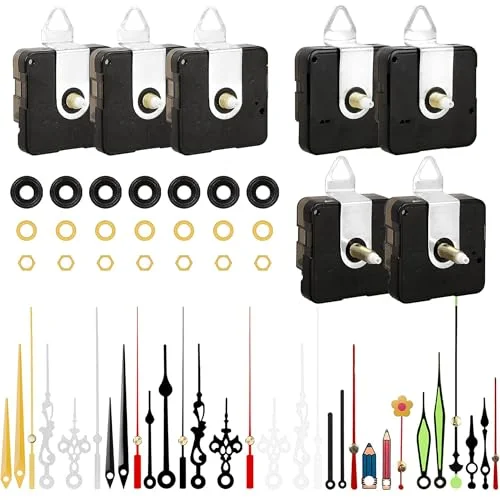 |
PARAOR 7-Piece Quartz Clock Movement Kit – $11.99 Comes in three shaft lengths (12mm, 15.5mm, and 21.5mm), so you can match the movement to your case’s actual panel thickness instead of guessing and rebuilding.
|
Before buying wood, measure or decide on your front panel thickness plus your dial thickness — that combined number determines which clock movement shaft length you need, and shaft lengths are sold in fixed sizes, not custom-cut. It’s far easier to design your case around a shaft length you already have than to plane down a finished panel later.
Here’s what you’ll need on the bench:
| Tool / Material | Purpose |
|---|---|
| Table saw or circular saw | Cut panels and frame stock to size |
| Drill with Forstner or spade bit | Bore the movement mounting hole (typically 8mm for a 6mm shaft, for clearance) |
| Combination square | Check corners are truly 90° before glue-up |
| Bar or pipe clamps | Hold the case square while glue cures |
| Wood glue (PVA) | Join frame and joinery, not the movement itself |
| 120 → 220 grit sandpaper | Progressive sanding before finish |
| Clock movement kit with hands | The mechanism — buy this before finalizing panel thickness |
Choosing Wood: Why Grain Direction Matters More Than Species
Most guides tell you to pick a hardwood and stop there. Hardness is a real factor — on the Janka hardness scale, red oak runs about 1,290 lbf, hard maple about 1,450 lbf, black walnut about 1,010 lbf, and cherry about 950 lbf, so all four resist dents and dings better than a softwood like pine (around 420 lbf). Any of them will look good and hold up as a clock case. Walnut and cherry are easier to hand-cut cleanly for tighter joints; oak and maple show more visible grain and take stain less evenly because of larger open pores.
What actually causes clock cases to fail isn’t species, it’s grain direction. Wood expands and contracts across the grain with seasonal humidity, roughly 1/4″ per foot of width for most hardwoods between a dry winter and a humid summer, but barely at all along the grain length. If you glue a solid wide panel rigidly into a frame with its grain running the wrong way, or screw it down tight on all four edges, that seasonal movement has nowhere to go and the panel splits. This is the single most common reason a handmade clock case cracks a few months after it’s finished, and it’s rarely mentioned in beginner tutorials.
Designing the Case: Frame-and-Panel Beats a Solid Glued Slab
A frame-and-panel design solves the wood movement problem directly. Build a frame from narrower stock (grain running with the frame’s length), rout or table-saw a groove around the inside edge, and let a floating panel sit in that groove without glue on the panel itself — only the frame corners get glued. The panel can expand and contract freely inside the groove all year without stressing the joint. If you’d rather keep it simple and use a single solid slab instead of a frame, at minimum avoid gluing or screwing it rigidly on all four sides; fasten it firmly along one edge only and let the opposite edges float in slotted holes.
Sketch your design before cutting, including the exact diameter of the dial opening and where the movement will sit on the back panel. Classic case proportions run roughly 1.4 to 1.6 times taller than wide for a wall or mantel clock, but this is a matter of taste — a small square case works fine for a simple quartz build.
Cutting and Joinery
Cut your frame pieces slightly oversized, then trim to final length once your first two pieces prove your saw setup is accurate — a 1° error on a miter compounds fast around four corners. Mitered corners look cleanest on a frame-and-panel case; a simple rabbet or butt joint reinforced with glue and pin nails is faster and plenty strong for a smaller case. Box joints or dovetails look striking on a solid-slab box-style case but add real build time; save them for a second build once your first case is done.
Dry-fit every joint before any glue touches wood. Clamp the case together without glue, check it sits square with a combination square at all four corners, and confirm the dial opening lines up with where the movement will actually sit. This step catches sizing mistakes while they’re still free to fix.

Assembling the Case
Glue the frame joints first, working corner by corner, and check the whole assembly for square with a combination square before the clamps go on — not after. Wipe excess glue immediately with a damp cloth; dried squeeze-out shows through stain and creates blotchy patches. Let the glue-up sit clamped for at least 30 minutes, then leave it in the clamps overnight before handling.
Once the glue has fully cured, drill the movement mounting hole in the back panel and the hand-shaft clearance hole through the dial opening. Sand progressively from 120 to 220 grit, always with the grain, and ease any sharp outside corners slightly so the finish doesn’t wear through at the edges first.
Installing the Clock Movement: Matching Shaft Length to Your Case
This is the step that trips up most first-time builders. A quartz clock movement’s shaft length has to cover the combined thickness of everything it passes through: the back mounting panel, plus the dial (if it’s a separate piece glued to the front), plus a couple of millimeters of clearance so the hour and minute hands can spin freely without rubbing the dial or the glass. Movement kits are typically sold in a few fixed shaft lengths, commonly around 12mm, 15.5mm, and 21.5mm — there usually isn’t a length in between, so measure before you buy, or buy a kit with multiple lengths included so you have options if your case comes out thicker than planned.
The simple formula: shaft length needed = back panel thickness + dial thickness + 2–3mm clearance. A 3/4″ (19mm) back panel with no separate dial layer needs roughly a 21.5mm shaft. A thinner 3/8″ (10mm) panel with a 1/8″ (3mm) dial glued on top needs closer to the 15.5mm size. If your case comes out between standard sizes, size up rather than down — a shaft that’s slightly too long can be packed out with the washers most kits include, but one that’s too short won’t reach through the panel at all.
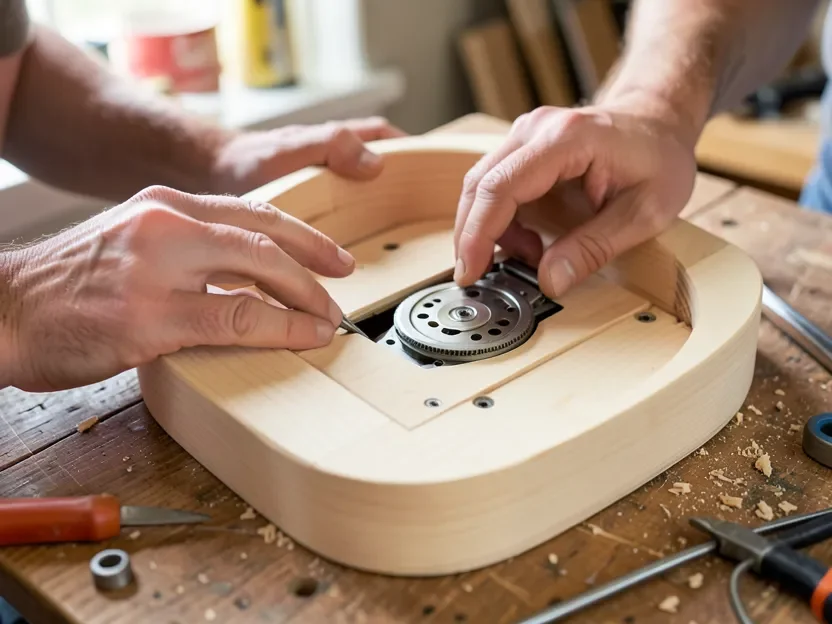
Feed the movement’s shaft through the back panel from inside the case, add the washer, and hand-tighten the mounting nut — snug, not wrench-tight. Overtightening is the second most common mistake: it can crack a thin wood dial or strip the plastic threads on the movement’s mounting post. Attach the hour hand first, then the minute hand, making sure neither touches the dial face or each other as they sweep past 12.
Finishing the Case
Finish the case before installing the movement, not after — stain and sealant fumes can gum up a battery movement’s gears if you finish around an already-mounted mechanism. A penetrating oil finish (like a hardwax oil) soaks into open-grain woods like oak and gives a low-sheen, hand-rubbed look in one or two coats, typically dry to the touch in 4–6 hours. A wipe-on polyurethane builds more of a protective film and suits a case that’ll see more handling, but needs 24 hours or more between coats. Whichever you choose, always test on a scrap offcut from the same board first — grain and porosity vary enough between individual boards that a stain color can look noticeably different from the sample can.
Common Mistakes to Avoid
A short list of the mistakes that actually cause rebuilds, based on the failure points above:
- Gluing a solid panel rigidly on all sides — blocks seasonal wood movement and cracks the panel within months. Use frame-and-panel construction or float at least two edges.
- Buying the movement after the case is built — shaft lengths come in fixed sizes; measure your panel-plus-dial thickness before you build, not after.
- Overtightening the mounting nut — cracks thin dials and strips the movement’s plastic threads. Hand-tight is enough.
- Skipping the dry-fit — a dial opening that’s off-center only becomes obvious once you try to mount the movement, and by then the glue has cured.
- Finishing around an already-installed movement — stain and sealant vapors can gum up the gear train. Finish first, install the movement last.
Maintenance and Care
Wipe the case with a soft, lint-free or microfiber cloth to remove dust; a damp cloth is fine occasionally, but avoid soaking the wood or using household cleaners, which can strip an oil finish. Check the movement’s mounting nut once or twice a year and snug it if it’s worked loose — vibration from repeated wall mounting can loosen it slowly over time. Keep the case out of direct sunlight, which fades finish and stain unevenly, and out of rooms with big humidity swings (like an unheated garage) where the wood movement problem discussed above becomes a long-term risk even with good joinery.
Frequently Asked Questions
What Shaft Length Do I Need for a Clock Movement?
Add your back panel thickness to your dial thickness (if separate), then add 2–3mm of clearance for the hands to spin freely. Movements are sold in fixed shaft lengths, commonly around 12mm, 15.5mm, and 21.5mm, so round up to the nearest available size rather than down.
What’s the Best Wood for a Clock Case?
Red oak, hard maple, black walnut, and cherry all work well and resist dents better than softwoods like pine. Walnut and cherry cut and finish more predictably for tight joinery; oak and maple show bolder grain but take stain less evenly because of their larger open pores.
Why Did My Clock Case Crack After a Few Months?
Almost always seasonal wood movement, not a bad glue joint. A solid panel glued or screwed rigidly on all four sides has nowhere to expand and contract as humidity changes through the year, so it splits under its own internal stress. Frame-and-panel construction with a floating panel, or fastening a solid panel on one edge only, prevents this.
How Do I Keep the Clock Hands From Touching the Dial?
Build in 2–3mm of shaft clearance beyond your panel-and-dial thickness when choosing the movement, and hand-tighten the mounting nut rather than wrenching it down, which can tilt the hand hub slightly toward the dial. Attach the hour hand first, then the minute hand, checking clearance as each one sweeps past 12 before moving on.
How Long Does It Take to Build a Wooden Clock Case?
A simple frame-and-panel case is realistic in a weekend: an afternoon for cutting and glue-up, overnight clamping, then an afternoon for sanding, finishing, and installing the movement. A carved or mitered box-style case with hand-cut joinery can take several evenings spread over one to two weeks, mostly due to finish dry time between coats.
Conclusion
A wooden clock case comes down to two things most tutorials gloss over: building the joinery so the wood can move with the seasons, and matching your movement’s shaft length to your panel thickness before you glue anything. Get those two right and the rest — wood choice, joinery style, finish — is mostly personal preference. Take your time on the dry-fit, and you’ll end up with a case that still hangs flat and ticks true years from now.
Sponsored / affiliate links. As an Amazon Associate I earn from qualifying purchases. I may earn additional commission from eligible campaigns.