Self-Tapping Screws vs Regular Screws for Wood
Use self-tapping screws for wood-to-metal fastening or other light assemblies where their thread-forming design suits the material; use regular wood screws for most solid-wood joints, especially load-bearing or finish-critical work. Choose wrong, and the joint can split, bite poorly, strip at the head, or leave torn fibers and scars around the entry point. This guide explains when self-tapping is a shortcut, when it is the wrong fastener, and how wood type, load, and finish quality change the choice.
| Decision factor | Self-Tapping Screws | Regular Screws | Winner |
|---|---|---|---|
| Solid-wood grip | Can work, but thread form varies by product | Made for timber, with wider pitch and deeper threads | Regular Screws |
| Pilot-hole tolerance | Some can tap their own path, but wood often still benefits from pre-drilling | Usually rely on a pilot hole for clean drive and split control | Regular Screws |
| Finish quality | Countersunk or pan heads can work, but surface damage is easier to create in wood | Countersunk heads sit cleaner in timber and cabinet work | Regular Screws |
| Wood-to-metal fastening | Well suited when one side is metal or sheet stock | Less suited unless the joint is mostly wood | Self-Tapping Screws |
| Hardwood at the edge | Higher split risk unless pilot holes are carefully sized | Still needs pre-drilling, but wood-specific threads usually seat better | Regular Screws |
Deeper pitch and flush pulls win in timber
Self-tapping screws form their own thread as they go in, but many screws sold for wood are also self-starting or self-tapping in some situations. Wood screws are made for timber, with a wider pitch and deeper threads that usually hold better in solid wood than shallow-thread fasteners. That difference matters most when the joint must resist pullout, sit flush, and avoid visible damage.
Why the difference matters in timber
In wood, the screw is not only joining parts. It is cutting fibers, compressing them, and leaving behind a thread profile that must hold under load. A screw that works well in sheet metal can still strip, split, or loosen in pine, plywood, MDF, or hardwood.
Fastenright notes that self-tapping screws create their own thread during installation and are used in plastic, UPVC, wood, and sheet metal. JC Gupta & Sons advises against using self-tapping screws for fixing into wood, while also noting that wood screws have deeper threads and a wider pitch. Those two points line up with the practical choice: wood screws are usually the better timber fastener.
Wood screw decision table
Use this table as the first filter. It is not about brand preference. It is about wood type, joint load, and finish quality.
| Wood type | Joint type | Finish requirement | Pilot hole needed | Best screw type | Risk level |
|---|---|---|---|---|---|
| Pine | Face frame, trim, light cabinet parts | Visible surface, countersunk preferred | Often yes, especially near edges | Regular Screws | Low to medium |
| Plywood | Cabinet boxes, cleats, shop fixtures | Moderate to high | Usually yes for clean entry and control | Regular Screws | Medium |
| MDF | Panels, carcasses, low-stress furniture | High, especially for surface repair | Yes, with careful sizing | Regular Screws | High |
| Hardwood | Joinery, leg blocks, edge fastening | High | Yes, nearly always | Regular Screws | High |
| Wood-to-metal hybrids | Hardware mounting, brackets, sheet-to-timber connections | Varies by hardware | Sometimes, depending on the screw tip and the wood side | Self-Tapping Screws | Medium |
Are self-tapping screws good for wood?
They can be, but only in limited cases. Self-tapping screws are a practical choice when the job involves thin stock, an existing opening, or a wood-to-metal assembly where the screw must bite into both materials. For most solid-wood joints, a wood screw is the cleaner and safer choice.
Softwood and thin stock
In pine or other softwood, a self-tapping screw may bite quickly and save time if the joint is light duty. The trade-off is that fast entry can overcut fibers if the pilot hole is too small or the screw is too aggressive for the board thickness. That is why finish quality matters as much as holding strength.
Say your project is a 1/2-inch pine cleat for a shelf support. A pan-head self-tapping screw may hold the cleat to a metal bracket, but a wood screw is usually the better choice if the cleat is fastening only to timber and the head must sit neat against the face.
Solid hardwood
Hardwood raises the split risk, especially close to the edge. A self-tapping screw with a sharp or piercing tip can still work, but the margin for error is narrow. Pre-drilling is the safer move, and in many hardwood joints the better answer is a proper wood screw with a matched pilot hole.
Cabinet and furniture joints
Cabinet backs, face frames, rails, and furniture stretchers usually reward clean thread engagement and flush heads. Regular wood screws are often better here because they are made for timber-specific grip. Surface tear-out depends on the pilot hole, countersink, head geometry, and drive technique, not just on the screw category. Self-tapping screws belong in these joints only when a metal component changes the fastening problem.
Do self-tapping screws need a pilot hole in wood?
Often yes. A pilot hole reduces splitting, helps the screw start straight, and lowers the chance of stripping the head before the threads bite. The right size depends on screw diameter, wood density, and edge distance, so there is no single hole size that fits every wood job.
When a pilot hole is mandatory
Use a pilot hole whenever you are near an edge, fastening hardwood, or driving into MDF. Dense wood resists the threads more strongly, and that resistance can split the board or stall the screw before full depth. A pilot hole is also useful when the finish must stay clean around the head.
How wood density changes the hole size
Softwoods accept a slightly tighter pilot hole than dense hardwoods. In practical terms, the harder the wood, the more careful you need to be with pilot size and screw choice. The hole should be matched to the screw diameter and the material density, not guessed from the head size.
A common first-timer mistake is driving a sharp self-tapping screw into oak without a pilot hole because the tip looks aggressive. The result is often a split edge or a screw that stops short, then chews up the head when more torque is added.
Why split risk rises near edges
Edge distance matters because wood fibers have less room to flex. When a screw enters too close to the edge, the fibers can separate before the threads develop a secure hold. That risk is highest in hardwood, but it shows up in pine and plywood too if the fastener is oversized.
When should you use wood screws instead?
Use wood screws for most wood-only work. They are the better choice for solid wood joints, plywood assemblies, MDF, and finish-critical cabinetry because their thread form is designed for timber and their grip is usually more reliable in those materials than a generic self-tapping fastener.
Solid wood joints
For rails, stiles, cleats, and leg blocking, wood screws usually hold better over time. Their deeper threads and wider pitch give better withdrawal resistance in timber, which matters when a joint carries repeated load or seasonal wood movement. Self-tapping screws are the shortcut, not the default.
Plywood and MDF
Plywood can accept either type, but wood screws generally give a cleaner, more predictable result. MDF is less forgiving: its edge fibers crush easily, and withdrawal strength is limited. In both cases, a pilot hole and the right countersunk head matter more than speed.
Finish quality and withdrawal strength
If the head must sit flush and stay neat, wood screws are usually safer. Countersunk heads are common on both screw types, but a proper wood screw is less likely to wobble, strip, or leave torn fibers around the entry point. In furniture, that visual damage is often the first failure you see.
Choose Self-Tapping Screws if… / Choose Regular Screws if…
Use the joint itself to decide. Self-tapping screws make sense when the assembly includes metal, sheet stock, or thin material that needs fast threading. Regular screws are the better choice when the job is wood-only, load-bearing, or visible enough that clean seating matters.
Choose self-Tapping screws if…
- You are fastening wood to metal or metal to wood.
- The wood is thin, the load is light, and the screw is part of a hardware connection.
- You are using a screw with a tip style suited to the material, such as sharp or piercing.
- You can accept a slightly higher risk of surface damage in exchange for faster installation.
Choose regular Screws if…
- The joint is solid wood, plywood, or MDF with no metal component.
- The connection must resist withdrawal, not just initial grip.
- Flush appearance matters and the head must seat cleanly.
- You need a more predictable result in hardwood or near a board edge.
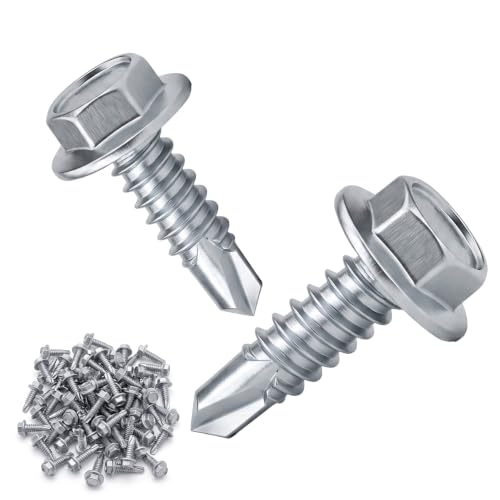
What head and tip style should you choose?
Head style and tip style control how the screw starts, how it sits, and how visible it remains. Countersunk heads sit flush below or at the surface, which suits finished woodwork. Pan heads protrude above the surface, which is useful when clamp load matters more than concealment.
Countersunk vs pan head
Countersunk heads are the better pick when you want a clean face and a fastener that disappears into the work. Pan heads are common for sheet-style fixes and hardware, where the fastener must clamp a bracket or plate and the head can remain visible. Wickes lists both countersunk and pan heads among self-tapping screws.
Sharp, blunt, and piercing tips
Self-tapping screws can be sold with blunt, flat, sharp, or piercing tips. Sharp and piercing tips start more easily in wood, but they also raise split risk if the pilot hole is too small or the screw is too close to the edge. Blunt and flat tips are less aggressive and may need more care at the start.
Self-drilling vs self-tapping
Do not confuse self-tapping screws with self-drilling screws. Fastenright distinguishes them by whether drilling and fastening are combined. A self-drilling screw has a drill-point tip and is intended to make its own hole, especially in metal-to-metal or metal-to-wood work. That is a different tool from a standard self-tapper.
The same source lists self-tapping screws in 3.5 mm, 4 mm, 5 mm, and 7 mm diameters, with lengths including 10 mm, 20 mm, 25 mm, 30 mm, 38 mm, and 40 mm. Wickes also lists C1022 for most of its self-tapping screws.
What size self-tapping screw is closest to a regular wood screw?
The closest match is usually not a single exact size. A self-tapping screw that is similar in diameter to a wood screw can work for light wood jobs, but thread form still matters. In timber, a screw with a wood-specific thread profile is usually the better match even when the nominal diameter looks similar.
If you are comparing them by size alone, start by matching diameter to the existing hole or the hardware slot, then check thread pitch and head style. A self-tapping screw with a similar diameter may still bite differently from a wood screw because its threads are shaped for a different material response.
Frequently asked questions
What is the difference between self-tapping and wood screws?
Self-tapping screws create their own thread as they are driven, while wood screws are made for timber and usually have a wider pitch and deeper threads. That makes wood screws more suitable for solid wood, plywood, and MDF, especially when the joint must stay tight over time.
When should I use wood screws instead of self-tapping screws?
Use wood screws for most wood-only joints, particularly when the connection is load-bearing or finish-critical. They usually provide better holding in timber and are less likely to damage the surface. They are also the safer pick for cabinet work, furniture, and hardwood.
Can self-tapping screws work in hardwood without splitting?
They can, but only with careful pre-drilling and conservative sizing. Hardwood has a higher split risk than softwood, especially near edges. If appearance and strength both matter, a proper wood screw with a matched pilot hole is usually the better choice.
Are self-tapping screws better for metal-to-wood joints?
Yes, that is one of their best uses. When a joint includes metal, a self-tapping screw can form its own thread in the metal side and simplify the installation. For the wood side, a pilot hole may still be needed depending on wood type, thickness, and edge distance.
Sponsored / affiliate links. As an Amazon Associate I earn from qualifying purchases. I may earn additional commission from eligible campaigns.