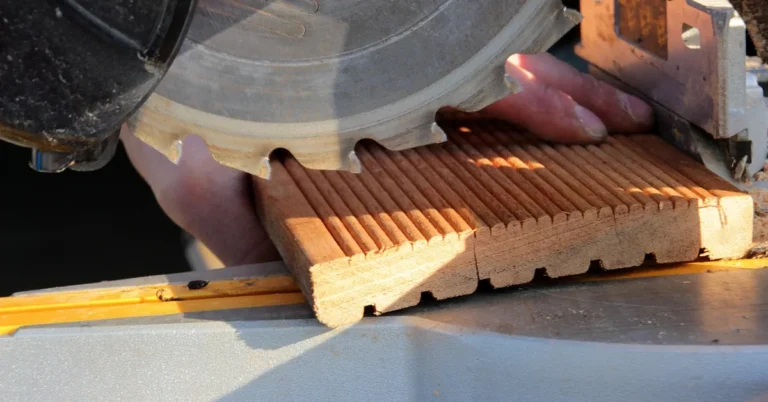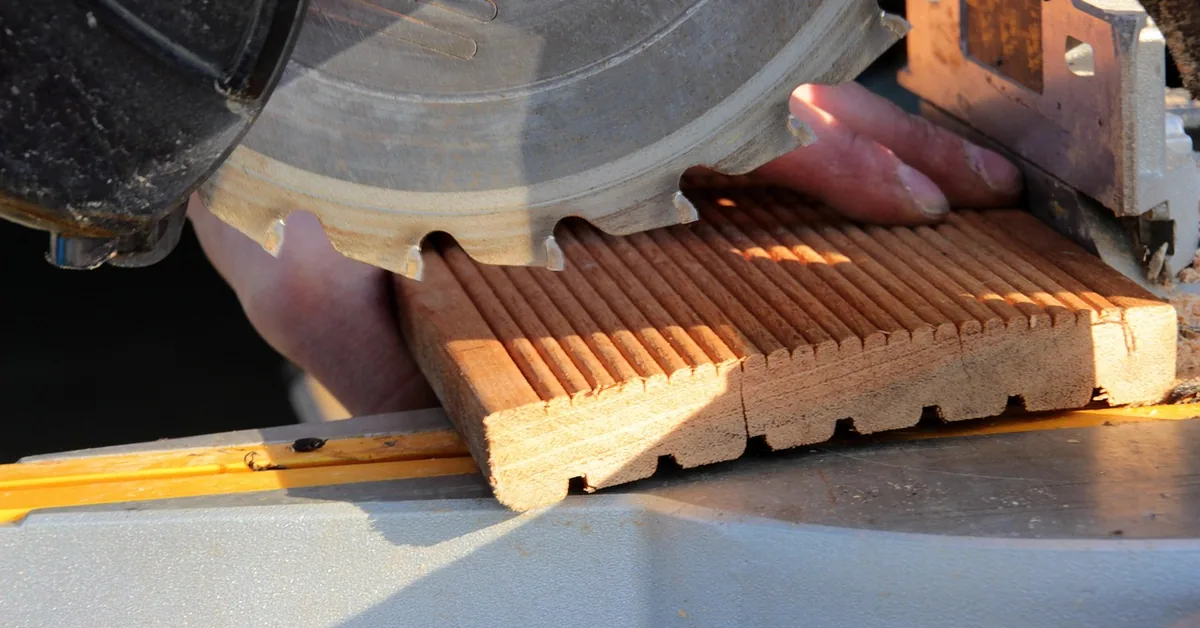
12-Inch Double-Bevel Sliding Miter Saw: Do You Need One?
A 12-inch double-bevel sliding compound miter saw is worth it when you need wide crosscuts, left-and-right bevel cuts, and repeatable angled cuts from one setup — but only if your shop has the extra bench depth the sliding rails need behind the saw. It makes the most sense for trim, crown molding, deck boards, and shelving.
Quick Answer
A sliding compound miter saw is best when you need accurate crosscuts, angled miters, bevel cuts, and wider board capacity in one tool. A dual-bevel model tilts both left and right, which saves setup time on trim, crown molding, picture frames, and repeat workshop cuts.
Sliding Vs Compound Vs Dual-Bevel Miter Saws
| Saw type | Best for | Watch out for |
|---|---|---|
| Sliding miter saw | Wide boards, shelving, flooring, and deck boards | Needs more bench depth behind the saw |
| Compound miter saw | Angled and beveled trim cuts | Limited width if it does not slide |
| Dual-bevel miter saw | Crown molding, repeated bevel cuts, and left/right trim work | Costs more and needs careful calibration |
How to Choose a 12-Inch Double Bevel Sliding Miter Saw
A 12-inch double bevel sliding compound miter saw is worth buying when you regularly cut wide trim, deck boards, framing lumber, crown molding, or repeated angled pieces. The important part is not only the blade size. You also need enough sliding capacity, accurate detents, a stable fence, clear cut-line guidance, and dust control that works with your shop setup. See our DeWalt miter saw guide for a direct comparison of the DWS780 and DWS779 if you have already settled on that brand.
| Feature | Why it matters | Best choice for most woodworkers |
|---|---|---|
| Sliding capacity | Lets the saw crosscut wider boards without flipping the workpiece. | Choose a saw that comfortably handles the widest boards you cut often. |
| Double bevel | Tilts left and right, so crown molding and trim cuts are faster and cleaner. | Look for clear bevel markings and positive stops at common angles. |
| Cut-line guide | Laser or shadow-line guidance helps reduce setup mistakes. | Shadow-line systems are often easier to trust because they show the blade kerf. |
| Dust collection | Miter saws throw dust behind the fence and around the blade. | Use a dust port, shop vac adapter, and rear clearance if the saw has rails. |
| Stand support | Long trim and deck boards sag without side support. | Use a rolling stand or extension wings for repeatable cuts. |
How We Evaluated This Miter Saw Buying Guide
We focused on the details that matter before buying or upgrading a 12-inch double bevel sliding compound miter saw: crosscut capacity, bevel range, miter detents, cut-line guidance, dust collection, stand support, blade compatibility, and whether the saw fits real trim, deck, and workshop projects. This is a buying guide based on specifications, common woodworking use cases, and safety factors, not a claim that every listed product was hands-on tested in our shop.
Real 12-Inch Double-Bevel Saws: How the Specs Actually Compare
Marketing copy for this saw class tends to repeat the same vague claims. Here is what four current 12-inch double-bevel sliding models actually list on their own spec sheets, so you can compare real numbers instead of ad copy.
| Model | Crosscut capacity (90°) | Miter range | Motor |
|---|---|---|---|
| DeWalt DWS780 | 16 in. with XPS crosscut positioning system | 60° left / 60° right, 10 positive stops | 15A |
| Makita LS1219L | 15 in. | 0°–60° left and right, positive stops at 0°, 15°, 22.5°, 31.6°, 45°, 60° | 15A |
| Ridgid R4222 | 12 in. | 70° miter capacity, 13 positive miter stops, 9 bevel stops | 15A |
| WEN MM1215 | 13.25 in. wide, 4.5 in. thick | Dual bevel, LED cutline | 15A |
One useful fact most buying guides skip: the popular DWS779 (a single-laser, non-XPS version of this saw) was discontinued as DeWalt moved its 12-inch double-bevel lineup to the XPS crosscut positioning system used on the current DWS780 — so if you see a DWS779 listed cheap, it is old stock, not a current model.
12-Inch vs 10-Inch Miter Saw: Which One Makes More Sense?
| Feature | 10-inch miter saw | 12-inch sliding dual bevel saw |
|---|---|---|
| Best for | DIY trim, smaller boards, lighter projects | Wide boards, crown molding, deck boards, stair treads |
| Cut capacity | Lower vertical and crosscut capacity | Higher capacity, especially with sliding rails |
| Weight | Lighter and easier to move | Heavier and better on a stand |
| Blade cost | Usually cheaper | Usually more expensive |
| Best buyer | Homeowner or casual DIY user | Serious DIYer, trim carpenter, or frequent woodworker |
Who Should Buy This Type of Saw?
A 12-inch double bevel sliding miter saw makes sense if you cut wide boards, crown molding, baseboards, stair parts, deck boards, or repeated angled pieces. The 12-inch blade gives more vertical capacity, the sliding rails increase crosscut width, and the double bevel head lets you cut left and right bevels without flipping long or delicate workpieces.
Who should skip it?
Skip a 12-inch sliding dual bevel saw if you only make small straight cuts, have limited storage, or need a lightweight saw for quick jobs. A 10-inch sliding miter saw may be cheaper, easier to carry, and enough for many homeowner projects. For a full breakdown of what a general-purpose 12-inch model buys you beyond this saw’s double-bevel focus, see our 12-inch miter saw roundup.
Safety and setup notes
Use the saw on a stable stand or bench, clamp small pieces, keep hands outside the blade path, let the blade reach full speed before entering the cut, and connect a shop vac when possible. A 12-inch sliding miter saw can throw a lot of dust, so vacuum compatibility and rear clearance matter more than the small dust bag included with many saws.
Affiliate picks
Best Miter Saw Cut-Line Accessory Picks
A laser or shadow-line guide is the cheapest upgrade for cut accuracy on a 12-inch double-bevel saw. Use these picks as a starting point before choosing one for your saw’s arbor type.
Disclosure: As an Amazon Associate, we may earn from qualifying purchases. Product details can change, so always check the latest price, availability, and specifications on Amazon before buying.
Best miter saw setup pick
Oshlun LG-M02 Green Laser Guide for Miter and Portable Saws
A green laser line up to 10x brighter than standard red laser guides — easier to see in a bright shop or outdoors.
Best for: Cut-line setup on a 5/8-in. arbor saw
Why we picked it: Installs in place of the outer blade flange with no extra adjustment, and the centrifugal switch turns the laser on only while the blade spins.
Main drawback: Will not fit some 12-in. saws with interlocking arbor flanges — check compatibility first.
Compare more miter saw accessory options
|
Option 1 Oshlun LG-M02 Green Laser Guide
|
 Option 2 Rechargeable Miter Saw Laser Guide
|
 Option 3 Oshlun LG-R01 Radial Arm Saw Laser Guide
|
As an Amazon Associate we earn from qualifying purchases.
What To Check Before Buying
- Blade size: 10-inch saws are easier to handle; 12-inch saws cut thicker and wider material.
- Bevel range: dual bevel helps when cutting crown molding and mirrored trim pieces.
- Blade match: use a fine-tooth non-ferrous blade for aluminum and a wood blade for lumber.
- Support: a stable miter saw stand improves repeat cuts and reduces board tipping.
A 12-inch double-bevel sliding compound miter saw earns its price when the double-bevel head and sliding rails actually get used — on crown molding, wide deck boards, and repeated angled cuts. If most of your work is small trim on narrow stock, a lighter single-bevel saw does the same job for less money and less bench space.
Double Bevel vs. Single Bevel, Sliding vs. Non-Sliding: What Actually Changes
A double bevel saw tilts the blade left and right, so you cut mirrored bevels — like opposite corners of crown molding — without flipping the workpiece. A single bevel saw only tilts one direction, so you flip the board (or the saw’s miter angle) to get the opposite cut. Double bevel saws cost more and weigh more; single bevel saws are lighter, cheaper, and still accurate for one-direction work.
Sliding rails let the saw head move forward and back, which is what lets a 12-inch blade crosscut a board wider than the blade’s own diameter — the DWS780 above reaches 16 inches at 90° because of its rails, not its blade size alone. A non-sliding compound saw is lighter and more compact but limited to roughly the blade’s diameter for crosscut width.
- Pick double bevel + sliding if you regularly cut crown molding, wide deck boards, or stair parts.
- Pick single bevel, non-sliding if your work is mostly narrow trim and you want a lighter, cheaper saw.
How to Set Up and Use a 12-Inch Double-Bevel Miter Saw
- Mount the saw: Bolt or clamp it to a stable bench or stand — a saw that rocks under load will not cut square.
- Check the blade and guard: Confirm the blade is tight and the retractable guard moves freely before the first cut.
- Set bevel and miter angles: Use the saw’s positive stops for common angles (0°, 22.5°, 45°) rather than eyeballing the scale.
- Clamp the workpiece: Secure it to the fence so it cannot shift as the blade enters the cut.
- Let the blade reach full speed: Start the saw and wait for it to spin up before lowering it into the material.
- Pull the slide through fully: On a sliding cut, pull the head all the way toward you, lower it, then push through — do not plunge straight down on a wide board.
- Check the cut line: A laser or shadow-line guide (see the picks above) removes most of the guesswork on angled cuts.
Using a miter saw can be dangerous if proper safety precautions are not taken. Always wear eye and ear protection, keep fingers away from the blade, and use a push stick or clamp to hold small pieces. Never force a cut that is too small or too large for the saw to handle safely.
For common accuracy problems after setup, see our guide on why a miter saw does not cut straight.
Maintenance And Care

Routine checks extend the saw’s life and keep cuts accurate. Inspect the power cord for fraying, confirm the blade guard moves smoothly and covers the blade fully at rest, check the blade for dullness or chipped carbide teeth, and examine the fence and miter gauge for misalignment.
- Clean dust and debris from the saw after each use with a brush or compressed air.
- Lubricate the slide rails and pivot points so the head moves smoothly.
- Verify bevel and miter angles against a reliable angle tool, and adjust if they drift.
- Store the saw in a dry area — rust on the rails is a common cause of a sticky slide.
Frequently Asked Questions
Is A Double Bevel Miter Saw Worth It?
Yes, for repeated crown molding, trim, or deck-board cuts where you need mirrored bevel angles. It lets you cut both directions without flipping the workpiece, which saves setup time on repetitive jobs. If most of your cuts are one-direction trim, a cheaper single-bevel saw does the same job.
What Size Wood Can A 12-inch Sliding Miter Saw Cut?
It depends on the model. Current 12-inch double-bevel sliding saws crosscut roughly 12 to 16 inches wide at 90° (the DeWalt DWS780 reaches 16 inches thanks to its rail design), and most cut up to about 4 to 4.5 inches thick.
Why Was The DWS779 Discontinued?
DeWalt phased out the DWS779 as it moved its 12-inch double-bevel sliding lineup to the XPS crosscut positioning system, now standard on the current DWS780. If you find a DWS779 for sale, it is leftover old stock rather than a current production model.
What’s The Difference Between A Sliding Miter Saw And A Sliding Compound Miter Saw?
A sliding miter saw only slides horizontally for extra crosscut width. A sliding compound miter saw adds bevel tilt on top of the slide, so it can angle-cut and bevel-cut in the same setup — which is what most 12-inch double-bevel models on the market actually are.
Can A 12-Inch Sliding Miter Saw Cut Crown Molding?
Yes. A double-bevel model is the easiest for crown molding because it tilts both directions, so you can cut mirrored corner angles without flipping the molding. Check the saw’s tall-fence rating — DeWalt’s DWS780, for example, supports crown molding up to 7-1/2 inches against the fence.
Do I Need The Sliding Feature If I Already Have A 12-Inch Blade?
Only if you cut boards wider than the blade’s own crosscut capacity without sliding, which on most fixed 12-inch saws is around 6 to 8 inches. Sliding rails are what let a 12-inch blade reach 12–16 inches of crosscut width.
Conclusion
Choose a 12-inch double-bevel sliding compound miter saw if your projects involve wide boards, crown molding, or repeated bevel cuts on both sides of a workpiece. A smaller 10-inch saw can still be better for a tight shop, lighter trim work, or users who move tools often.
Before buying, compare cutting capacity, bevel range, blade quality, dust collection, and stand support using real spec sheets rather than ad copy. A sharp blade and a stable setup matter as much as the saw body when you want clean, square cuts.
Sponsored / affiliate links. As an Amazon Associate I earn from qualifying purchases. I may earn additional commission from eligible campaigns.
 LMAOSS Miter Saw, 12-inch Double Bevel Sliding Compound Miter Saw with Laser Guide, 3800 RPM, 80T Blade, ±45° Miter & Dual Bevel, Max 4.2" x 13" Cut, Power Saw for Metal, Plastic, Wood, Laminates
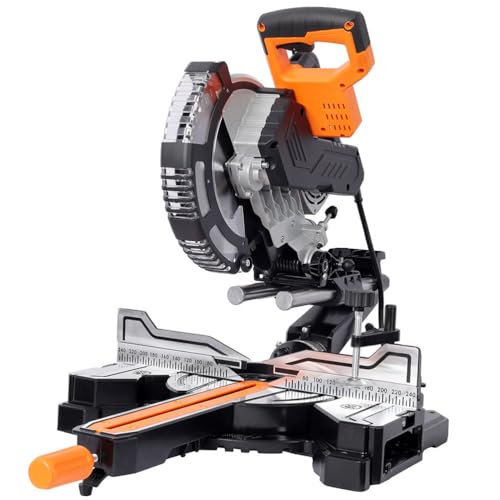 YATON 10-Inch Dual Bevel Sliding Miter Saw, 2-Speed Compound Miter Saw with LED Shadow Line, 45° Bevel & Miter Cuts, Steel Frame Precision Power Saw for Wood, PVC & Soft Metal