Engineered Hardwood Flooring Vs Laminate Flooring: Ultimate Guide
Are you in the market for new flooring and feeling overwhelmed by the choices? Engineered hardwood flooring and laminate flooring are two popular options that often leave homeowners scratching their heads.
Both promise to transform your space, but how do you decide which is right for you? Imagine stepping into your living room and feeling that perfect blend of elegance and durability underfoot. That’s the promise of both engineered hardwood and laminate.
However, each type has its own unique benefits and drawbacks that can significantly impact your decision. We’ll dive into the nitty-gritty details that matter most to you, helping you make a choice that not only suits your style but also your lifestyle. Let’s uncover the differences and discover which flooring solution perfectly fits your home.
Credit: forte.co.nz
Features Of Engineered Hardwood
Engineered hardwood has a real wood top layer. Below, it has layers of plywood. These layers make it strong. The top layer is what you see. It looks like real wood. The plywood layers are glued together. This makes the floor stable. It won’t warp easily. It is great for humid areas.
This flooring is very durable. It can last for many years. It handles wear and tear well. Scratches are less likely. It is easy to clean and maintain. With care, it can last decades.
Engineered hardwood looks very natural. It has a warm feel. Many colors and finishes are available. It matches well with most home styles. It adds a classic touch to rooms.
Features Of Laminate Flooring
Laminate flooring offers durability and affordability. It resists scratches and moisture, making it ideal for busy homes. Easy installation adds convenience, while a variety of styles mimic the look of real wood.
Construction And Materials
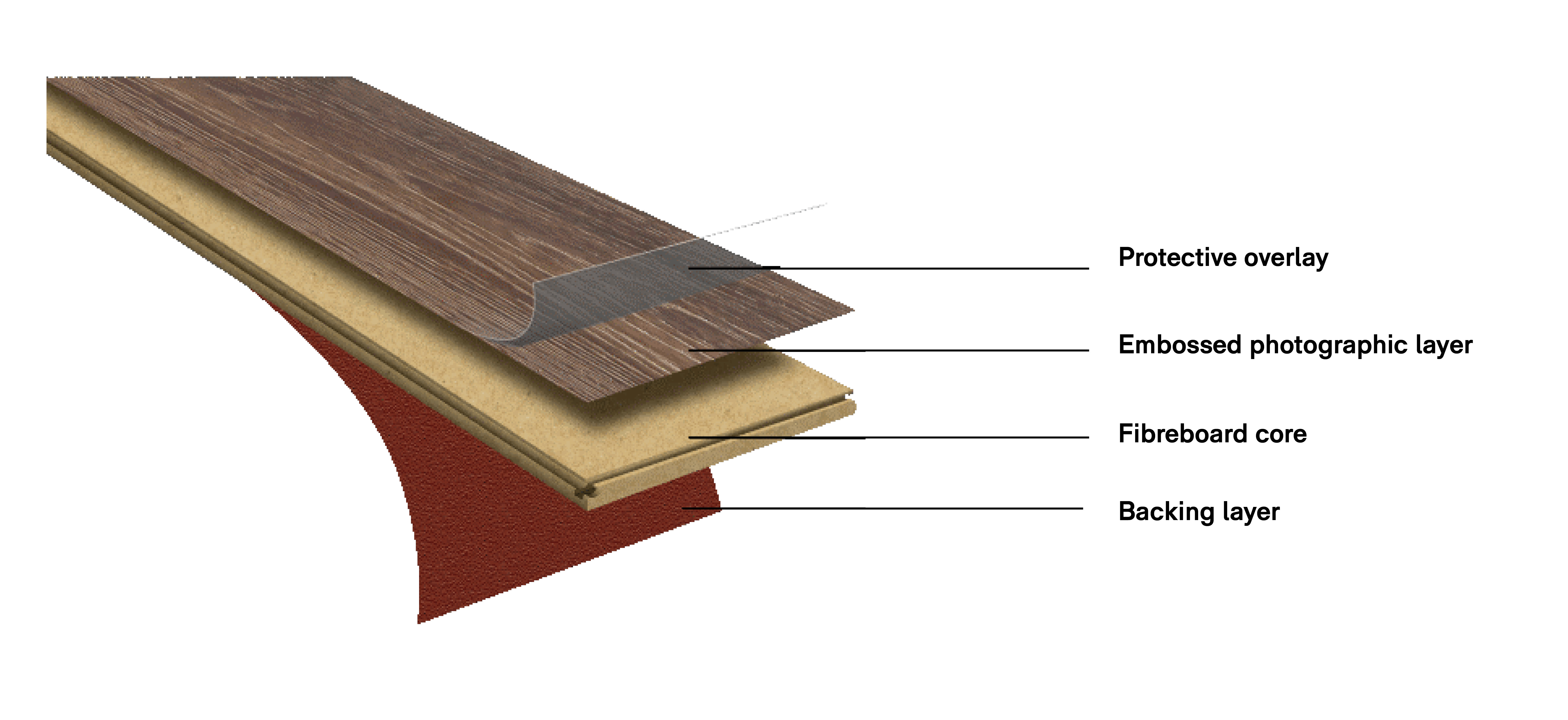
Laminate flooring is made with a core layer of fiberboard. This layer gives strength. A top layer has a printed design. It looks like wood or stone. A protective coating guards against scratches. Easy to install. Often uses a click-lock system. This system helps the pieces fit together. Less expensive than real wood.
Durability And Lifespan
Laminate flooring is very durable. It resists dents and scratches. A strong wear layer protects it. It lasts 10 to 15 years. Good for busy homes. It handles foot traffic well. Not good for wet places. Water can damage it. Keep it dry to last longer.
Visual Variety
Laminate flooring offers many design choices. It mimics wood, stone, and tile. Patterns and colors vary widely. Can match any room style. Textures add realism. Smooth or embossed surfaces available. Affordable way to achieve different looks. Easy to switch styles when needed.
Cost Comparison
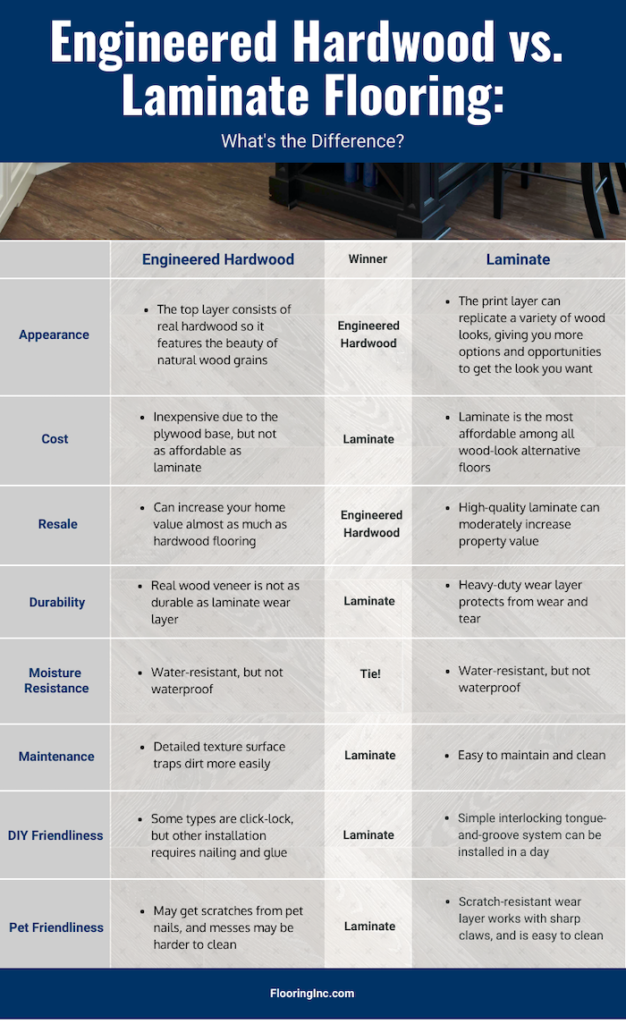
Engineered hardwood flooring often costs more than laminate. Hardwood uses real wood layers. Laminate uses wood fibers and resin. Laminate is usually cheaper. You might spend less on laminate materials.
Installing engineered hardwood can be tricky. It may need professional help. Laminate is easier to install. You can do it yourself. This saves on installation costs.
Engineered hardwood lasts longer. It can add more value to your home. Laminate might wear out faster. Think about what will last the longest. Hardwood might be better for future value.
Installation Process
Engineered hardwood is often easier to install than solid wood. The planks can be glued or clicked together. This makes it a good choice for DIY projects. It can be installed over many types of subfloors. This includes concrete. Floating installation is a popular method. It does not need nails or glue. This method is quick and clean.
Laminate flooring is known for its easy installation. It uses a click-lock system. This allows the planks to snap together. No glue or nails are needed. It can be placed over existing floors. This makes it a great choice for beginners. Laminate is lightweight and easy to handle.
Both flooring types can be installed by professionals or DIY enthusiasts. Professional installation ensures a perfect finish. DIY installation saves money and can be fun. Engineered hardwood may require more skill than laminate. Reading instructions carefully is key for both. Practice and patience are important.
Maintenance And Care
Engineered hardwood needs gentle care. Use a soft broom to sweep. Avoid water spills. Use a damp cloth for stains. Wipe dry immediately. Weekly, use a cleaner made for wood. Do not use harsh chemicals. These can damage the wood. Use mats at doorways. This keeps dirt away. Protects the floor’s shine.
Laminate is easier to clean. Use a vacuum for dust. Use a mop for stains. Use a cleaner made for laminate. Do not use soap-based products. They leave residue. Always use dry mops. Wet mops can harm the surface. Place rugs in busy areas. This reduces wear.
Repairing engineered hardwood is simple. Use a wood filler for small scratches. For deeper damage, replace boards. Laminate repairs are different. Use a repair kit. Kits fix small chips. For big damage, replace panels. Both floors need regular checks. This prevents larger problems. Keeps floors looking new.
Environmental Impact
Engineered hardwood uses real wood layers. This makes it more sustainablethan other options. It requires less wood than solid hardwood. This helps in preserving forests. It can last for many years. This means less need for replacement. Thus, it saves resources over time.
Laminate flooring uses synthetic materials. It’s less sustainablethan engineered hardwood. It often needs replacement sooner. This leads to more waste over time. Laminate production uses chemicals. This can harm the environment. But it’s less expensive to produce. So, it is often chosen for budget reasons.
Engineered hardwood can sometimes be recycled. This helps reduce waste. It produces less waste when disposed of. Laminate flooring is harder to recycle. It often ends up in landfills. This increases environmental waste. Choosing the right flooring can impact the planet. Choose wisely for less waste.
Best Uses For Each Flooring Type
Engineered hardwood flooringis popular in homes. It gives a warm feel. It is best for living rooms and bedrooms. It adds value to a home. Laminate flooringis great for busy areas. It handles wear and tear well. It is ideal for families with kids and pets. It offers many designs. It can look like real wood or stone.
Laminate flooringsuits businesses. It is durable and easy to clean. It is perfect for offices and shops. It withstands heavy foot traffic. Engineered hardwood flooringalso fits well in commercial spaces. It gives a classy look. It is ideal for high-end shops and restaurants. It lasts long with proper care.
Engineered hardwoodworks well in dry rooms. It is not good for bathrooms. It is best in bedrooms and dining rooms. Laminate flooringsuits any room. It is great for kitchens and bathrooms. It handles moisture better. It is versatile and adaptable.

Credit: duramagicfloor.com
Pros And Cons Overview
Engineered hardwoodlooks like real wood. It feels natural underfoot. This flooring is more stable than solid wood. It can handle moisture and temperature changesbetter. Yet, it can be more costly. Scratches may show up over time. This type needs special careto keep it looking nice.
Laminate flooringis budget-friendly. It is easy to install. This flooring resists scratches well. It can look like wood or stone. But, it might not feel like real wood. It can be slippery when wet. Water can damage it if not cleaned quickly. Laminate flooring is less durable than hardwood.
Making The Right Choice
Choosing between engineered hardwoodand laminate flooringcan be tricky. Both have their own charms. Engineered hardwood offers a natural look. It’s made of real wood. Laminate, on the other hand, is more durable. It can resist scratches better. Think about the room’s use. High-traffic areas might need laminate. But, for a cozy feel, hardwood wins.
Your lifestyle plays a big role here. Do you have pets or kids? Laminate might be a better choice. It’s easy to clean and maintain. If you love the feel of real wood, then go for engineered hardwood. It gives warmth and elegance. Choose what fits your daily life best.
Budget is another key factor. Engineered hardwood can be pricey. It adds value to your home though. Laminate is more affordable. It’s great for tight budgets. Both options have quality choices. Decide based on your budget and needs.
Credit: www.flooringinc.com
Frequently Asked Questions
Is Engineered Hardwood Flooring Better Than Laminate?
Engineered hardwood offers a real wood look and durability. Laminate is cost-effective and resists scratches. Choose based on budget and preference.
What Are The Negatives Of Engineered Wood Flooring?
Engineered wood flooring can be prone to moisture damage. It may scratch easily and has limited refinishing options. The initial cost can be higher than laminate. Some types may off-gas volatile organic compounds (VOCs). It can be sensitive to temperature and humidity changes.
What Is The Cost Difference Between Laminate And Engineered Wood Flooring?
Laminate flooring is generally cheaper, costing $1 to $5 per square foot. Engineered wood flooring costs more, ranging from $3 to $12 per square foot. Installation fees may vary based on complexity and location.
Do Engineered Wood Floors Scratch Easily?
Engineered wood floors can scratch, especially in high-traffic areas. Proper maintenance and using rugs help protect them. Consider protective pads under furniture and avoid dragging heavy items. Regular cleaning and care can minimize scratches, keeping the floor looking new longer.
Conclusion
Choosing between engineered hardwood and laminate flooring depends on your needs. Engineered hardwood offers natural beauty and lasts longer. Laminate is budget-friendly and resists scratches well. Both have unique benefits. Consider your lifestyle and budget. A busy home might prefer laminate for durability.
Engineered hardwood adds value and elegance to any space. Think about installation ease too. Laminate is often simpler to install yourself. Decide what fits best with your home decor and maintenance preferences. Both options can enhance your home’s look. Make an informed choice for a floor you’ll love.