Distressed Solid Hardwood Flooring: Pros, Cons & Cost
Distressed solid hardwood flooring is 100% real wood plank intentionally scraped, wire-brushed, or hand-worn to look aged, costing $8 to $15 per square foot for materials. Reclaimed wood runs higher, and wire-brushed finishes cost more to clean since dirt collects in the grain. Skipping acclimation or over-brushing softer species causes gaps or premature wear. This guide covers real cost-by-species pricing, honest pros and cons, DIY distressing techniques, and whether it holds resale value.
Quick Answer
Distressed solid hardwood is 100% solid wood hand-scraped, wire-brushed, or machine-textured to look weathered. It runs $8-$15 per square foot for materials, hides scratches and dents well, and suits rustic or farmhouse interiors. The trade-off: wire-brushed grooves trap dirt and take longer to clean than hand-scraped or smooth finishes, and true hand-distressing adds real labor cost.
What Is Distressed Solid Hardwood Flooring?
Best Distressed Floor Cleaner Pick
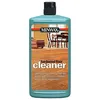
Minwax Hardwood Floor Cleaner, 32 fl. oz.
A pH-neutral, no-rinse formula made specifically for finished hardwood — safe for regular use on distressed and textured floors.
- Best for: Weekly cleaning of sealed hand-scraped or wire-brushed floors
- Why we picked it: No-rinse formula means no standing water risk on open-grain distressed textures
- Main drawback: Not formulated for unsealed or oil-finished wood
Compare more distressed floor care options
 Option 1 Bona Hardwood Floor Polish, Low Gloss
|
 Option 2 WOCA Natural Soap Wood Floor Cleaner
|
 Option 3 Rejuvenate All Floors Restorer
|
As an Amazon Associate we earn from qualifying purchases.
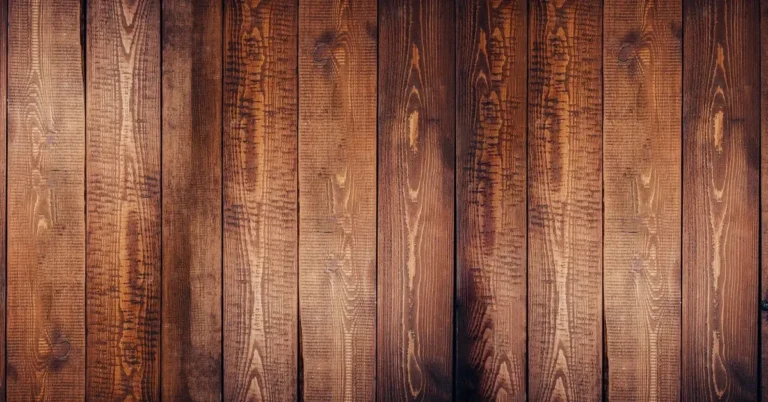
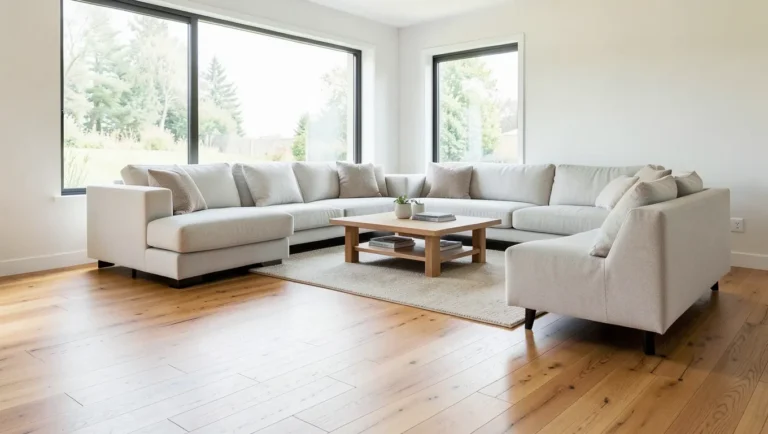
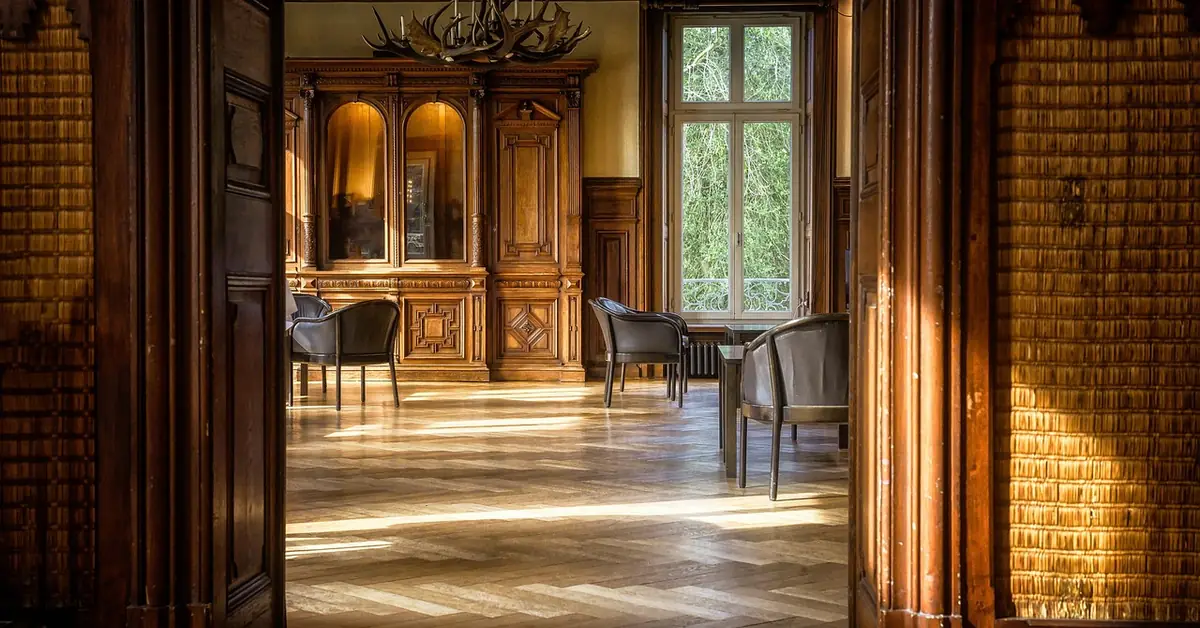
Distressed solid hardwood flooring is wood flooring milled from a single, solid piece of hardwood — no plywood core, no veneer layer — that is intentionally scraped, dented, or brushed during manufacturing to look worn and weathered. The wood is 100% hardwood from top to bottom, which is what lets it be sanded and refinished multiple times over its life, unlike engineered wood’s thin surface layer.
The distressed look comes from replicating the marks a real antique floor picks up after decades of foot traffic: scratches, small dents, open grain, and uneven tone. Because those marks are already part of the design, new scratches and dents from daily use tend to blend in rather than stand out — which is the main practical reason homeowners choose it over a smooth, glossy finish.
Solid vs. Engineered Distressed Hardwood
Both solid and engineered hardwood can be distressed — the construction underneath is what differs. Solid hardwood is one piece of wood through its full thickness; engineered hardwood is a thin hardwood veneer bonded over plywood layers. That difference drives where each one can go and how long it lasts.
| Factor | Solid Distressed Hardwood | Engineered Distressed Hardwood |
|---|---|---|
| Construction | 100% hardwood, full thickness | Hardwood veneer over plywood core |
| Refinishing | Can be sanded and refinished 4-6+ times | Limited to 1-3 light sandings, or none on thin veneers |
| Where it can go | Above grade only; avoid basements and concrete slabs | Works over concrete, in basements, with radiant heat |
| Moisture stability | More prone to expansion and contraction | More dimensionally stable in humidity swings |
| Typical cost | $8-$15/sq ft materials | $6-$12/sq ft materials (distressed finish) |
If long-term refinishing flexibility matters most, solid wins. If you’re installing over a concrete slab, in a basement, or need better moisture stability, engineered with a distressed veneer gets you the same look with fewer installation restrictions.
Why Choose Distressed Hardwood Flooring?
Distressed hardwood earns its popularity from being genuinely forgiving in real households. Here’s what actually makes it worth the higher price tag over a smooth finish:
- Hides everyday wear: New scratches, dents, and dog-nail marks blend into the existing texture instead of standing out against a glossy surface.
- Timeless in resale listings: The weathered look reads as farmhouse, rustic, industrial, or modern-organic depending on the stain — it isn’t locked into one design trend.
- Refinishable (solid only): Solid distressed hardwood can be sanded and refinished several times over decades, so the investment isn’t a one-time asset.
- Lower visible-maintenance anxiety: Because the finish already looks lived-in, spills and scuffs are less stressful to deal with day to day.
- Available in reclaimed and FSC-certified options: Many suppliers offer reclaimed or sustainably-sourced distressed wood for buyers who want a lower environmental footprint.
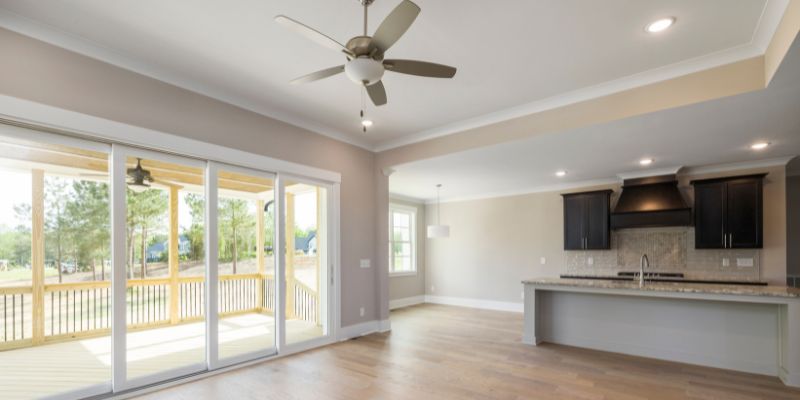
Types of Distressed Solid Hardwood Flooring
Not all distressed floors are made the same way, and the technique used affects both look and price. Here’s a quick rundown of the main types:
| Type | Description | Best For |
|---|---|---|
| Hand-Scraped | Artisans scrape each plank by hand with a draw knife for a unique, uneven texture — no two boards match. | Rustic or traditional homes |
| Wire-Brushed | A wire brush strips soft grain fibers, leaving the harder grain raised in a subtler, more uniform texture. | Modern or industrial spaces |
| Reclaimed Wood | Wood genuinely salvaged from old barns or factories — the wear is authentic, not manufactured. | Eco-conscious or vintage lovers |
| Machine-Distressed | Rollers or drums create consistent, repeatable dents and scratches across every plank. | Budget-friendly rustic designs |
| Smoked or Fumed | Wood is chemically treated (traditionally with ammonia fumes) to darken and enhance the grain before finishing. | Bold, custom aesthetics |
It’s worth separating two terms buyers often mix up: distressed means artificially aged during manufacturing, while reclaimed means the wood is genuinely old, salvaged from a real structure. Reclaimed floors cost more precisely because that wear is authentic and the supply is limited — you’re paying for history, not just a texture. For a deeper look at one specific technique, see our guide to what hand-scraped hardwood flooring actually is and how it’s made.
Which Distressing Technique Should You Choose? (Cost, DIY Difficulty & Durability)
Cost and technique don’t line up the way most buyers assume — wire-brushing looks subtler than hand-scraping but often costs more per square foot because of the labor-intensive brushing pass. Here’s how the five main techniques actually compare on the factors that matter for a buying decision:
| Technique | DIY Feasible? | Cost Premium vs. Smooth | Scratch-Hiding | Cleaning Difficulty |
|---|---|---|---|---|
| Hand-Scraped | Partially — draw-knife scraping is learnable but slow | +$2 to $6/sq ft | Excellent | Moderate |
| Wire-Brushed | Yes, with a hand wire brush and patience | +$1 to $4/sq ft | Good | Higher — dirt collects in open grain |
| Machine-Distressed | No — requires factory rollers/drums | +$0.50 to $2/sq ft | Good | Low |
| Reclaimed | No — sourcing and milling is specialized | +$4 to $10+/sq ft | Excellent | Moderate |
| Smoked/Fumed | No — requires controlled chemical exposure | +$3 to $7/sq ft | Good | Low |
For most budgets, wire-brushing done yourself on unfinished planks (before installation) is the best cost-to-effort ratio. If durability and resale-ready authenticity matter more than budget, hand-scraped or genuine reclaimed wood justifies the premium.
How Is Distressed Solid Hardwood Flooring Made?
Manufacturers start with kiln-dried hardwood — usually oak, hickory, or maple — and apply one or more of these techniques before finishing:
- Hand-scraping: Skilled workers use a draw knife or scraper to remove wood in irregular patterns, creating undulations that catch light unevenly.
- Wire-brushing: A rotating wire brush strips the softer spring-growth fibers, exposing the harder grain lines in relief.
- Sanding and staining: Some floors are lightly sanded unevenly, then stained to emphasize grain variation and simulate wear patterns.
- Aging treatments: Wood may be smoked, charred with a torch, or chemically fumed to darken tone and mimic decades of UV exposure.
Whichever method is used, the board is always lightly sanded afterward along the grain direction to remove burrs and splinters — sanding across or against the grain leaves marks that read as damage rather than natural wear.
Can You Distress Hardwood Floors Yourself?
Yes — distressing unfinished planks before installation is a realistic DIY project, though it’s slow and best practiced on scrap boards first. Here’s the general process:
- Start with unfinished, unstained planks: Distressing works best before any finish is applied, since sealed wood resists tools and stains unevenly afterward.
- Choose your tools: A wire brush and drill attachment for subtle texture; a hammer with a bag of bolts, nuts, or screws for random dents; a length of chain swung against the board for deeper, irregular marks.
- Work randomly, not in a pattern: Real wear never repeats — vary the pressure, angle, and spacing so the result doesn’t look stamped.
- Sand along the grain: Lightly sand every distressed area in the direction of the wood grain to remove sharp burrs and splinters.
- Stain and seal: Apply stain after distressing so it settles into the new grooves and dents, deepening the aged effect before sealing.
Distressing an already-installed, finished floor is much harder to do evenly and typically isn’t worth the risk — for existing floors, hiring a flooring contractor to sand, distress, and refinish in place gives a more consistent result.
What Does Distressed Hardwood Flooring Cost?
Total installed cost typically runs $11 to $22 per square foot (materials plus labor), with reclaimed wood and hand-scraped finishes pushing toward the top of that range. Here’s the full breakdown:
| Expense | Average Cost (per sq. ft.) | Notes |
|---|---|---|
| Materials | $8-$15 | Varies by wood species and distressing technique |
| Installation labor | $3-$8 | Depends on local labor rates and subfloor condition |
| Underlayment | $0.50-$2 | For soundproofing or added moisture protection |
| Finishing/sealing | $1-$3 | Skipped if buying pre-finished planks |
| Ongoing maintenance | $50-$100/year | Cleaners, felt pads, and occasional touch-ups |
Wood species drives a big chunk of that material cost swing. Here’s roughly what to expect per species before distressing labor is added:
| Species | Material Cost (per sq. ft.) | Why |
|---|---|---|
| Oak | $3-$8 | Widely available, moderate hardness, most common distressed choice |
| Maple | $4-$8 | Very hard and scratch-resistant, holds distressing texture well |
| Hickory | $4-$9 | Hardest common flooring species, best for high-traffic rooms |
| Walnut | $6-$12 | Softer and darker, premium look but shows dents more on smooth cuts |
| Pine (reclaimed) | $5-$15 | Softwood; reclaimed old-growth pine costs more for tight grain and history |
For a full breakdown of how grade, plank width, and finish affect pricing beyond species alone, see our guide on how much hardwood flooring costs per square foot.
Does Distressed Hardwood Flooring Increase Resale Value?
Hardwood flooring in general has one of the strongest returns of any home upgrade — refinishing existing hardwood floors returns an estimated 147% of its cost at resale, and installing new hardwood returns roughly 118%. Distressed styles specifically tend to perform well in rustic, farmhouse, or modern-organic markets, but the effect is style-dependent rather than universal.
📊 New hardwood flooring returns roughly 118% of its cost at resale; refinishing existing hardwood returns about 147%. — Source: National Association of Realtors Remodeling Impact Report data, as compiled by real estate resale-value research (2026)
The caveat: a heavily distressed, very dark, or unusually textured floor is a stronger style statement than a neutral smooth finish, which means it can also polarize buyers in a market that skews more traditional. A moderate distressing level — visible texture without extreme gouging — tends to appeal to the widest range of buyers and is the safer resale bet.
Things to Consider Before Buying
- Installation: Hire a professional for solid hardwood. Uneven subfloors cause long-term issues, and solid wood needs room to expand and contract with humidity.
- Maintenance: Low-maintenance doesn’t mean no-maintenance — avoid harsh chemicals and standing water even on a distressed finish.
- Climate: Hardwood is humidity-sensitive. In consistently humid regions, a whole-home dehumidifier helps prevent seasonal gaps or cupping.
- Authenticity: Cheaper “distressed-look” products sometimes use thin veneers or printed textures rather than real hand or machine distressing — check the construction, not just the photos.
How to Choose the Right Distressed Hardwood for Your Home
A few factors make the biggest difference in long-term satisfaction. For more species and style comparisons, browse our full hardwood flooring guide hub.
- Match your style: Cozy and rustic points toward hand-scraped or reclaimed wood; modern and industrial points toward wire-brushed with a light or gray stain.
- Consider the room: High-traffic areas like kitchens do best with harder species like oak or hickory; bedrooms can work with softer species like walnut.
- Weigh color carefully: Darker stains hide dirt better but can make small rooms feel tighter; lighter stains brighten a space but show more contrast against dust.
- Always test samples in your actual room: Lighting drastically changes how a distressed finish reads — a sample that looks great under showroom lighting can look very different under your windows.
Installation Tips for Distressed Solid Hardwood Flooring
- Prep the subfloor: Confirm it’s clean, level, and fully dry before planks arrive — bumps or residual moisture cause long-term problems.
- Acclimate the wood: Let planks sit in the installation room for several days so they adjust to local temperature and humidity before fastening.
- Pick the right method: Nail-down is standard for solid hardwood over a wood subfloor; glue-down is used over concrete slabs.
- Leave expansion gaps: Small gaps around the room’s perimeter let the wood expand and contract seasonally without buckling.
Skipping acclimation is the single most common installation mistake — planks that haven’t adjusted to the room’s humidity before fastening can shift or gap within the first few months.
Caring for Your Distressed Hardwood Floors
- Sweep regularly: Grit and dust are what actually scratch a floor over time — a soft broom or microfiber mop before mopping prevents most of it.
- Use a pH-neutral, wood-specific cleaner: General all-purpose cleaners can dull the finish or strip protective coatings over repeated use.
- Avoid standing water: Damp-mop only — pooled water can seep into open grain (especially on wire-brushed floors) and cause warping.
- Protect from furniture: Felt pads under chair and table legs prevent point-load scratches that even a distressed texture won’t fully hide.
- Refinish on a schedule: Solid hardwood typically needs sanding and refinishing every 10-15 years, depending on foot traffic.
Pairing Distressed Hardwood with Your Decor
Distressed hardwood works across more design styles than its rustic reputation suggests. A few reliable pairings:
- Rustic charm: Exposed beams, leather furniture, and warm tones like burgundy or mustard.
- Modern edge: Sleek furniture, neutral tones, and metal accents for an industrial feel.
- Cozy cottage: Soft textiles, pastel colors, and vintage decor for a farmhouse look.
- Bold contrast: Dark distressed floors against white walls and colorful art.
Room-specific choices matter too — a lighter wire-brushed finish tends to work better in smaller spaces, while bathroom-adjacent hardwood needs extra moisture precautions regardless of the distressing style. Bring home samples and view them under your own lighting before committing — showroom lighting rarely matches how a distressed finish reads in your actual room.
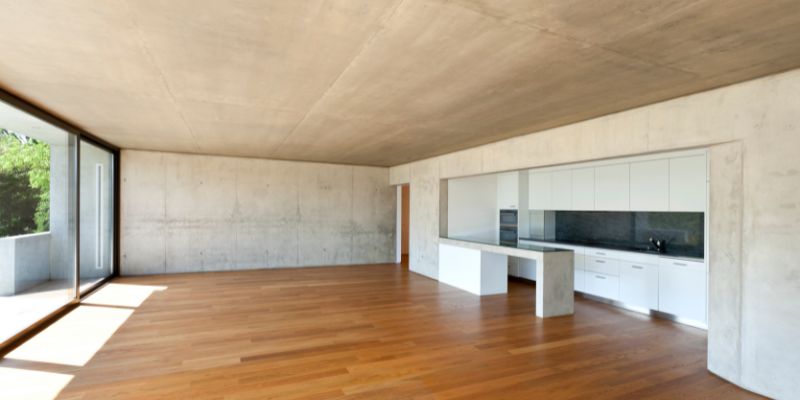
Environmental Impact and Sustainability
Distressed hardwood can be a genuinely sustainable choice. Reclaimed wood repurposes material from old buildings instead of harvesting new trees, and solid hardwood’s ability to be refinished multiple times means one floor can outlast several cycles of cheaper flooring replacement. Look for FSC (Forest Stewardship Council) certification on new wood to confirm it comes from a responsibly managed forest.
Common Mistakes to Avoid
- Buying on looks alone: Low-cost “distressed-look” floors sometimes use thin veneers or printed textures instead of real distressing — verify construction, not just photos.
- Skipping in-room samples: Lighting changes how distressed texture and stain color read — always test in your actual space.
- Ignoring maintenance: A distressed finish still needs regular sweeping and the right cleaner — neglect leads to real damage, not just character.
- Wrong wood for the room: Softer species like pine dent more easily and aren’t ideal for high-traffic areas.
- DIY installation without experience: Solid hardwood installation is unforgiving of subfloor and acclimation mistakes — hire a professional if this is your first install.
Where to Buy Distressed Solid Hardwood Flooring
- Local flooring stores: Best for seeing and touching real samples, with staff who can answer species and finish questions in person.
- Big-box retailers: Home Depot and Lowe’s carry budget-friendly, machine-distressed options with quick availability.
- Online specialty retailers: Sites like BuildDirect offer a wider range of species and distressing styles than most local stores stock.
- Reclaimed wood suppliers: Salvage yards and specialty companies source genuine reclaimed lumber for authentic, one-of-a-kind floors.
Conclusion
Distressed solid hardwood flooring earns its higher price with real durability, forgiving day-to-day wear, and — for solid wood — the ability to be refinished for decades. The trade-offs are real too: wire-brushed grain traps more dirt, reclaimed wood costs more for authentic history rather than manufactured texture, and humid climates require extra care regardless of technique. Match the technique and species to your room’s traffic and your climate, and it’s one of the few flooring upgrades that reliably pays back more than it costs at resale.
Frequently Asked Questions
What makes distressed hardwood flooring different from regular hardwood?
Distressed hardwood is intentionally textured or aged during manufacturing to look worn, with scratches, dents, or open grain built into the finish. Regular hardwood is sanded smooth and polished. The distressed texture hides everyday wear better, which is why it’s popular in busy households with kids or pets.
Is distressed hardwood flooring more expensive than smooth hardwood?
Yes, typically. The extra labor involved in hand-scraping or wire-brushing adds roughly $0.50 to $6 per square foot over a standard smooth finish, depending on the technique — machine-distressing adds the least, hand-scraping and reclaimed wood add the most.
Can you distress hardwood floors yourself?
Yes, on unfinished planks before installation. Common DIY methods include wire-brushing, hammering with a bag of bolts for random dents, or dragging a chain across the surface — always sanded along the grain afterward and practiced on scrap wood first. Distressing an already-finished, installed floor is much harder to do evenly.
Does distressed hardwood flooring hide scratches and dents?
Yes — that’s its main practical advantage. Because the surface already has intentional texture and tone variation, new scratches, dents, and pet-nail marks blend in visually instead of standing out the way they would on a smooth, glossy floor.
Can I refinish distressed hardwood floors?
Yes, if it’s solid hardwood. Solid distressed floors can be sanded and refinished multiple times over their life, typically every 10-15 years depending on traffic. Engineered distressed floors have a thinner veneer and can usually only handle one to three light sandings, if any.
Is distressed hardwood flooring good for resale value?
Generally yes — hardwood flooring overall returns an estimated 118% of its cost at resale for new installation and about 147% for refinishing existing floors. Distressed styles perform best in rustic, farmhouse, or modern-organic markets; a moderate distressing level appeals to the widest range of buyers.
Can I install distressed hardwood flooring in a bathroom or humid climate?
It’s not recommended for full bathrooms — hardwood is moisture-sensitive and bathrooms trap humidity. Tile or waterproof vinyl is the safer choice there. In generally humid climates, a whole-home dehumidifier and proper acclimation before installation help prevent seasonal gaps or cupping elsewhere in the house.
Sponsored / affiliate links. As an Amazon Associate I earn from qualifying purchases. I may earn additional commission from eligible campaigns.