Festool Domino DF 500 vs DF 700: Which One Do You Actually Need?
If you build furniture-scale projects (cabinets, chairs, shelving, small tables), the Festool Domino DF 500 handles almost everything you will ever join. If you build entry doors, workbenches, large casework, or anything using stock thicker than about an inch and a half, the DF 700 XL is the one that actually reaches deep enough and holds a big enough tenon to matter. That is the real dividing line, and it has almost nothing to do with which machine is “better”: they are sized for different jobs.
Domino DF 500 vs DF 700: The Short Answer
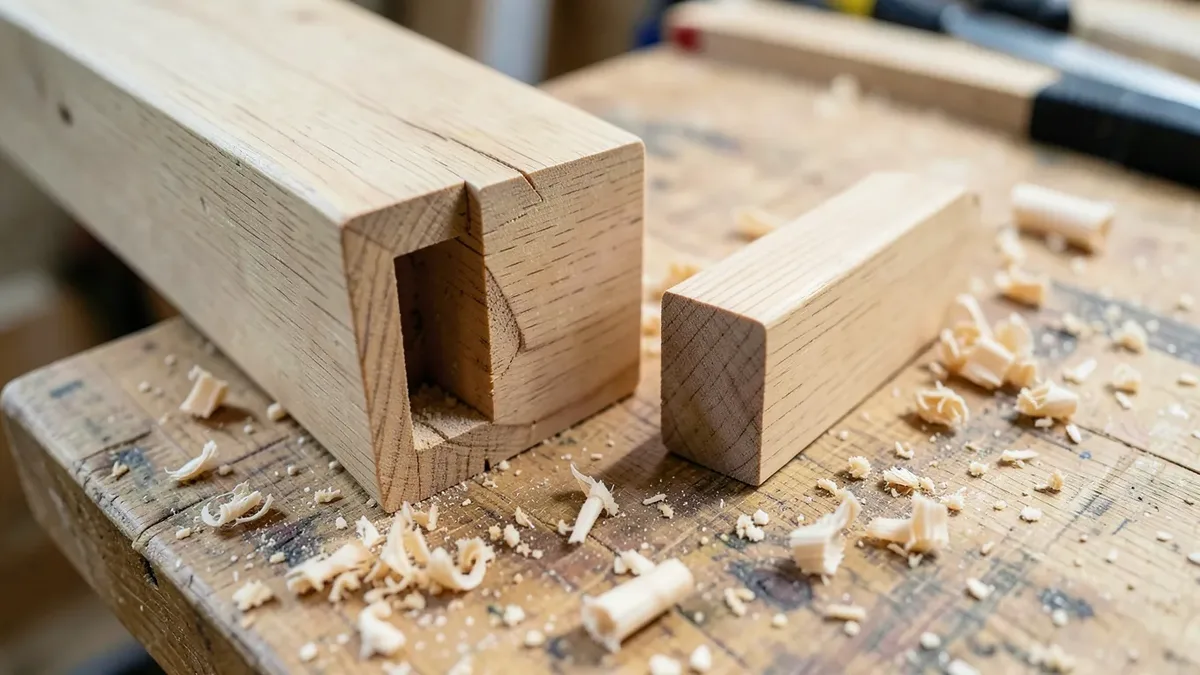
Both machines cut the same style of joint: a rotating, oscillating cutter that plunges a clean mortise for a loose tenon. But they are built around two different tenon ranges, and that single fact drives almost every other difference between them.
Best For Most Furniture-Scale Projects
 |
Festool Domino Joiner DF 500 Q: $1,359 Cuts the 4-10mm tenon range this article covers for cabinets, chairs, tables, and shelving, the size most home shops and small furniture builds actually need.
|
Tenon and Cutter Size: The Core Difference
Every other spec on these two tools follows from the cutter sizes each one accepts. The DF 500 takes 4mm, 5mm, 6mm, 8mm, and 10mm cutters, and cuts tenon stock from 4x20mm up to 10x50mm. The DF 700 XL only takes the larger 8mm, 10mm, 12mm, and 14mm cutters, with tenons running up to roughly 140mm (about 5-1/2 inches) long. Notice the overlap at 8mm and 10mm: both machines can cut those two sizes, they just do it at very different scales of tool.
| Spec | Domino DF 500 | Domino DF 700 XL |
|---|---|---|
| Cutter sizes | 4, 5, 6, 8, 10mm | 8, 10, 12, 14mm |
| Tenon size range | 4x20mm to 10x50mm | 8x30mm up to 14x140mm |
| Max plunge / mortise depth | 28mm | 70mm (15-70mm in 5mm steps) |
| Motor power | 420 watts | 720 watts |
| Bare tool weight | about 7 lbs | about 11.4 lbs |
| Typical set price (Amazon, checked live) | $1,359 | $1,849 |
One correction worth flagging: a lot of older comparison pages (including the previous version of this one) cap the DF 700’s mortise depth at somewhere around 40-45mm. That is wrong. Festool’s own spec sheet and the current Amazon listing both put the real maximum at 70mm, in 5mm increments starting at 15mm. That extra depth is exactly what lets the 700 reach all the way through a thick door stile or a workbench leg where the 500 physically cannot plunge deep enough.
How the Cutting Action Actually Works
Both machines use the same patented mechanism: the cutter spins like a router bit and simultaneously oscillates back and forth along the width of the mortise, so it acts like a tiny chain mortiser rather than a straight plunge bit. That is what lets a single cutter produce a clean, flat-bottomed slot instead of a round hole, and it is also why the mortise width can be adjusted with a simple dial: the machine controls how far the cutter oscillates, not just how far it plunges. This is the core patent that has kept the Domino essentially without direct competition since it launched, and it is identical in principle between the 500 and the 700; the 700 just scales the same mechanism up to swing a bigger cutter through a deeper cut.
What differs between the two sets is what ships in the Systainer case alongside the tool. The DF 500 Q set comes with the base machine, a 5mm cutter already installed, the trim stop and cross stop fences, a spindle wrench, and the stackable Systainer case. Additional cutter sizes and tenon stock are sold separately. The DF 700 XL set follows the same pattern but with its own trim and cross stop hardware sized for the larger fence, plus the power cord and connector hose fitting shown on its own listing. Neither set includes a full run of cutters out of the box, so budget for at least one or two additional cutter sizes ($55 each on Amazon at the time of writing) on top of the base machine price if your projects need more than the one size that ships installed.
Weight and Handling: Why Size Matters for Small Parts
The DF 500 is small enough to steady and plunge with one hand, which matters more than it sounds like it should when you are joining narrow face-frame stock or repeating the same cut forty times on a run of drawer boxes. At roughly 7 lbs bare, it does not fight you on smaller parts. The DF 700 XL weighs closer to 11.4 lbs bare (Amazon lists the boxed set, with the Systainer case and full accessory kit, at 23 lbs total), and that extra mass is genuinely useful for holding a big tool steady in thick, heavy stock. But it becomes a liability on narrow stiles or anything you are trying to hold with one hand while the other operates the fence. Reviewers who own both tools consistently make the same point: the 700 is not simply a “better 500,” it is a different tool sized for different material.
Match the Tool to Your Project Scale
Skip the spec sheet for a second and think about what you actually build most often. That is a better predictor of which Domino you need than any single number in the table above.
- Cabinets, bookcases, face frames, drawer boxes: DF 500. The 8-10mm tenons it cuts are already stronger than the plywood or hardwood stock you are joining.
- Chairs and tables with 3/4″ to 1″ legs and aprons: DF 500, unless the joint is a structural leg-to-apron connection on a heavy dining table, where stepping up to a 10mm tenon (which both machines can cut) gives you a margin of safety.
- Entry doors, garage doors, large casework with 1-3/4″ or thicker stiles: DF 700 XL. The 500 cannot plunge deep enough to reach the center of stock that thick, and a 10mm tenon is undersized for a door’s racking loads anyway.
- Workbenches, timber-frame-style joinery, thick slab tables: DF 700 XL. This is the scale of project the 700 was actually designed around.
- A mix of both (some furniture, occasional doors): Buy the 500 first for the everyday work, then add a Seneca Woodworking bit adapter (a real, widely used third-party accessory) that lets a 700 owner run 500-size cutters, or vice versa depending on which base machine you start with. It will not turn one machine into the other, but it does let one shop share cutters and tenon stock across both jobs if you eventually own both.
Price and Availability: Is the DF 700 Worth the Extra Money
Checked live on Amazon at the time of writing, the DF 500 Q set runs $1,359 and the DF 700 XL set runs $1,849, roughly $500 more for the larger machine. Neither price is cheap, and that is worth being upfront about: this is a premium tool line, not a $150 biscuit joiner replacement. Both machines are genuinely stocked and sold through Festool’s authorized Amazon storefront (this is not a Ridgid or Stihl situation where the manufacturer restricts sales to dealer-only channels), though individual listings do rotate in and out of stock, so the specific ASIN in the box above is the one we verified live, not necessarily the only valid listing.
For most home shops and small professional shops, the extra $500 for the 700 is not worth it unless you already know you need the depth. If your projects are cabinets, furniture, and shelving, the 500 does that work for less money and less bulk. The 700 earns its price on doors, workbenches, and heavy casework, where the 500 simply cannot make the joint at all.
Frequently Asked Questions
What is the main difference between the Festool Domino DF 500 and DF 700?
The DF 500 cuts 4-10mm tenons up to a 28mm plunge depth and is built for furniture-scale work. The DF 700 XL cuts 8-14mm tenons up to a 70mm plunge depth and is built for doors, workbenches, and thick casework. They share the 8mm and 10mm cutter sizes but are otherwise sized for different jobs.
Can the DF 500 and DF 700 use the same tenons and cutters?
Only at the 8mm and 10mm sizes, which both machines can cut. The DF 500’s 4mm, 5mm, and 6mm cutters and the DF 700’s 12mm and 14mm cutters are not interchangeable between the two machines without a third-party bit adapter, such as the one made by Seneca Woodworking.
Is the Festool Domino DF 700 worth the higher price over the DF 500?
Only if your projects actually need it. The DF 700 is worth the roughly $500 premium for entry doors, large casework, and workbenches, where its 70mm plunge depth and larger tenons are required. For cabinets, chairs, tables, and shelving, the DF 500 does the job for less money and is easier to handle on smaller parts.
What is the maximum plunge depth on the Festool Domino DF 700?
The DF 700 XL plunges up to 70mm deep, adjustable in 5mm increments starting at 15mm. This is confirmed on Festool’s own documentation and the current Amazon listing. It is significantly deeper than older figures of 40-45mm sometimes cited on comparison pages, which are out of date.
Sponsored / affiliate links. As an Amazon Associate I earn from qualifying purchases. I may earn additional commission from eligible campaigns.