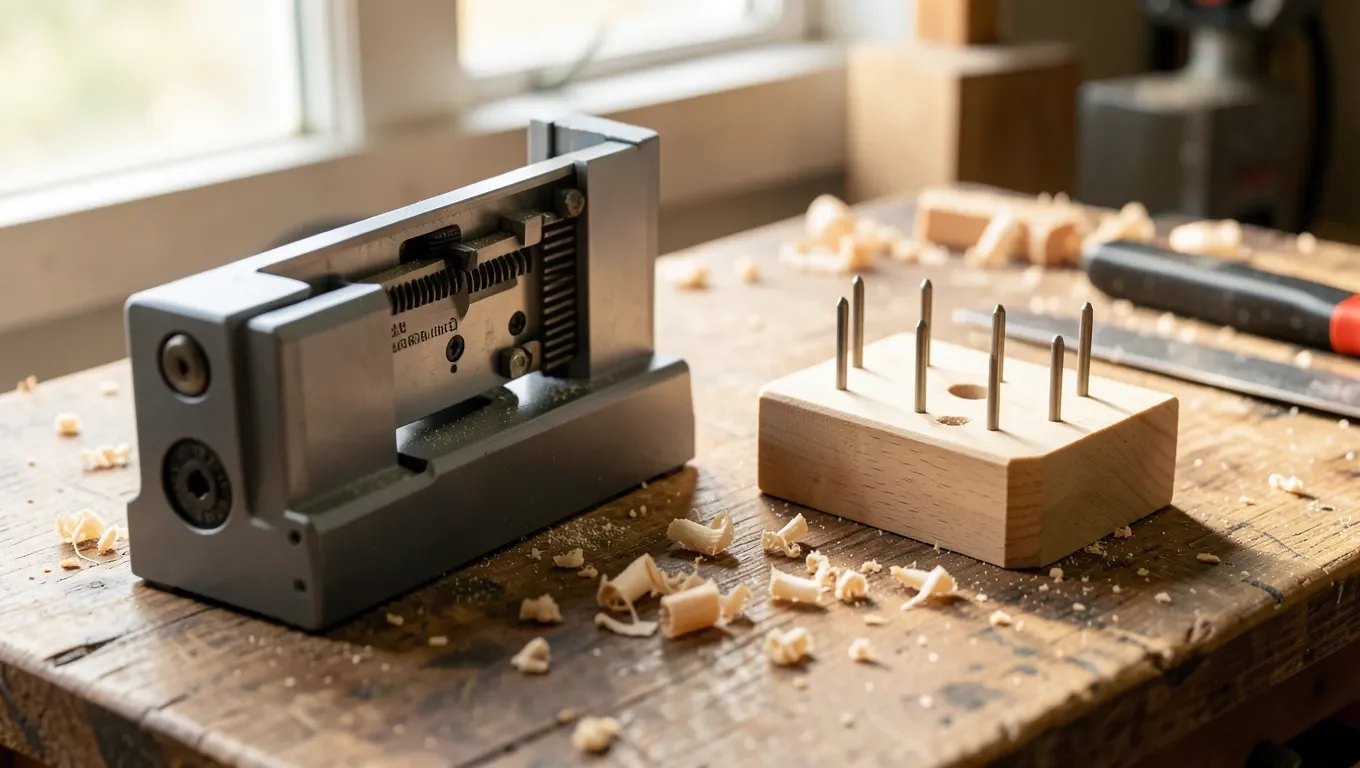
Biscuits vs Dowels: Which Joint Is Actually Stronger?
A biscuit joiner and a dowel jig solve the same basic problem – keeping two boards aligned and glued together – but they get there in very different ways, and picking the wrong one for a load-bearing project is a common reason drawers rack and shelves eventually sag.
This guide breaks down what each joint actually is, what independent strength tests show (the results contradict the “dowels always win” advice repeated on most forums), and which one belongs in your next build.
Short answer: if you’re aligning wide panels for a glue-up – tabletops, cabinet sides, wide edge joints – a biscuit joiner is faster and more forgiving of minor misalignment. If the joint has to carry real structural load – chair rails, table aprons, bed frames – a dowel joint drilled with a self-centering jig outperforms a biscuit in solid wood, though that gap narrows, and sometimes reverses, in manufactured sheet goods like MDF and particleboard.
Biscuits vs Dowels at a Glance
Biscuits are thin, oval discs of compressed beech that fit into a slot cut with a dedicated biscuit joiner; they swell once glue hits them and mostly serve to keep panels aligned during clamping while adding modest strength. Dowels are round wood pins glued into drilled holes; they take more setup to align correctly but create a deeper, stronger mechanical bond, particularly in solid hardwood. Neither is a universal upgrade over the other – the right choice depends on the substrate and how much load the joint carries.
Best Pick For Strong, Precise Dowel Joints
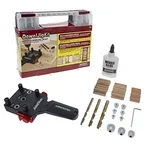 |
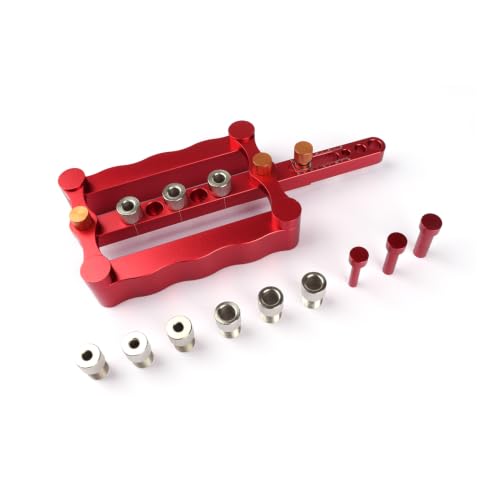
Milescraft 1333 DowelJig Kit – $24.99 If the strength-test numbers below convince you dowels are the right call for a structural joint, this self-centering jig removes the biggest reason people avoid doweling: misaligned holes.
|
What Is a Biscuit Joint
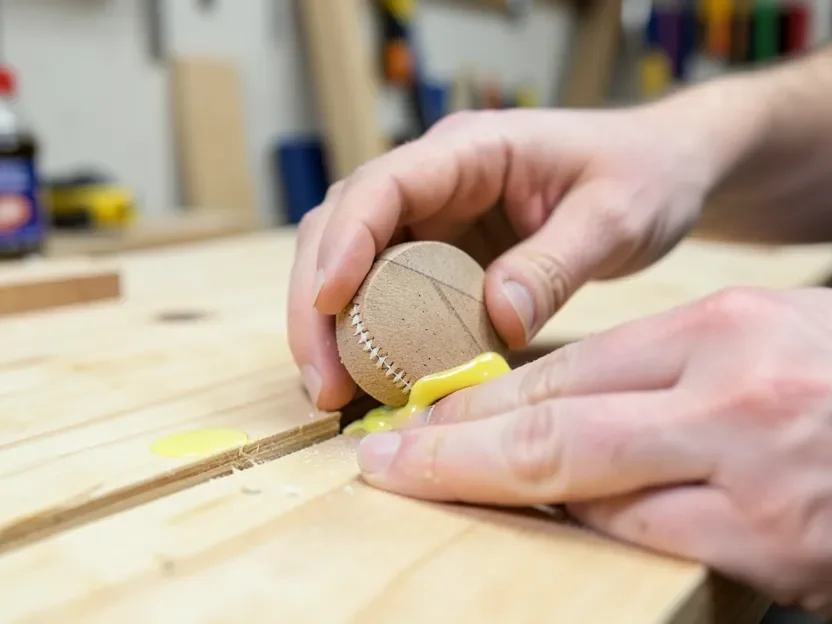
A biscuit joint uses a football-shaped disc of compressed wood, almost always beech, that’s inserted dry into matching slots cut in each board with a biscuit joiner (also called a plate joiner). Once glue goes into the slot, the biscuit absorbs moisture from the glue and swells slightly, locking itself against the slot walls within a few minutes. That swelling, not the biscuit’s shape, is what does most of the holding.
The real value of a biscuit isn’t raw strength – it’s alignment. Slots have a small amount of side-to-side play built in, so you can nudge a panel into place during glue-up without fighting a rigid joint. That makes biscuits the standard choice for edge-joining boards into a wider panel, aligning cabinet face frames, and joining miters where a few millimeters of adjustment saves a ruined cut. If you are picking a size for 3/4-inch stock, see what size biscuit to use for 3/4-inch wood.
What Is a Dowel Joint
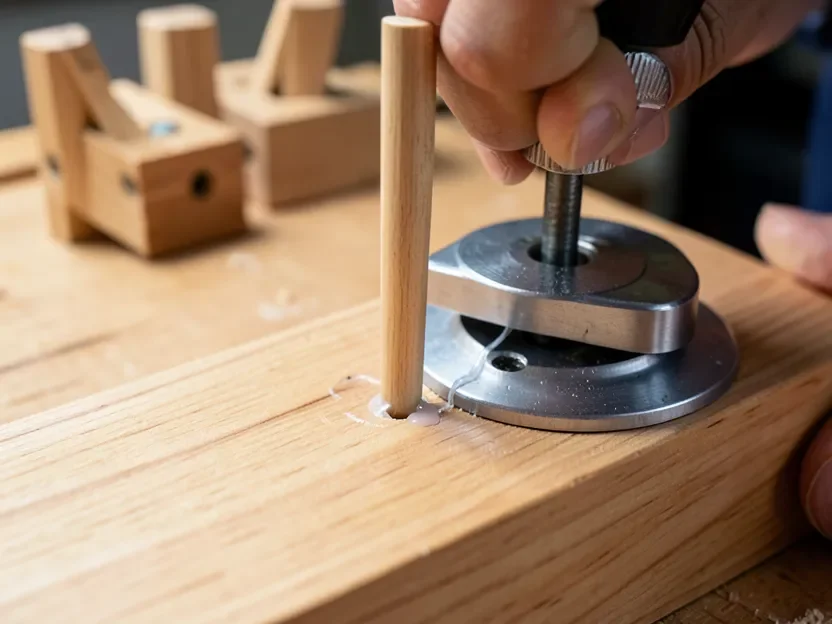
A dowel joint uses round wood pins, typically 1/4 to 3/8 inch in diameter, glued into holes drilled into both mating boards. Because the holes have to line up exactly on both pieces, most woodworkers use a jig – either a self-centering handheld jig or a fixed doweling machine – to guarantee the holes on each board hit the same spot. Get that alignment wrong and the joint won’t close flush, so the jig isn’t optional the way it can feel with a biscuit joiner.
What you get for that extra setup is a joint that penetrates deeper into both boards and puts more long-grain surface in contact with glue than a biscuit’s thin, shallow slot. In solid hardwood, that translates directly into a stronger, stiffer joint that resists both pull-apart and twisting forces better than a biscuit does.
Strength Comparison: What Load Tests Actually Show
This is the part most articles oversimplify into a flat “dowels are stronger” claim, and it’s only half true. In solid wood, independent joint-pull tests commonly show dowel joints failing in the 135 to 245 pound range, compared with 40 to 70 pounds for a single biscuit in the same species – roughly a 2 to 3x advantage for dowels, driven mainly by the dowel’s deeper penetration and larger glue-contact area.
That advantage shrinks, and in some tests reverses, once you move to manufactured sheet goods. MDF and particleboard lack the long wood fibers a dowel normally locks into, and drilling into either material can leave the hole walls slightly crumbly, which weakens a dowel’s grip. A biscuit’s flat, wide profile spreads its glue bond over more surface area relative to its size, and that swelling action still works fine in a compressed-fiber substrate. Several published shop comparisons have found biscuits matching or beating dowels specifically in MDF and particleboard, even with dowels still winning comfortably in solid hardwood.
The practical takeaway: match the joint to the material, not just the load. A dowel is the safer default for solid-wood furniture that bears real weight. A biscuit is a perfectly reasonable, sometimes superior, choice for cabinet-grade plywood and MDF cases where alignment matters as much as raw pull-apart strength. For a deeper look at where biscuit joints hold up and where they don’t, see our breakdown of whether biscuit joints are actually strong.
Ease of Use and Setup Time
Biscuits are the faster joint to cut. Set the joiner’s fence, plunge, and the slot is done in a couple of seconds – there’s no separate alignment step because the tool references off the board’s face and edge automatically. A beginner can cut consistent, usable biscuit slots within the first hour of owning a joiner.
Dowels take longer because both holes have to land in exactly the same spot on opposing boards. A self-centering jig removes most of the guesswork – clamp it to the edge, and the bushing centers itself on the board’s thickness automatically – but you still have to mark hole locations, switch bushings for different dowel diameters, and drill to a consistent depth. Expect doweling a project to take roughly twice as long as the equivalent biscuit joints, in exchange for the stronger result.
Cost Considerations
A basic biscuit joiner typically costs more upfront than a handheld dowel jig, but biscuits themselves are cheap and sold in bulk – a box of 100 mixed-size biscuits runs about $10. Dowel jigs are usually less expensive than a joiner, and dowel pins cost only a little more per joint than biscuits do, so the ongoing cost difference between the two methods is small. The bigger cost factor is labor time: if you’re paying yourself (or an employee) by the hour, the speed advantage of biscuits adds up fast on a big glue-up.
Choosing the Right Joint for Your Project
Use biscuits when you’re edge-joining boards into a wide panel, aligning a miter joint, joining cabinet-grade plywood or MDF panels, or building anything where speed and forgiving alignment matter more than maximum pull-apart strength. Use dowels when you’re building chair or table joints that bear real structural load, working in solid hardwood where the strength advantage is largest, or building anything – like a bed frame or a heavily used dining chair – that needs to survive years of racking stress. Getting your stock flat and true before cutting either joint matters more than which method you pick; a warped board will undermine a dowel joint just as easily as a biscuit slot.
Common Mistakes That Weaken Either Joint
The single biggest failure point for both joints is skimping on glue or letting it skin over before clamping – clamp time matters as much as glue choice. For biscuits, cutting the slot too close to a board’s edge can blow out the face when the biscuit swells, so keep at least 3/8 inch of material outside the slot. For dowels, the most common mistake is drilling too shallow, which cuts into the glue-surface advantage that makes dowels stronger in the first place; aim for at least 1 inch of penetration per side in 3/4-inch stock. Most biscuits are made from beech specifically because it swells predictably and holds a crisp edge when compressed – a cheaper substitute biscuit can swell unevenly and leave a visible bump under a finish.
Frequently Asked Questions
Are Biscuit Joints Better Than Dowels?
Neither is better across the board. Biscuits win on speed and forgiveness: a biscuit joiner cuts an oval slot with enough slop to shift a panel a millimeter or two during glue-up, which is exactly what you want when aligning a wide tabletop or cabinet side. Dowels win on raw pull-apart strength in solid wood, because a 1 to 1.5 inch dowel penetrates deeper into both boards and puts more long-grain glue surface to work than a thin, flat biscuit. Pick biscuits for alignment-first jobs and dowels for anything that has to carry a structural load.
How Much Weight Can a Dowel Joint Hold Compared to a Biscuit Joint?
Independent joint-pull tests on solid hardwood commonly show dowel joints failing between 135 and 245 pounds of force, versus 40 to 70 pounds for a single biscuit in the same wood. That’s roughly a 2 to 3x strength advantage for dowels in solid stock. The gap comes down to glue-surface area and depth: a 5/16-inch dowel set 1 inch deep has more long-grain contact than a #20 biscuit’s thin, shallow slot, and a round dowel resists twisting forces a flat biscuit can’t.
What Is the Difference Between a Wood Biscuit and a Festool Domino?
A biscuit is a thin, oval disc of compressed beech that swells inside a slot once glue is added; a Festool Domino is a small solid-wood tenon, oval in cross-section, seated into a mortise cut by Festool’s dedicated Domino joiner. The Domino behaves much closer to a mortise-and-tenon joint than a biscuit does: it’s thicker, penetrates deeper, and typically tests stronger than either biscuits or hand-drilled dowels. The tradeoff is cost, since a Domino joiner runs several times the price of a biscuit joiner or a basic dowel jig.
Do Biscuits or Dowels Work Better in MDF and Particleboard?
This is where the usual dowels-are-always-stronger advice breaks down. In MDF and particleboard, a smooth round dowel has less to grip, since these manufactured sheet goods lack the long wood fibers a dowel normally locks into, and the hole itself can crumble slightly during drilling. A biscuit’s flat, wide profile and swelling action spread the glue bond over more surface area in these low-density substrates, and several published shop tests have shown biscuits matching or outperforming dowels specifically in MDF and particleboard joints, even though dowels remain stronger in solid hardwood.
Conclusion
Biscuits and dowels aren’t competing for the same job so much as splitting it: biscuits handle alignment and light-to-moderate joints fast, while dowels handle structural load better in solid wood, with MDF and particleboard being the one place that ranking can flip. Match the joint to the material and the load it needs to carry, keep your glue and clamp time dialed in, and either method will outlast the furniture around it.
Sponsored / affiliate links. As an Amazon Associate I earn from qualifying purchases. I may earn additional commission from eligible campaigns.