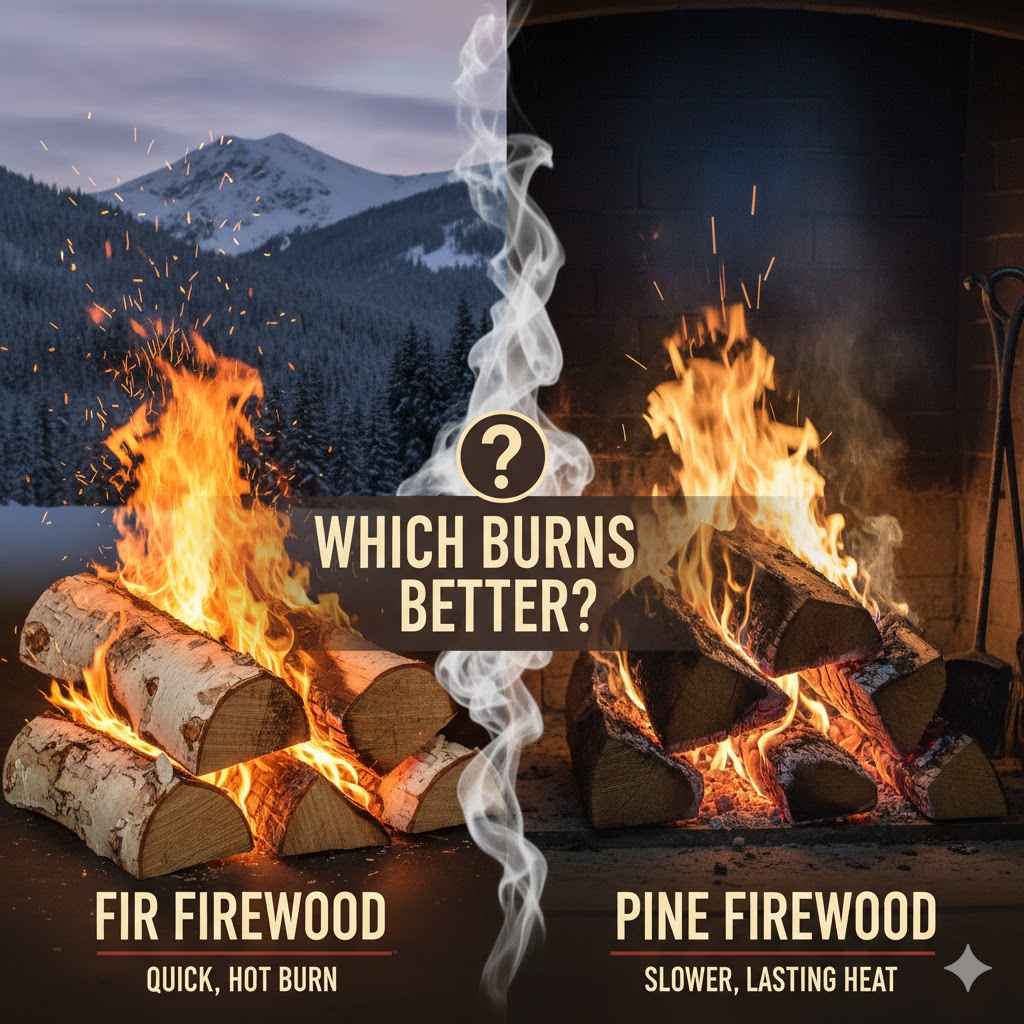
Fir vs Pine Firewood: Which Burns Better?
Choosing the right firewood can make a big difference in how warm your home gets. Many people wonder about Fir vs Pine Firewood: Which Burns Better? This is a common question, especially for those new to wood burning. It can seem tricky to know which is best.
Don’t worry, this guide will make it simple. We’ll break down what you need to know step by step. Let’s find out which wood is right for you.
Understanding Fir vs Pine Firewood Differences
This section will explore the main ways fir and pine firewood differ. We will look at how they are generally perceived and their common uses. Understanding these basic differences is key to making an informed choice for your fireplace or wood stove.
We aim to give you a clear picture of each wood type.
What is Fir Firewood?
Fir firewood comes from fir trees. These trees are evergreen and are often found in cooler climates. They have soft wood.
Fir wood is known for being a softwood. This means it has a lower density compared to hardwoods. Because it’s softer, it’s generally easier to split and process.
People often find it splits quite readily, which is a big plus when you’re preparing your woodpile.
The scent of burning fir can be quite pleasant. Many people describe it as fresh and slightly fragrant. This makes it a nice choice for a cozy evening fire.
However, because it’s soft, it burns relatively quickly. This means you’ll need to add more logs more often than you would with denser wood.
Fir is also known for producing sparks. This is due to its resin content. While this can create a lively fire, it also means you need to be more cautious.
Ensure your fireplace has a good screen to prevent stray embers from escaping. This is an important safety consideration for any wood burner.
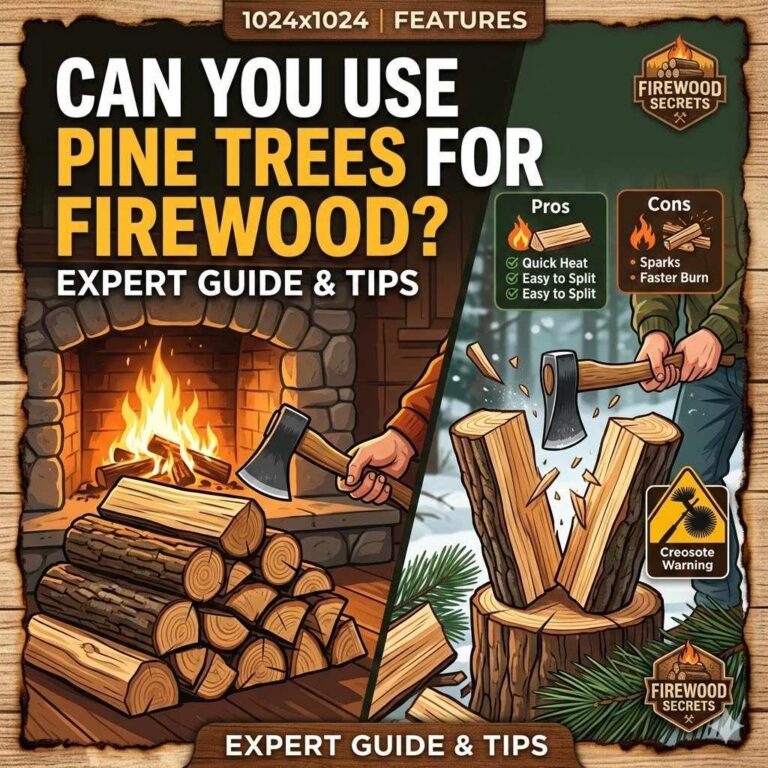
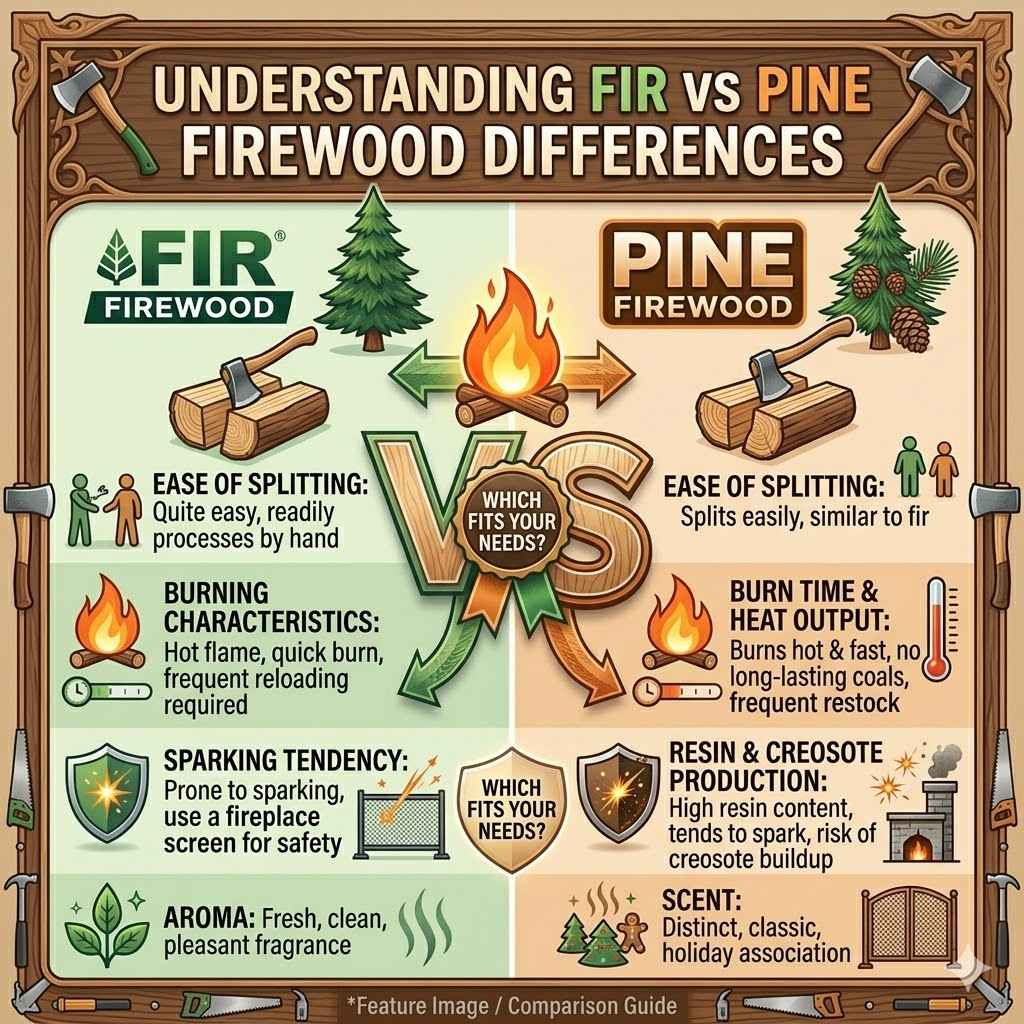
- Ease of Splitting: Fir wood is generally quite easy to split. Its soft nature means you can often do it by hand with less effort than harder woods. This is a great advantage if you are preparing your own firewood and don’t have heavy-duty splitting equipment.
- Burning Characteristics: Fir burns with a relatively hot flame but doesn’t last very long. It’s good for getting a fire going quickly or for a short burst of heat. It tends to burn faster because of its lower density and higher moisture content when green.
- Sparking Tendency: A common trait of fir is its tendency to spark. This is often linked to the higher resin content in the wood. Sparks can be beautiful but also a potential fire hazard. Always use a fireplace screen when burning fir.
- Aroma: Many people enjoy the scent of burning fir. It often has a fresh, clean, and slightly pine-like aroma that many find pleasant and festive. This can add to the ambiance of a room.
What is Pine Firewood?
Pine firewood comes from pine trees. Pine trees are also evergreen and grow in many parts of the world. Like fir, pine is also a softwood.
Pine is very similar to fir in many ways. It is also a softwood, which means it splits easily. You won’t have too much trouble processing pine logs.
It’s readily available in many areas, making it a common choice for firewood.
Pine burns quickly, similar to fir. It produces a good amount of heat when it’s burning, but it doesn’t provide long-lasting coals. You will find yourself needing to restock your woodbox more frequently with pine.
This can be a drawback if you’re looking for a fire that lasts all evening.
Pine also tends to spark a lot due to its high resin content. This means safety precautions are just as important when burning pine as they are with fir. Always keep a spark screen in place.
The aroma of burning pine is also quite distinct and is often associated with holidays.
- Availability and Cost: Pine is one of the most common types of wood found across many regions. This often makes it more readily available and sometimes less expensive than other firewood options. Its widespread growth makes it an accessible choice for many households.
- Burn Time and Heat Output: Pine burns hot and fast. It ignites easily and produces a good amount of heat in a short period. However, its low density means it doesn’t create long-lasting embers or burn for an extended duration, requiring frequent reloading.
- Resin and Creosote Production: Like fir, pine has a high resin content. This high resin content contributes to its tendency to spark and pop. It can also lead to faster creosote buildup in chimneys if not properly managed with regular cleaning.
- Scent: The smell of burning pine is very recognizable and often associated with winter and holiday seasons. It’s a classic scent that many people enjoy in their homes during colder months.
Fir vs Pine Firewood Which Burns Better Comparison
Now we can directly compare fir and pine firewood. Both are softwoods with similar burning characteristics. We’ll look at how they stack up in terms of heat, burn time, and ease of use.
This comparison will help clarify their differences and similarities for your burning needs.
Heat Output and Burn Time
When it comes to heat output, both fir and pine are considered moderate producers. They don’t offer the long-lasting, deep heat that hardwoods like oak or maple can provide. However, they do provide a good amount of warmth.
The key difference lies in burn time. Because both are softwoods with lower density, they tend to burn much faster than hardwoods. You can expect a fire made from fir or pine to be shorter-lived.
This means you will need to add logs more often to maintain a consistent temperature.
For instance, if you’re looking to quickly heat up a room or need a fire for a shorter period, both are suitable. If you are hoping to keep a fire going all night, you might find yourself getting up more often to feed the stove. This is a common trade-off with softwoods.
A typical softwood log might burn for 1-2 hours, depending on its size and how the fire is managed. A hardwood log of similar size could easily burn for 3-4 hours or more. So, while you get heat, it’s more of a fleeting warmth with fir and pine.
Consider this: if you have a large pile of pine and fir, you’ll need to use it more quickly to get through a cold winter compared to a similar-sized pile of hardwood. This is an important factor for budgeting and planning your firewood supply.
| Wood Type | Heat Output | Burn Time | Ease of Splitting | Sparking |
|---|---|---|---|---|
| Fir | Moderate | Fast | Easy | High |
| Pine | Moderate | Fast | Easy | High |
Ease of Splitting and Kindling
One of the biggest advantages of both fir and pine firewood is how easy they are to split. As softwoods, they lack the dense structure found in hardwoods. This makes them ideal for people who may not have powerful splitting tools or who are new to processing firewood.
You can often split fir and pine logs by hand with a good axe and some practice. This makes preparing your firewood supply much less labor-intensive. If you’re gathering your own wood or want a quick task, these softwoods are very forgiving.
Beyond splitting, both fir and pine make excellent kindling. Kindling is the small, dry wood used to start a fire. Their fast-burning nature means they catch fire easily.
You can use thin pieces of fir or pine to get your fire going before adding larger logs.
Using pine or fir as kindling is very effective. It catches a spark or flame quickly and burns hot enough to ignite slightly larger pieces of wood. This is a practical benefit that makes starting your fire much simpler, especially on cold days when you want warmth fast.
A common scenario is using small, dry pine branches as the very first fuel. Once those catch well, you add slightly larger split pieces of fir. This gradual increase in wood size helps build a strong ember bed, ready for larger logs.
- Manual Splitting Effort: Both fir and pine require less physical force to split compared to hardwoods like oak or maple. This makes them a good choice for individuals who may not have access to hydraulic log splitters or find heavy splitting difficult.
- Kindling Effectiveness: These softwoods are excellent for starting fires. Their low density means they ignite very quickly and burn hot, which is perfect for getting your fire going. You can easily create small, dry pieces to serve as reliable kindling.
- Processing Time: Because they split easily, preparing a supply of fir or pine for burning can be done much faster than with hardwoods. This is beneficial if you have limited time for firewood preparation but still need a good amount for the season.
- Accessibility for Beginners: For those new to wood burning, fir and pine offer a less intimidating entry point. Their forgiving nature in splitting and starting fires allows new users to gain confidence without struggling with tough, dense wood.
Soot and Creosote Buildup
A significant consideration when burning fir and pine is their tendency to produce soot and creosote. Both woods contain higher levels of resins and sap, which are sticky, flammable substances. When these burn, they can leave behind a residue in your chimney.
This residue is called creosote. It’s a black, tar-like substance that can build up over time. If enough creosote accumulates, it can become a serious fire hazard.
A chimney fire is extremely dangerous and can cause significant damage to your home.
Because fir and pine burn quickly and can burn at lower temperatures if not managed well, they tend to create more creosote than dense hardwoods that burn hotter and cleaner for longer. It’s not that they inherently cause more soot, but the way they burn, often with more incomplete combustion due to their fast burn rate, can contribute to it.
To combat this, it is very important to clean your chimney regularly. Professional chimney sweeps recommend cleaning at least once a year, and possibly more if you are a frequent user of fir and pine firewood. Always ensure your fire is burning hot and efficiently.
Regularly inspecting your chimney for any signs of buildup is also wise. If you notice a black, tarry substance coating the inside of your chimney flue, it’s time for a cleaning. This proactive approach is crucial for safety when using these types of wood.
A sample scenario: A family burns fir firewood every evening for three months. They notice their fireplace damper feels sticky and see black residue inside the flue during a quick inspection. They decide to call a chimney sweep for a professional cleaning.
This prevents a potential chimney fire.
- Resin Content Impact: The higher natural resin content in fir and pine woods is a primary factor in creosote formation. As the wood burns, these resins vaporize and can condense on cooler chimney surfaces, creating the sticky residue.
- Burn Temperature and Efficiency: Softwoods like fir and pine burn hot but fast. If fires are allowed to smolder or burn inefficiently, incomplete combustion occurs. This incomplete burning releases more unburned particles that contribute to creosote buildup in the flue.
- Chimney Cleaning Schedule: Due to increased creosote risk, chimneys used with fir and pine should be cleaned more frequently. A yearly inspection and cleaning is standard, but if you burn a lot of these softwoods, consider twice-yearly cleanings.
- Symptom Recognition: Be aware of symptoms like a tarry smell, black soot visible in the flue, or reduced draft. These are indicators that creosote buildup is occurring and professional cleaning is needed to maintain safety.
Factors Influencing Fir vs Pine Firewood Burn Quality
The quality of burn for any firewood, including fir and pine, isn’t just about the type of wood. Several other factors play a significant role. We will look at how seasoning, wood density, and how you manage your fire affect its performance.
Understanding these will help you get the best burn from your fir and pine.
The Importance of Seasoned Firewood
Seasoning is the process of drying out firewood. This is perhaps the most critical factor for a good burn. Unseasoned (green) wood contains a lot of moisture.
When you try to burn wood with high moisture content, a lot of the energy from the fire is used just to boil off the water. This results in a weak, smoldering fire that produces little heat. It also creates a lot of smoke and contributes significantly to creosote buildup.
Properly seasoned firewood should have a moisture content of around 20% or less. This usually takes about 6-12 months of drying time in a well-ventilated, covered location. You can often tell if wood is seasoned by looking for cracks at the ends of the logs and by its lighter weight.
It will also make a hollow clacking sound when two pieces are banged together, rather than a dull thud.
Using seasoned fir or pine will make a world of difference. You’ll get a hotter, cleaner burn with less smoke and less creosote. The wood will ignite more easily and burn more efficiently, providing more usable heat for your home.
Never burn green wood. It is inefficient, creates more pollution, and is a fire hazard. Always ensure your firewood is well-seasoned before putting it into your stove or fireplace.
This applies to all wood types, but it is especially important for softwoods like fir and pine.
For example, a cord of green pine might weigh 4500 pounds, with up to 1000 pounds of that being water. A cord of seasoned pine of the same size will weigh closer to 3000 pounds, meaning more of what you’re burning is actual wood fuel, not water.
- Moisture Content Reduction: Seasoning reduces the water content in wood from over 50% when freshly cut down to ideally 15-20%. This is essential because water absorbs heat, meaning unseasoned wood wastes energy trying to evaporate this water instead of producing heat.
- Heat Efficiency Increase: Dry wood burns hotter and more efficiently. Less energy is lost to evaporation, allowing the wood to release its stored thermal energy as heat into your home, providing a much warmer and more comfortable environment.
- Reduced Smoke and Emissions: Wet wood smolders and produces excessive smoke, often containing harmful pollutants. Seasoned wood burns cleaner with less smoke, improving air quality both inside and outside your home.
- Creosote Prevention: The high moisture content in unseasoned wood contributes significantly to creosote formation in chimneys. Burning dry wood minimizes this risk, making your home safer by reducing the chance of a dangerous chimney fire.
Wood Density and Energy Content
Wood density is a key factor in how much heat a log can produce and for how long. Denser woods have more wood fiber packed into the same volume. This means they contain more stored energy.
Fir and pine are both considered softwoods. They have relatively low density compared to hardwoods. This is why they burn faster and produce less total heat per log than hardwoods like oak, maple, or ash.
A common way to measure energy content is in British Thermal Units (BTUs). Hardwoods generally yield more BTUs per cord than softwoods. For example, oak might yield around 25 million BTUs per cord, while pine might yield closer to 15 million BTUs per cord.
This means that to get the same amount of heat from pine or fir as you would from oak, you will need a larger quantity of pine or fir. If your primary goal is long-lasting, consistent heat, hardwoods are usually a better choice.
However, this doesn’t mean fir and pine are useless. They are excellent for quickly heating a space or for starting fires. Their lower density also makes them easier to handle and split, which can be a significant advantage for many people.
Scenario: A family wants to heat their home for a whole winter. They have a choice between a cord of seasoned oak and a cord of seasoned pine. If they choose oak, they will likely have enough heat for the entire season.
If they choose pine, they might need 1.5 to 2 cords to achieve the same heating effect.
| Wood Type | Density (lbs/cubic foot, seasoned) | Approximate BTU per Cord (millions) | Burn Time Characteristic |
|---|---|---|---|
| Oak | 40-45 | 25 | Long |
| Maple | 35-40 | 22 | Moderate to Long |
| Fir | 25-30 | 15 | Fast |
| Pine | 25-30 | 15 | Fast |
Fire Management Techniques
How you manage your fire can greatly influence the burn quality of any wood. This is particularly true for softwoods like fir and pine. Proper fire management maximizes heat output and minimizes issues like smoke and creosote.
First, ensure you are starting with seasoned wood. As we discussed, this is crucial. Next, consider the size of the logs you are using.
For quick heating, smaller logs burn faster and hotter. For longer burns, larger logs are better.
Airflow is also very important. Your stove or fireplace has air vents that control how much oxygen feeds the fire. Too little air leads to smoldering and smoke.
Too much air can make the fire burn too quickly and waste fuel.
Try to maintain a hot, active fire. This means ensuring your fire has enough air to burn efficiently. You can often tell if your fire is burning well by the color of the flames.
Bright, lively flames indicate good combustion. Dark, smoky flames suggest poor airflow or wet wood.
For fir and pine, it’s often beneficial to burn them hot. This helps to burn off more of the resins and reduces the potential for creosote buildup. Don’t let the fire smolder for extended periods.
When you need a longer burn, use larger logs or a mix with denser wood if available.
Scenario: A person uses pine for their fireplace. They notice it sparks a lot and burns out quickly. They adjust their stove’s air intake to allow more oxygen.
The flames become brighter and hotter, and while it still burns quickly, the heat output is much improved and the sparking is more controlled.
- Airflow Control: Properly adjusting air vents is key. Opening vents allows more oxygen, leading to a hotter, faster burn. Closing them slows the burn, creating longer-lasting coals but potentially more smoke if the wood isn’t fully dry. For softwoods, a good balance is needed to burn hot.
- Log Size Selection: Using a mix of log sizes can be effective. Smaller, split pieces of fir and pine are excellent for starting fires quickly. Larger logs, though still burning fast for softwoods, will last a bit longer. For very long burns, mixing with hardwoods is an option.
- Hot Fire Management: Softwoods like fir and pine benefit from being burned hot. This ensures more complete combustion, which helps to burn off volatile compounds that can cause creosote. Avoid letting the fire smolder for extended periods, as this is less efficient and less safe.
- Regular Ash Removal: Keeping the ash pan or firebox relatively clean allows for better airflow underneath the wood. Too much ash can block air intake, leading to a smoldering fire. Regular ash removal supports an efficient burn.
Fir vs Pine Firewood Which Burns Better for Specific Needs
Deciding between fir and pine isn’t always about which one is technically “better” in every single way. It often depends on what you need the firewood for. We’ll look at scenarios where each might be a preferred choice.
This will help you make the best decision for your specific situation.
Best for Quick Warmth and Ambiance
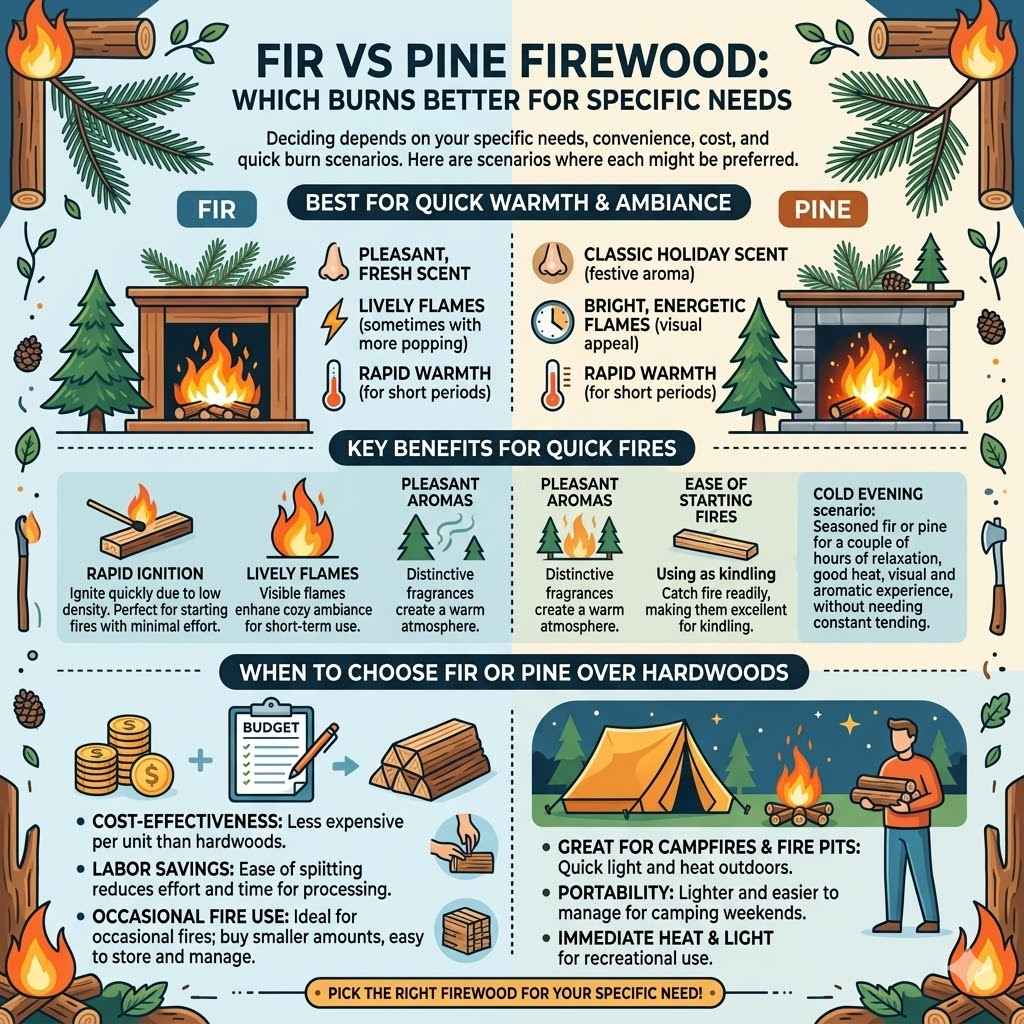
If you’re looking to quickly warm up a room or create a cozy ambiance for a short period, both fir and pine are excellent choices. Their soft nature means they ignite easily and produce a lively flame.
Pine, in particular, is often favored for its classic holiday scent. Burning pine can quickly fill a home with a festive aroma, making it popular during the winter holiday season. The bright, energetic flames of pine can add to the visual appeal of a fire.
Fir also offers a pleasant, fresh scent. Its flames can be very active, sometimes with more popping and crackling sounds. This can contribute to a lively and comforting atmosphere.
Both woods are great for getting a fire going rapidly to chase away the chill.
For example, on a cold evening, you might want to start a fire to relax for a couple of hours before bed. Using seasoned fir or pine would be ideal. It would give you a good amount of heat and a pleasant visual and aromatic experience without burning for too long and requiring constant tending.
This is different from needing a fire to last all night for heating. For those situations, the fast burn rate of fir and pine would be a disadvantage. But for a quick boost of warmth and ambiance, they shine.
- Rapid Ignition: Both fir and pine ignite very quickly due to their low density. This makes them perfect for starting a fire when you need warmth fast, without a lot of effort.
- Lively Flames: The burning of these softwoods often produces bright, active flames. This visual element can enhance the cozy ambiance of a room, making them ideal for decorative or short-term heating fires.
- Pleasant Aromas: Pine is well-known for its distinctive, festive scent, often associated with winter holidays. Fir also offers a fresh, clean fragrance that many find appealing for creating a warm atmosphere.
- Ease of Starting Fires: Because they catch fire so readily, they are also excellent for use as kindling. You can easily start a fire with smaller pieces and then add larger logs of fir or pine to build up the heat quickly.
When to Choose Fir or Pine Over Hardwoods
There are specific situations where choosing fir or pine over denser hardwoods is a smart move. These often involve convenience, cost, and the specific need for a quick burn.
If you are a casual fire user, meaning you only light fires occasionally, using softwoods can be more economical. You buy or gather a smaller amount, and it’s easier to manage and process. You don’t need to invest in a huge quantity of wood that might sit for years.
Pine and fir are also often more affordable and readily available than many hardwoods. If budget is a primary concern, softwoods can be a good option, as long as you understand their limitations. Their ease of splitting also means lower labor costs if you’re doing the work yourself.
Another scenario is if you have an outdoor fire pit or are camping. Softwoods are great for these uses because they get going quickly, produce a visible flame, and you don’t need them to last for many hours. They provide immediate heat and light for an evening outdoors.
Consider this: if you’re going camping for a weekend, bringing a few logs of pine is much easier than hauling dense hardwood. They are lighter and easier to manage. You’ll have a campfire quickly and enjoy the experience without a lot of prep work.
- Cost-Effectiveness: Often, pine and fir are less expensive per unit than hardwoods. If you are on a budget or have limited funds for firewood, these softwoods can provide a more accessible heating option.
- Labor Savings: The ease of splitting softwoods reduces the physical effort and time required for processing firewood. This is a significant advantage if you are splitting your own wood and have physical limitations or limited time.
- Occasional Fire Use: For those who only light fires occasionally, softwoods are ideal. You can acquire a smaller supply that is easier to store and manage, and it will still provide the desired heat and ambiance without needing a large, long-term stockpile.
- Outdoor and Camping Fires: Softwoods are excellent for campfires or outdoor fire pits. They ignite easily, burn brightly, and provide quick heat and light for short periods, making them perfect for recreational use.
Frequently Asked Questions
Question: Is pine firewood safe to burn in a fireplace
Answer: Yes, pine firewood is safe to burn in a fireplace, provided it is properly seasoned and you take safety precautions. Always use a fireplace screen to catch sparks, as pine tends to spark due to its resin content. Regular chimney cleaning is also essential to manage creosote buildup.
Question: Does fir firewood make a lot of smoke
Answer: Fir firewood can produce more smoke than denser hardwoods if it is not properly seasoned or if the fire is not burning efficiently. Well-seasoned fir burned in a hot, active fire will produce less smoke. Ensure good airflow for the best results.
Question: Which type of wood burns longer fir or pine
Answer: Fir and pine are very similar in this regard; both are softwoods and tend to burn relatively quickly. Neither burns significantly longer than the other. If you need longer burn times, hardwoods are a better choice.
Question: Can I mix fir and pine firewood with hardwoods
Answer: Yes, you can absolutely mix fir and pine firewood with hardwoods. This can be a great way to get the benefits of both. For example, use fir or pine to start your fire quickly, and then add hardwoods to maintain heat for a longer period.
Question: How do I know if my fir or pine firewood is seasoned
Answer: Seasoned fir or pine firewood will have cracks at the ends of the logs. It will also feel lighter than green wood and make a hollow clacking sound when two pieces are banged together. Ideally, seasoned wood has a moisture content of 20% or less.
Summary
When comparing Fir vs Pine Firewood, both are softwoods that burn fast, ignite easily, and offer moderate heat. They are great for quick warmth and ambiance. Pine is noted for its festive scent, while fir provides a fresh aroma.
Both are simple to split and make good kindling but require diligent chimney cleaning due to creosote potential. Choose them for occasional fires or when ease of use is a priority.