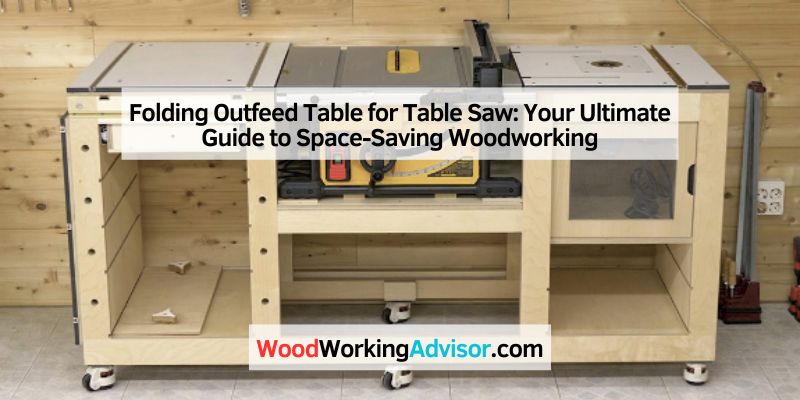
Folding Outfeed Table for Table Saw: Your Ultimate Guide to Space-Saving Woodworking
Hey there, fellow woodworker! If you’re like me, you love the hum of a table saw and the satisfaction of turning raw lumber into something beautiful. But let’s be real—space in the workshop is always a challenge. That’s where a folding outfeed table for a table saw comes in. It’s a game-changer for small shops, giving you the support you need for long boards without eating up precious floor space. I’ve spent years tinkering with my own setups, and I’m excited to share everything I’ve learned about folding outfeed tables. This guide is packed with practical tips, ideas, and insights to help you choose or build the perfect one. Let’s dive in and make your woodworking smoother and more efficient!
What Is a Folding Outfeed Table and Why Do You Need One?
Picture this: you’re ripping a long piece of plywood on your table saw, and it starts to tip off the back edge. Frustrating, right? An outfeed table catches that workpiece, keeping it level and safe. A folding outfeed table does the same but folds away when you’re done, saving space. I used to struggle with makeshift solutions like sawhorses, but they were wobbly and took up room. A folding outfeed table is sturdy, adjustable, and tucks neatly against the saw or wall.
Why do you need one? It improves safety by preventing boards from falling or binding. It also boosts precision, as your workpiece stays flat. Plus, it’s a lifesaver for solo woodworkers like me who don’t have an extra pair of hands. Whether you’re cutting sheet goods or long boards, this tool makes the job easier. And the folding design? Perfect for cramped garages or shared spaces.
Benefits of a Folding Outfeed Table for Your Workshop
Let me tell you, adding a folding outfeed table to my shop was one of my best decisions. Here’s why it might be for you too:
- Space-Saving Design: My garage shop is tiny, so I need tools that don’t hog space. A folding outfeed table collapses in seconds, leaving room for my car or other projects.
- Enhanced Safety: Before I had one, I’d wrestle with heavy panels alone. Now, the table supports the wood, reducing the risk of kickback or accidents.
- Versatility: Some models double as workbenches or assembly tables. I use mine for sanding and gluing up projects when it’s not catching boards.
- Portability: Many folding tables are lightweight or have wheels. I’ve taken mine to job sites or moved it around the shop with ease.
- Cost-Effective: You don’t need to break the bank. I built my first one with scrap wood and hinges, and it worked like a charm.
Here’s a quick comparison to show why a folding outfeed table beats other options:
| Feature | Folding Outfeed Table | Fixed Outfeed Table | Sawhorses |
|---|---|---|---|
| Space Efficiency | Folds away, saves space | Takes up permanent room | Bulky to store |
| Stability | Sturdy, designed for saws | Very stable | Wobbly |
| Portability | Often has wheels | Hard to move | Easy to carry |
| Cost | Affordable or DIY | Expensive | Cheap but less reliable |
Types of Folding Outfeed Tables Available
Not all folding outfeed tables are the same, and I’ve tried a few kinds over the years. Here’s a breakdown of the main types to help you pick the right one:
Store-Bought Folding Outfeed Tables
These are ready-to-use and perfect if you don’t want to build your own. Brands like Rockler, SawStop, and Bora make models that attach directly to your table saw. I bought a Rockler one a few years back, and it was a breeze to set up. They often have adjustable legs, roller tops, or even built-in dust collection. The downside? They can be pricey, ranging from $100 to $400. But if you value convenience, they’re worth it.
DIY Folding Outfeed Tables
If you’re handy (and I bet you are), building your own is rewarding and budget-friendly. My first DIY table was made from plywood, 2x4s, and heavy-duty hinges. I followed a plan from a woodworking magazine, and it cost me under $50. You can customize it to fit your saw perfectly, add features like storage shelves, or even make it wall-mounted. The catch is it takes time and some skill, but the satisfaction of using something you built is unbeatable.
Hybrid Solutions
Some woodworkers mix store-bought components with custom builds. For example, I once used a folding workbench frame from Home Depot and added a custom plywood top to match my saw’s height. These hybrids give you flexibility without starting from scratch. They’re great if you want a balance of convenience and personalization.
How to Choose the Right Folding Outfeed Table
Picking the perfect folding outfeed table depends on your needs, space, and budget. Here’s what I consider every time I’m shopping or building one:
- Size and Compatibility: Measure your table saw and workspace. The table should be slightly wider than your saw’s table and align with its height. My SawStop is 27 inches deep, so I made sure my outfeed table was 30 inches deep to catch wide panels.
- Material: Steel or aluminum are durable but heavy. Plywood is lighter and easy to work with for DIY projects. I prefer wood for the top surface because it’s smooth and doesn’t dent my workpieces.
- Folding Mechanism: Look for smooth hinges or roller tracks that lock securely when open. My store-bought table has a gas-assisted fold, which feels like opening a car hatch—super slick!
- Portability: If you move your saw often, wheels are a must. I added locking casters to my DIY table, and it’s been a game-changer for rearranging my shop.
- Budget: Set a realistic budget. A $200 store-bought table might save you 10 hours of building time. But if you can spend $50 and a weekend, DIY is the way to go.
- Extra Features: Some tables have rollers or ball bearings for smooth sliding, which is great for heavy panels. Others have storage or adjustable tops. Decide what extras matter to you.
Building Your Own Folding Outfeed Table: My Step-by-Step Experience
If you’re ready to roll up your sleeves, building a folding outfeed table is a fun and practical project. I’ll share the process I followed for my favorite DIY table, which I still use today. It’s simple, costs about $75, and fits most table saws.
Materials I Used:
- 3/4” plywood (4’ x 2’ for the top)
- 2x4s (8’ lengths, 4 pieces for the frame and legs)
- Heavy-duty hinges (2’ (2)
- 2” locking casters (4)
- Wood screws (2’ and 3” lengths)
- Wood glue
- TPU filament for 3D-printed spacers (optional, for leveling)
- Paint or or sealant (optional, for finishing)
Tools I Needed:
- Table saw (ironically!)
- Drill
- Circular saw saw (for rough cuts)
- Clamps
- Level
- Measuring tape
- Square
Steps to Build:
- Measure Your Saw: I checked my table saw’s height (34.5” in my case) and width to ensure the table would align perfectly. I decided on a 48” wide by 24” deep top to handle large panels.
- Cut the Top: I cut the 3/4” plywood to size using my table saw for clean edges. A I sanded it smooth to prevent splinters on my workpieces.
- Build the Frame: I cut four 2x2x4s to form a rectangular frame for the underside of the top. I used glue and 3” screws to attach them, making sure everything was square.
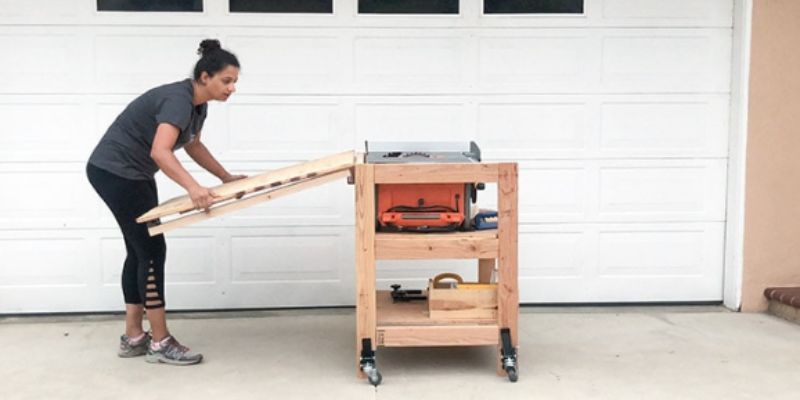
- Make the Legs: I cut four 2x4s to 33” (slightly shorter than the saw height to account for casters). I attached two legs to a folding hinge so they’d swing down and lock in place.
- Attach Hinges: I mounted the hinges to the back edge of the table saw’s frame, connecting the outfeed table so it folds up against the saw. I used 3D-printed TPU spacers to shim for a perfect flush fit.
- Add Casters: I screwed locking casters to the legs for mobility. This lets me roll the table out of the way when I’m done.
- Level and Test: I set up the table, checked it with a level, and adjusted the legs by sanding them slightly. I ripped a 4’x8’ sheet of plywood to test it, and it caught the wood without a hitch.
- Finish: I painted the frame for a clean look and sealed the top with polyurethane to make it durable.
This project took me a Saturday, but it’s been worth every minute. If you’re new to woodworking, take your time with measurements—small errors can throw off the alignment.
Installing and Setting Up a Store-Bought Folding Outfeed Table
If DIY isn’t your thing, a store-bought table is super easy to set up. I recently helped a friend install a Bora Saw PM-4500 Saw Plate, and here’s how it went:
- Unpack and Check all parts.: The box had the frame, legs, top, and hardware. We made sure nothing was missing.
- Attach to the Saw: The table came with brackets that bolted to the back of my friend’s DeWalt saw. We followed the instructions to align it with the table height.
- Adjust the Legs: The legs had adjustable feet, so we tweaked them until the outfeed was level with the saw.
- Test the Fold: We unfolded it, and locked it, and tested it with a piece of MDF. The rollers on top made sliding the board so smooth.
- Fine-Tune: We made minor adjustments to the height to eliminate any gaps where small pieces could catch.
The whole setup took 30 minutes. Pro tip: keep your saw’s manual handy to confirm its dimensions, and double-check the table’s weight capacity if you work with heavy stock.
Maintenance Tips to Keep Your Folding Outfeed Table in Great Shape
Whether you build or buy, a little care keeps your table working like new. Here’s what I do:
- Clean Regularly: Sawdust builds up in hinges and tracks. I vacuum mine monthly and wipe the top with a damp cloth.
- Check Alignment: Every few months, I use a straightedge to ensure the table’s still level with my saw. Loose bolts can shift things over time.
- Lubricate Moving Parts: For hinges or rollers, I dab on some silicone spray or WD-40 to keep them smooth.
- Inspect for Wear: My DIY table’s plywood top got beat up after a year, so I sanded and resealed it. For store-bought ones, check for bent frames or worn rollers.
- Store Properly: When folded, I prop mine upright to avoid stress on the hinges. If it’s wall-mounted, make sure the wall brackets are secure.
Common Challenges and How to Overcome Them
No setup is perfect, and I’ve hit a few snags with folding outfeed tables. Here’s how I dealt with them:
- Gaps Between Saw and Table: My first table had a 1/4” gap where small cut-offs would fall. I added a thin strip of wood to bridge it.
- Wobbly Legs: A cheap store-bought model I tried wobbled under heavy loads. I reinforced it with diagonal braces, and it’s rock-solid now.
- Space for Folding: In my cramped shop, folding the table up didn’t always save enough room. I switched to a wall-mounted design that drops down only when needed.
- Height Misalignment: If your table’s too high or low, boards can bind. I use shims or adjustable feet to fine-tune it.
Why I Love My Folding Outfeed Table (And You Will Too)
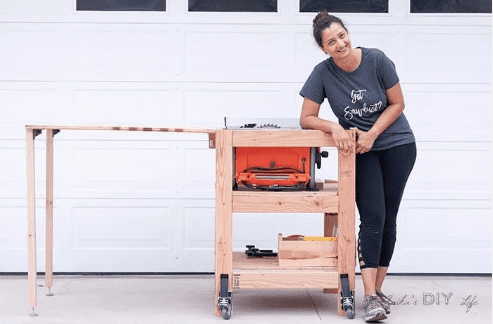
After years of using both DIY and store-bought folding outfeed tables, I can’t imagine woodworking without one. It’s like having a trusty sidekick that’s there when you need it and steps aside when you don’t. My current setup—a hybrid with a custom top and folding legs—has made ripping plywood safer and more precise. I’ve saved time, reduced frustration, and kept my small shop organized. It’s a must-have.
Whether you’re a weekend DIYer or a pro, a folding outfeed table is a smart addition. It’s affordable, practical, and adapts to your space. If you’re on the fence, start with a simple DIY build or check out budget-friendly models online. You’ll wonder how you ever worked without it.
So, what’s next? Grab your tape measure, pick a design, and get ready to transform your table saw experience. Your workshop—and your back—will thank you!
Frequently Asked Questions About Folding Outfeed Tables for Table Saws
What is the ideal height for a folding outfeed table?
The outfeed table should be level with your table saw’s surface. Mine’s saw is 34.5 inches, so I built my table to match that height. Measure your saw’s table top and adjust for any casters or feet on the outfeed table. A slight downward slope (1/16 inch) can help boards slide off easily.
Can I use a folding outfeed table with a portable table saw?
Absolutely! My friend uses one with a DeWalt portable saw, and it works great. Just make sure the table’s brackets or frame are compatible with your saw’s design. Check the weight capacity too, since portable saws are lighter.
How much weight can a folding outfeed table hold?
It depends on the table. My DIY one handles about 150 lbs, while store-bought models like the SawStop can support up to 250 lbs or more. Always check the specs or test your build with scrap wood before loading heavy stock.
Are folding outfeed tables hard to build for beginners?
Not really! My first one was a bit rough, but it worked. Start with simple plans, use pre-cut lumber, and double-check measurements. Basic tools like a drill and saw are enough. Watch a few online tutorials for tips.
How do I make my folding outfeed table more portable?
Add locking casters to the legs, like the ones I used on my DIY build. Choose lightweight materials like 3/4” plywood or aluminum if you’re buying. Wall-mounted designs are less portable but save floor space in storage.
Can a folding outfeed table replace a workbench?
Sometimes! My store-bought table doubles as a workbench for light tasks like sanding or assembly. But for heavy pounding or clamping, a dedicated workbench is sturdier. Check if your table’s rated for dual use.