Table Saw Dust Collection: How Much CFM You Actually Need (2026)
Most table saws need 350–450 CFM of true airflow at the dust port to control sawdust — cabinet saws often need 600–650 CFM. A collector rated 650 CFM can lose enough airflow to duct resistance that only 350 CFM actually reaches the blade. This guide covers real CFM requirements by saw type, why static pressure matters more than the number on the box, and which hood setup gets closest to full capture.
How Much CFM Do You Actually Need for Table Saw Dust Collection?
Best Table Saw Dust Collection Pick
PSI Woodworking TSGUARD Dust Collection Guard – $299.95
This is the overhead-guard half of the combined setup covered above — it mounts over the blade on a boom arm and connects to any standard 4″ hose, which is exactly the “overhead plus bottom” pairing that gets you closest to full capture.
- Best for: Cabinet and contractor saws needing overhead capture and blade-guard safety in one unit
- Why we picked it: Accepts blades up to 16″ and connects straight into an existing 4″ duct run
- Main drawback: Installation and boom-arm alignment take real effort — plan on an hour or more of fitting
Compare more table saw dust collection options
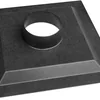 Option 1 POWERTEC 12″ Dust Hood – $14.87
|
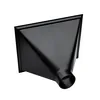 Option 2 POWERTEC Big Gulp Dust Hood – $32.99
|
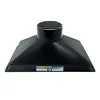 Option 3 POWERTEC Mini Gulp Dust Hood – $17.99
|
As an Amazon Associate we earn from qualifying purchases.
CFM (cubic feet per minute) requirements depend on the saw, not a single universal number. A benchtop or jobsite saw with a shop-vac-sized 2–2.5” port can get usable results from 350–450 CFM. A cabinet saw with a full 4” port and an enclosed base needs more — Harvey Industries lists a 470 CFM minimum at the hose connection for its Alpha Series cabinet saws, and most cabinet-saw manufacturers land in the same 450–650 CFM range.
The number printed on a dust collector’s box is measured with no hose, no fittings, and no filter attached — conditions you will never actually have. Every foot of flexible hose, every 90₂ elbow, and every reduction from 4” down to a saw’s port bleeds off airflow. A collector rated 650 CFM at the intake can realistically deliver only 350–450 CFM by the time the air reaches the saw, which is why “bigger number on the box” and “actually clears the dust” are not the same claim.
CFM by Saw Type
| Saw Type | Port Size | Realistic CFM Needed | Typical Collector |
|---|---|---|---|
| Benchtop / jobsite saw | 2–2.5” | 350–450 CFM | Shop vac (6+ peak HP) |
| Contractor saw | 2.5–4” | 450–550 CFM | 1 HP dust collector |
| Cabinet saw | 4” | 600–650 CFM | 1.5–2 HP dust collector |
If you’re still deciding on the collector itself rather than just the hood, our guide to picking a dust collector for a home shop breaks down single-stage vs. cyclone options at these CFM ranges.
Do You Need Overhead AND Under-Table Dust Collection?
Under-table collection alone only captures the dust that falls straight down through the blade slot. A table saw throws roughly half its dust upward and outward from the top of the blade, where a bottom-only hood can’t reach it. Getting close to full capture means combining a sealed under-table hood with an overhead guard or blade shroud that catches the upward spray at the source.
📊 A cabinet saw’s dust port needs roughly 470 CFM minimum at the hose connection to keep up with a fully enclosed base — Source: Harvey Industries, dust collection requirements, 2026
Materials matter too: MDF and dense manufactured sheet goods throw far more fine dust than solid lumber, and species like cedar and walnut are notably dustier than oak or maple. If you cut a lot of sheet goods, size your collection toward the top of the ranges above rather than the bottom.
Types of Table Saw Dust Extraction Systems
There are three basic ways to capture dust from a table saw, and most effective setups use at least two of them together.
Overhead Guards
An overhead guard sits above the blade and captures dust and chips as they’re thrown upward off the top of the teeth — the spray a bottom hood never sees. Most also double as a blade guard, which is why several (like the PSI TSGUARD below) are sold primarily as safety equipment with dust collection as a built-in feature.
Blade Surrounds / Under-Blade Shrouds
A blade surround encloses the blade itself, close to the point where the cut is actually happening, and routes the dust straight into a port before it can spread. These work best on saws with enough clearance under the table to fit a shroud without interfering with the blade’s tilt range.
Bottom (Cabinet) Collection
Bottom collection uses the saw’s cabinet or base as a funnel, pulling dust down and out through a single 4″ port. It’s the easiest to add to an existing saw and the baseline every cabinet saw ships with — but on its own it only catches what falls, which is why the overhead-plus-bottom combination above consistently outperforms either one alone.
Selecting the Right Dust Hood for Your Saw
Before buying a hood, measure your saw’s existing opening and note whether you need it to mount underneath, behind, or clear of the blade’s full tilt and height range. A hood sized for a benchtop saw won’t seal properly on a cabinet saw’s larger base, and vice versa.
- Port size: Match the hood’s outlet to your hose — most are a nominal 4″ OD that steps down to 2.5″ with a reducer for shop-vac use.
- Mounting clearance: Confirm the hood doesn’t interfere with the blade at full tilt (typically 45°) or with a dado stack if you run one.
- Existing system compatibility: If you already run ductwork, check the hood’s port against your blast gates and Y-fittings before ordering.
DIY Solutions for Dust Management
Building a Custom Dust Hood
A shop-built hood from plywood or clear acrylic can enclose the blade and underside of the table for a fraction of a commercial hood’s price. Keep the internal volume as small as practical — a hood that’s too roomy dilutes suction and actually collects less than a snug-fitting one at the same CFM. If you’re building the saw’s whole base or extension table from scratch anyway, our DIY table saw workbench guide covers sizing the cabinet to leave room for ductwork.
Improving an Existing System
If you already have a collector but it’s underperforming, the fix is usually the seal, not the machine. Check every joint between the saw and the collector for gaps, shorten runs of flexible hose where you can (smooth rigid pipe has far less resistance), and add a pre-separator ahead of a shop vac’s filter so fine dust doesn’t clog it mid-cut. Our full walkthrough on upgrading dust collection on an existing table saw goes step-by-step through sealing, hose sizing, and blast-gate placement.
Table Saw Dust Collection Accessories Compared
Prices and availability checked directly on Amazon at the time of writing:
| Product | Type | Price | Rating |
|---|---|---|---|
| PSI Woodworking TSGUARD | Overhead guard + dust collection | $299.95 | 4.0★ (103 ratings) |
| POWERTEC Big Gulp Dust Hood | Bottom/universal hood | $32.99 | 4.6★ (3,302 ratings) |
| POWERTEC Mini Gulp Dust Hood | Bottom hood, compact | $17.99 | 4.6★ (3,302 ratings) |
| POWERTEC 12″ Table Saw Dust Hood | Bottom hood, standard | $14.87 | 4.7★ (1,844 ratings) |
The overhead guard costs roughly 10× more than a basic bottom hood because it’s doing two jobs — blade safety and upward-dust capture — that the bottom hoods don’t attempt. If budget is tight, a bottom hood plus a sealed cabinet gets you most of the way there; add the overhead guard when you’re ready to close the remaining gap.
Installation Tips for Better Dust Capture
Ensuring a Tight Seal
Any gap between the saw’s cabinet and the dust hood is a place where the collector pulls in shop air instead of sawdust-laden air, which is the single biggest reason a “properly sized” system still underperforms. Seal cabinet panels, motor covers, and the miter slot ends with weatherstripping or foam tape, and check the seal again after the first few uses once vibration has had a chance to loosen anything.
Optimizing Dust Flow
Keep hose runs as short and as straight as the shop allows — every elbow costs roughly the equivalent of several feet of straight hose in lost airflow. Place the collector or blast gate as close to the saw as practical rather than running one long hose from across the room.
Regular Maintenance
Empty the collection bag or bin before it’s more than half full — a fuller bag restricts airflow well before it looks “full.” If your system uses a filter bag, check its micron rating; our guide to dust collector bag micron ratings and when to replace them covers how a clogged or too-coarse bag quietly kills suction long before anything looks obviously wrong.
Troubleshooting Common Dust Collection Problems
- Reduced suction: Check for a clog first — a partial blockage anywhere in the line drops airflow more than most people expect. Clear it before assuming the collector itself is underpowered.
- Dust escaping around the blade: This is almost always a sealing problem, not a CFM problem — recheck the cabinet seal before buying a bigger collector.
- Fine dust passing straight through a shop vac filter: Standard shop-vac filters aren’t rated for fine wood dust. Add a cyclone pre-separator or switch to a HEPA-rated filter bag.
- Motor not building suction: Inspect for a torn impeller or a bag installed backward before assuming a wiring or motor fault.
Frequently Asked Questions
How do you collect dust from a table saw?
Start with a sealed hood under the table connected to a shop vac or dust collector by 4″ hose, then add an overhead guard if you need close to full capture. Taping a garbage bag to the base can catch some falling dust in a pinch, but it doesn’t seal well and misses everything thrown upward from the blade.
Will a shop vac work for table saw dust collection?
Yes, for benchtop and jobsite saws — a 6+ peak HP shop vac can deliver enough airflow for a small saw’s 2–2.5″ port. It’s not enough for a cabinet saw’s larger port and enclosed base, which needs a dedicated dust collector instead. See our shop vacuum CFM and tank size guide for matching a vac to your saw.
How many CFM do you need for table saw dust collection?
Plan on 350–450 CFM for a benchtop or contractor saw and 600–650 CFM for a cabinet saw, measured at the collector’s rated output before hose and fitting losses. Because duct resistance eats into that number, buy toward the higher end of the range you need rather than the exact minimum.
Do you need overhead dust collection, or is under-table enough?
Under-table alone only catches dust that falls down through the blade slot — roughly half of what the blade throws goes up and outward instead. An overhead guard or blade shroud catches that upward spray, so combining both gets meaningfully closer to full capture than either one alone.
Why does my table saw throw so much dust?
A misaligned blade or fence is the most common cause — it forces the blade to rub rather than cut cleanly, which throws extra fine dust and wastes stock. Cutting dense sheet goods like MDF, or a dusty species like cedar or walnut, also produces noticeably more fine dust than solid maple or oak.
What’s the difference between a shop vac and a dedicated dust collector?
A shop vac moves less air but at higher velocity through a small hose, which suits benchtop saws and fine debris. A dedicated dust collector moves far more air at lower pressure through a larger 4″ port, which is what a cabinet saw’s bigger cabinet volume actually needs to stay clear.
Conclusion
Effective table saw dust collection comes down to matching real CFM — not the number on the box — to your saw type, then sealing every gap between the saw and the collector. A bottom hood handles the basics; pairing it with an overhead guard is what closes the gap on the dust that would otherwise end up on your workpiece and in the air you’re breathing.
Sponsored / affiliate links. As an Amazon Associate I earn from qualifying purchases. I may earn additional commission from eligible campaigns.