Vintage Table Saws: Delta Unisaw History & Real Values
The 1939 Delta Unisaw was the first tilting-arbor cabinet saw ever built, and unrestored examples still sell for $500 to $700 today — but only if the table isn’t cracked and the tilt mechanism still moves freely. A rusted top or a missing riving knife can cut that value in half. This guide covers how to identify a real vintage model, what to check before buying, and how to restore one without wrecking its collector value. For newer options, see our full table saw guide.
Why Vintage Table Saws Still Hold Up
Best Rust Protection Pick
 |
Boeshield T-9 Rust & Corrosion Protectant, 12 oz – $23.00 A single coat on a cleaned cast-iron top dries to a thin waxy film that stops the surface rust that drops a vintage saw’s resale value — the exact use case its own 4.8-star reviews call out for table saw tops.
|
As an Amazon Associate we earn from qualifying purchases.
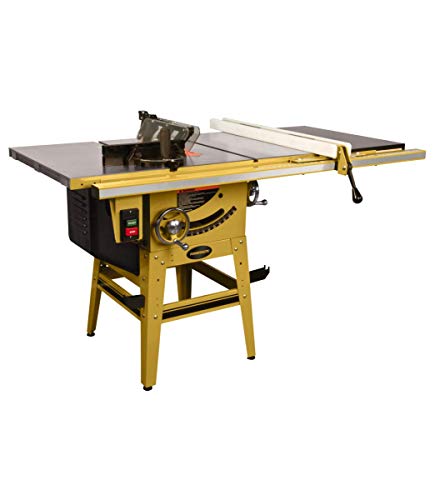
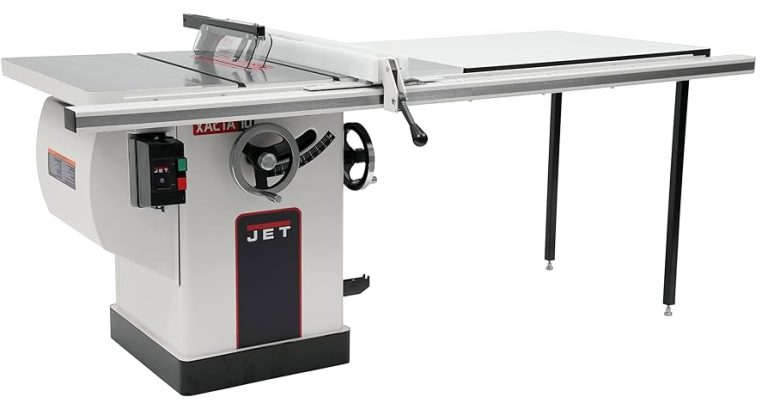
Delta introduced the Unisaw in 1939 as the first fully enclosed, tilting-arbor cabinet saw on the market — built at Delta’s Milwaukee, Wisconsin plant before production moved to Tupelo, Mississippi in 1952. Its production run lasted more than 50 years, longer than any other table saw model in history, which is why parts and community knowledge are still easy to find today.
The earliest 1939-1941 Unisaws used four cast-iron feet at the base instead of the enclosed square cabinet that replaced them in 1941 — a detail collectors use to date a saw at a glance. Heavy cast-iron tops and simple mechanical linkages (rack-and-pinion tilt, no electronics to fail) are what let 80-year-old saws still cut true today.
That decades-long durability depends on the cast iron staying rust-free. The single cheapest thing you can do the day you bring one home is stop rust before it starts — especially on an unheated garage or shop floor.
Identifying a Genuine Vintage Model
Quality is easy to spot once you know what to check. Look for a solid cast-iron body (not stamped sheet metal), tight machining with no play in the arbor, and hardwood table extensions rather than plastic. Check for a stamped serial number or casting date on the trunnion or motor plate — sites like Vintage Machinery’s Unisaw Type Study let you match casting details to a production year.
- Cast-iron body: heavy, one-piece, no visible weld repairs on structural castings.
- Precision machining: the blade tilts and raises smoothly with no wobble at the arbor.
- Original tags or casting marks: most Delta, Rockwell, and Powermatic saws stamp a serial number that dates the casting.
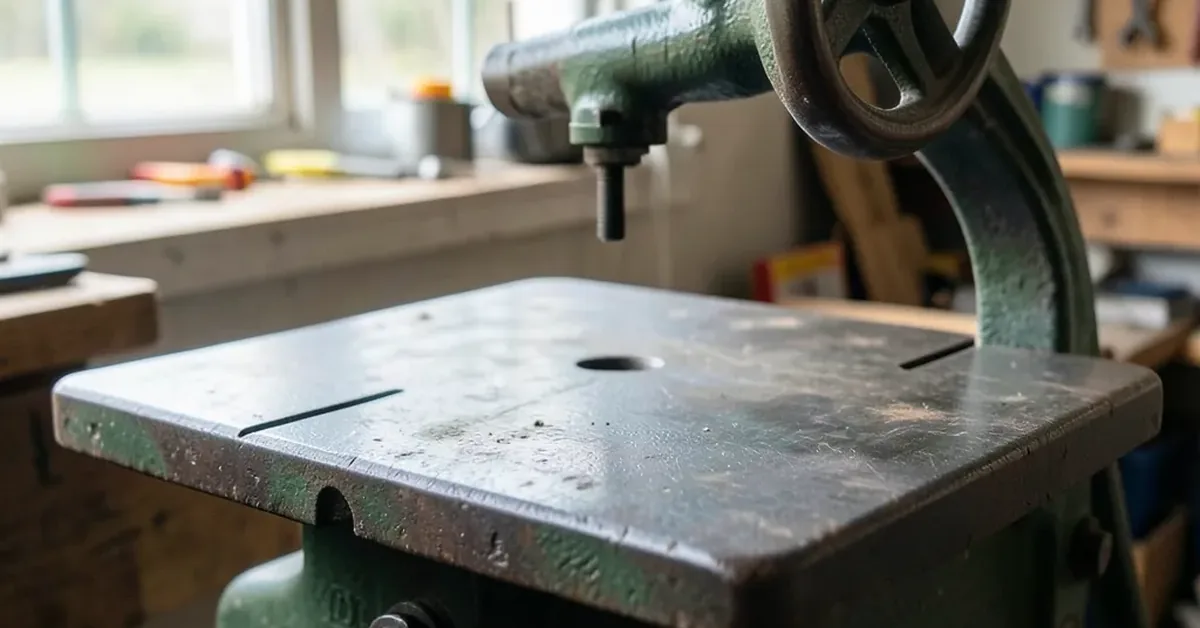
- Rust pattern: surface rust on the table is cosmetic; pitting deep enough to catch a fingernail means the flatness is compromised.
Three Models Worth Knowing
| Model | Era | What to look for |
|---|---|---|
| Delta Unisaw (four-footed) | 1939-1941 | Four cast-iron feet, no enclosed cabinet — earliest and most collectible version. |
| Delta Unisaw 34-450 | 1950s-1970s | Enclosed square cabinet, 3 HP+ motor, the most common Unisaw you’ll find used. |
| Rockwell 34-450 | 1970s | Rockwell-badged version made after Rockwell acquired Delta — same castings, different nameplate. |
Not every vintage saw is a Delta. If you’ve found a Craftsman-badged machine instead, our Sears Roebuck vintage table saw buyer’s guide covers the same condition and dating checks specific to that brand.
What to Check Before You Buy
Before handing over cash, assess condition against a short checklist and be ready to walk away if the motor doesn’t spin freely by hand.
- Rust: surface rust wipes off; pitted rust means re-flattening the table, which costs real money.
- Motor: spin the blade by hand — it should turn freely with no grinding. A seized motor is a $150-300 repair or replacement.
- Parts availability: Delta and Rockwell parts are still widely stocked; off-brand vintage saws often are not.
- Trunnion play: raise and tilt the blade — excess play here is expensive to fix and hard to spot from photos.
Restoring Without Destroying the Value
Restoration is where most collector value gets made or lost. Clean before you disassemble — soft brushes, compressed air, and a citrus degreaser lift decades of grime without touching original paint or decals, which collectors pay a premium to see intact.
Do Vintage Table Saws Need New Safety Features?
Yes — most pre-1990s saws shipped with a blade guard and nothing else. Adding a modern splitter or riving knife, anti-kickback pawls, and a magnetic emergency stop switch closes the biggest safety gap without altering the saw’s original castings or appearance, so it doesn’t hurt collector value.
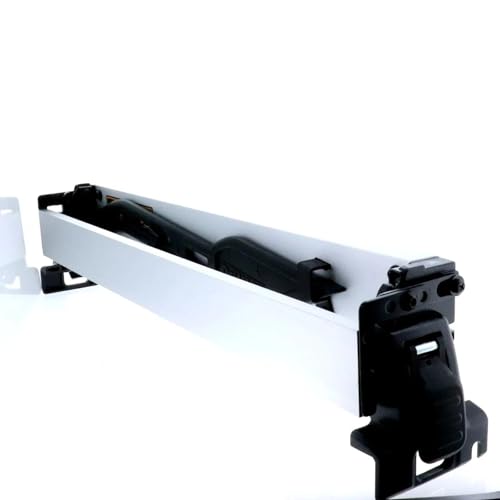
- Riving knife or splitter: the single highest-impact upgrade — cuts kickback risk dramatically on a saw with no factory splitter.
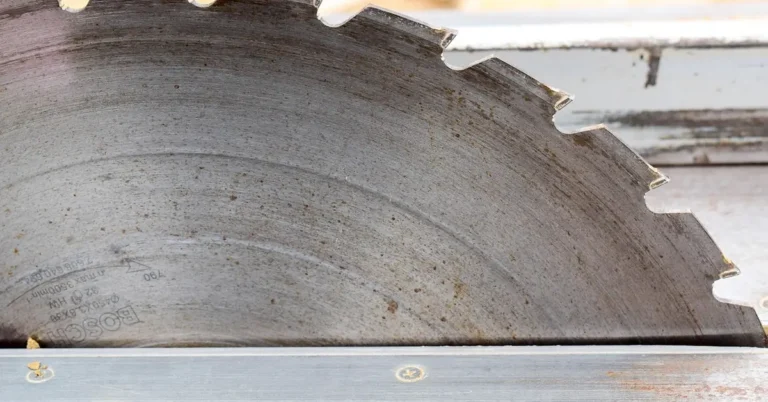
- Blade guard: add an aftermarket guard if the original is missing or cracked.
- Digital angle/height gauge: a magnetic add-on that doesn’t require modifying the saw itself.
For fence work specifically, our Delta table saw fence upgrade guide covers swapping in a modern fence rail on the same Unisaw castings covered here. If you need a diagram to source small parts, our table saw parts diagram reference shows how trunnion and arbor assemblies are typically laid out across brands.
Maintenance That Actually Matters
Weekly: wipe the table after use and check the blade for pitch buildup. Monthly: lubricate the trunnion and raise/tilt gears, and inspect the power cord for cracked insulation — a common failure point on any saw over 40 years old.
| Symptom | Likely cause | Fix |
|---|---|---|
| Blade won’t spin | Dead capacitor or worn brushes | Test the motor separately before assuming the saw is dead |
| Uneven cuts | Fence or blade out of parallel | Re-square the fence to the miter slot, not just to the blade |
| Excessive vibration | Loose arbor nut or unbalanced blade | Tighten the arbor, try a different blade to isolate the cause |
“The trunnion is the part people neglect most on these saws — a few drops of oil twice a year is the difference between smooth tilt adjustments and a saw that fights you every time.” — a common note from long-time Unisaw owners restoring four-footed and 34-450 models, echoed across the restoration threads at Old Woodworking Machines and Vintage Machinery.
Frequently Asked Questions
What Are Vintage Table Saws?
Vintage table saws are cabinet or contractor saws built roughly from the 1930s through the 1980s by brands like Delta, Rockwell, and Powermatic. They’re prized for heavy cast-iron construction and simple, repairable mechanisms that often outlast newer lightweight saws.
How Do You Identify a Vintage Table Saw?
Check the brand badge, casting marks, and serial number stamped on the trunnion or motor plate, then match those details against a type study like Vintage Machinery’s Unisaw registry. Cast-iron feet (pre-1941 on Delta Unisaws) versus an enclosed cabinet is one quick visual cue for dating a saw.
Are Vintage Table Saws Worth Buying?
Yes, if the price reflects real condition. A working 1939-era Delta Unisaw typically runs $500-$700 unrestored, which is often less than a comparable new cabinet saw, but budget extra for a riving knife and other safety upgrades most vintage saws lack from the factory.
How Do You Maintain a Vintage Table Saw?
Wipe the table after each use, lubricate the trunnion and tilt mechanism monthly, and apply a rust-preventing wax like Boeshield T-9 to bare cast iron every few months in an unheated shop. Inspect the power cord and switch yearly since deteriorating insulation is the most common age-related failure.
Conclusion
A well-chosen vintage table saw — especially a Delta Unisaw with intact castings and a freely spinning motor — can outlast several generations of newer saws for a fraction of the price. Check condition against the list above, add the safety upgrades a factory saw from the 1950s never shipped with, and protect the cast iron from day one.
Sponsored / affiliate links. As an Amazon Associate I earn from qualifying purchases. I may earn additional commission from eligible campaigns.