Ideal Carbide Hole Saw Kit: Complete Buying Guide & Our Pick
The ideal carbide hole saw kit is a 3- to 6-piece set with carbide-tipped (not solid-carbide) teeth, a quick-change arbor, and a diameter range matched to your actual jobs — not the biggest kit on the shelf. Carbide teeth stay sharp roughly five times longer than bi-metal when you’re cutting abrasive material like cement board, stainless steel, or fiberglass, but they cost more and are more brittle, so buying more kit than you need just wastes money on sizes you’ll never touch.
Below is a real comparison of what separates a genuinely useful carbide hole saw kit from an oversized box of bits you’ll use twice, plus the one set we’d actually put in a truck.
Our Pick: The Ideal Carbide Hole Saw Kit for Most Shops
Best Carbide Hole Saw Kit for Metal & Mixed-Material Work
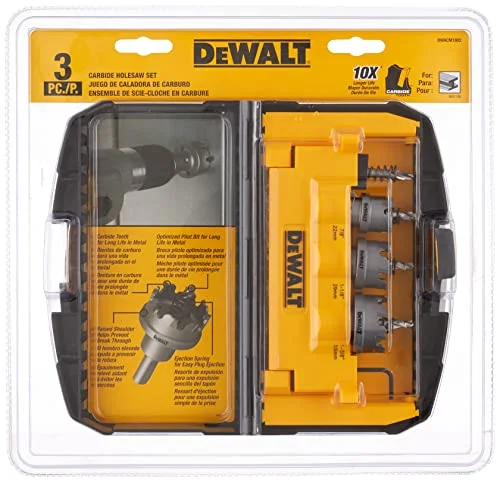 |
DEWALT DWACM1802 Metal Cut Carbide Holesaw Set, 3 Piece – $98.12 Carbide teeth built specifically for metal, with an ejection spring and raised shoulder so plugs don’t jam and edges don’t break through — the two most common complaints with cheaper carbide sets.
|
Carbide-Tipped vs. Solid Carbide vs. Bi-Metal: The Difference That Matters
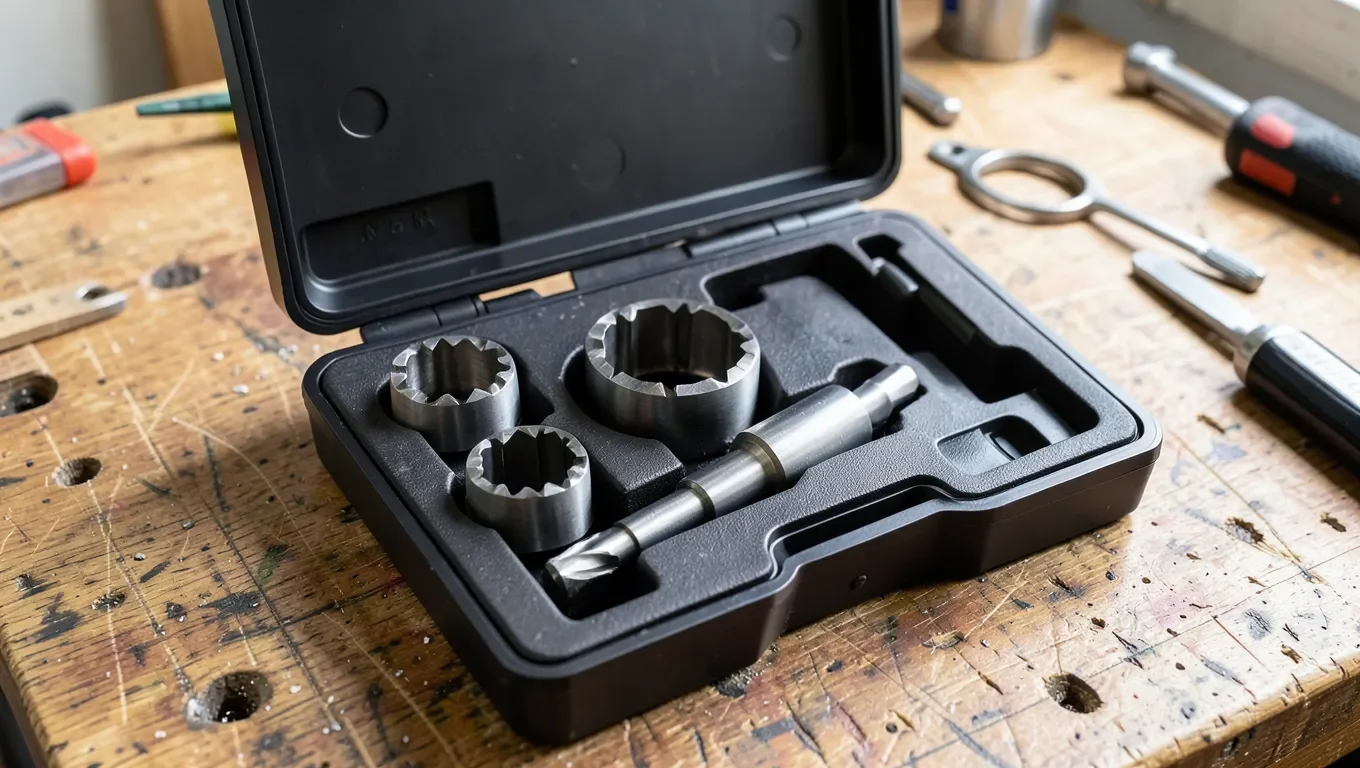
Most “carbide hole saw kit” listings are actually carbide-tipped (sometimes labeled TCT, tungsten carbide teeth): individual carbide chips brazed onto a steel saw body. That’s different from a solid carbide or carbide-grit hole saw, which has an abrasive rim bonded all the way around and is built for glass, tile, and ceramic — not for punching clean round holes in wood or sheet metal. Buying a grit-rim saw expecting it to behave like a tipped saw (or vice versa) is the single most common return reason on these kits, and almost none of the listings spell the difference out clearly.
For wood, drywall, and most metal work, you want carbide-tipped. For tile, glass, or porcelain, you want a grit-rim (diamond or carbide-grit) hole saw instead — they’re not interchangeable, and a tipped saw will chip a tile edge instead of cutting it cleanly.
Hole Saw Kit Comparison: Diameter, Material, Arbor, and Price
Kits are sold by use case more than by piece count. Here’s how the common categories actually break down:
| Kit Type | Hole Diameter Range | Material Compatibility | Arbor Type | Price Tier |
|---|---|---|---|---|
| Compact electrician’s carbide set (3–4 pc) | 7/8″ – 1-3/8″ | Sheet metal, stainless steel, aluminum | Quick-change hex arbor | $80 – $130 |
| Multi-purpose carbide kit (6–8 pc) | 3/4″ – 2-1/2″ | Wood, metal, PVC, fiberglass | Universal arbor with pilot bit | $60 – $150 |
| Large-diameter recessed-light kit | 4″ – 6″ | Drywall, wood, thin metal | Arbor-less or bi-metal (true carbide is rare this large) | $40 – $90 |
| Pro plumber/HVAC carbide kit (10+ pc) | 3/4″ – 4-1/4″ | Copper, PVC, sheet metal, wood | Interchangeable quick-release arbor | $150 – $300 |
If you only buy one kit, the compact electrician’s-style set covers the sizes most DIYers and remodelers actually cut — the same reasoning behind our pick above. Add a multi-purpose kit later only if you regularly work in wood or plastic too.
What a Carbide Hole Saw Kit Is Actually Good For
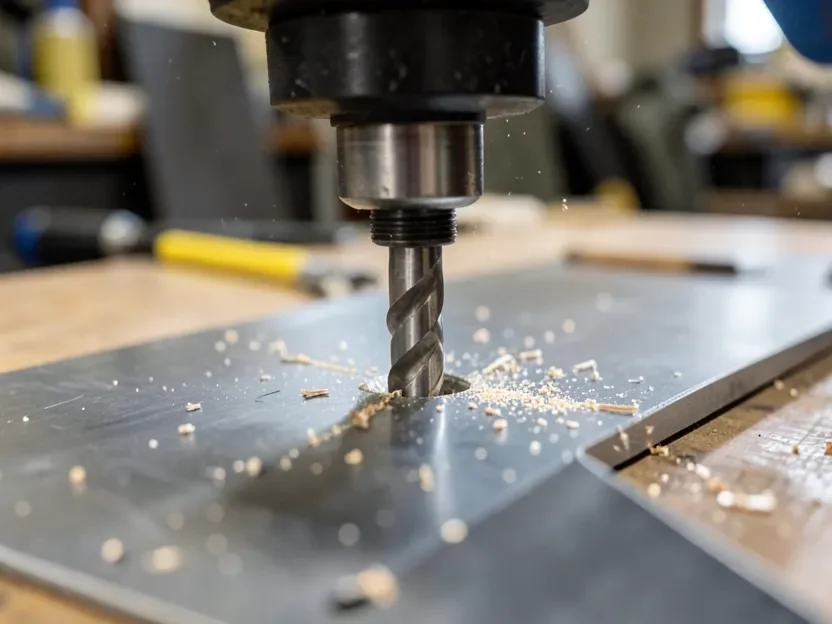
In woodworking, carbide-tipped saws earn their keep on hardwood, plywood with glue-heavy layers, and cement-backer board — all of which chew through a standard bi-metal saw’s teeth in a handful of cuts. They’re the right call for door-knob holes, cabinet grommet holes, and speaker cutouts where you want a clean edge without tear-out.
In metalworking, carbide teeth handle stainless steel, aluminum, and mild steel sheet without dulling after one or two holes the way a cheap bi-metal saw does. That’s useful for conduit and box knockouts, HVAC ductwork, and panel fabrication — for example, sizing a 2-inch hole saw correctly when you’re actually cutting into 1 1/2-inch PVC pipe rather than guessing and cutting the hole oversized.
How to Use a Carbide Hole Saw Without Burning It Up
Carbide teeth are hard but brittle — the most common way people ruin a new kit isn’t wear, it’s heat and chipping from running it wrong. A few rules that actually matter:
- Start slow, always. Low RPM (roughly 300–450 RPM for wood, well under 200 RPM for metal) until the pilot bit is fully seated, then increase speed gradually.
- Match speed to material, not habit. Wood tolerates higher speed than metal; running a metal-rated speed on wood just burns the cut edge, and running a wood-rated speed on steel chips carbide teeth.
- Back the pressure off in metal. Let the teeth cut — forcing a carbide tooth into steel is how you snap it off the body.
- Clear chips periodically. Pull back every few seconds on deeper cuts so chips don’t pack the gullet and overheat the teeth.
- Confirm the arbor is actually seated. A loose arbor is the single biggest cause of wobble and chipped teeth on a brand-new kit — see our arbored vs. non-arbored hole saw guide if you’re not sure which type you have.
Always wear eye protection, secure the workpiece with a clamp, and unplug the drill before swapping saws — carbide teeth are sharp enough to cut a finger the same way they cut sheet metal.
Maintenance: Keeping the Carbide Edge Sharp
Wipe metal shavings and resin buildup off the teeth after every use — a soft brush and mild soap and water is enough; skip harsh solvents, which can loosen the braze holding the carbide tips on. Dry the saw fully before storing it, since a damp case is the fastest way to rust the arbor and pilot bit even if the carbide itself doesn’t corrode. Chipped or worn teeth can be touched up with a diamond file, but once more than one or two teeth are visibly chipped, it’s cheaper to replace that saw than to keep filing it back into round.
Common Mistakes to Avoid
Using a wood-rated speed on metal is the most common mistake — it’s the fastest way to chip carbide teeth on a brand-new saw. A close second is buying a large multi-purpose kit expecting it to work on tile or glass; those need a grit-rim saw, not carbide-tipped teeth, as covered above. Finally, skipping the pilot hole or letting the workpiece shift mid-cut is what turns a clean round hole into an oval one — always clamp the material down before you start.
Frequently Asked Questions
Can You Sharpen Carbide Hole Saws?
Yes, lightly, with a diamond file following the original tooth angle — but carbide is brittle, so sharpening restores an edge rather than reshaping heavily worn or chipped teeth. Once several teeth are chipped, replacement is usually cheaper than repeated filing.
What Is the Difference Between Cobalt and Carbide Hole Saws?
Cobalt (bi-metal with a cobalt-alloy edge) is heat-resistant and flexible, a solid all-around choice for general metal work. Carbide-tipped saws are harder and hold an edge far longer in abrasive materials like stainless steel, cement board, and fiberglass, but the teeth are more brittle and can chip if forced.
What Is the Ideal Application for a Carbide Hole Saw Kit?
A carbide hole saw kit is ideal for cutting precise holes in abrasive or hard materials — stainless steel, cement backer board, fiberglass, and hardwood — where a standard bi-metal saw would dull within a few holes. For softer materials like drywall or thin softwood, a cheaper bi-metal saw does the job just as well for less money.
Is a Carbide-Tipped Hole Saw the Same as a Diamond or Grit-Rim Hole Saw?
No. Carbide-tipped saws have individual carbide teeth brazed onto a steel body and are meant for wood and metal. Diamond or carbide-grit saws have an abrasive rim bonded around the entire edge and are built for tile, glass, and porcelain — using the wrong type for the material is the most common return reason for these kits.
Bottom Line
The ideal carbide hole saw kit isn’t the biggest set you can find — it’s the smallest set that actually covers the sizes and materials you cut. For most metal and mixed-material work, a compact 3-piece carbide-tipped set like the DEWALT DWACM1802 above covers the common sizes without paying for diameters you’ll never use. If you regularly cut tile or glass, skip carbide-tipped entirely and buy a grit-rim saw instead — no carbide kit, no matter how well-reviewed, will do that job cleanly.
Sponsored / affiliate links. As an Amazon Associate I earn from qualifying purchases. I may earn additional commission from eligible campaigns.