Fresh Oak Flooring: What Real Oak Hardwood Costs and Needs
Real oak hardwood flooring costs $13–$17 per square foot installed and rates 1,290 Janka (red oak) to 1,360 Janka (white oak) – both far harder than pine. Skipping proper acclimation – waiting a fixed 48 hours instead of matching the wood’s moisture content to the subfloor – is the leading cause of gapping and cupping after install. This guide covers real installation costs, red vs. white oak differences, correct acclimation timing, and long-term care.
If you landed here searching for the specific Lifeproof “Fresh Oak” luxury vinyl plank color, that’s a waterproof LVP product, not solid or engineered wood – it won’t need acclimation, sanding, or refinishing the way real oak does. Everything below covers genuine oak wood flooring: solid and engineered planks milled from actual oak trees.
Acclimating and Preparing Fresh Oak Flooring – Do It by Moisture, Not by the Clock
Best Moisture Meter Pick

General Tools MMD4E Moisture Meter for Wood – $38.83
Reads 5–50% moisture in wood with stainless steel pins – exactly the check this guide recommends before installing oak flooring instead of just waiting 48 hours.
- Best for: confirming oak planks and subfloor are within 2–4 points of each other before nailing or gluing down
- Why we picked it: pin-type readings are more direct on bare wood than pinless models, and it doubles as a leak/mold check tool for other rooms
- Main drawback: pins leave tiny holes, so test on scrap or an inconspicuous plank edge
As an Amazon Associate we earn from qualifying purchases.
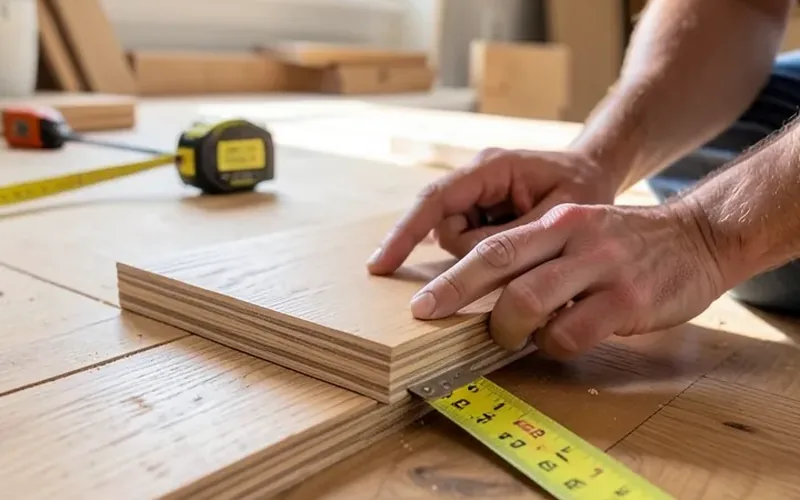
A common mistake is leaving new oak planks in the room for a fixed 48 hours and assuming that’s enough. It usually isn’t. Acclimation is finished when the flooring’s moisture content is within about 2–4 percentage points of the subfloor’s moisture content – not after a set number of hours. Depending on the season, HVAC operation, and how the wood was stored before delivery, that can take anywhere from a few days to two weeks.
- Run the HVAC first: Get permanent heating and cooling operating in the home at normal living conditions at least 5 days before flooring delivery – acclimating in an unconditioned space wastes the process.
- Check moisture content, don’t guess: Use a pin or pinless wood moisture meter on both the subfloor and several flooring boards. Kiln-dried oak typically arrives around 6–8% moisture content; installation is safe once the flooring and subfloor readings are within 2–4 points of each other.
- Hold humidity in range: Keep indoor relative humidity between 35–55% year-round after installation – both drier and more humid conditions push solid oak to shrink or swell at the seams.
📊 Basic oak flooring installation runs $13.19–$16.72 per square foot (materials + labor) as of 2026, with full-room projects averaging around $12,000. – Source: Angi, 2026 Oak Flooring Installation Cost Data
Since acclimation is a moisture-content match, not a countdown timer, a simple pin-type moisture meter is the one tool that actually tells you when oak planks are ready to go down – and it keeps paying off afterward for spotting leaks under trim or near exterior doors.
The Allure of Fresh Oak Flooring
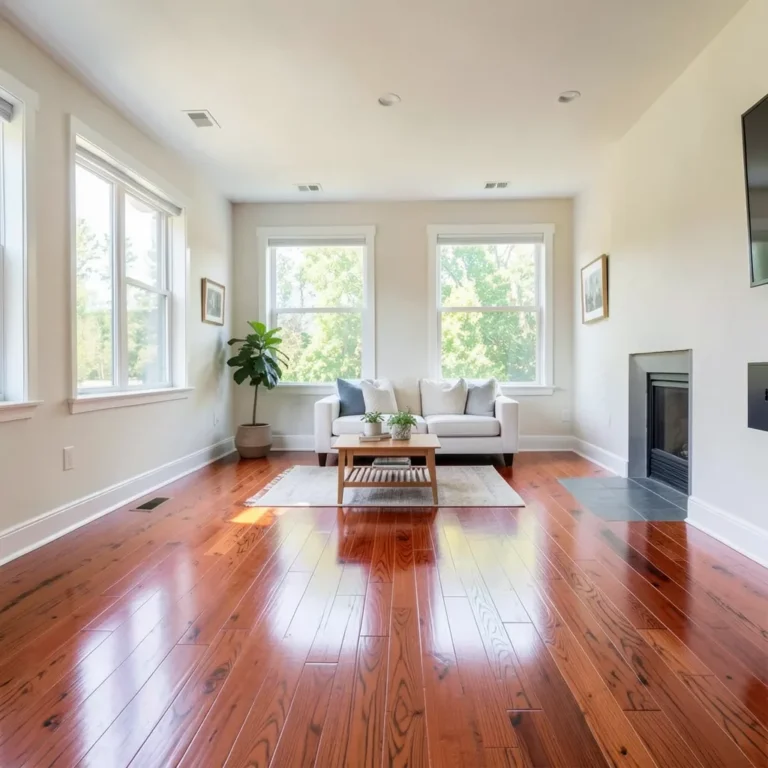
Fresh oak flooring captivates homeowners with a grain pattern and hardness that few budget materials can match. Oak is one of the hardest domestic flooring species commonly sold in the U.S., which is why it dominates the oak flooring aisles at big-box retailers and specialty flooring shops alike.
Timeless Appeal
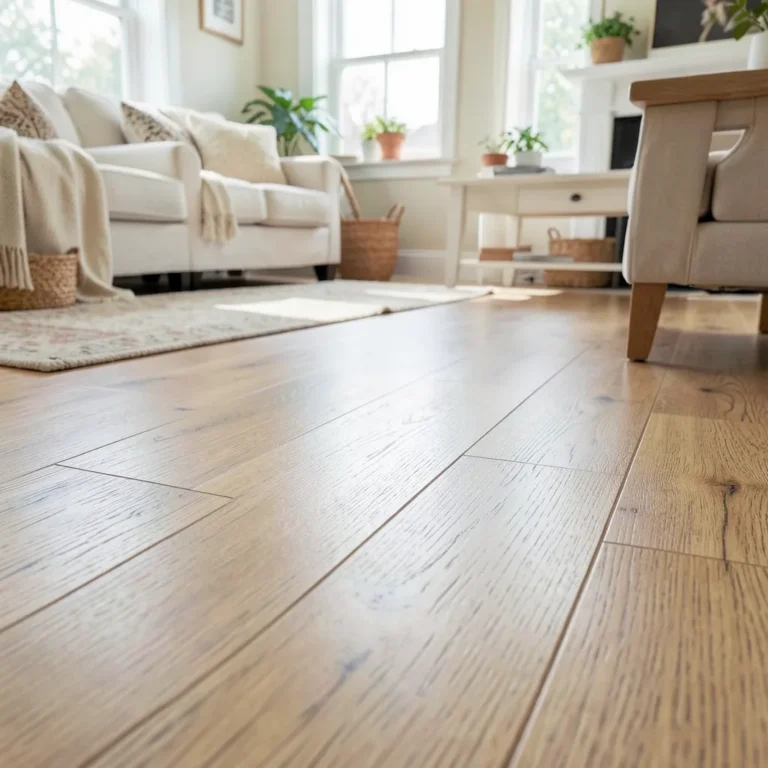
Oak flooring fits both modern and traditional interiors because its grain reads as neutral rather than trendy. Unlike painted finishes or exotic species, oak rarely looks dated a decade later.
- Durable enough for daily foot traffic in living rooms and hallways
- Can be sanded and refinished multiple times over its lifespan
- Wide availability of stains, widths, and plank lengths
- Recognized by appraisers as a value-adding upgrade over carpet or laminate
Natural Beauty and Variation
Every oak board is unique – grain, mineral streaks, and small knots vary board to board even within the same batch. This variation is a normal feature of a natural material, not a defect, and it’s what keeps a real wood floor from looking uniform like a printed vinyl replica.
| Feature | Description |
|---|---|
| Janka hardness | 1,290 lbf (red oak) – 1,360 lbf (white oak) |
| Color range | Light beige to deep reddish-brown, depending on species and stain |
| Grain | Open grain (red oak) or tighter, closed grain (white oak) |
Types of Oak Flooring
Choosing the right type of oak flooring means picking a species and a construction method – and getting both wrong is the most common regret homeowners report after installation.
Red vs. White Oak
Red and white oak are the two primary species used for oak flooring. They differ in color, grain, hardness, and moisture resistance.
| Feature | Red Oak | White Oak |
|---|---|---|
| Color | Reddish/pink hue | Light brown to olive |
| Grain | Open grain, more visible pores | Closed grain, tighter pores |
| Janka hardness | 1,290 lbf | 1,360 lbf |
| Moisture resistance | Lower – open pores absorb more moisture | Higher – tighter cell structure, traditionally used for wine barrels and boat building |
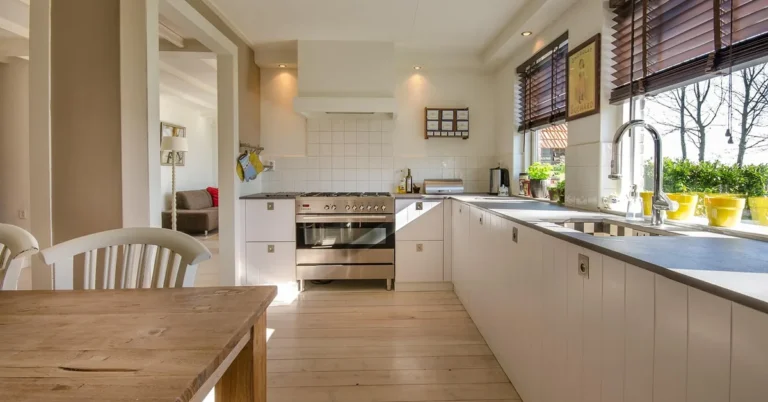
Red oak’s warm, pinkish tone suits cozy, traditional rooms and is usually the cheaper of the two. White oak’s tighter grain and slightly higher hardness make it the better pick for kitchens, entryways, and homes with dogs.
Solid vs. Engineered Oak Planks
Oak flooring comes in two constructions: solid planks milled entirely from oak, and engineered planks with a real oak wear layer bonded over a plywood core.
- Solid oak planks – 100% oak wood, similar to the Wendover brown oak style; can be sanded and refinished 4–6 times over its life; more prone to expansion and contraction with humidity swings, so it’s not recommended below grade (basements)
- Engineered oak planks – a cross-layered plywood or HDF core with a real oak veneer on top; more dimensionally stable in humid climates or over radiant heat; can typically be refinished only 1–2 times depending on wear-layer thickness
Solid oak gives the most refinishing headroom over a 40+ year lifespan. Engineered oak is the safer call in basements, over concrete slabs, or anywhere humidity swings are hard to control.
Benefits of Oak Flooring in Your Home
Durability and Longevity
At 1,290–1,360 Janka, oak resists scratches and dents better than softwoods like pine (Janka ~380–690) or many budget engineered products. A well-maintained oak floor commonly lasts 30+ years and can be refinished several times rather than replaced.
Increases Property Value
Real hardwood, including oak, is one of the few flooring upgrades appraisers and buyers consistently rate above carpet or laminate – a factor worth weighing against oak’s higher upfront cost versus engineered alternatives or LVP.
Design Considerations for Oak Floors
Choosing the Right Shade
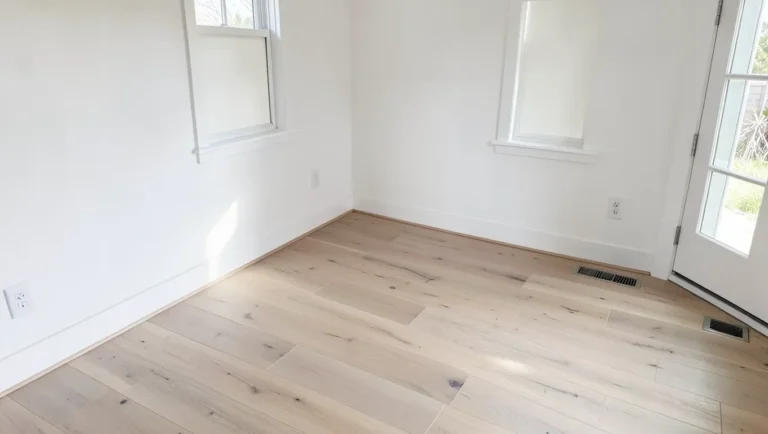
Light, natural finishes read bright and airy; darker walnut-toned stains add warmth but show dust and pet hair more readily. Always test a stain sample on an offcut of the actual oak batch you’re buying – red and white oak can take the same stain differently because of their grain structure.
To Stain or Not to Stain
| Pros | Cons |
|---|---|
| Enhances natural grain and color | Darkens the wood and hides some grain detail |
| Wide range of achievable tones | Needs recoating as the finish wears |
| UV-resistant topcoats slow fading | Requires a test patch before committing |
Maintaining Your Oak Floors
| Do | Don’t |
|---|---|
| Sweep or vacuum with a hard-floor setting | Use a steam mop or soaking-wet mop |
| Wipe spills immediately | Use vinegar, ammonia, or oil-soap cleaners not made for finished wood |
| Use a pH-neutral hardwood cleaner | Scrub with abrasive pads |
| Keep indoor RH between 35–55% | Let standing water sit at doorways or under plants |
Felt pads under furniture legs, mats at exterior doors, and a household humidifier or dehumidifier to hold that 35–55% range do more for long-term appearance than any cleaning product.
Cost and Budgeting for Oak Flooring
Material-only prices for oak flooring typically run $3–$10 per square foot for engineered and $5–$15 for solid, before installation. Once labor is included, expect the $13.19–$16.72 per square foot blended rate cited above, or roughly $10,000–$14,000 for a typical 1,000 sq ft room in mid-range white oak.
The payoff: oak’s 30+ year lifespan and refinishing ability (solid boards can be sanded 4–6 times) usually beats replacing carpet or laminate every 8–15 years on a cost-per-year basis, even though the upfront price is higher.
Frequently Asked Questions
How long does oak flooring need to acclimate before installation?
There’s no fixed number of days. Oak is ready to install once its moisture content is within about 2–4 percentage points of the subfloor’s, which a wood moisture meter confirms directly. Depending on season and HVAC operation, this typically takes several days to two weeks – a flat 48-hour wait is often not enough.
What is the Janka hardness rating of oak flooring?
Red oak rates 1,290 lbf on the Janka hardness scale and white oak rates 1,360 lbf, both well above softwoods like pine. This makes oak one of the more dent- and scratch-resistant options among common domestic flooring species.
How much does oak flooring installation cost per square foot?
Basic oak flooring installation, including materials and labor, runs about $13.19 to $16.72 per square foot as of 2026. Material alone ranges $3–$10 per square foot for engineered oak and $5–$15 for solid oak, with installation adding roughly $1–$5 per square foot on top.
Is “Fresh Oak” flooring the same as real oak hardwood?
No. “Fresh Oak” is also the name of a Lifeproof luxury vinyl plank color sold at Home Depot – a waterproof vinyl product that only looks like oak. Real oak hardwood is milled from actual oak trees, needs acclimation before installation, and can be sanded and refinished; vinyl plank cannot.
Conclusion
Fresh oak flooring earns its popularity through genuine hardness (1,290–1,360 Janka), a 30+ year lifespan, and the ability to be refinished instead of replaced. The projects that go wrong almost always skip the moisture-content check before installation – test with a real meter, hold humidity in the 35–55% range afterward, and oak flooring will outlast most other choices in the house.
Sponsored / affiliate links. As an Amazon Associate I earn from qualifying purchases. I may earn additional commission from eligible campaigns.