Half of Basketball Court: Maximize Your Training Space
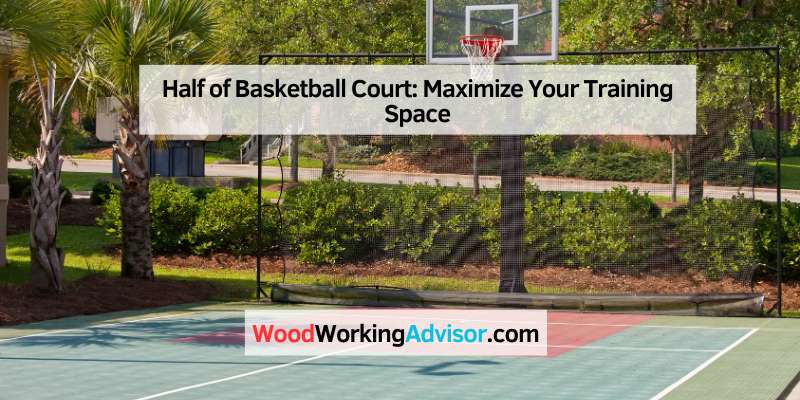
A half of basketball court measures 47 feet long and 50 feet wide. It is commonly used in smaller spaces or for backyard basketball courts.
ModuTile, VersaCourt, and Sports Venue Calculator are some companies that offer half court basketball kits for installation. With the growing popularity of backyard basketball, building a half court can be a great addition to your home or community center. It provides a space for recreational activities and can improve one’s basketball skills.
We will discuss the dimensions of a half court basketball court, different types of kits available for installation, and their costs.
Introduction To Half-court Basketball
Half-court basketball is a modified version of the traditional full-court game, where only one half of the basketball court is utilized. This smaller playing area offers a range of benefits, making it a popular choice for training and recreational purposes.
Benefits Of A Smaller Court
A half-court basketball court brings several advantages to players of all skill levels. Here are some key benefits:
- Increased player involvement: With a smaller court, players have more opportunities to be actively involved in the game. They are constantly engaged and have more chances to touch the ball, improving their overall skills and decision-making abilities.
- Improved fitness: Playing on a half-court requires players to cover less ground, resulting in shorter sprints and reduced fatigue. This allows players to focus on specific aspects of the game, such as shooting, passing, and defense, leading to better overall fitness.
- Enhanced teamwork: The limited space on a half-court promotes better communication and collaboration among teammates. Players must work together closely, strategizing and executing plays effectively to succeed.
- Maximized practice time: With a smaller playing area, teams can make the most of their practice sessions. They can run drills, scrimmage, and work on specific skills without wasting time running the full length of the court.
Popular Uses In Training And Recreation
Half-court basketball is widely utilized in various training and recreational settings. Here are some popular uses:
- Training sessions: Coaches and trainers often use half-court setups to focus on specific skills and game scenarios. This allows for more repetitions and targeted development of individual and team skills.
- Recreational play: Half-court games are common in informal settings, such as parks, community centers, and backyard setups. They provide a fun and accessible way for friends and family to enjoy basketball without the need for a full-size court.
- Tournaments and leagues: Half-court tournaments and leagues are organized to accommodate a larger number of teams and players. These events offer a competitive environment while conserving space and time.
Overall, half-court basketball offers a range of benefits and is a versatile option for both training and recreational purposes. Its smaller size fosters increased player involvement, improved fitness, enhanced teamwork, and maximized practice time. Whether you are a beginner or an experienced player, half-court basketball can provide an enjoyable and effective way to develop your skills and enjoy the game.
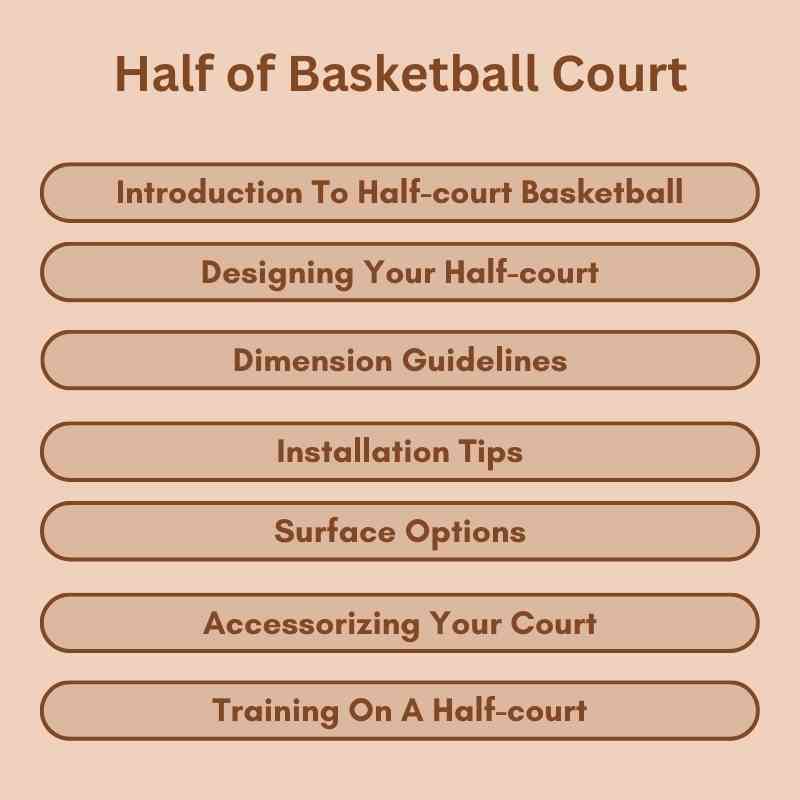
Designing Your Half-court
Choosing The Right Location
When designing your half-court, the first step is to choose the right location. Consider the available space in your backyard or outdoor area. Look for a flat and level surface that is free from obstructions such as trees or utility lines. It’s important to have enough room for players to move around comfortably, so make sure the dimensions of the space meet the requirements for a half-court basketball court.
Materials And Equipment Needed
Once you have selected the location, the next step is to gather the materials and equipment needed to build your half-court. Here is a list of the essential items:
- Basketball hoop: Choose a high-quality hoop that is durable and adjustable in height.
- Basketball court tiles: Opt for interlocking tiles specifically designed for outdoor use. These tiles provide a stable and safe playing surface.
- Boundary lines: Use tape or paint to mark the boundaries of the half-court.
- Basketball: Purchase a regulation-size basketball for optimal play.
- Netting or fencing: Consider installing netting or fencing around the court to prevent balls from going out of bounds.
- Optional extras: Scoreboard, seating, lighting, and landscaping can enhance the overall look and functionality of your half-court.
By gathering these materials and equipment, you can ensure that you have everything you need to create a professional and enjoyable half-court basketball experience.
Dimension Guidelines
Introductory paragraph
Basketball court dimension guidelines are crucial for ensuring the standard playing area is maintained, whether it’s at the NBA, NCAA, or high school level. These guidelines provide specific measurements for the half-court, ensuring consistency and fairness in the game.
NBA standards
Nba Standards
- The half-court dimensions for the NBA are 47 feet in length and 50 feet in width.
- This includes a three-point line that is 22 feet away from the hoop at the top of the key and 23.75 feet away at the corners.
- The free-throw line is 15 feet from the backboard, and the key or paint area is 16 feet wide.
NCAA standards
Ncaa Standards
- For NCAA standards, the half-court dimensions are slightly smaller at 42 feet in length and 40 feet in width.
- Similar to the NBA, the three-point line is 22 feet away from the hoop at the top of the key and 21.75 feet away at the corners.
- The free-throw line is also 15 feet from the backboard, and the key or paint area is 12 feet wide.
High school standards
High School Standards
- At the high school level, the half-court dimensions are usually 42 feet in length and 50 feet in width.
- The three-point line is 19.75 feet away from the hoop at the top of the key and 22 feet away at the corners.
- The free-throw line remains the same at 15 feet from the backboard, and the key or paint area is typically 12 feet wide.
Installation Tips
Looking to install a half basketball court? Check out the ModuTile and VersaCourt kits for easy installation in Austin, Texas. With a variety of options available, you can create your own backyard basketball court with professional-grade materials. Get ready to shoot some hoops!
Preparing The Ground
If you are considering installing a half basketball court, proper ground preparation is essential for optimal performance and safety. Begin by ensuring that the ground is level and free from any obstructions or debris. Use a level and a tape measure to confirm that the ground is even.
Assembling The Hoop System
Assembling the hoop system is a crucial part of the installation process. Ensure that you follow the manufacturer’s instructions carefully. The hoop system should be securely anchored to the ground to prevent any wobbling or instability during use.
Surface Options
Transform your half of a basketball court with a variety of surface options available. From ModuTile to VersaCourt, you can find kits, coatings, and flooring that will enhance your playing experience. Whether you’re a professional or just playing for fun, these options will elevate your game.
Choosing the right surface for your half basketball court is an important decision that can affect the longevity and durability of your court. There are several surface options available, each with its own advantages and disadvantages. In this section, we will compare the three most popular surface options: asphalt, concrete, and modular tiles.
Comparing asphalt, concrete, and modular tiles
Asphalt:
Asphalt is a popular choice for outdoor basketball courts due to its durability and low cost. It is also easy to install and requires minimal maintenance. However, asphalt can crack over time, which can affect the safety and playability of the court. Asphalt courts also tend to be rougher and less forgiving than other surfaces, which can lead to more injuries.
Concrete:
Concrete is a more durable option than asphalt, but it is also more expensive. It provides a smooth and consistent playing surface, and it is less likely to crack over time. Concrete courts are also easier to maintain than asphalt courts, and they can be coated with a variety of colors and designs. However, concrete can be slippery when wet, and it can be more challenging to install than other surfaces.
Modular tiles:
Modular tiles are an innovative solution that provides a durable and customizable surface for your half basketball court. These tiles can be easily installed over any flat surface, including concrete, asphalt, or even grass. They are available in a variety of colors and designs, and they can be easily replaced if damaged. Modular tiles also provide excellent shock absorption, which can help reduce the risk of injuries. However, modular tiles are more expensive than other surface options, and they can be more challenging to install.
Coating and painting your court
Coating and painting your basketball court can help protect it from the elements and enhance its appearance. There are several coating and painting options available, including acrylic, latex, and rubber. Acrylic coatings are the most popular option, as they provide a smooth and durable surface that can be customized with a variety of colors and designs. Latex coatings are another option, but they are less durable than acrylic coatings and tend to wear off more quickly. Rubber coatings are the most expensive option, but they provide excellent shock absorption and can last for many years.
In conclusion, choosing the right surface for your half basketball court depends on your budget, preferences, and needs. Asphalt is a low-cost and durable option, while concrete provides a smooth and consistent playing surface. Modular tiles are a more expensive but customizable solution that offers excellent shock absorption. Coating and painting your court can also enhance its appearance and protect it from the elements. Whatever option you choose, make sure to maintain your court regularly to ensure it lasts for many years.
Accessorizing Your Court
Enhance the look and functionality of your half basketball court with the right accessories. Consider adding durable and high-quality court flooring, adjustable basketball hoop systems, and vibrant court lines to complete the setup and elevate your playing experience. With the right accessories, you can transform your half basketball court into a professional-grade playing space.
Selecting Durable Outdoor Basketballs
When accessorizing your half basketball court, selecting the right basketball is crucial for a great playing experience. Outdoor basketballs are designed to withstand the wear and tear of outdoor use, ensuring they last longer than indoor basketballs. When selecting a basketball for your court, it’s important to consider the quality, size, and material of the ball. High-quality outdoor basketballs are made of rubber or synthetic leather, which make them durable and weather-resistant.
Adding Seating And Lighting
In addition to selecting the right basketball, adding seating and lighting to your half-court can enhance your playing experience. Installing benches or chairs around your court can provide a comfortable place to rest between games. Lighting your court allows you to play at any time of day, and it adds a cool ambiance to your outdoor space. When selecting lighting, it’s important to choose fixtures that are weather-resistant and provide enough light to play safely.
Accessorize Your Court Smartly
Accessorizing your half basketball court is a great way to create a fun and inviting space for friends and family to enjoy. When selecting accessories, it’s important to choose high-quality products that are durable and weather-resistant. By selecting durable outdoor basketballs, adding seating and lighting, you can create an enjoyable and safe playing experience for everyone. Don’t forget to consider the size and material of your basketballs, the comfort of your seating, and the quality of your lighting when accessorizing your court.
Training On A Half-court
Utilizing a half basketball court for training can be highly effective, especially when space and player count are limited. This approach not only maximizes the available resources but also enhances the players’ skills and adaptability on the court.
Drills And Games For Limited Space
When working with a half-court, it’s crucial to focus on drills and games that are specifically tailored to make the most of the limited space. Dribbling and shooting drills can be modified to suit the smaller area, emphasizing precision and agility.
Incorporating 1-on-1 or 2-on-2 games can also be highly beneficial, fostering intense competition and improving players’ decision-making abilities under constrained conditions.
Maximizing Practice With Fewer Players
With a half-court, it’s essential to optimize practice sessions, especially when the number of players is limited. Rotation drills and multi-position practices can help ensure that every player receives ample opportunities to develop their skills.
Implementing small-sided scrimmage games enables each player to actively participate and engage in a higher number of game-like situations, leading to overall improvement in their performance.
Beyond The Court
Integrating Technology For Training
Technology has revolutionized basketball training, with the integration of advanced tools and equipment. From virtual reality simulators to motion tracking sensors, players can now enhance their skills and performance like never before. Coaches utilize video analysis software to provide personalized feedback, helping players refine their techniques and strategies. Additionally, wearable devices monitor player’s biometrics, offering valuable insights for improvement.
Community Events And Tournaments
Community events and tournaments play a vital role in fostering camaraderie and sportsmanship. Local basketball courts often serve as the venue for these events, bringing together players and fans from diverse backgrounds. These gatherings not only promote physical activity but also contribute to the social fabric of the community. Organizing regular tournaments encourages healthy competition and provides a platform for aspiring players to showcase their talent.
Frequently Asked Questions
What Is A Half-court In Basketball?
A half-court in basketball is a playing area that covers half of the standard basketball court. It is commonly used for smaller games or practice sessions. The dimensions of a half-court are typically 47 feet by 50 feet. It provides players with a condensed space to work on their skills and tactics.
How Many Feet Is A Half Basketball Court?
A half basketball court is typically 47 feet long and 50 feet wide.
What Does Half Of A Basketball Court Look Like?
Half of a basketball court looks like a rectangular area with dimensions of 47 feet by 50 feet. It is divided into two equal halves by the midcourt line, with a circular center circle at the midpoint of the court.
The three-point arc is also present, with its radius measured at 22 feet from the center of the basket.
How Many Feet Is A Nba Half-court Shot?
A NBA half-court shot is approximately 47 feet.
Conclusion
A half of a basketball court offers a practical and cost-effective solution for those who want to enjoy the game of basketball in a limited space. With the right dimensions and equipment, you can create your own half court at home or in a community center.
Whether you’re a basketball enthusiast or want to encourage physical activity, a half court provides a versatile and enjoyable option for players of all ages and skill levels. Explore the various options available and start enjoying the game on your own terms.