The Real History of the Maloof Rocking Chair’s Design Evolution
Sam Maloof didn’t set out to design an icon. In 1948 he was a self-taught furniture maker building oak pieces for his own house in Chino, California – and by 1982, one of his rocking chairs was the first piece of contemporary furniture the White House ever added to its permanent collection. Here’s the real, source-checked timeline of how that happened, what actually changed in the joinery along the way, and where you can still see the originals today.
From Scrap Oak To A Full-Time Craft (1948–1949)
Best Book On Maloof’s Own Design Process
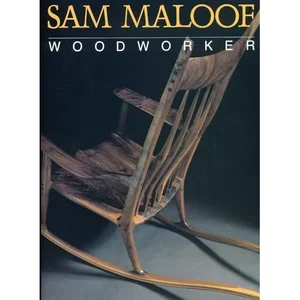 |
Sam Maloof, Woodworker – $36 Maloof’s own account of the joinery and design decisions covered in this article, told in his own words with period photos of the actual chairs.
|
Maloof was born in 1916 in Chino, California, to Lebanese immigrant parents. Before he ever built furniture for a living, he worked as a graphic artist, served in the U.S. Army during World War II, and spent time as a studio assistant to the Claremont artist-designer Millard Sheets. In 1948, newly married to Alfreda Ward, he built furniture for their first house out of scrap oak planks simply because the couple couldn’t afford to buy any. It was Alfreda who pushed him to make woodworking his profession, and by 1949 he was working wood full-time.
None of that early furniture was built to be iconic. It was inexpensive, sturdy oak seating meant to solve a real problem in a young couple’s house – which is part of why the joinery Maloof developed later stands out so much. He spent the next several decades refining the same handful of ideas rather than reinventing his approach for every new commission.
The Joint That Actually Changed
In his early chairs through the 1950s and 1960s, Maloof used a comparatively simple socket joint: he clamped the two side seat rails together outside-edge to outside-edge, bored a single hole through both at once, then separated the rails to leave a matching half-round socket that a lathe-turned leg fit into. It worked, but it limited how sculptural the transition from leg to seat could look.
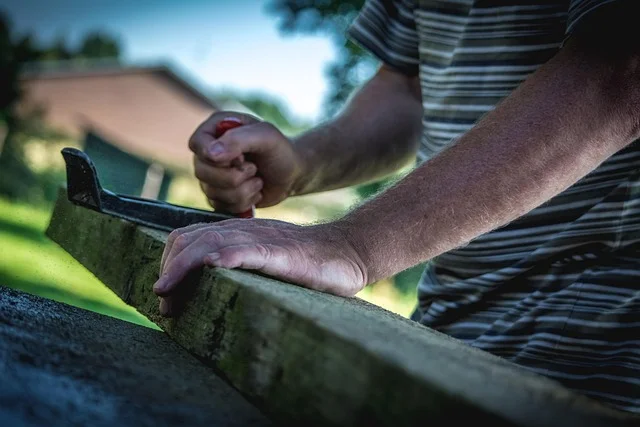
Shortly after he introduced a shaped wood seat around 1970, Maloof began cutting that joint differently. He used a 1/4-inch rabbeting bit to shape shoulders so the front and rear legs interlocked directly with the seat instead of simply socketing into it, then treated the whole assembly as a sculpture problem rather than a fitting problem: the parts were glued up oversized and looking almost crude, then hand-carved down afterward until the leg and seat read as one continuous piece of wood. That rabbeted, hand-shaped joint is the detail most people mean today when they talk about a “Maloof joint,” and it’s still the hardest part of his chairs to replicate well. For the full step-by-step breakdown of how it’s cut and carved, see our guide to Sam Maloof’s chair-making process.
From Function-First Seating To A Sculptural Signature
One popular myth is that Maloof invented the rocking chair. He didn’t – rocking chairs had been common in American homes for well over a century before he built his first one. What he changed was how a rocking chair’s structure could look: instead of turned spindles and a flat seat, his chairs read as a single flowing piece of wood, with the seat, back, and rockers all shaped to work together as one continuous form. That shift didn’t happen all at once. Early pieces were closer to traditional Shaker-influenced seating; over roughly three decades of the same commissions repeating, the curves became more pronounced, the joinery became more sculptural, and the chair stopped looking like furniture with added ornamentation and started looking like it had grown into its shape. Our breakdown of Maloof’s design philosophy covers why he insisted every curve had to serve comfort first, not the other way around.
Recognition That Changed What A “Craft Chair” Could Be
In 1982, one of Maloof’s rocking chairs became the first piece of contemporary furniture selected for the White House Collection – a milestone for studio furniture as a category, not just for Maloof personally. Three years later, in 1985, he received a MacArthur Foundation Fellowship, becoming the first and, at the time, only craftsperson to receive the award. In 2001–2002, the Smithsonian’s Renwick Gallery mounted a full retrospective of 65 original Maloof pieces. His work is now held in the permanent collections of the Smithsonian American Art Museum, the Metropolitan Museum of Art, the Los Angeles County Museum of Art, and the Philadelphia Museum of Art. Our guide to Maloof’s Smithsonian holdings goes deeper into which pieces are in that collection and why.
That kind of recognition mattered beyond Maloof’s own career. Studio furniture-makers working in the decades before him were generally treated as tradespeople, not artists, no matter how refined their joinery was. A woodworker’s chair being added to the White House Collection, then a decade later filling a museum retrospective, put pressure on that distinction in a way gallery shows alone hadn’t managed. It’s a big part of why a chair – a piece of furniture meant to be sat in daily, not displayed behind glass – is still one of the pieces most often cited when people talk about American studio craft breaking into fine-art institutions.
The Woods Behind The Curves
Maloof worked primarily in black walnut, prized for the way it carves cleanly along tight compound curves without tearing out – a real limitation with the deep scoops and rounded transitions his designs depend on. He also used maple, cherry, and, later in his career, sapele as old-growth walnut in the wide, thick stock a sculpted seat needs became harder to source. Each wood carries a different grain figure and color, which is part of why no two Maloof chairs look quite identical even when the joinery and proportions are the same. For a closer look at grading and sourcing the walnut this style depends on, see our guide to the wood Maloof used.
Where To See The Originals – Or Build One Yourself
Maloof died on May 21, 2009, at age 93, at his home in the Alta Loma area of Rancho Cucamonga, California. That home and workshop, which had earlier been relocated piece by piece after a freeway extension threatened the original site, are preserved today by the Sam and Alfreda Maloof Foundation for Arts and Crafts at 5131 Carnelian Street in Rancho Cucamonga. The foundation runs a one-hour Home Tour and a longer, two-hour Grand Tour by reservation, plus a virtual 360-degree tour for anyone who can’t visit in person. If you’d rather build your own version than see an original in person, our roundup of real Maloof chair templates and plans is the place to start.
Frequently Asked Questions
When did Sam Maloof design his first rocking chair?
Maloof began working wood full-time in 1949, and his rocking chair design developed steadily over the following decades rather than arriving all at once. It became his signature piece well before it reached wider recognition in 1982, when one of his rocking chairs became the first piece of contemporary furniture added to the White House Collection.
What makes the Maloof joint different from a standard mortise and tenon?
A standard mortise-and-tenon joint is cut to its final size and then assembled. The rabbeted leg-to-seat joint Maloof developed around 1970 is deliberately glued up oversized first, then hand-carved down afterward so the leg and seat read as one continuous shape with no visible seam – treating the joint as a sculpting step rather than a fitting step.
Why was Sam Maloof’s 1985 MacArthur Fellowship significant?
Maloof was the first craftsperson ever awarded a MacArthur Fellowship, commonly known as the “genius grant.” At the time, the award had gone almost exclusively to scientists, writers, and fine artists, so his selection was a significant sign that studio furniture-making was being recognized as a serious art form, not just a trade.
Can you still see an original Maloof chair in person?
Yes. Original Maloof pieces are in the permanent collections of the Smithsonian American Art Museum, the Metropolitan Museum of Art, the Los Angeles County Museum of Art, and the Philadelphia Museum of Art. You can also see chairs in the context of his actual workshop at the Sam and Alfreda Maloof Foundation for Arts and Crafts in Rancho Cucamonga, California, which offers guided tours by reservation.
Conclusion
The Maloof rocking chair didn’t become iconic because of a single breakthrough – it evolved through three decades of the same maker refining the same joint, the same curves, and the same small handful of woods until a functional chair became a museum piece. That trajectory, from scrap oak in a young couple’s house to the White House Collection and the Smithsonian, is unusual precisely because it happened without Maloof ever treating his furniture as anything other than something meant to be sat in.
Sponsored / affiliate links. As an Amazon Associate I earn from qualifying purchases. I may earn additional commission from eligible campaigns.