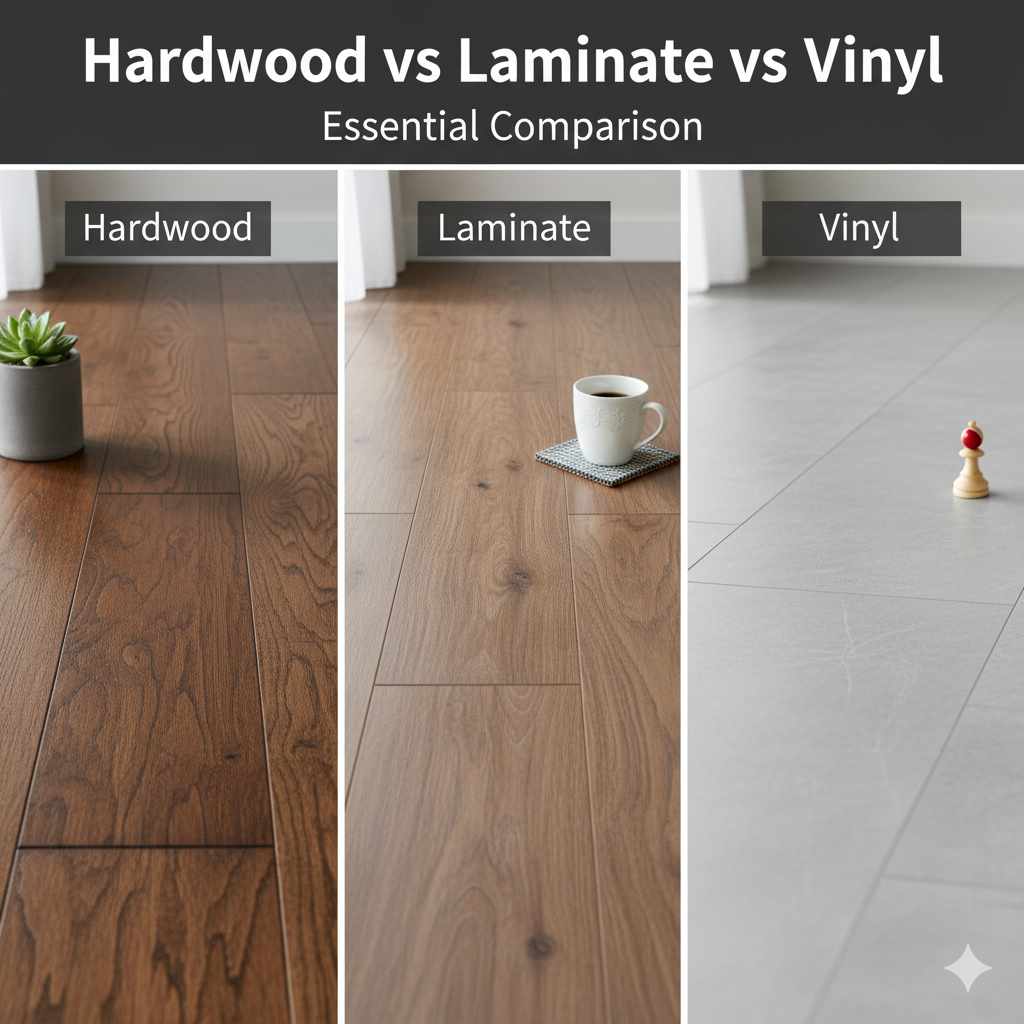
Hardwood Floor vs Laminate vs Vinyl: Essential Comparison
Choosing between hardwood, laminate, and vinyl flooring? For unmatched natural beauty and lasting value, hardwood is excellent but pricier. Laminate offers a wood look affordably, while vinyl provides superior water resistance and durability for busy homes. Compare durability, cost, and aesthetics to find your perfect fit.
Hello, DIY friends! Md Meraj here. Picking the right flooring for your home can feel like a big decision, especially when you’re aiming for that beautiful look without breaking the bank or getting lost in technical details. Many of you have asked me about the main contenders: genuine hardwood floors, practical laminate, and versatile vinyl. Each has its own charm and fits different needs and budgets. Don’t worry, we’ll break it down simply, step-by-step, so you can feel confident about your choice. Let’s explore these popular flooring options together!
Hardwood Floor vs Laminate vs Vinyl: Making the Right Choice for Your Home
Deciding on new flooring is exciting! It’s a chance to refresh your space and add real value. But with so many options, it’s easy to get overwhelmed. Hardwood floors offer timeless elegance, but they come with a significant investment. Laminate flooring mimics wood at a lower cost, and vinyl offers incredible versatility and durability, especially for high-traffic areas or moisture-prone rooms. This guide will help you compare these three popular flooring types, looking at everything from how they’re made and how well they stand up to daily life, to how much they’ll cost and how they’ll look in your home. By the end, you’ll have a clear picture of which flooring is the best fit for your project and your lifestyle.
Understanding the Basics: What’s Under Your Feet?
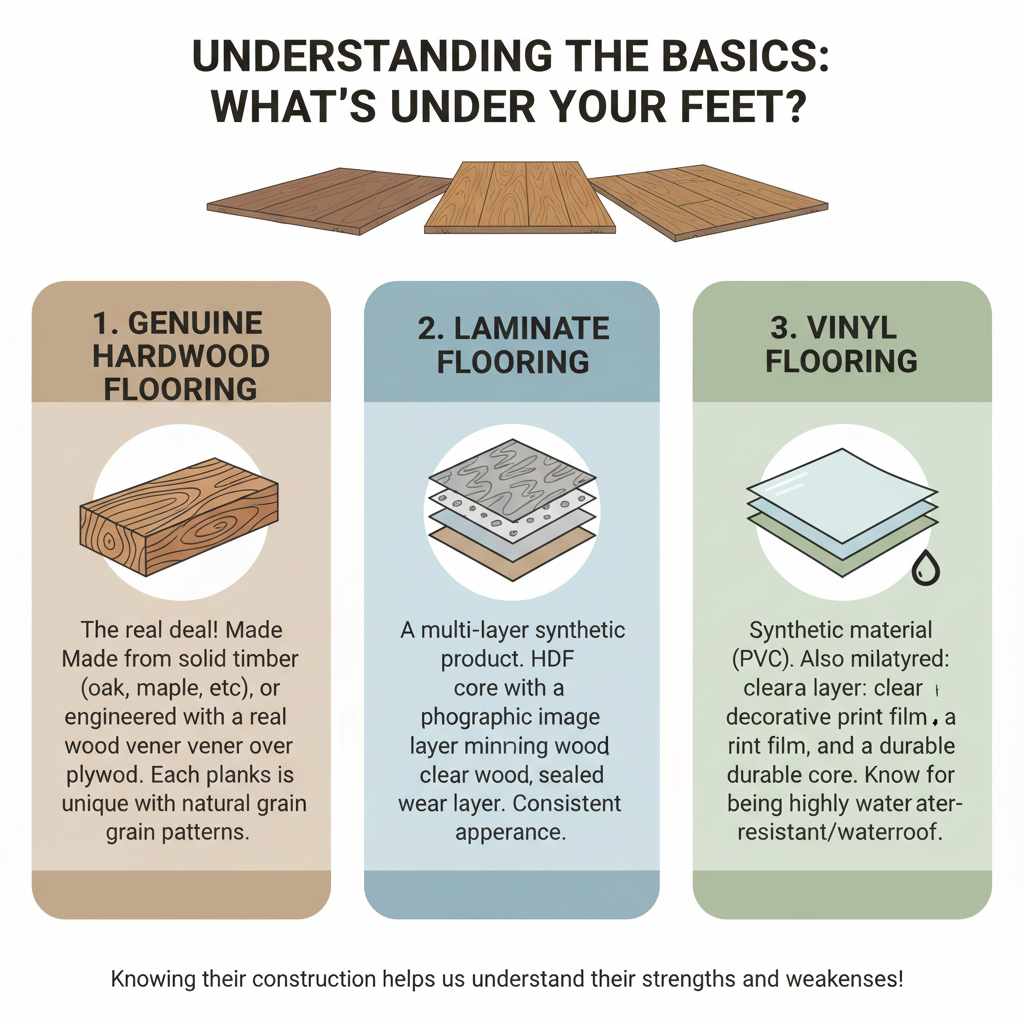
Before we dive into the comparison, let’s get a clear picture of what each flooring type actually is. Knowing their construction helps us understand their strengths and weaknesses.
1. Genuine Hardwood Flooring
This is the real deal! Hardwood floors are made from solid pieces of timber, like oak, maple, cherry, or walnut. They can be either solid hardwood (a single piece of wood from top to bottom) or engineered hardwood (a top layer of real wood veneer over layers of plywood or composite material). This natural material is what gives hardwood its unique beauty, warmth, and character. Each plank is one-of-a-kind, featuring natural grain patterns and color variations.
2. Laminate Flooring
Laminate flooring is a multi-layer synthetic product. It’s constructed with a core layer usually made from high-density fiberboard (HDF), topped with a photographic image layer that mimics wood (or stone), and then sealed with a clear wear layer. Think of it as a high-quality photograph of wood laminated under a protective coating. It’s designed to look like hardwood but is manufactured, making it more consistent in appearance than real wood.
3. Vinyl Flooring
Vinyl flooring, often referred to as Luxury Vinyl Tile (LVT) or Luxury Vinyl Plank (LVP), is also a synthetic material. It’s made from multiple layers of PVC (polyvinyl chloride) and other compounds. The top layer is a clear wear layer, beneath that is a decorative print film (mimicking wood or stone patterns), and then comes the core layer. It’s known for being highly water-resistant or even waterproof, making it a practical choice for many areas of the home.
Key Comparison Factors: What Really Matters?
When comparing hardwood, laminate, and vinyl, several factors come into play. Let’s break them down objectively to help you make an informed decision.
Durability and Longevity
How well will your floor hold up to daily life? This is a crucial consideration, especially in homes with kids, pets, or high foot traffic.
- Hardwood: Real hardwood is durable and can last for decades, even centuries, with proper care. It can be sanded and refinished multiple times to repair scratches or wear and give it a fresh look. However, it’s susceptible to scratches from pet claws, dents from heavy furniture, and damage from excessive moisture.
- Laminate: Laminate is quite durable and resistant to scratches and fading, thanks to its tough wear layer. It’s a good option for busy households. However, once the wear layer is significantly damaged, it cannot be repaired like hardwood. It’s also not ideal for very wet areas, as prolonged exposure to moisture can cause the core to swell and become damaged.
- Vinyl: Vinyl flooring, especially LVP and LVT, is exceptionally durable. It’s highly resistant to scratches, stains, and dents. Its biggest advantage is its excellent water resistance, making it suitable for kitchens, bathrooms, basements, and laundry rooms where moisture is a concern. It typically lasts 15-20 years or more, depending on quality and traffic.
Water Resistance and Moisture Protection
Water is the enemy of many flooring types. Understanding how each holds up is key for selecting the right material for specific rooms.
- Hardwood: Very susceptible to water damage. Spills need to be wiped up immediately. Standing water can warp, stain, and buckle the wood. It’s generally not recommended for full bathrooms, laundry rooms, or basements prone to dampness.
- Laminate: While modern laminates have improved water resistance methods, they are still generally not considered waterproof. Excess moisture can seep into the seams and damage the HDF core over time, leading to swelling and warping. Some newer options offer enhanced water resistance, but they still require quick cleanup of spills.
- Vinyl: This is where vinyl shines. Most LVP and LVT products are waterproof or highly water-resistant. This makes them an excellent choice for kitchens, bathrooms, and other areas where spills or humidity are common. The waterproof nature means spills won’t damage the subfloor underneath, and it holds up exceptionally well in damp environments.
Aesthetics and Appearance
How will it look and feel in your home? The visual appeal is a major factor for many homeowners.
- Hardwood: Offers unparalleled natural beauty, warmth, and a luxurious feel. Each plank has unique grain patterns, knots, and color variations, giving it a rich, organic look. It adds significant character and can elevate the perceived value of a home. Available in various species, finishes, and plank widths.
- Laminate: Designed to mimic the look of hardwood. Modern printing technology produces very realistic wood grain patterns. However, the repetition in patterns can sometimes be noticeable, and it may lack the tactile warmth and depth of real wood. It offers a consistent, clean look.
- Vinyl: Also mimics wood (and stone) very effectively, with high-definition printing and embossed textures that can feel quite realistic. LVP and LVT come in a vast array of styles, colors, and textures, allowing for immense design flexibility. It can offer a modern or rustic look depending on the chosen pattern and finish.
Installation Simplicity
Are you planning a DIY project? The ease of installation can significantly impact time and cost.
- Hardwood: Solid hardwood is typically nailed or stapled down to a subfloor. Engineered hardwood often comes with a click-lock system for floating installation or can be glued or nailed down. Installation usually requires specialized tools (like a nailer or staple gun) and a well-prepared subfloor. It’s often best left to professionals for a guaranteed perfect finish.
- Laminate: Most laminate flooring utilizes a click-lock system, making it a popular choice for DIYers. These planks snap together, creating a floating floor that doesn’t require adhesives or fasteners. It can be installed over many existing subfloors, provided they are level and clean.
- Vinyl: Vinyl flooring offers several installation methods. Sheet vinyl is often glued down. LVP and LVT can come as glue-down, peel-and-stick, or, most commonly, a click-lock system for floating installation. The click-lock systems are generally very user-friendly, making it an excellent option for DIY projects.
Maintenance and Cleaning
How easy is it to keep your floors looking their best?
- Hardwood: Requires careful maintenance. You should avoid excess water, use specialized wood floor cleaners, and protect it from scratches. Regular sweeping or vacuuming with a soft brush attachment is recommended. Spills must be wiped up immediately.
- Laminate: Relatively easy to clean. Damp mopping (not wet mopping) with a laminate-specific cleaner or a mixture of water and vinegar is usually sufficient. Avoid steam mops or excessive water. Sweeping or vacuuming is also effective.
- Vinyl: Very easy to maintain. Regular sweeping or vacuuming keeps it free of dirt and debris. Damp mopping with a pH-neutral cleaner or even just water is usually all that’s needed. It’s highly stain-resistant and can handle spills without issue.
Cost Comparison
Your budget plays a big role. The price can vary greatly based on quality, brand, and installation method.
Here’s a general price range per square foot, excluding installation costs:
| Flooring Type | Material Cost (per sq ft) | Estimated Lifespan |
|---|---|---|
| Hardwood (Solid & Engineered) | $5 – $15+ | 50+ years (refinishable) |
| Laminate | $1 – $5 | 15-25 years |
| Vinyl (LVP/LVT) | $2 – $7 | 15-25 years (often waterproof) |
Note: These are approximate figures. High-end versions of any material can significantly increase the cost. Installation costs can range from $2-$10+ per square foot depending on the complexity and your region.
Resale Value
How will your flooring choice impact your home’s marketability?
- Hardwood: Generally considered a premium feature that can increase a home’s resale value. Many buyers specifically look for real wood flooring.
- Laminate: While it looks good, it’s not typically seen as a value-adding feature like hardwood. It’s viewed as a budget-friendly alternative.
- Vinyl: Modern LVP and LVT are becoming more accepted and appreciated, especially in areas where durability and water resistance are highly valued. It can be a neutral or slightly positive feature, but not usually a major selling point like hardwood.
Pros and Cons at a Glance
Let’s summarize the advantages and disadvantages for each type to make your decision clearer.
Hardwood Flooring
- Pros:
- Timeless natural beauty and warmth.
- Increases home resale value.
- Can be sanded and refinished multiple times.
- Adds a luxurious feel to any room.
- Hypoallergenic (when kept clean).
- Cons:
- High cost of material and installation.
- Susceptible to scratches, dents, and moisture damage.
- Requires careful maintenance and specific cleaning products.
- Can be noisy in certain applications.
- Not ideal for high-moisture areas like bathrooms or basements.
Laminate Flooring
- Pros:
- Affordable price point.
- Durable wear layer resists scratches and fading.
- Easy DIY installation with click-lock systems.
- Wide variety of realistic wood looks.
- Relatively easy to clean.
- Cons:
- Cannot be refinished.
- Vulnerable to moisture damage if not cleaned quickly.
- Can sound hollow when walked upon.
- May not feel as warm or luxurious as hardwood.
- Lower resale value compared to hardwood.
Vinyl Flooring (LVP/LVT)
- Pros:
- Excellent water resistance/waterproof options.
- Very durable and resistant to scratches, stains, and wear.
- Easy to clean and maintain.
- Wide range of styles, colors, and textures.
- Comfortable underfoot and can be warmer than laminate.
- Good DIY installation options (click-lock, glue-down).
- Cons:
- Cannot be refinished.
- Lower resale value than hardwood.
- Cheaper vinyl can look less realistic or be less durable.
- Can be damaged by excessively sharp objects or heavy furniture if not protected.
- Some older or lower-quality vinyl may contain VOCs (Volatile Organic Compounds), though modern standards are much better – look for certifications like FloorScore®.
Where Each Flooring Type Shines Best
Considering the strengths of each material will help you choose the right spot for it in your home.
Best for Living Areas and Bedrooms:
Hardwood: For living rooms, dining rooms, and bedrooms, the natural warmth and aesthetic appeal of hardwood are hard to beat. It adds elegance and can make these spaces feel more inviting and valuable. Its ability to be refinished means it can look beautiful for generations. Engineered hardwood is a viable alternative here if budget is a concern or if minor moisture fluctuations are expected.
Best for Kitchens and Dining Rooms:
Vinyl: These areas are prone to spills and heavy foot traffic. Vinyl’s waterproof nature and durability make it a standout choice. You get the look of wood without the worry of water damage from dropped drinks or splashes. Laminate can work too, but requires vigilance with spills.
Best for Bathrooms, Laundry Rooms, and Basements:
Vinyl: This is vinyl’s true domain. Bathrooms, laundry rooms, and basements often experience higher humidity or are prone to leaks. Fully waterproof vinyl flooring is the most practical and worry-free solution, protecting your subfloor and ensuring longevity.
Best for High-Traffic Areas and Kids/Pets:
Vinyl & Laminate: Both offer good resilience. Vinyl often has the edge due to its superior water resistance, which is a lifesaver in homes with messy pets or active children. The protective wear layer on both laminate and vinyl stands up well to daily wear and tear.
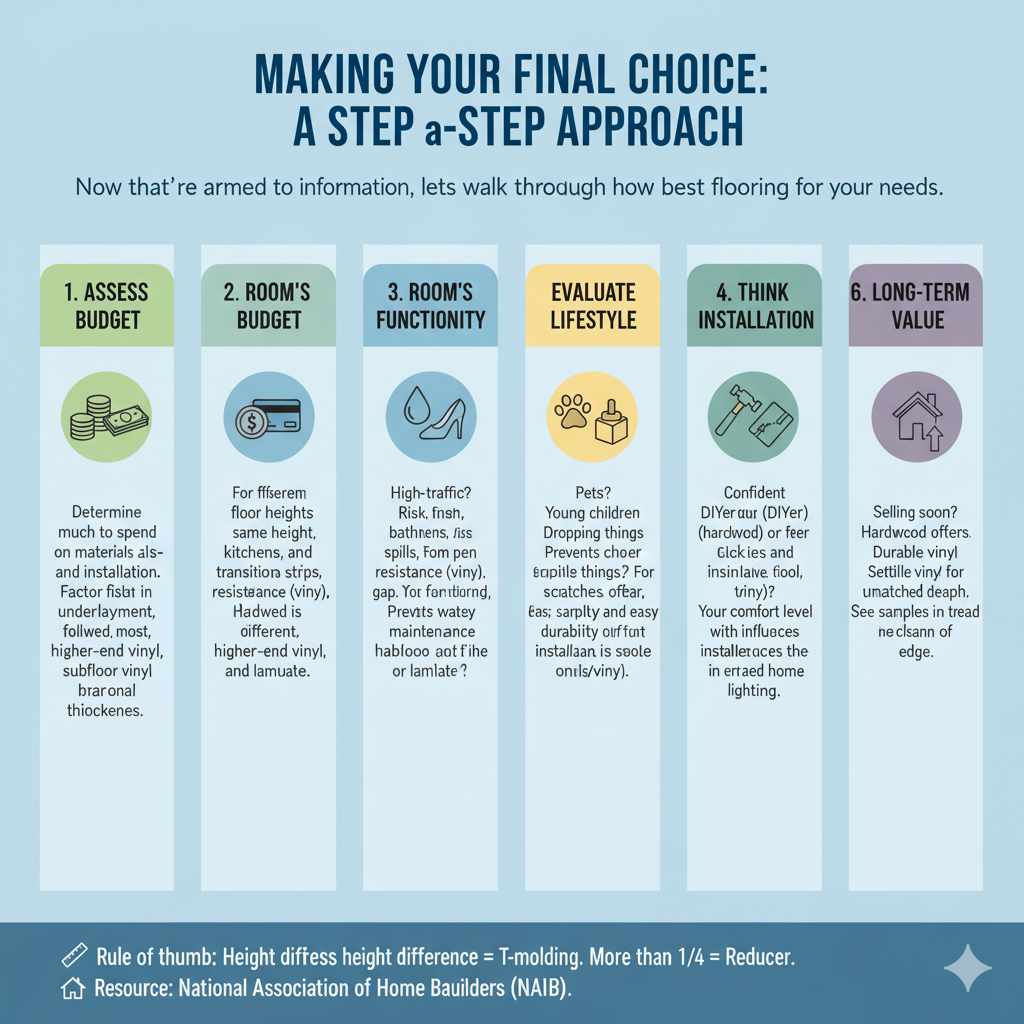
Making Your Final Choice: A Step-by-Step Approach
Now that you’re armed with information, let’s walk through how to select the best flooring for your needs:
Step 1: Assess Your Budget
Determine how much you’re willing to spend on materials and installation. Remember to factor in underlayment, transition strips, and potential subfloor preparation. Hardwood will be the most expensive, followed by higher-end vinyl, then laminate. Get quotes for both materials and professional installation if you’re not doing it yourself.
Step 2: Consider the Room’s Functionality
Is the room a high-traffic zone? Is there a risk of spills or moisture? For kitchens, bathrooms, and basements, prioritize water resistance (vinyl is likely your best bet). For serene bedrooms or formal living rooms, aesthetics and warmth might lead you to hardwood or a realistic laminate.
Step 3: Evaluate Your Lifestyle
Do you have pets? Young children? Are you prone to dropping things? If spills, scratches, and wear are major concerns, lean towards the durability and ease of maintenance offered by vinyl or laminate.
Step 4: Think About Installation
Are you a confident DIYer prepared for a potentially more challenging installation (hardwood) or do you prefer a simpler click-lock system (laminate/vinyl)? Your comfort level with tools and DIY projects should influence your choice.
Step 5: Prioritize Aesthetics
What look and feel do you want to achieve? While laminate and vinyl can mimic wood, real hardwood offers unmatched depth and character. Consider samples of each to see how they look in your home’s lighting and how they complement your decor.
Step 6: Factor in Long-Term Value
If you plan to sell your home in the next few years, hardwood might offer a better return on investment. If you’re settling in for the long haul and prioritize practicality, durable vinyl might be a smarter choice for your wallet and your peace of mind.
Frequently Asked Questions (FAQs)
Q1: Can I install hardwood flooring in a basement?
Generally, no. Basements are prone to moisture and humidity, which can cause solid hardwood to warp, swell, and buckle. Engineered hardwood is slightly more stable but still not ideal. Waterproof vinyl flooring is usually the recommended choice for basements.
Q2: Is laminate flooring truly waterproof?
Most standard laminate flooring is water-resistant, not waterproof. While it can handle minor, quick spills, prolonged exposure to water can damage the core. Some newer laminate products offer enhanced water resistance, but genuine waterproof capabilities are typically found in vinyl.