5/8 Plywood Price at Home Depot: Real Sheet Prices (Oct 2026)
5/8 plywood at Home Depot runs from about $31 for standard 19/32 in. rated sheathing to $57.70 for fire-retardant treated sheets, based on listings checked October 5, 2026. The catch is that most plain 5/8-class sheathing is labeled 19/32, not 5/8, so searching the wrong size hides the cheapest panel. This guide gives dated prices, cost per square foot, span ratings and when a different panel is the smarter buy.
5/8 Plywood Prices At Home Depot (Checked Oct 5, 2026)
Best Screws For 5/8 Subfloor
 |
Simpson Strong-Tie DSVT158R1LB Deck-Drive DSV Wood Screw, #8 x 1-5/8 in., 1 lb, $20.02 A 1-5/8 in. screw passes through a 19/32 to 5/8 in. panel and still bites about an inch into the framing below, and the T25 driver bit comes in the box.
|
As an Amazon Associate we earn from qualifying purchases. Price checked 2026-10-05 and may change.
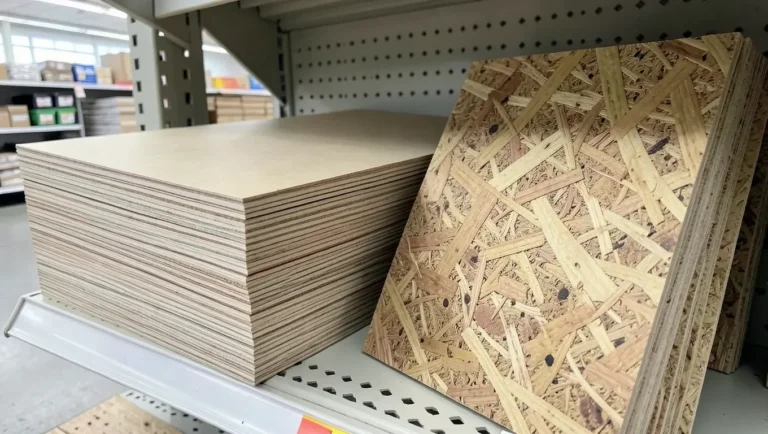
5/8 plywood is the nominal name for a panel that APA (The Engineered Wood Association) rates under the 19/32 performance category, and the price you pay depends far more on treatment and brand than on the thickness itself. The table below pulls the real listed prices for the panels that come up when you search 5/8 at Home Depot, plus nearby thicknesses so you can see what the jump actually costs.
| Panel (4 ft. x 8 ft. sheet) | Model | Listed price | Per sq. ft. |
|---|---|---|---|
| 5/8 in. CDX fire-retardant pressure-treated plywood | 368216 | $57.70 | $1.80 |
| 5/8 in. fire-rated pressure-treated and fire-treated pine or fir plywood (three other listings) | 9330007, 41340, 208275 | $57.70 each | $1.80 |
| Huber ZIP System 5/8 in. OSB roof sheathing (OSB, not plywood) | 1012110 | $49.48 | $1.55 |
| 19/32 in. rated sheathing plywood | 407735 | $31.50 ($28.35 at 55 or more) | $0.98 |
| Plytanium 19/32 in. rated sheathing, southern yellow pine | 195482 | $31.00 ($27.90 at 58 or more) | $0.97 |
| Plytanium 19/32 in. T1-11 8 in. on-center siding panel | 113699 | $46.78 | $1.46 |
| Plytanium 23/32 in. southern pine tongue and groove sheathing | 605189 | $50.47 | $1.58 |
| 1/2 in. CDX ground-contact pressure-treated pine plywood | 131876 | $41.08 | $1.28 |
Prices above are the figures shown in Home Depot’s listings when we checked them on October 5, 2026. Home Depot blocks automated page loads, so we read the listings through a web search readout rather than a logged-in local store, which means your store’s price, pickup and delivery pricing can differ. The 5/8 in. BCX pressure-treated sheet (model 273562) showed as out of stock with no price at that time. Always confirm on Home Depot’s 5/8 plywood listing page before you drive over.
Why Home Depot Sells 5/8 Plywood As 19/32
Plywood is pressed and then sanded, so the finished panel comes out a little thinner than its nominal size. A panel sold as 5/8 in. is therefore labeled 19/32 in. (0.594 in.) on most sheathing, against 0.625 in. for a true 5/8. For structural work that gap does not matter, because APA assigns both thicknesses the same 40/20 span rating. It matters when you are matching an existing floor height, trim or a fastener length.
One detail most price guides miss: Home Depot’s listing for model 407735 gives the actual thickness as 0.563 in. (9/16), which is a little under the 0.594 in. you would calculate for 19/32. That is a spread of roughly 1/32 in. between figures. If you are stacking plywood over an existing subfloor or lining up with a hardwood threshold, take a caliper or tape to a panel in the store instead of trusting the label.
Span Rating: What 40/20 Means For Your Project
The two numbers on a rated sheathing stamp are span ratings in inches. The left number is the maximum spacing of supports when the panel is used for roof sheathing, and the right number is the maximum spacing when it is used as a subfloor. APA lists 40/20 for 19/32 and 5/8 in. panels, and 32/16 for the thinner 15/32 and 1/2 in. panels.
| Span rating | Typical thickness | Roof support spacing | Floor joist spacing |
|---|---|---|---|
| 32/16 | 15/32 or 1/2 in. | 32 in. | 16 in. |
| 40/20 | 19/32 or 5/8 in. | 40 in. | 20 in. |
This corrects a claim you will see repeated, that 5/8 plywood is the minimum subfloor thickness at 16 inch joists. The 40/20 rating means a 19/32 or 5/8 in. panel is rated for joists up to 20 inches apart, and even the thinner 32/16 panels are rated for 16 inch spacing. Rating is not the same as feel, though: thicker panels flex less between joists, which is why many builders step up for tile or when joists are at the wide end.
Stiffness: How Much Better Is 3/4 Than 5/8?
Bending stiffness of a flat panel scales with the cube of its thickness. Using nominal sizes, (0.75 / 0.625) cubed is about 1.73, so a 3/4 in. panel is roughly 70 percent stiffer than a 5/8 in. panel of the same material, a simple geometry calculation rather than a tested figure. Plywood layups vary, so treat it as a rule of thumb. The Home Depot table above shows the cost of that step: the 23/32 in. tongue and groove sheet lists at $50.47 against $31.50 for 19/32 sheathing, a difference of $18.97 per sheet.
What You Actually Pay Per Square Foot
Per-sheet prices hide the real gap. A 4 ft. x 8 ft. sheet covers 32 square feet, so dividing each listed price by 32 shows where the money goes.
- Standard 19/32 sheathing: $31.00 to $31.50 per sheet, or about $0.97 to $0.98 per square foot.
- Fire-retardant treated 5/8: $57.70 per sheet, or about $1.80 per square foot, which is 83 percent more than the $31.50 untreated sheet.
- Bulk pricing: the 19/32 listing drops to $28.35 at 55 or more sheets, a saving of $3.15 per sheet.
- A 10-sheet job: 10 sheets of 19/32 sheathing cost about $315 before tax, against about $577 in fire-retardant treated 5/8. That is $262 you only spend if code or the project actually calls for fire-retardant treatment.
The practical takeaway: do not pay the fire-retardant premium by default. Fire-retardant treated sheathing exists for assemblies where fire code applies, and your local building department decides that, not the store. For an ordinary shed floor, subfloor or wall panel, check local code before assuming the treated sheet is required. If you are weighing plywood against other options, our plywood price per square foot calculator runs this math for any sheet price.
Choosing The Right 5/8 Panel
- Subfloor: rated sheathing 19/32 or 5/8 is the economy choice at joists up to 20 inches apart. Step up to 23/32 tongue and groove if you want stiffer floors or fewer edge squeaks. See whether 1/2 inch works for a shed floor if you are building small.
- Roof and wall sheathing: standard rated sheathing meets the 40/20 rating at typical rafter spacing. If you are weighing thinner panels, see using 1/2 plywood on a roof.
- Siding: T1-11 panels are a finished exterior surface, not framing sheathing, and the 19/32 in. T1-11 listed above costs about $15 more per sheet than plain sheathing.
- OSB instead of plywood: the ZIP System 5/8 in. panel above is OSB with a built-in weather barrier layer, which is why it lists at $49.48. If you want plain plywood, it is not the same product.
- Compare other stores: our 3/4 inch plywood at Lowe’s price and options guide covers the thicker panel at a competing store.
Installing 5/8 Plywood: Fasteners And Spacing
A few habits make a 5/8 in. panel perform like a stiffer one. Run panels across the joists rather than parallel to them, stagger the end joints so they do not line up between rows, and leave about a 1/8 inch gap at panel edges and ends so the sheets can expand with humidity. Glue the panel to the framing with construction adhesive in addition to screwing it down, which reduces squeaks over time.
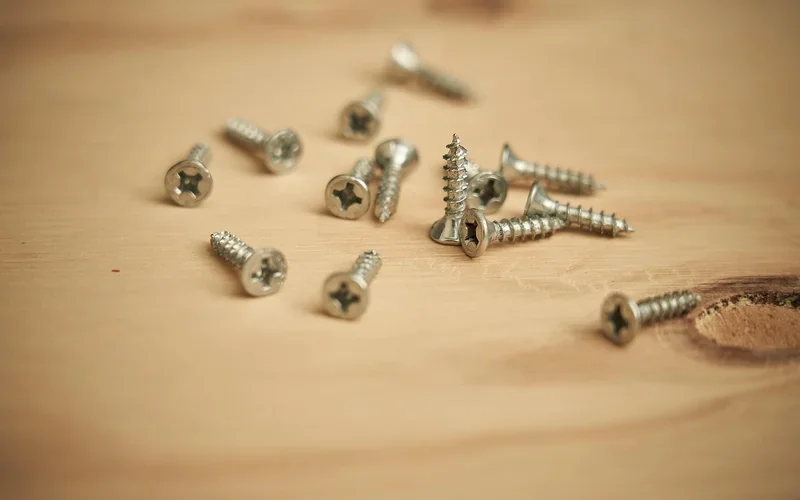
Screw length is simple to get right. With a 19/32 to 5/8 in. panel on top, a 1-5/8 in. screw leaves roughly an inch in the joist. Go longer, around 2 to 2-1/2 in., if you add a second layer or a thicker underlayment. Space fasteners about every 6 inches along panel edges and every 12 inches in the field, which are common APA nailing patterns also used for screws. If you need sheets cut down before you leave the lot, our plywood cut-to-size cost guide and Lowe’s wood cutting service guide explain what stores usually allow.
How To Save Money On 5/8 Plywood
- Search both sizes: look up 19/32 as well as 5/8. The cheapest rated sheathing often appears only under 19/32.
- Buy in volume: the two sheathing listings above step down by $3.10 to $3.15 per sheet at 55 or 58 sheets.
- Skip treatment you do not need: the fire-retardant sheet costs $26.20 more than the 19/32 sheet at the listings above.
- Check the in-stock filter: the BCX treated 5/8 sheet showed out of stock, so filter by pickup today before planning around a price.
- Compare by square foot: divide every listing by 32 before deciding, since sheet sizes and thicknesses differ.
Frequently Asked Questions
How Much Is 5/8 Plywood At Home Depot?
On October 5, 2026, the 5/8 in. x 4 ft. x 8 ft. fire-retardant treated plywood sheets we checked listed at $57.70 each, and the standard 19/32 in. rated sheathing, which is the common 5/8-class panel, listed at $31.00 to $31.50. Prices vary by store, so confirm on your local store page.
Is 19/32 Plywood The Same As 5/8 Plywood?
Practically yes. 19/32 in. is the actual thickness of panels sold as nominal 5/8 in. (0.594 in. versus 0.625 in.), and APA lists the 40/20 span rating for both 19/32 and 5/8 thickness. Store listings can state the actual thickness slightly differently, so measure if a precise fit matters.
Is 5/8 Plywood Strong Enough For A Subfloor?
Yes, for the joist spacing it is rated for. A 40/20 rated 19/32 or 5/8 panel is rated for floor joists up to 20 inches on center, and a thicker 23/32 in. panel adds stiffness if you want less bounce or a hard tile or stone finish above.
Is 5/8 Plywood Thick Enough For A Roof?
The left number of the 40/20 rating is the maximum roof support spacing in inches, which is wider than a standard 24 inch rafter layout. Snow load, local code and roofing type can still require a different panel, so check your local code before ordering.
How Many Square Feet Is One Sheet Of 5/8 Plywood?
A standard 4 ft. x 8 ft. sheet covers 32 square feet. Divide the sheet price by 32 to compare options fairly, for example $31.50 / 32 is about $0.98 per square foot.
Bottom Line
For most jobs, standard 19/32 in. rated sheathing at about $31 per sheet is the real answer to a 5/8 plywood search, and the $57.70 fire-retardant sheets are a specialty purchase. Search both sizes, divide by 32 to compare, confirm the live price on your store page, and measure the panel if thickness matters. If you are also tiling over the floor, our guide to putting tile on plywood explains why the extra stiffness of a thicker underlayment often pays off.
Sponsored / affiliate links. As an Amazon Associate I earn from qualifying purchases. I may earn additional commission from eligible campaigns.