How to Remove Paint From Hardwood Floors Without Damaging the Finish
Remove dried paint from hardwood floors with a plastic putty knife first, then rubbing alcohol or a citrus-based stripper for what’s left behind – never a heat gun, which scorches the finish faster than it lifts paint. The right method depends on your floor’s finish: polyurethane tolerates mineral spirits, but a wax finish needs the gentlest option or the stripper eats the wax too.
This guide covers the gentlest-to-strongest removal order, which method matches your finish type, and the cleanup steps that keep the wood from gouging.
Start With the Gentlest Method: Soap, Water, and a Plastic Scraper
Best Citrus Paint Stripper Pick
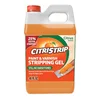 |
Citristrip Stripping Gel, 40 oz – $16.85 A citrus-based gel stripper that clings to vertical drips and dried splatters instead of running off, and works without the fumes of a solvent-based stripper – the gentler option this guide recommends trying before mineral spirits.
|
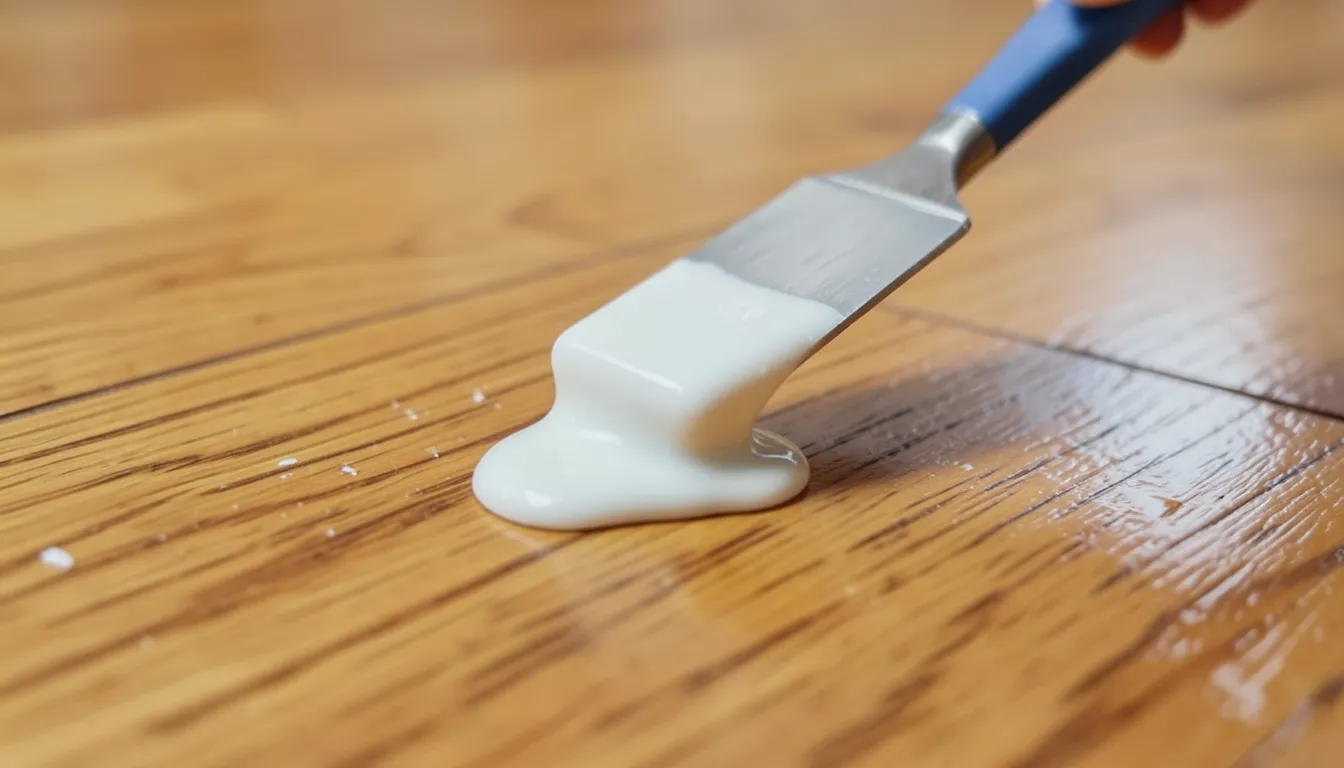
Mix warm water with a few drops of mild dish soap and dampen a rag – this alone lifts fresh or thin paint spots without touching the finish. For dried drips, work a plastic putty knife (never metal) under the edge of the paint at a low angle. Metal blades cut through polyurethane in seconds; plastic just can’t generate the same shearing force against the wood.
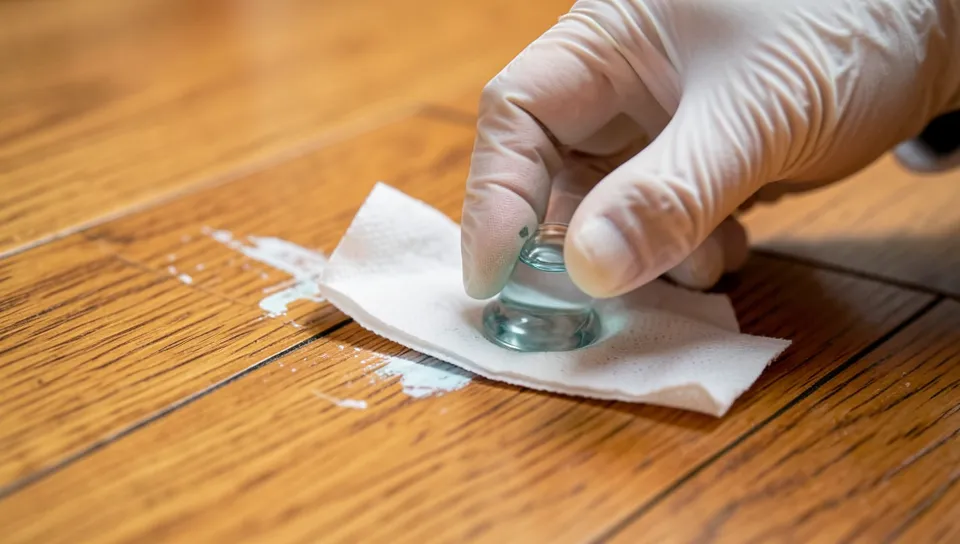
If soap and water don’t budge it, move to rubbing alcohol on a cotton rag, or a 3-to-1 mix of rubbing alcohol and lemon juice for tougher dried latex paint. Both break the paint’s bond to the finish without dissolving the finish itself the way a stronger solvent can.
📊 Chemical strippers and paint thinners work on polyurethane-finished floors, but wax-finished solid wood floors should stick to soap-and-water or rubbing-alcohol methods only – solvent strippers dissolve wax finishes along with the paint. — Source: Family Handyman flooring guide
Identify Your Floor’s Finish Before You Choose a Stripper
The finish on your floor decides which products are safe. Run a fingernail test on a hidden spot: polyurethane feels like a hard plastic layer sitting on top of the wood; wax feels softer and can be scratched off in a thin film; oil finishes soak into the wood and leave a matte, low-sheen surface with no separate topcoat to protect.
| Finish Type | Safe Removal Method | Avoid |
|---|---|---|
| Polyurethane | Rubbing alcohol, mineral spirits, or citrus stripper gel | Heat guns (can bubble the topcoat) |
| Wax | Warm soapy water or rubbing alcohol only | Any chemical stripper – it strips the wax too |
| Oil (e.g. Danish oil, tung oil) | Mineral spirits in light applications, re-oil after | Aggressive scraping – no topcoat to protect the wood |
Removing Stubborn or Old Dried Paint
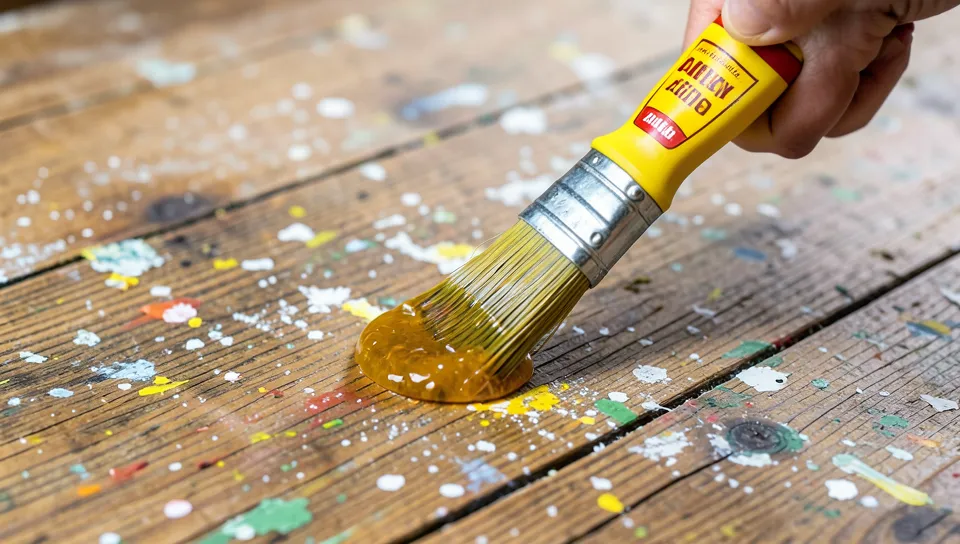
- Test in a hidden spot first: try any product on a closet corner or under a rug before the main floor area.
- Apply the citrus stripper gel: brush it on thick enough to stay wet for 15-20 minutes rather than drying out.
- Scrape gently with the plastic putty knife: work with the wood grain, not against it, to avoid gouging.
- Wipe with a clean, damp rag: remove all stripper residue before it can sit on the finish.
- Re-apply finish or wax if needed: a spot that’s been stripped down to bare wood needs to be re-sealed to match the surrounding floor.
Mistakes That Gouge or Discolor the Floor
Never use a heat gun on hardwood – the same heat that softens paint softens and can bubble a polyurethane finish, and the scorch marks that follow are far harder to fix than the paint was. Avoid scraping at a steep angle or pressing hard with any blade, plastic or otherwise; let the chemical do the softening work instead of forcing the tool. And don’t skip the small test patch – some strippers can lighten stain color even when they don’t damage the topcoat.
“The floors I’ve had to sand and refinish after a paint-removal attempt almost always came from a heat gun or a metal scraper pressed too hard – not from the paint itself.”
More Hardwood Floor Care Guides
Once the paint is gone, keep the rest of the floor in shape with the full wood care and maintenance guide, or see why steam mops are the wrong tool for routine cleaning on the same finish types covered here.
Frequently Asked Questions
What is the best paint remover for hardwood floors?
A citrus-based stripping gel like Citristrip for dried splatters on polyurethane, or plain rubbing alcohol for lighter latex paint spots – both are gentler than solvent-based strippers.
How do I remove paint from hardwood floors without a stripper?
Start with warm water and mild dish soap on a rag, then a plastic (never metal) putty knife to lift dried edges. Rubbing alcohol handles most leftover residue.
Can I use vinegar to remove paint from a wood floor?
Vinegar alone is too mild for dried paint. A 3-to-1 mix of rubbing alcohol and lemon juice works better and is still gentle on most finishes.
Is paint remover safe for hardwood floors?
Citrus-based and alcohol-based removers are safe for polyurethane and oil finishes when tested first. Solvent-based chemical strippers are too aggressive for wax-finished floors.
Will a heat gun remove dried paint from a wood floor safely?
No. Heat guns can bubble and scorch the finish before the paint fully softens, and the resulting damage is harder to repair than removing the paint carefully by hand.
Conclusion
Match the remover to your floor’s finish, start gentle, and let chemistry do the work instead of forcing a blade. That order – soap and water, then alcohol, then a citrus stripper only if needed – removes paint without leaving a bare or gouged patch behind.
Sponsored / affiliate links. As an Amazon Associate I earn from qualifying purchases. I may earn additional commission from eligible campaigns.