Bissell Carpet Cleaner on Wood Floors? Only CrossWave Is Safe
No — a standard Bissell carpet cleaner isn’t safe for wood floors; its wet-vacuum spray can push hardwood’s normal 6-9% moisture content past 25%, the point where planks start to cup. The exception is Bissell’s own hard-floor machines, the CrossWave and SpinWave, built with sealed-floor settings and a dedicated Wood Floor Formula. This guide covers which Bissell models are actually safe, how much water causes real damage, and the mop-based alternative if you’d rather not buy a second machine.
Quick Answer
A regular Bissell upright carpet cleaner is not safe for wood floors — it releases more water than sealed wood can handle and its stiff brushes can dull the finish. Bissell’s CrossWave, CrossWave Turbo, and SpinWave are purpose-built exceptions: their two-tank or spin-mop systems are rated safe for sealed hardwood, tile, and laminate.
Which Bissell Models Are Actually Safe for Wood Floors?
Best Wood-Floor-Safe Bissell Pick
Bissell CrossWave OmniFind Cordless Wet Dry Vacuum Mop
Vacuums and washes sealed hardwood, tile, and laminate in one pass; also refreshes area rugs and low-pile carpet.
- Best for: Homes with a mix of sealed wood floors and area rugs
- Why we picked it: Two-tank design reclaims the water it sprays, unlike a standard carpet cleaner
- Main drawback: Not rated for unsealed, oiled, or waxed wood
Compare more wood-floor-safe cleaning options
 Option 1 Bissell CrossWave Turbo (3888A) – $199.99
|
 Option 2 Bona PowerPlus Premium Motion Spray Mop for Hardwood Floors – $54.97
|
 Option 3 Bissell Wood Floor Formula (1929) – $9.99
|
As an Amazon Associate we earn from qualifying purchases.
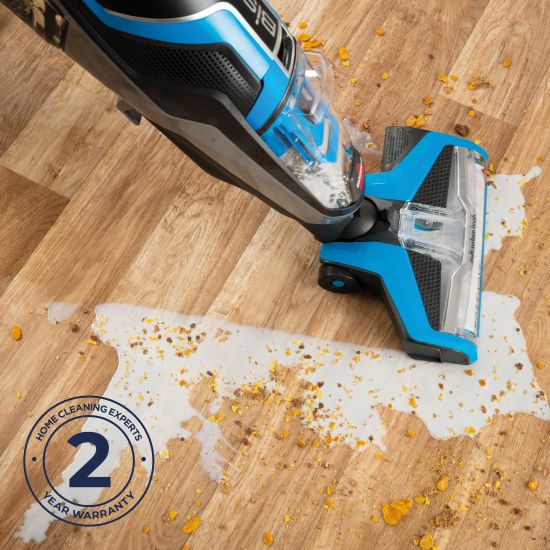
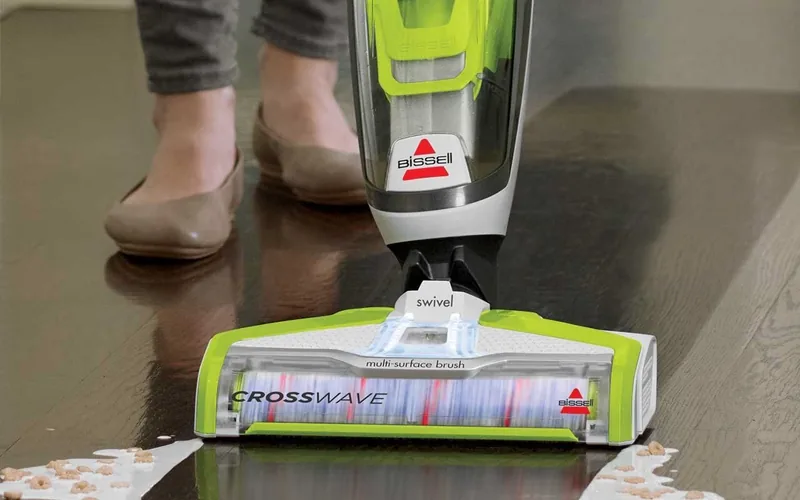
Bissell makes two different families of machines, and they are not interchangeable on wood. A standard upright carpet cleaner is engineered to force water deep into carpet fibers — the opposite of what a sealed wood floor needs. The Bissell CrossWave and CrossWave Turbo are wet/dry vacuums built with a two-tank system: they spray a controlled mist and immediately vacuum it back up in the same pass, which is why Bissell rates them safe for sealed hardwood, tile, and laminate. The SpinWave is a spin-mop with no suction at all — it applies a light mist through spinning microfiber pads, so there is never standing water to seep into seams.
The catch that trips most people up: “safe for hardwood” always means sealed hardwood with tight, gap-free seams. An unsealed, oiled, or waxed floor should never meet any wet-vacuum or spin-mop, CrossWave included — the heat and moisture will still find a way in through the open grain. For a model-by-model breakdown of which Bissell spin mops, steam mops and vacuums actually clear that bar, see our best Bissell for hardwood floors guide.
Standard vs. Hard-Floor-Safe Cleaners: A Moisture Comparison
Here is how the moisture risk actually stacks up across the options, based on how each machine delivers and removes water:
| Cleaner | Water Delivery | Moisture Risk on Wood | Best For |
|---|---|---|---|
| Standard Bissell upright carpet cleaner | Heavy spray + scrub brush, built to soak carpet fibers | High — not reclaimed, can push seams past 25% moisture | Carpets and rugs only |
| Bissell CrossWave / CrossWave Turbo | Two-tank wet/dry vac — sprays, then vacuums it back up | Low — on sealed floors only, no standing water | Daily spills, mixed hard floor + rug homes |
| Bissell SpinWave | Spinning microfiber pads, light mist, no suction | Low — pads absorb as they spin, no pooling | Light daily mopping on sealed floors |
| Traditional wood-floor spray mop (e.g. Bona) | Fine controlled mist + microfiber pad, no machine | Lowest — least total water of any option here | Anyone who doesn’t want a second machine |
📊 Hardwood flooring normally holds 6-9% moisture content; after a water event that figure can spike past 25%, the threshold restoration professionals flag as the point cupping and permanent deformation become likely. — Source: Delmhorst Instrument Co., wood moisture measurement guidance
Why a Standard Carpet Cleaner Damages Wood Floors
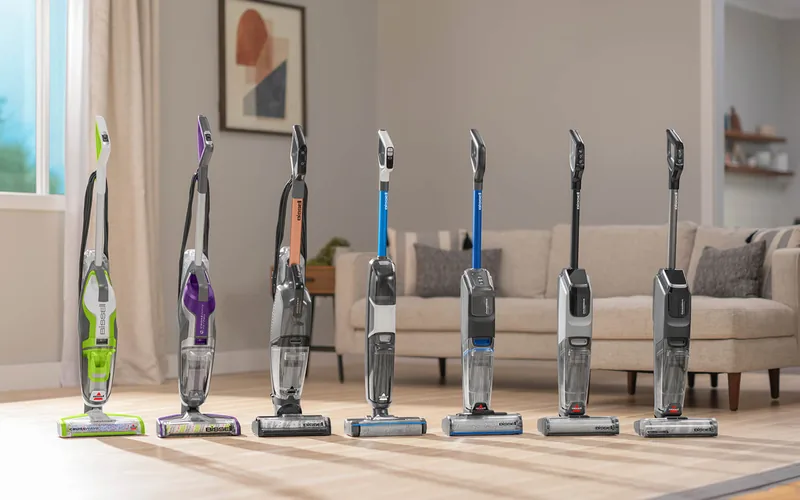
A standard upright Bissell carpet cleaner is built to force water and cleaning solution deep into carpet fibers, then scrub with a stiff rotating brush. Neither part of that job description belongs on a sealed wood floor. The brush is aggressive enough to leave fine scratches that dull the finish over time, and the machine has no way to reclaim the water it sprays — it simply keeps pushing more onto the surface.
That excess water is the real damage mechanism. Wood is porous, and once moisture gets past the finish and into the seams, the underside of each plank absorbs more than the top — the fibers swell unevenly and the edges rise higher than the center, a pattern called cupping. Left unaddressed, it can progress to permanent warping, finish failure, or mold growth under the boards.
It also puts your machine’s warranty at risk in the other direction: Bissell’s limited warranty explicitly excludes damage from use that isn’t in accordance with the user guide, and running a carpet-only model on wood — where it can pool water, jam, or overheat trying to scrub a hard surface — counts as improper use. Check your specific model’s manual before assuming any hard-floor setting exists.
How to Clean Wood Floors the Right Way
- Sweep or dry-vacuum first with a soft-bristle or wood-floor attachment — grit is what actually scratches finish, not water.
- Mop with a barely-damp microfiber head, never a saturated one, and pick up any standing liquid within a couple of minutes.
- Use a cleaner formulated for sealed wood (Bissell’s Wood Floor Formula, Bona, or similar) instead of vinegar-and-water mixes, which can dull polyurethane finishes over repeated use.
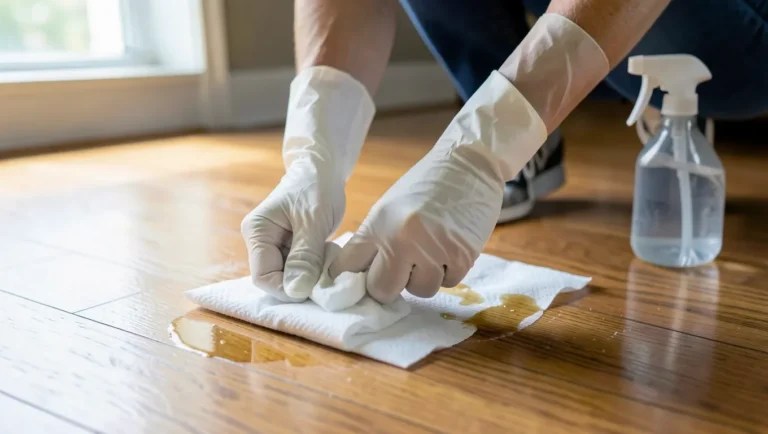
- Wipe spills immediately with a dry cloth rather than letting them sit — wood that stays wet is what actually warps, not a quick pass with the right tool.
- Use felt pads under furniture legs and lift instead of drag when moving anything heavy.
If you already own a Bissell steam mop, note that steam cleaning is a separate question from wet-vacuum carpet cleaning — heat plus moisture carries its own risk profile, covered in our steam cleaner safety guide. For a broader comparison of cleaner types, see our guide to the best cleaners for wood floors.
“I’ve refinished enough water-damaged floors to recognize cupping the moment I see it — the boards rise slightly at the edges before you’d ever call the floor ‘wet.’ By the time a spill or a cleaning pass looks visibly soaked, the moisture is usually already deeper into the seams than it looks from the top.”
Frequently Asked Questions
Can you use a Bissell CrossWave on hardwood floors?
Yes. The CrossWave and CrossWave Turbo are rated safe for sealed hardwood floors because their two-tank system vacuums up the water it sprays in the same pass. They are not safe on unsealed, oiled, or waxed wood.
Does using a standard carpet cleaner on wood floors void the warranty?
It can void the machine’s warranty, not just risk the floor. Bissell’s limited warranty excludes damage from use that doesn’t follow the user guide, and running a carpet-only model on a hard surface it wasn’t designed for typically falls under that exclusion.
Can I use a Bissell carpet cleaner on laminate floors?
No, for the same reason as hardwood: laminate’s core layer swells permanently when water gets past the seams, and a standard carpet cleaner doesn’t reclaim the water it sprays. The CrossWave and SpinWave are rated safe for sealed laminate.
Is Bissell’s Wood Floor Formula required, or will plain water work?
Plain water works in a CrossWave or SpinWave, but the Wood Floor Formula is formulated to dissolve tracked-in dirt and sticky messes on sealed wood without leaving the streaking that plain water or a generic multi-surface formula can cause.
What’s the difference between the CrossWave and SpinWave for wood floors?
The CrossWave is a wet/dry vacuum that sprays and vacuums in one pass and can also refresh area rugs and low-pile carpet. The SpinWave is a spin-mop only, with no suction and no carpet capability — it applies a lighter, more controlled amount of water through spinning microfiber pads.
Can you use carpet cleaner as a general floor cleaner?
Not on hard floors. A carpet cleaner’s brush and water volume are calibrated for fiber, not a flat sealed surface, so it can leave residue, scratches, or trapped moisture. Use a cleaner rated for your specific floor type instead.
Conclusion
A standard Bissell upright carpet cleaner isn’t built for wood, and using one risks both your floor’s finish and the machine’s own warranty. If you want one machine for wood floors, tile, and rugs, the CrossWave or CrossWave Turbo does that job safely on sealed surfaces. If you’d rather skip a second appliance, a wood-specific spray mop uses even less water and gets you most of the way there.
Sponsored / affiliate links. As an Amazon Associate I earn from qualifying purchases. I may earn additional commission from eligible campaigns.