How Can You Tell If Wood Is Teak: Essential Guide
To tell if wood is teak, look for its golden-brown color, distinct oily feel, straight grain, and classic leather-like scent. Teak’s natural oils make it durable and water-resistant, setting it apart from other hardwoods.
Have you ever admired a beautiful piece of wooden furniture or decking and wondered if it’s the luxurious, weather-resistant teak you’ve heard so much about? It’s a common question, especially when you’re looking for quality and durability. Teak wood can be pricey, so knowing how to identify it is a smart move for any DIY enthusiast or homeowner. Don’t worry, I’m here to help you become a teak detective! We’ll walk through simple, hands-on ways to spot genuine teak, making your next woodworking project or purchase a confident one. Let’s dive in and uncover the secrets of this amazing wood!
Why Knowing Your Teak Matters
Teak (Tectona grandis) isn’t just another pretty hardwood; it’s a superstar in the world of woodworking for several reasons. Its popularity isn’t accidental. Genuine teak is famous for its incredible durability, resistance to water and pests, and a beautiful, rich appearance that only gets better with age. This makes it a top choice for outdoor furniture, boat decks, and high-end interior applications. For anyone building, renovating, or buying, understanding teak helps you:
- Ensure you’re getting the quality you’re paying for.
- Make informed decisions about where to use it (it excels outdoors!).
- Appreciate its natural benefits, like its inherent water and pest resistance.
- Avoid costly fakes or lower-quality alternatives passed off as teak.
Identifying teak can seem tricky at first, but after you learn a few key characteristics, you’ll be able to spot it with confidence. Let’s get started on how you can become an expert at recognizing this fantastic wood!
Key Characteristics to Identify Teak Wood
Genuine teak has a distinct personality that you can learn to recognize. It’s a combination of what you see, what you feel, and even what you smell! Here are the main features to look for:
1. Color
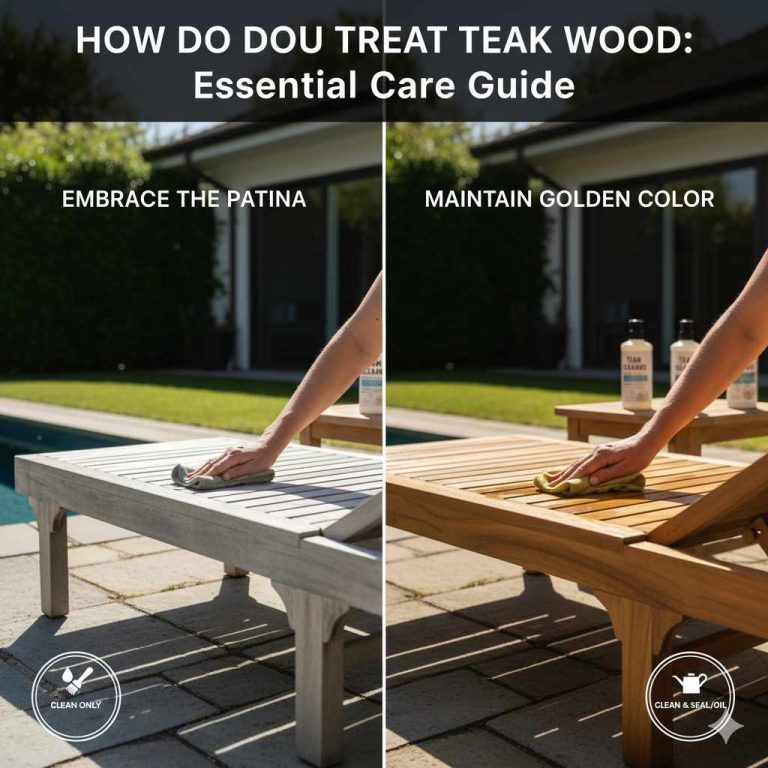
Freshly cut teak wood typically has a beautiful golden-brown to medium brown hue. As it ages and is exposed to sunlight and the elements, it will weather to a lovely silvery-grey. This color change is one of its most sought-after characteristics, especially for outdoor use. If you see very dark brown or reddish tones, it might be a different wood altogether. Some tropical woods can mimic teak’s color, but the overall combination of features will usually give the real deal away.
2. Grain (The Pattern of the Wood)
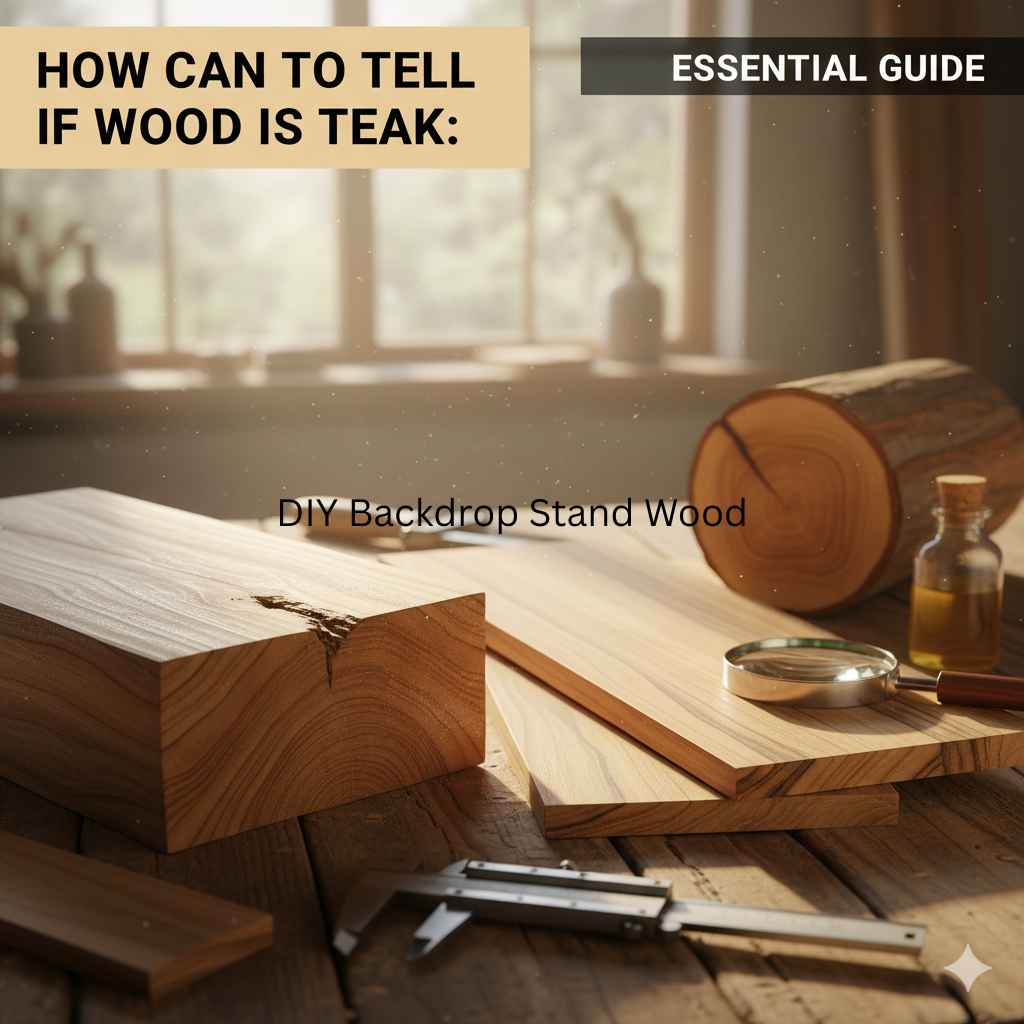
Teak is known for its generally straight, coarse, and sometimes wavy grain pattern. This straightness contributes to its strength and makes it easier to work with. You won’t typically find the very tight, uniform grain that’s common in woods like maple or oak. Also, keep an eye out for the presence of dark mineral deposits, often called “veins,” running through the grain. These are common in teak and are often a good indicator of its authenticity.
3. Oily Feel
This is one of the most telling signs of real teak. Teak wood is naturally oily. This natural oil content is what makes it so resistant to water, rot, and insects. When you touch teak, especially a piece that hasn’t been heavily sealed or coated, you should feel a slightly slick or oily sensation. This isn’t greasy, but rather a smooth, almost waxy feel. Even unfinished teak exhibits this characteristic. Woods like oak or pine will feel dry and rougher to the touch.
This oily nature is a key reason why teak is a preferred material for boat decks and outdoor furniture – it doesn’t absorb moisture readily and resists decay even in wet environments.
4. Scent
When you cut or sand teak, it releases a distinctive, pleasant aroma. Many people describe it as a rich, leathery, or sometimes slightly sweet scent. This smell is attributed to the natural oils within the wood. If the wood has no discernible smell, or if it smells strongly of pine or something chemically treated, it’s probably not teak. The scent is strongest when the wood is freshly worked.
5. Weight and Density
Teak is considered a medium-weight hardwood. It’s not as heavy as woods like oak or walnut, but it’s certainly more substantial than lighter woods like pine or poplar. You can get a sense of its density by picking up a piece. It should feel solid and well-balanced, not flimsy or overly light.
What About Teak Substitutes? (And How to Spot Them)
Because teak is so prized, there are quite a few woods that are sometimes presented as teak or used as substitutes. It’s good to be aware of these so you don’t get fooled!
Common Teak Alternatives
- Iroko: Often called “African Teak,” Iroko can resemble teak in color when new, but it lacks the same oily feel and distinctive scent. It’s also more prone to cracking and maintenance issues over time.
- Mahogany: While a beautiful wood, mahogany has a different grain pattern and lacks the oily feel and specific scent of teak.
- White Oak: Often used for outdoor projects, white oak has a distinct grain and is much more porous and less oily than teak.
- Engineered or Composite Materials: Many “teak-look” products are actually manufactured from plastics, recycled materials, or a blend of wood fibers and resins. These can look convincing from a distance but don’t have the natural feel or longevity of true teak.
How to Differentiate
- Feel: Always touch the wood. The oily, smooth feel is teak’s signature.
- Smell: Work a small, inconspicuous area, or smell a sample. Teak has that unique leathery scent.
- Grain: Look for the straight, coarse grain with potential dark mineral streaks.
- Color Aging: Observe how the wood weathers. Teak’s silvery-grey fade is distinctive.
Sensory Tests: The Hands-On Approach
You don’t always need fancy equipment to identify teak. Your senses are powerful tools in the workshop!
The Feel Test
Run your hands over the surface of the wood. Does it feel slightly slick or oily? If it feels dry, rough, or porous, it’s likely not teak. The natural oils in teak give it this unique, smooth texture. Try this on a piece of known oak or pine for comparison – you’ll immediately notice the difference in how dry they feel.
The Smell Test
If you have a chance to sand, cut, or even just scratch a small area of the wood, take a sniff. Genuine teak has a characteristic aroma, often described as leathery or like a new baseball glove. Some sources even mention notes of cinnamon. If it smells strongly of pine, cedar, or has no discernible scent, it’s a red flag.
The Visual Inspection
Look closely at the end grain and the face of the wood. The grain should be relatively straight and coarse. You might see small pores or the aforementioned dark mineral streaks. The color should be a warm golden brown that will eventually weather to grey. If the grain is very tight and uniform, or very dark and red, it’s probably not teak.
Scientific & Practical Tests for Teak Identification
While sensory tests are great, sometimes a little more goes a long way, especially for larger projects or when authenticity is critical.
Understanding Teak’s Properties
Teak is renowned for its durability and resistance to the elements. This is largely due to its high silica content and natural oils. These properties mean it doesn’t readily absorb water and is naturally resistant to fungal decay and insect attack. For example, the U.S. Forest Products Laboratory’s Wood Handbook details the properties of various woods, including teak, highlighting its exceptional durability in various conditions.
The Water Drop Test (A Simple Indicator)
While not foolproof, you can try a simple water test on a small, unfinished section of wood. Since teak is naturally oily and dense, water shouldn’t penetrate it easily. Place a small drop of water on the wood. If the water beads up and sits on the surface for a while before slowly absorbing, it’s a good sign. If the water soaks in immediately and darkens the wood significantly, it might not be teak, or it could be a poorly finished piece.
Oil Content Test (Subtle but Useful)
The oily feel is the most accessible indicator of teak’s oil content. However, for professionals, there are more advanced methods. For example, chemical tests can identify the specific compounds responsible for teak’s unique properties, but these are beyond the scope of a beginner’s guide. For practical purposes, the “feel like you’re touching a smooth, slightly waxy surface” is your best bet.
Hardness and Durability Comparison
Teak falls into the medium-hardwood category. It’s harder than woods like pine or cedar but softer than very hard woods like ebony or walnut. You can get a sense of this by trying to make a shallow scratch with a fingernail or a dull tool. Teak will resist scratching better than softwoods but might show a slight dent from significant force, unlike some exceptionally hard woods.
Teak Terminology You Might Encounter
As you explore teak, you might hear different terms. Understanding them can help clarify what you’re looking at.
- Burmese Teak (or Myanmar Teak): Often considered the finest and most desirable teak, known for its rich color and excellent durability.
- Indian Teak: Also of high quality, with similar characteristics to Burmese teak.
- Java Teak: Grown on plantations, this teak can be very uniform but might sometimes lack the complex grain and character of naturally grown teak. Nevertheless, it’s still genuine teak.
- Deforestation and Sustainability: Due to its popularity, responsible sourcing is important. Look for teak certified by organizations like the Forest Stewardship Council (FSC) to ensure it comes from sustainably managed forests. You can learn more about forest certification at the Forest Stewardship Council website.
- Teak Wood vs. Teak Oil Finish: Be careful not to confuse genuine teak wood with furniture that has simply been treated with teak oil. A teak oil finish can be applied to many different types of wood to give them a similar look and some water resistance, but it’s not the same as solid teak.
Teak vs. Other Woods: A Comparison Table
To help solidify your understanding, here’s a quick comparison table of teak against some other common hardwoods.
| Wood Type | Color | Grain | Feel | Scent | Durability/Resistance |
|---|---|---|---|---|---|
| Teak | Golden to medium brown, weathers to silver-grey | Straight, coarse, sometimes wavy; often with dark mineral streaks | Oily, smooth, slightly waxy | Leathery, sweet, distinctive | Excellent; very water, rot, and insect resistant |
| Oak (White) | Light to medium brown | Straight, coarse, prominent pores | Dry, often porous | Mild, woody | Good; resistant to decay, but not inherently oily |
| Mahogany | Reddish brown to dark brown | Straight to interlocked, fine to medium | Smooth, can be slightly waxy but less so than teak | Mild, slightly bitter | Good; decent rot resistance, but not oily like teak |
| Pine (White) | Creamy white to pale yellow | Straight, often with knots | Dry, soft, porous | Resinous, fresh | Poor; very susceptible to rot and insects |
Step-by-Step Guide: How to Test Wood for Teak
Follow these steps when you want to identify wood as teak:
- Observe the Color: First, look at the wood’s color. Does it appear golden-brown or medium-brown? If it’s very dark brown, reddish, or yellowish-white, it’s less likely to be teak. Note if it seems to have weathered to a grey color.
- Feel the Surface: Gently run your hand across the wood. Does it have a subtle oily or waxy feel to it? This is a major clue for teak. If it feels dry, rough, or very porous, it’s probably not teak.
- Inspect the Grain: Examine the grain pattern. Teak typically has a straight, coarse grain. Look for any dark lines or mineral deposits within the grain. Very fine or very irregular grain might indicate a different wood.
- Test the Scent (if possible): If you can safely create a small amount of dust (by lightly sanding or scratching an inconspicuous area), take a sniff. Does it smell leathery or slightly sweet? A strong pine or cedar smell, or no smell at all, is usually not teak.
- Consider the Weight: Lift the wood (if it’s a manageable piece). Does it feel solid and moderately heavy? Teak is a hardwood, so it should have a good density. It shouldn’t feel light and flimsy like pine.
- Perform a Water Drop Test: On an unfinished spot, place a small drop of water. Good teak should resist absorption, causing the water to bead up and sit on the surface for a while before slowly soaking in. Quick absorption or immediate darkening suggests it might not be teak.
- Question Substitutes: Be aware of woods like Iroko or common imitations. Remember that the combination of oily feel, leathery scent, straight coarse grain, and color is what truly signifies teak.
FAQ: Your Teak Identification Questions Answered
Q1: Is all golden-brown wood teak?
No, not all golden-brown wood is teak. Many tropical hardwoods share a similar color. Teak’s distinct oily feel, leathery scent, and straight, coarse grain are crucial identifiers that help differentiate it from other woods with similar colors. Always use a combination of these characteristics for accurate identification.
Q2: What is “teak wood” made of?
Genuine teak wood comes from the teak tree (Tectona grandis), a large deciduous tree native to South and Southeast Asia. It’s a natural hardwood, not a composite material, known for its dense structure and natural oils.
Q3: Can I tell if wood is teak just by looking on a website?
It’s very difficult to tell if wood is teak just from online photos. Photos can be misleading due to lighting, camera settings, and finishes. Always prioritize seeing and touching the wood in person, or if buying online, look for detailed descriptions, reputable sellers, and certifications like FSC if available.
Q4: Does real teak smell strongly?
Real teak has a subtle, distinctive smell when worked, often described as leathery. It’s not an overpowering or unpleasant scent. If a wood smells very strongly like pine or something artificial, it’s likely not teak, or it might have a finish that’s masking its natural aroma.
Q5: Why is teak so resistant to water?
Teak’s remarkable water resistance is due to its high natural oil content and dense structure. These oils repel water effectively, preventing the wood from swelling, shrinking, or rotting. This makes it an ideal material for boat building and outdoor furniture, where it’s constantly exposed to moisture.
Q6: How can I test teak if it’s already finished or painted?
Testing finished or painted wood for teak is much harder. If it’s painted, you’d have to look for signs of underlying teak characteristics if any of the paint has chipped or worn away. For clear finishes, you can still try the feel and scent tests after light sanding on an inconspicuous area. However, definitive identification becomes challenging with heavy finishes, and you may just have to rely on the reputation of the source.
Q7: Is there a simple way to check if my outdoor furniture is teak?
Yes! For outdoor furniture, your best bets are the feel and color. Does it feel slightly oily and smooth? Has it weathered to a beautiful silvery-grey? If it feels dry and has a uniform brown color that hasn’t changed much, it might be a different wood or heavily sealed. A quick Google search for the furniture brand or model combined with “teak” might also yield results or customer reviews detailing the material.