How Do You Get PVC Glue Out of Clothes: Genius Easy Hack
To get PVC glue out of clothes, carefully apply acetone (nail polish remover) to a cotton ball and blot the stained area. The acetone will dissolve the glue. Scrape away the softened glue with a dull edge, then pre-treat the spot with laundry detergent and wash the garment as usual. Always test on a hidden spot first!
Hello there, fellow DIYer! It’s Md Meraj, and today we’re tackling a classic workshop problem. You’re in the middle of a plumbing project, feeling proud, and then you look down. A drip of that stubborn purple or clear PVC glue is now a permanent-looking part of your favorite work shirt. Don’t worry! It happens to the best of us.
That sticky, tough-to-remove glue seems impossible to conquer. But I’m here to tell you it’s not. With a little patience and a simple household item, you can save your clothes from that chemical bond. Let’s walk through a genius little hack that will make that glue stain a thing of the past.
First, What Is PVC Glue Exactly?
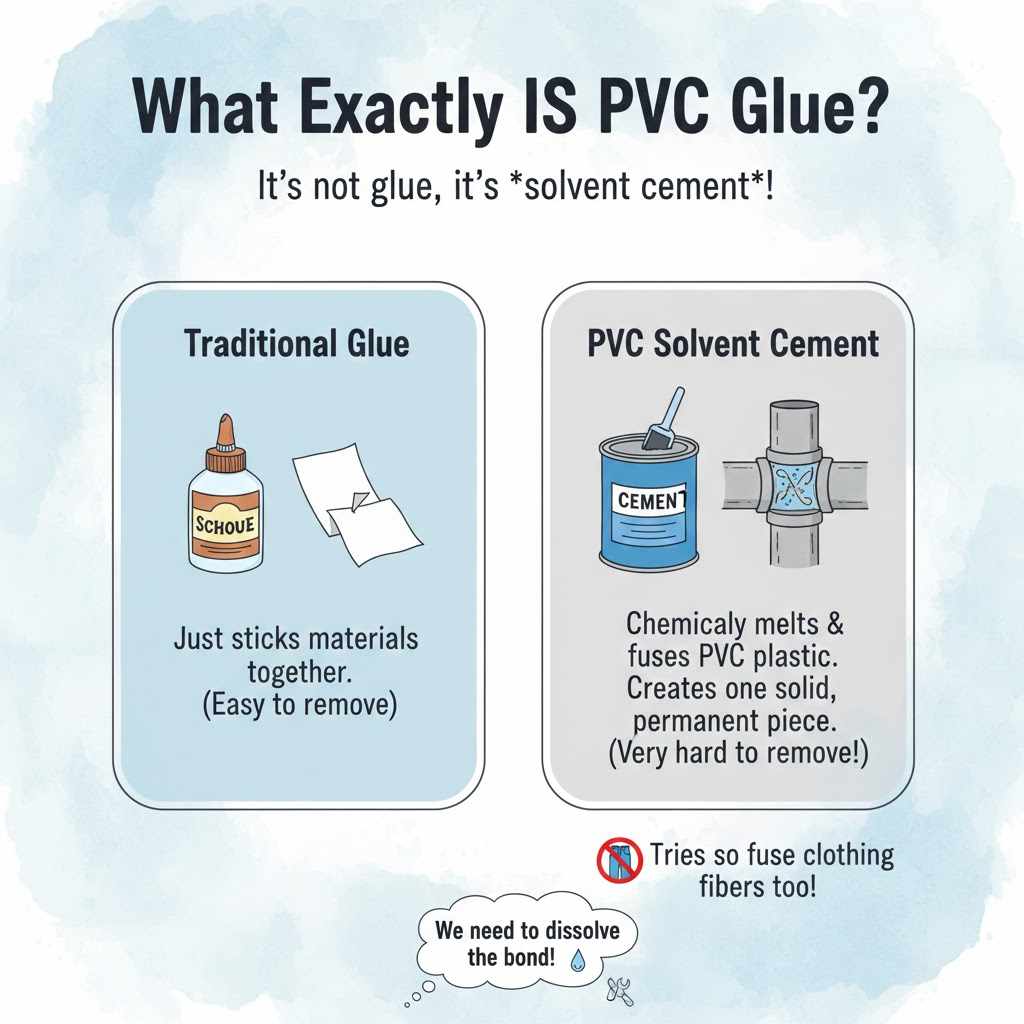
Before we dive into the solution, let’s quickly understand what we’re up against. PVC glue, also called PVC cement, isn’t really a “glue” in the traditional sense. It’s a solvent cement. Instead of just sticking things together, it chemically melts the surface of the PVC plastic. When the solvent evaporates, the two melted pieces fuse into one solid piece.
This is great for creating leak-proof pipe joints, but not so great when it happens on your jeans. The cement tries to do the same thing to synthetic fibers in your clothing—it tries to fuse them. That’s why it’s so much harder to remove than regular school glue. But understanding this helps us know that we need something that can dissolve the bond without destroying the fabric underneath.
Safety Always Comes First
We’re going to be working with a chemical solvent, so safety is our top priority. Even if it’s a common household product, we need to be careful. Here’s a quick checklist to run through before you start:
- Work in a Ventilated Area: The fumes from acetone can be strong. Open a window or work outside if you can.
- Protect Your Hands: Wear rubber or nitrile gloves to keep the solvent off your skin.
- Protect Your Surfaces: Lay down old towels or newspapers under your clothing to protect your table or countertop.
- Read the Label: Always read the warnings on any product you use, including your laundry detergent and the solvent.
- Keep Away from Heat: Acetone is flammable. Keep it far away from any open flames or heat sources. For more details on handling flammable liquids safely, you can refer to guidance from safety organizations like the U.S. Occupational Safety and Health Administration (OSHA).
Gather Your Supplies for the Mission
The good news is you probably have everything you need already. This is a simple and affordable fix. Let’s get our toolkit ready:
- Acetone or Acetone-Based Nail Polish Remover: This is our hero ingredient. Pure acetone works best, but a strong nail polish remover will do the trick.
- A Dull Knife, Spoon, or Plastic Scraper: To gently lift off the excess glue.
- Cotton Balls or Cotton Swabs (Q-tips): For precise application of the acetone.
- A Few Clean, White Cloths or Paper Towels: For blotting the stain. Using white cloths prevents any dye transfer to your garment.
- Liquid Laundry Detergent: For pre-treating the stain after the glue is gone.
- Cold Water: For rinsing.
The Step-by-Step Guide to Removing PVC Glue
Alright, let’s get that glue out! Follow these steps carefully, and remember, patience is key. Don’t rush the process.
Step 1: Scrape Off the Excess
If the glue is still wet, try to blot it gently with a clean cloth. If it’s already dry and hard, this is where your scraper comes in.
Take your dull knife or the edge of a spoon and carefully scrape off as much of the raised, hardened glue as you can. Be gentle! The goal is to remove the surface layer without snagging or tearing the fabric. You won’t get it all off, but you’ll make the next step much easier.
Step 2: The All-Important Spot Test
Do not skip this step! Acetone is a strong solvent and can damage or discolor delicate or synthetic fabrics like acetate or rayon.
- Find an inconspicuous area on your clothing, like an inside seam or the hem.
- Apply a tiny amount of acetone with a cotton swab.
- Wait a minute or two and then blot it with a white cloth.
- Check for any color transfer on the cloth or any damage to the fabric.
If everything looks good, you’re ready to proceed to the main event. If you see damage, stop and try one of the alternative methods I’ll mention later.
Step 3: Apply the Acetone
It’s time to dissolve that stubborn glue. Place a clean, folded cloth or a few paper towels on the inside of the garment, directly behind the stain. This will prevent the glue and solvent from bleeding through to the other side.
Now, dip a fresh cotton ball in acetone. Dab it gently onto the glue stain. Don’t pour the acetone directly on the clothing, as that can spread the stain. The goal is to saturate the glue, not the entire shirt.
Step 4: Blot and Lift, Don’t Rub
Let the acetone sit for a minute to start breaking down the PVC cement. You should see the glue begin to soften and get gooey.
Take a clean section of your white cloth and begin blotting the area. The softened glue should start transferring from your clothes to the cloth. As the cloth gets dirty, switch to a clean section or a new cotton ball. You may need to apply a little more acetone and continue blotting. This is the most time-consuming part. Be patient and keep blotting until the glue is gone.
Step 5: Rinse the Area
Once you’ve removed all the glue residue, you need to rinse out the acetone. Take the garment to a sink and rinse the treated area thoroughly with cold water. This will stop the solvent’s chemical action and wash away any remaining loosened particles.
Step 6: Pre-Treat and Wash
Now we treat it like any other stain. Apply a small amount of your favorite liquid laundry detergent directly to the spot where the glue was. Gently rub the detergent into the fabric with your fingers.
Let it sit for about 15-20 minutes, then wash the entire garment according to the care label instructions. It’s best to wash it with other items to help with the agitation.
Step 7: Air Dry and Inspect
After washing, do not put the clothing in the dryer! The high heat from a dryer can set any faint, remaining traces of the stain, making them nearly impossible to remove later.
Instead, hang the garment to air dry. Once it’s fully dry, inspect the area carefully in good light. If the stain is completely gone, you can wash and dry it normally from now on. If you can still see a trace of it, repeat the process from Step 3.
Alternative Methods for Stubborn Stains or Delicate Fabrics
Sometimes acetone isn’t the right tool for the job. If you did a spot test and it damaged your fabric, or if the stain just won’t budge, here are a few other options you can try.
The Freezing Method
This is a great chemical-free option. By freezing the glue, you make it brittle and easier to crack off.
- Fold the garment with the glue stain facing out.
- Place it in a plastic bag and put it in the freezer for at least an hour.
- Once the glue is frozen solid, take it out and immediately try to crack and peel the glue off with your fingers or a dull scraper.
- Much of it should flake off. You may still need to treat any remaining residue with a mild solvent.
Rubbing Alcohol (Isopropyl Alcohol)
Rubbing alcohol is less aggressive than acetone and can be safer on some synthetic fabrics (but you should still spot test!). Follow the same “dab, blot, and rinse” process as you would with acetone. It may take a bit more time and effort, but it’s a good alternative.
Commercial Adhesive Removers
Products like Goo Gone or 3M Adhesive Remover are designed to tackle sticky messes. They are typically oil-based, so they work differently than acetone. Read the product’s instructions carefully, as they often require you to let the product sit on the stain for a while before scraping and washing. Always spot test these products as well!
Choosing the Right Removal Method
Feeling a bit unsure about which method to choose? This table should help you decide.
| Removal Method | Best For | Pros | Cons |
|---|---|---|---|
| Acetone | Tough, dried stains on sturdy fabrics like cotton or denim. | Very effective and fast-acting. Inexpensive. | Can damage delicate/synthetic fabrics. Strong fumes. |
| Rubbing Alcohol | Slightly more delicate fabrics, or if you don’t have acetone. | Milder than acetone. Commonly available. | Less powerful; may require more effort and time. |
| The Freezing Method | Thick, gloopy stains on any fabric. A great first step. | Completely chemical-free and safe for all fabrics. | May not remove the entire stain, often requires follow-up treatment. |
| Adhesive Remover | Very stubborn, set-in stains. | Specifically designed for sticky residue. Very powerful. | Can leave an oily residue that requires extra washing. Must test carefully. |
A Quick Guide to Fabric Safety
Not all fabrics are created equal when it comes to solvents. Using the wrong chemical can be a recipe for disaster. Here’s a general guide, but remember, spot testing is always the best policy. For detailed information on fabric types, resources from university extensions, like this guide from the University of Missouri on textile care, can be very helpful.
| Fabric Type | Acetone Safety | Notes |
|---|---|---|
| Cotton & Denim | Generally Safe | These natural, durable fibers usually handle acetone well. |
| Polyester & Nylon | Use with Caution | Spot test is crucial. Can sometimes cause discoloration. |
| Rayon, Acetate, Modacrylic | AVOID | Acetone will literally dissolve these fabrics, creating a hole. |
| Wool & Silk | Use with Extreme Caution | It’s better to try the freezing method or consult a professional cleaner. |
What Not to Do: Common Mistakes to Avoid
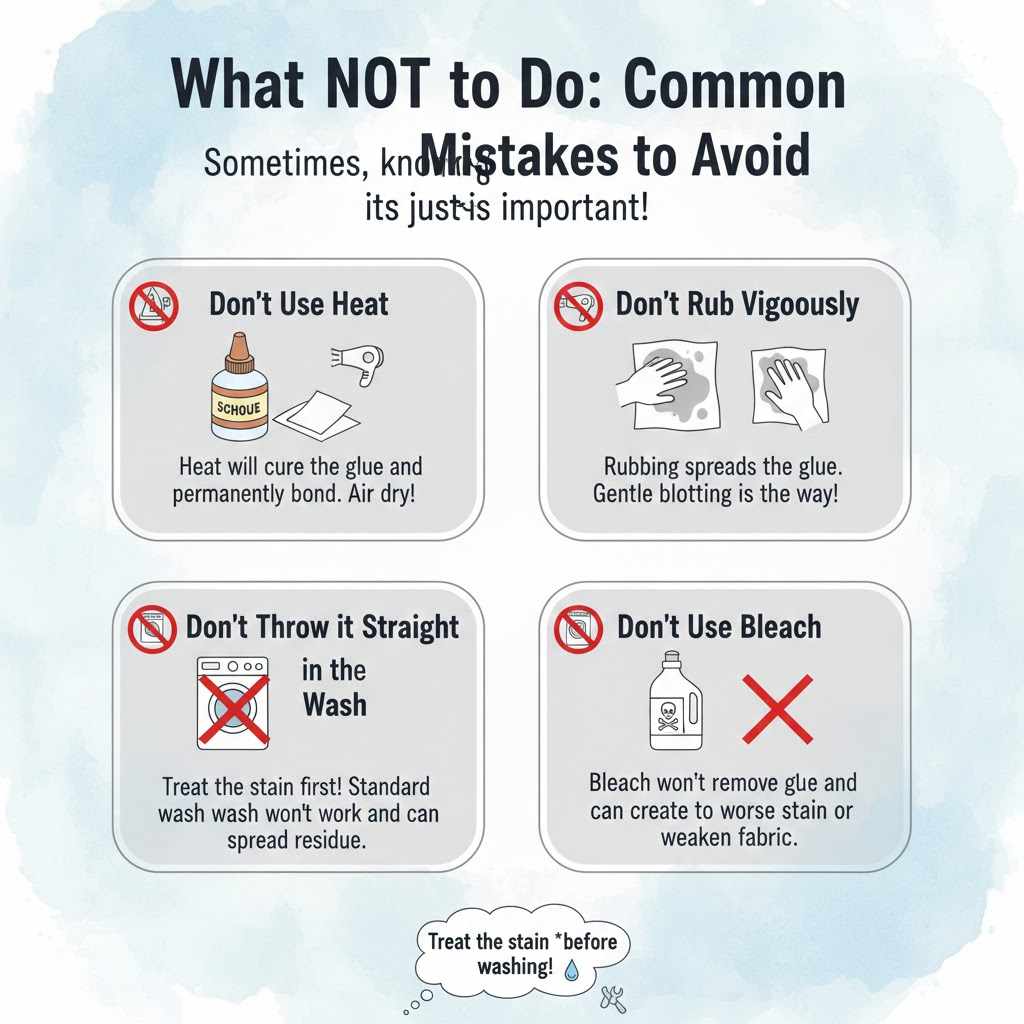
Sometimes, knowing what to avoid is just as important as knowing what to do. Here are a few common mistakes that can make the problem worse:
- Don’t Use Heat: Never apply heat from an iron or a hairdryer to the stain. Heat will cure the glue and permanently bond it to the fabric fibers. This is why we air dry!
- Don’t Rub Vigorously: Rubbing can spread the softened glue around and grind it deeper into the fabric’s weave. Gentle blotting is the way to go.
- Don’t Throw it Straight in the Wash: A standard wash cycle will do nothing to PVC glue and can spread the residue to other clothes in the load. You must treat the stain first.
- Don’t Use Bleach: Bleach won’t remove the glue but can react with the chemicals in the cement, potentially creating a new, worse stain or weakening the fabric.
Frequently Asked Questions (FAQ)
Can you get dried PVC glue out of clothes?
Yes, absolutely! It takes more effort than a wet stain, but it’s definitely possible. The key is to first mechanically remove as much of the hardened surface glue as possible with a scraper, then use a solvent like acetone to dissolve the remaining glue that has soaked into the fibers.
Does vinegar remove PVC glue?
Unfortunately, no. Vinegar is an acid that works well on mineral deposits and some light adhesives, but it is not strong enough to dissolve the chemical solvents and resins used in PVC cement. You need a more powerful solvent like acetone for this job.
Will Goo Gone work on PVC glue?
Goo Gone can be effective, but it may require more patience. It works best on adhesive residues. Apply it to the stain, let it sit for several minutes to penetrate, and then scrape and blot. Because it’s oil-based, you will need to thoroughly wash the garment afterward to remove the oily residue.
What fabrics are most sensitive to acetone?
Fabrics containing acetate, triacetate, or modacrylic are extremely sensitive. Acetone will dissolve them, creating permanent damage or a hole. Always avoid using acetone on fabrics like rayon or anything with a delicate, silky finish unless you are certain of the fiber content.
Is it better to treat a wet or dry PVC glue stain?
It’s always better to treat a stain when it’s wet. A wet stain hasn’t had time to fully cure and bond with the fabric fibers. You can often blot most of it away before it becomes a major problem. However, most of us don’t notice the stain until it’s dry, and the methods described above are designed for those dried-on messes.
Can I just put the stained clothing in the washing machine?
No, you should not. A regular washing machine cycle, even with hot water and strong detergent, won’t break down the hardened PVC cement. The heat could even set the stain further, and there’s a small risk of the residue transferring to other clothes in the wash.
Why is PVC glue so hard to remove?
PVC glue is difficult to remove because it’s not a simple adhesive. It’s a solvent that melts plastic to fuse it together. When it gets on fabric, it tries to melt and fuse the synthetic fibers in a similar way, creating a very strong, integrated bond that regular washing can’t break.
Conclusion: Your Clothes Are Saved!
There you have it! A seemingly permanent workshop disaster is really just a problem waiting for a simple, smart solution. That dreaded PVC glue stain doesn’t have to mean the end for your favorite work clothes. By understanding the nature of the glue and using a common household solvent like acetone, you can carefully dissolve the stain and restore your garment.
Remember the golden rules: work safely, always spot test, and be patient with the process. Blot, don’t rub, and keep heat away until you’re sure the stain is gone. With this knowledge in your back pocket, you can get back to your projects with one less thing to worry about. Happy building!