How Does Krazy Glue Work: Essential Guide
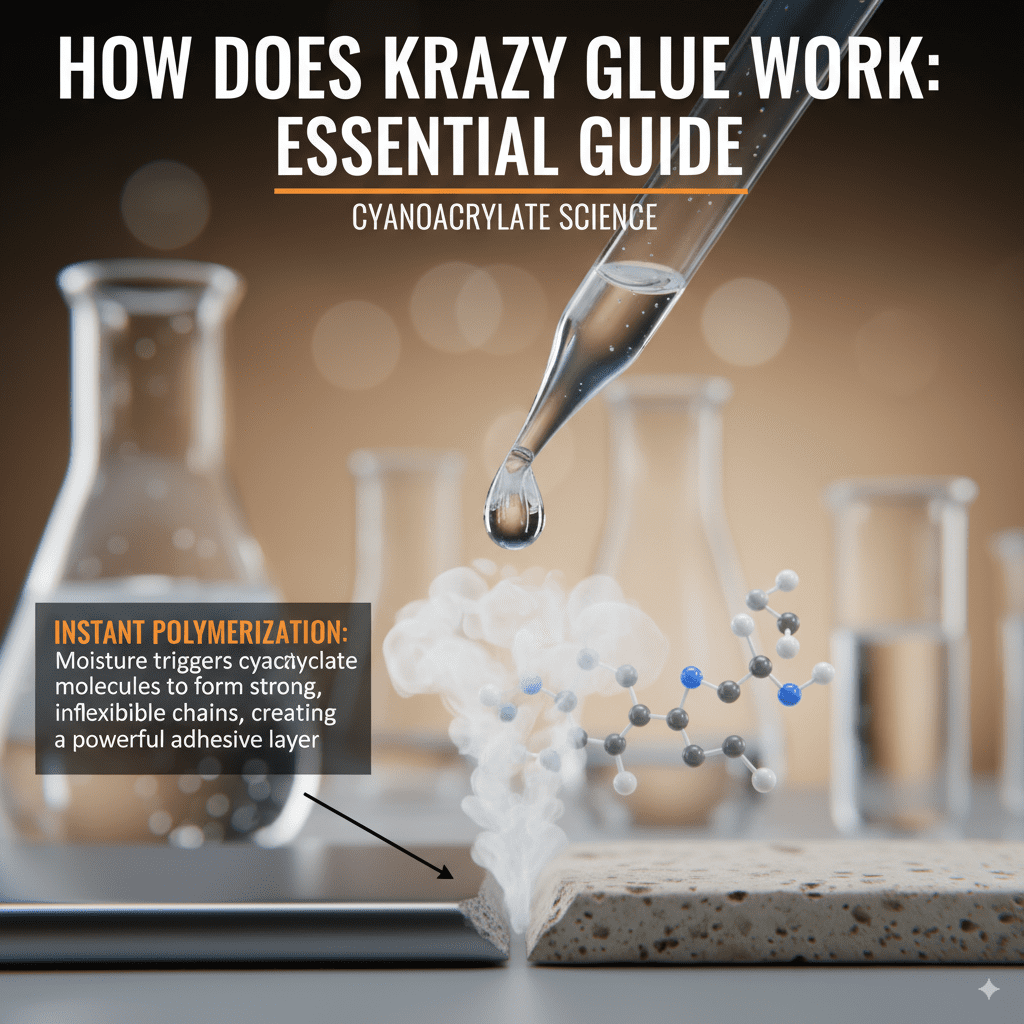
Krazy Glue works by a process called rapid polymerization. It’s a super glue that uses a chemical reaction with moisture in the air and on surfaces to harden almost instantly, creating a strong bond between materials. It’s incredibly fast and effective for quick fixes and many DIY projects.
Hey there, DIYer! Ever grab that little tube of Krazy Glue thinking, “How does this stuff get so strong, so fast?” You’re not alone! It feels like magic when two pieces of material stick together in seconds. Sometimes, when a project hits a snag or a piece breaks, knowing you’ve got a reliable adhesive like Krazy Glue on hand can save the day. But how does it actually do its job? Understanding the science behind it isn’t as complicated as it sounds, and it can actually make you a more confident user for all your projects. We’ll break down the science in a way that makes sense, so you can tackle those repairs and builds with ease. Let’s dive into the surprisingly simple “how” of this amazing glue!
How Does Krazy Glue Work: The Science Explained Simply
At its heart, Krazy Glue, also known as cyanoacrylate adhesive, is a liquid that turns solid through a chemical reaction. It’s not like regular glue that needs time to dry out and evaporate water. Krazy Glue needs something else entirely: moisture.
Think of it like this: Krazy Glue comes in a liquid form, just waiting for the right trigger to transform. That trigger is moisture – specifically, the tiny amount of humidity present in the air and on the surfaces you’re joining.
The Magic Ingredient: Cyanoacrylate
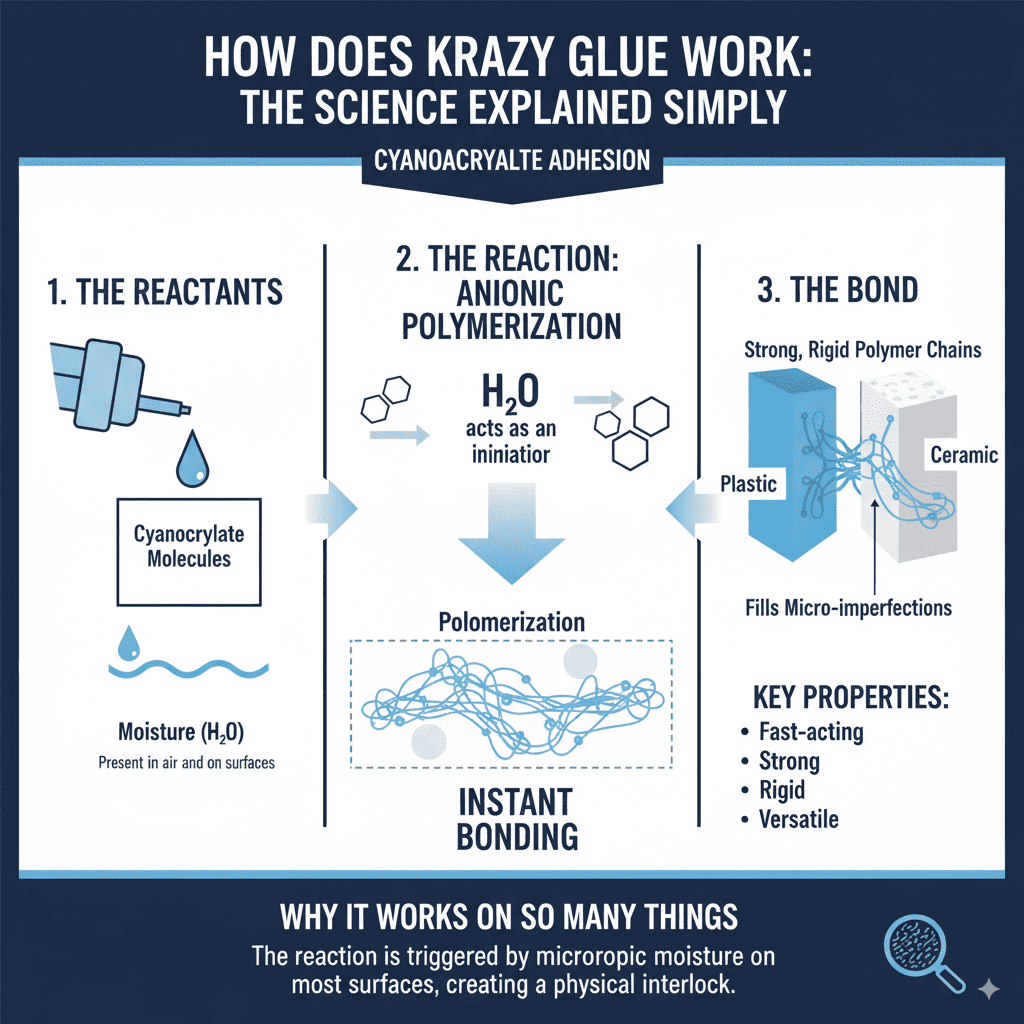
The key player in Krazy Glue is a chemical compound called cyanoacrylate. When this liquid cyanoacrylate comes into contact with even a minuscule amount of moisture, it starts a chain reaction. This reaction is called anionic polymerization.
Polymerization: The Fast Transformation
When the cyanoacrylate molecules encounter water (H₂O), the water molecules act as an initiator. They start breaking the bonds within the cyanoacrylate. This causes the individual cyanoacrylate molecules to link up with each other, forming long, strong chains. These chains are what create the solid, durable bond.
It’s this rapid linking of molecules – polymerization – that gives Krazy Glue its super-fast bonding power. It happens almost instantly, which is why you feel that immediate grip when you use it.
Why It Bonds to So Many Things
Cyanoacrylate is excellent at bonding to a wide variety of materials because it can react with the tiny imperfections and molecular structures on almost any surface. Whether it’s plastic, metal, ceramic, or even some types of wood, there’s usually enough surface moisture for the reaction to start. The strength of the bond comes from the interlocking polymer chains that form between your two pieces.
The Role of Air and Surface Moisture
It’s a common misconception that Krazy Glue dries by evaporation. While there might be a tiny bit of evaporation, it’s not the primary bonding mechanism. The moisture already present is what kicks off the polymerization process. This is why Krazy Glue works so well in humid environments and sometimes seems to bond faster on slightly damp surfaces (though you should generally avoid soaking the surfaces).
For a successful bond, you need just enough moisture to start the reaction, but not so much that it dilutes the glue and weakens the bond. A good rule of thumb is that clean, dry surfaces work best, but for most materials, the ambient humidity is sufficient.
Applying Krazy Glue: A Step-by-Step Guide for Beginners
Using Krazy Glue effectively is all about preparation and careful application. Since it bonds so quickly, there’s no room for error once the glue is applied.
Step 1: Gather Your Supplies
Before you even think about squeezing that tube, make sure you have everything ready. This includes:
- The item(s) to be repaired or joined.
- A small tube of Krazy Glue (cyanoacrylate adhesive).
- A clean, dry cloth or paper towel.
- Optional: Gloves (highly recommended – see safety section!).
- Optional: A fine-grit sandpaper or emery board if surfaces need light preparation, and a brush for cleaning dust.
Step 2: Prepare Your Surfaces
This is arguably the most critical step for a strong bond. For Krazy Glue to work its best, the surfaces that will be joined should be clean and dry.
- Cleanliness: Ensure there’s no dust, dirt, oil, grease, or old adhesive residue. You can use a clean cloth dampened with a bit of rubbing alcohol (isopropyl alcohol) to wipe down the surfaces. Let them dry completely.
- Smoothness: For very smooth surfaces, gently abrading them with fine-grit sandpaper can help create a better grip for the glue. Clean off any dust afterward.
- Fit: Make sure the pieces fit together perfectly. Krazy Glue bonds almost instantly, so you won’t have much time for adjustments.
Step 3: Apply the Glue
This is where the speed comes into play. Be precise!
- Less is More: Apply a small, thin bead of Krazy Glue to only ONE of the surfaces. You don’t need a lot; a little goes a very long way. Too much glue can actually weaken the bond and make a mess.
- Even Distribution: Try to apply it in a way that will spread evenly when the pieces are joined.
- Avoid Clogging: Be careful not to get glue around the nozzle, as it can clog the tube quickly.
Step 4: Join the Surfaces
Act fast once the glue is on!
- Quickly Bring Together: Immediately bring the two surfaces together.
- Hold Firmly: Press them together firmly and hold them in place. You’ll feel the bond start to set within seconds.
- Maintain Pressure: Continue holding for at least 30-60 seconds. Some manufacturers recommend holding for 1-2 minutes to ensure an initial strong set.
Step 5: Allow for Full Cure
While Krazy Glue feels solid quickly, its full strength develops over a longer period.
- Initial Set: The initial bond is strong enough to handle carefully within a minute or two.
- Full Cure: For maximum strength, allow the bonded item to cure for at least 24 hours before subjecting it to stress, heat, or moisture. The exact cure time can vary slightly depending on the product and conditions.
Materials That Bond Well (and Some to Be Careful With)
One of the best things about Krazy Glue is its versatility. It can bond a wide range of materials commonly found around the house and in DIY projects.
Excellent Bonding Materials:
- Plastics: Most common plastics like acrylonitrile butadiene styrene (ABS), PVC, acrylic, and polycarbonate.
- Ceramics and Porcelain: Ideal for repairing broken mugs, plates, or decorative items.
- Metals: Works well on steel, aluminum, brass, and other common metals.
- Rubber: Useful for repairing rubber hoses, shoe soles, or gaskets.
- Wood: Great for small wood repairs, model building, or quickly joining small wooden pieces.
- Leather: Can be used for quick fixes on leather items, though a specialized leather glue might be better for flexibility and long-term wear.
- Some Fabrics: Works on synthetic fabrics, but may create a stiff bond.
Materials to Use Krazy Glue With Caution:
- Foam: Many types of foam (like Styrofoam) can be melted or damaged by the solvents in cyanoacrylate glue.
- Porous Materials: While it bonds to wood, very porous materials might absorb too much glue, weakening the bond and leaving a brittle residue.
- Silicone and Teflon: These materials are notoriously difficult to glue and Krazy Glue often won’t create a lasting bond with them.
- Areas Under High Stress or Flex: For items that will bend or flex a lot, or be under significant mechanical stress, a more flexible adhesive like a silicone adhesive or epoxy might be a better choice.
- Glass (sometimes): While it can bond glass, it can leave a cloudy or brittle bond if not applied perfectly. For glass requiring a clear, durable bond, a specialized glass glue or epoxy is often preferred.
Safety First: Essential Precautions When Using Krazy Glue
My number one priority is always safety in the workshop and for any DIY task. Krazy Glue is powerful, and while it’s incredibly useful, it demands respect. Its super-fast bonding action means you need to be careful to avoid bonding yourself to things you don’t want bonded!
Skin and Eye Safety
- Gloves are Your Friend: Always wear disposable gloves (like nitrile or latex) when you’re working with Krazy Glue. This prevents it from bonding to your skin. If you do get it on your skin, don’t panic.
- How to Remove from Skin: If you get Krazy Glue on your skin, gently try to peel it apart. If it’s stuck fast, soak the affected area in warm, soapy water. You can also try gently rubbing with acetone (nail polish remover), but test on a small skin area first and rinse thoroughly afterward. Avoid using acetone near your eyes or mouth.
- Eye Protection: Always wear safety glasses. If Krazy Glue gets into your eyes, flush immediately with warm water and seek medical attention. Never try to force your eyelids open.
Ventilation and Fumes
Krazy Glue releases fumes during the polymerization process. These fumes can be irritating.
- Work in a Well-Ventilated Area: Make sure you have good airflow. Open a window or work outdoors if possible.
- Avoid Inhaling Fumes: Try to keep your head above the project to avoid inhaling the initial burst of fumes as the glue sets.
Storage and Disposal
Proper storage ensures your glue lasts and prevents accidents.
- Keep Away from Children and Pets: Store Krazy Glue in its original packaging, tightly capped, in a cool, dry place, out of reach of children and pets.
- Disposal: Dispose of dried glue and empty tubes according to your local regulations for household waste.
Tips for Easy Application and Clean-up
- Use a Gel Formula for Vertical Surfaces: If you’re working on a project where the glue might run, opt for a gel-style Krazy Glue. It’s thicker and stays in place better.
- Nozzle Ejector Tool: Some tubes come with, or you can use a thin wire or toothpick to remove any dried glue from the nozzle before use.
- Clean Up Excess Immediately: If you accidentally get a bit too much glue, and it hasn’t fully cured, you can often wipe it away with a clean cloth or paper towel. For cured glue, you might need a bit of acetone (carefully!) or gentle scraping once fully hardened.
Krazy Glue vs. Other Adhesives
Understanding how Krazy Glue stacks up against other common adhesives can help you choose the right product for your project. Each has its strengths and weaknesses.
Table: Krazy Glue vs. Common Adhesives
| Adhesive Type | How it Works | Bonding Speed | Strength | Flexibility | Best For |
|---|---|---|---|---|---|
| Krazy Glue (Cyanoacrylate) | Rapid polymerization with surface moisture. | Seconds to minutes for initial set. | Very strong, rigid bond. | Low (brittle). | Quick repairs, small parts, non-flexible materials (plastics, metal, ceramics). |
| Wood Glue (PVA) | Water evaporation and wood fiber penetration/drying. | Dries in hours, full cure 24+ hours. | Strong bond, especially on wood. | Medium (slightly flexible). | Woodworking projects, furniture assembly. |
| Epoxy Resin | Two-part chemical reaction (resin + hardener) cures. | Minutes to hours for set, 24+ hours for full cure. | Extremely strong, can fill gaps. | Medium to High (depending on formulation). | Structural repairs, dissimilar materials, gap filling, demanding applications. Learn more about epoxy properties. |
| Super Glue Gel | Same as Krazy Glue, but thicker viscosity. | Seconds to minutes for initial set. | Very strong, rigid bond. | Low (brittle). | Vertical surfaces, gap filling, less likely to drip. |
| Hot Glue | Thermoplastic adhesive melts and solidifies upon cooling. | Seconds to minutes for initial set. | Low to Medium, can loosen with heat. | High (very flexible). | Crafts, temporary bonds, fabric, paper, non-structural applications. |
When to Choose Krazy Glue:
Krazy Glue shines when you need a lightning-fast, strong bond on smooth, non-porous surfaces or for small, precise applications where flexibility isn’t a concern. It’s the go-to for mending a broken ceramic handle, reattaching a small plastic part, or a quick fix on a shoe sole.
When to Consider Other Adhesives:
- For Woodworking: Traditional wood glue (PVA) is generally superior for most woodworking projects because it allows for repositioning and forms a bond that is often stronger than the wood itself. Epoxies can also be used for wood repairs, especially for filling gaps or very strong structural bonds.
- For Flexibility: If your project involves movement, bending, or vibration, Krazy Glue’s brittle nature might cause the bond to crack. Look for flexible adhesives like silicone or some types of polyurethane adhesives.
- For Large Gaps: Krazy Glue is designed for tight-fitting surfaces. For gaps, epoxy resins are much better as they can be formulated to fill voids. Hot glue can also fill gaps but offers less structural strength.
- For Extreme Conditions: If your project will be exposed to significant heat, cold, moisture, or heavy loads, you’ll need a more robust adhesive like a specialized epoxy or construction adhesive. Refer to resources like Building Science for insights into material performance under various conditions.
Frequently Asked Questions About How Krazy Glue Works
Q1: Will Krazy Glue work on fabric?
A: Krazy Glue can bond certain synthetic fabrics, but it often creates a stiff, brittle bond that might crack with movement. For most fabrics, especially natural ones or those that need to remain flexible, a fabric glue or a flexible adhesive is a better choice.
Q2: Can I use Krazy Glue to fix a broken mug handle?
A: Yes, Krazy Glue is excellent for repairing ceramic and porcelain items like mug handles. Just ensure the surfaces are clean, dry, pressed together firmly, and allow it to cure for 24 hours before use. Be mindful of food safety if the repair is near a food contact surface.
Q3: Why does Krazy Glue bond to my fingers so quickly?
A: Your skin has natural moisture, which is the catalyst for Krazy Glue’s rapid polymerization. The chemicals in the glue react instantly with this moisture, forming a strong bond in seconds.
Q4: Does Krazy Glue work underwater?
A: Standard Krazy Glue is not designed to work underwater. In fact, the abundance of water can dilute the adhesive and prevent it from bonding effectively or at all. There are specialized “waterproof” or “submersible” cyanoacrylate adhesives available, but they often require very specific underwater application conditions.
Q5: How long does Krazy Glue last in the tube?
A: When stored properly in a cool, dry place with the cap tightly sealed, Krazy Glue can last for a year or more. However, it’s not uncommon for it to eventually dry out or become less effective, especially if exposed to humidity or frequent temperature changes.