Are There Different Strengths of Hot Glue Sticks? Yes – Here’s What Differs
Yes – hot glue sticks are not all the same strength. Three things actually change how strong the bond is: the stick’s diameter (which determines what gun it fits), its temperature rating (low-temp around 250F or high-temp around 380F), and its formula (standard craft-grade EVA versus a high-strength or specialty blend). Mixing these up is the real reason a hot glue repair sometimes fails within a day.
Below is what each of those three factors actually controls, plus which stick to reach for depending on the material you’re bonding.
Yes, Hot Glue Stick Strength Varies – Here’s What Actually Controls It
Our Pick for Hard-to-Bond Surfaces
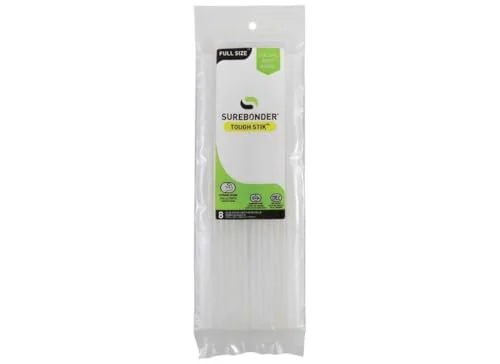 |
Surebonder Acrylic High-Strength Full Size Glue Sticks, 8-Pack – $11.95 A genuinely stronger formula for the “hard-to-bond” materials standard craft sticks struggle with, like tile, metal, rubber, and plastic.
|
Two glue sticks that look identical off the shelf can perform completely differently once they’re melted. Here’s each factor on its own.
Diameter: 7mm Mini Sticks vs. 11-12mm Full-Size Sticks
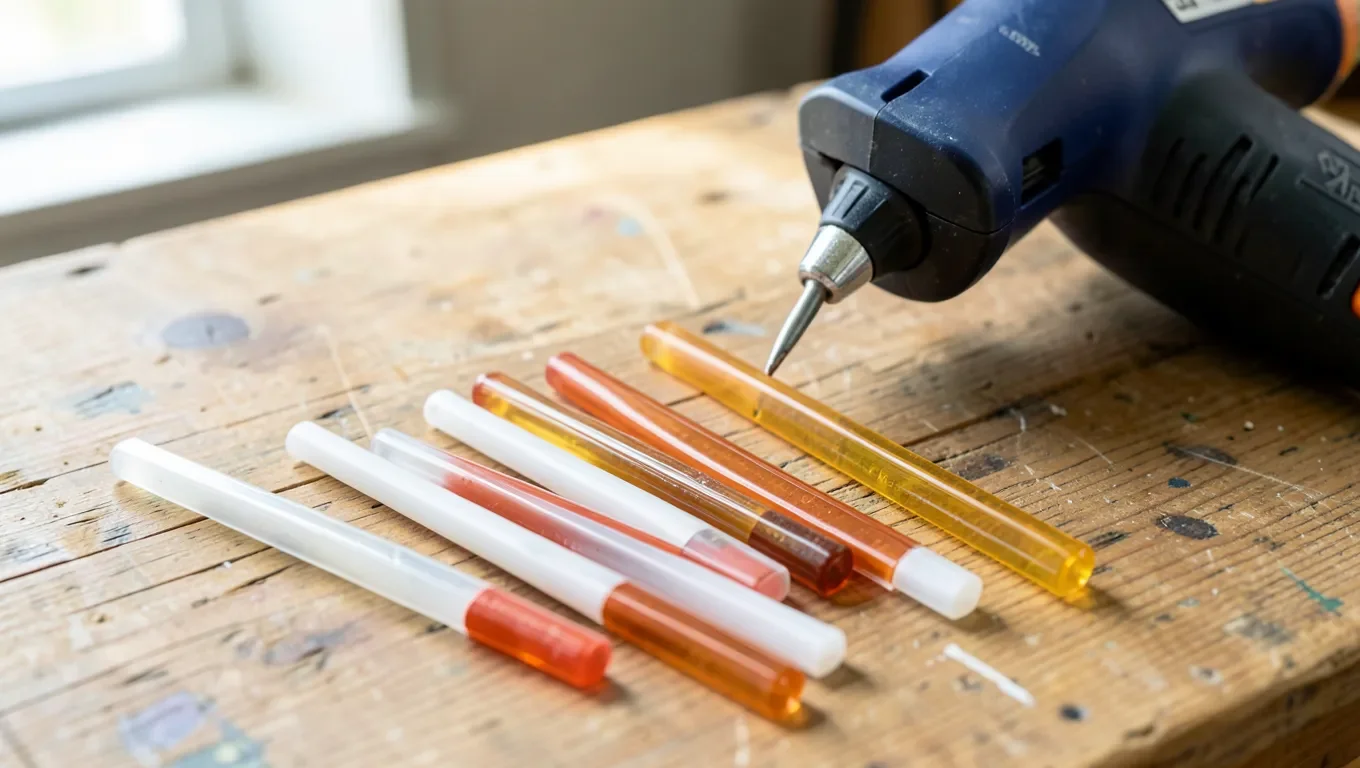
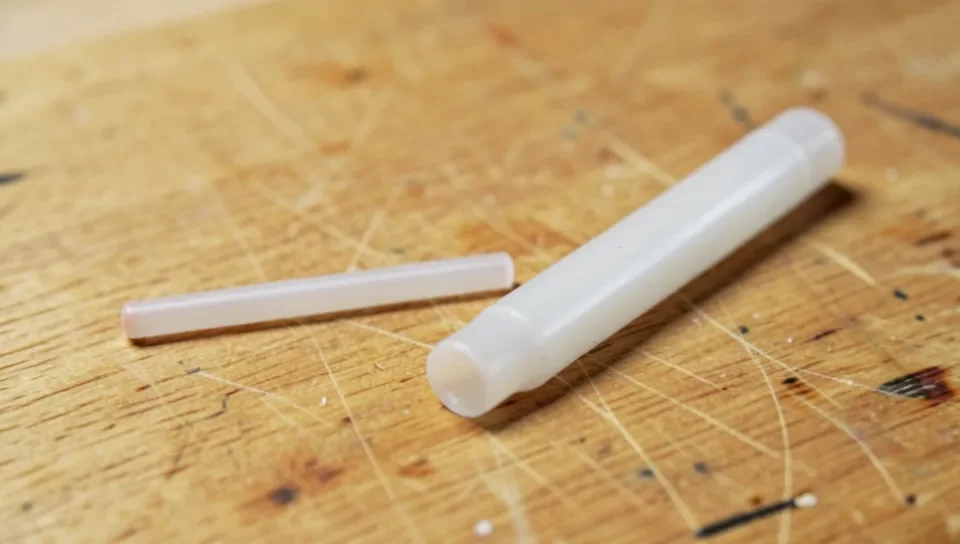
Glue sticks come in two standard diameters, and they are not interchangeable. Mini glue sticks measure about 0.27 inches (7mm) across and roughly 4 inches long, sized for mini/craft glue guns with a narrow feed channel. Full-size sticks measure about 0.43-0.5 inches (11-12mm) across and about 10 inches long, sized for full-size guns with a larger bore and a stronger heating element.
This isn’t just a sizing preference – it’s a mechanical limit. A 7mm stick fed into an 11mm chamber won’t seat against the heating element properly and can feed unevenly. Forcing an 11mm stick into a mini gun’s narrow channel can jam the feed mechanism entirely or, worse, cause partially melted glue to back up out of the loading slot. If a project needs a full-size stick’s higher output and stronger bond, it needs a full-size gun to match – there’s no adapter that makes the two sizes work together.
Low-Temp (About 250F) vs. High-Temp (About 380F) Formulations
The second variable is the melting temperature the stick is formulated for, and it’s a real strength trade-off, not just a safety setting. Low-temperature sticks liquefy around 250F. They’re genuinely gentler on delicate materials – foam, ribbon, lace, thin fabric, and some plastics – that would warp, melt, or scorch under a hotter gun. The trade-off is a weaker, slower-setting bond that’s fine for light craft work but not for anything load-bearing.
High-temperature sticks liquefy around 380F. That extra heat lets the adhesive penetrate porous surfaces like wood and cardboard better before it sets, which is why high-temp sticks bond faster and hold stronger on wood, thicker fabric, ceramics, and general repairs. The same heat that makes the bond stronger is also what makes high-temp sticks a bad choice for foam or thin plastic – the surface will deform before the glue even finishes bonding to it. Match the formulation to the material, not just to whatever gun happens to be sitting on the bench.
Specialty Formulations: Fabric, Wood, and Industrial-Grade Sticks
Beyond the standard all-purpose EVA stick, several specialty formulas exist for a reason – each changes the resin blend to solve a specific bonding problem:
- Fabric-specific sticks use a more flexible resin blend so the dried glue bends with the fabric instead of cracking or feeling like a hard plastic dot, and some are formulated to survive a gentle wash cycle.
- Wood glue sticks are formulated to grab porous end grain and fill small gaps, and the cured glue can usually be sanded flush – a standard craft stick tends to smear or gum up sandpaper instead.
- High-strength / industrial-grade sticks (like the acrylic-modified pick above) add tackifying resin or acrylic modifiers to bond genuinely difficult surfaces – metal, tile, rubber, vinyl, concrete – that a standard craft-grade EVA stick will only weakly tack onto and then let go of within days.
The label difference between “craft-grade” and “heavy-duty” or “all-purpose” isn’t marketing fluff. Craft-grade sticks use a lower-cost EVA blend optimized for paper, fabric, and light assembly – cheap, widely available, and fine for the job they’re built for. Heavy-duty/all-purpose sticks use a higher concentration of tackifying resin (and sometimes an acrylic additive) for a stronger initial grab and a higher long-term bond strength on tougher materials. They cost more per stick, but on a hard-to-bond surface, a craft-grade stick simply won’t hold as long – it’s not that one brand is “better,” it’s a different formula built for a different job.
Stick diameter is a separate decision from formula and temperature – see our mini vs. full-size glue stick diameter chart if you’re not sure which size your gun takes before buying a multi-pack.
Frequently Asked Questions
Are All Glue Sticks The Same Strength?
No. Strength depends on the stick’s formula (standard craft-grade EVA versus a high-strength or acrylic-modified blend), its temperature rating, and how well its diameter matches the gun it’s used in. A craft-grade stick and a heavy-duty stick can look identical but hold very differently on the same material.
What’s The Difference Between Craft-Grade And Heavy-Duty Glue Sticks?
Craft-grade sticks use a standard EVA blend built for paper, fabric, and light general use, and they’re the cheapest option. Heavy-duty (or “all-purpose”/”high-strength”) sticks use more tackifying resin, and sometimes an acrylic modifier, for a stronger grab and better long-term hold on tougher or harder-to-bond surfaces like wood, tile, or plastic.
What’s The Difference Between High-Temperature And Low-Temperature Glue Sticks?
High-temperature sticks melt around 380F and bond faster and stronger, making them better for wood, thicker fabric, and general repairs. Low-temperature sticks melt around 250F and are gentler on delicate materials like foam, ribbon, and thin plastic, but the bond is weaker and better suited to light craft work.
What Are The Strongest Hot Glue Sticks?
High-strength or industrial-grade full-size sticks with an acrylic-modified formula bond the strongest, particularly on hard-to-bond surfaces like metal, tile, rubber, and plastic. They’re designed for use in full-size, high-temperature guns rather than mini/craft guns.
Can I Use A 7mm Glue Stick In An 11mm Glue Gun?
No. A 7mm mini stick won’t seat properly against a full-size gun’s heating element and will feed and melt unevenly. The two diameters are built for differently sized feed channels and aren’t interchangeable in either direction.
Conclusion
Hot glue sticks genuinely do vary in strength, and it comes down to three things you can check before you buy: the diameter that matches your gun, the temperature rating suited to your material, and whether you need a standard craft formula or a heavy-duty/specialty one. Match all three to the job and the bond holds; mismatch any one of them and it’s usually the reason a repair or project comes apart sooner than expected.
Sponsored / affiliate links. As an Amazon Associate I earn from qualifying purchases. I may earn additional commission from eligible campaigns.