How Long Does Hot Glue Take to Dry? Set Time vs. Full Cure Explained
Hot glue sets firm in 15 to 60 seconds and reaches full cure strength in about 15 to 30 minutes. It does not need 24 hours like wood glue or epoxy, because hot glue is not actually “drying” in the water-evaporation sense at all – it is cooling from a melted liquid back into a solid.
That distinction matters more than it sounds. If you treat hot glue like a chemical-cure adhesive and wait hours “to be safe,” you are not making the bond any stronger – the bond finished forming as soon as the glue cooled. If you treat it like a chemical cure and only give it 5 seconds, you will pull it apart before it has even finished setting. Here is exactly what is happening at each stage, and why.
How Long Does Hot Glue Take to Dry? The Real Timeline
Three separate clocks are running once the glue leaves the nozzle, and mixing them up is the #1 reason projects fail or people wait far longer than they need to:
- Initial set (15-60 seconds): The glue turns from liquid to a firm, non-tacky solid. This is the window where holding pressure actually matters.
- Handling strength (1-2 minutes): You can pick the piece up and move it without the joint shifting, but the bond is still gaining strength as the glue keeps cooling below the surface.
- Full cure / maximum strength (15-30 minutes): The glue has cooled all the way through, including inside a thick bead. This is when it can take real stress, weight, or flex without failing.
A thin bead on a cool piece of wood can finish that whole sequence in under 10 minutes. A thick pooled joint on warm material can take closer to an hour to cool solid all the way through, even though the surface feels dry in seconds.
Best Dual-Temp Glue Gun For Wood
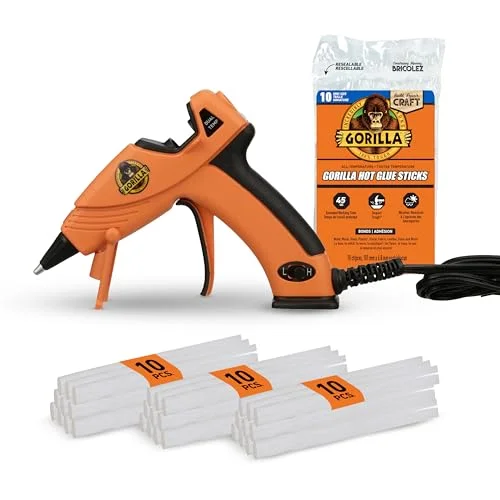 |
Gorilla Mini Hot Glue Gun Kit, Dual Temp – $20.99 This is the gun that makes the timing above easy to control – flip to high heat for wood and you get the slower-cooling, deeper-penetrating bond described below.
|
Why Hot Glue “Dries” by Cooling, Not Curing
Most glue sticks are made from ethylene-vinyl acetate (EVA) copolymer, a thermoplastic. Thermoplastics do not undergo a chemical reaction when they set – they simply change physical state, the same way melted candle wax turns solid again as it cools. There is no moisture to evaporate and no cross-linking reaction happening inside the joint. Once the glue has cooled below roughly 100-120°F, it has reached essentially the same hardness it will ever have.
That is the opposite of how PVA wood glue works. PVA is water-based and sets as the water evaporates out of the joint, which is a slow process that can take 24 hours to fully finish even after it feels dry to the touch. Epoxy is different again – it is a genuine chemical reaction between resin and hardener that keeps generating heat and strength for 24 to 72 hours. Hot glue does none of that, which is exactly why waiting a full day for a hot-glued joint accomplishes nothing. Whatever strength it is going to have, it already has within about half an hour.
High-Temp vs. Low-Temp Glue Sticks: Different Set Times, Different Bond
Not all glue sticks melt at the same temperature, and that changes both how fast they set and how well they actually bond to wood:
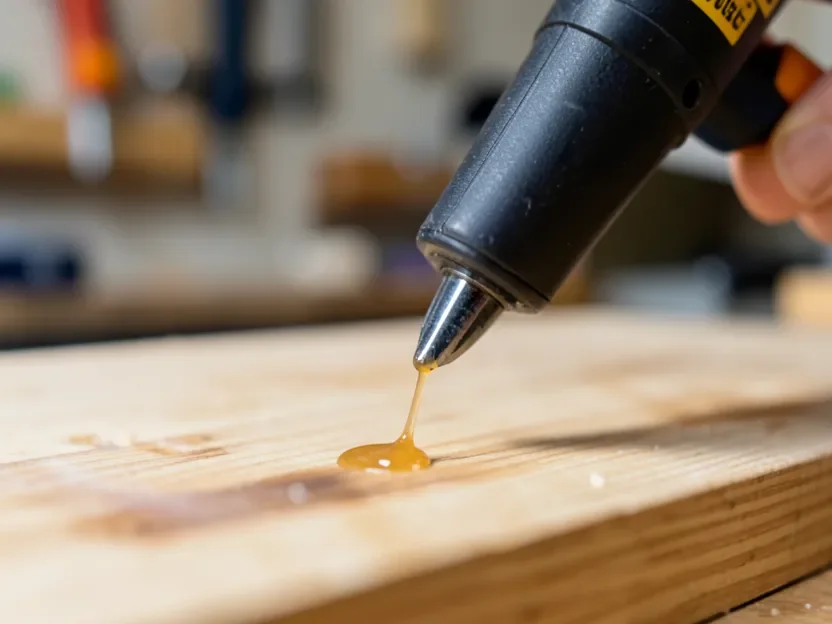
- Low-temp sticks (roughly 250°F / 121°C): Cool and set noticeably faster because there is less heat to dissipate. Good for foam, ribbon, and fabric, but on wood they often solidify before they have had time to flow into the grain, which means a weaker mechanical bite.
- High-temp sticks (roughly 380-400°F / 193-205°C): Stay molten longer, giving you extra seconds to position the joint. On wood specifically, that longer molten window lets the glue soak into open grain and pores before it locks up, which is why high-temp glue generally grips bare wood better than low-temp glue does.
This is the whole reason a dual-temp gun is worth having in a wood shop instead of a fixed-temperature craft gun: you can drop to low heat for anything delicate and switch to high heat specifically for wood, rather than compromising on both.
Hot Glue vs. Other Adhesives: Setting & Cure Times Compared
Here is how hot glue’s cooling-based set time stacks up against the chemical-cure adhesives you would reach for instead on a structural joint:
| Adhesive Type | Initial Set Time | Full Cure Time | Best For |
|---|---|---|---|
| Hot Glue (EVA) | 15-60 seconds | 15-30 minutes | Crafts, quick fixes, bonding dissimilar materials, non-structural wood joints |
| Wood Glue (PVA) | 20-30 minutes | 24 hours | Furniture, structural wood joints, glue-ups |
| Super Glue (Cyanoacrylate) | 10-30 seconds | 24 hours | Small, non-porous repairs |
| Epoxy (2-Part) | 5-30 minutes | 24-72 hours | Structural bonds, gap-filling, load-bearing repairs |
| Construction Adhesive | Minutes to hours | 24-72 hours | Subfloors, framing, heavy-duty bonding |
The pattern is consistent: every adhesive on this list that cures 24 hours or longer does so through a genuine chemical reaction. Hot glue is the only one on the list that finishes almost entirely through simple cooling, which is why it is also the fastest.
What Actually Changes Hot Glue’s Drying Time
Four things move the numbers above up or down, and they all come back to the same physics: how much heat has to leave the glue before it is solid.
Bead thickness matters more than anything else. A thin skim of glue has a lot of surface area relative to its volume, so heat escapes fast. A thick pooled blob insulates its own core, so the outside can feel firm in a minute while the center is still soft and vulnerable to shifting for much longer. Ambient and substrate temperature work the same way in reverse – gluing onto cold material or working in a cold garage pulls heat out faster and shortens set time, while a warm room or warm workpiece slows it down. Airflow has a small but real effect: a gentle fan speeds up cooling, while dead-still air in an enclosed space holds heat slightly longer. None of these change how much total heat has to dissipate, only how fast it happens – which is why even the “slow” combinations above rarely push full cure much past the 30-45 minute mark.
Can You Actually Hot Glue Wood Together?
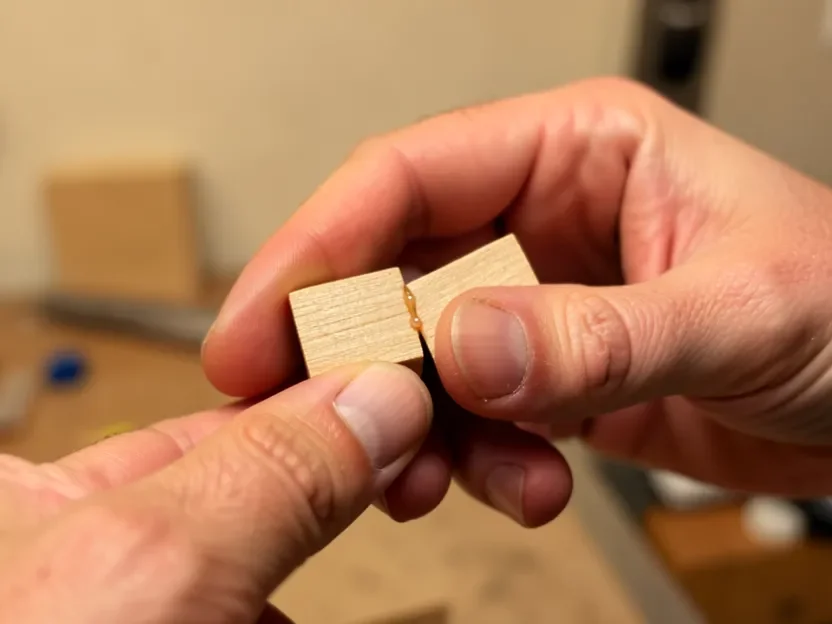
Yes, but the fast set time above is also the honest reason to keep expectations in check: hot glue grips the surface of wood well and grips fast, but it does not have the shear strength or water resistance of a real wood adhesive. It is a good choice for decorative trim, temporary jigs, and craft-level joints – not for anything load-bearing or exposed to moisture. We cover the strength side of that question in much more depth, including which joints actually hold up and which ones fail under load, in our full guide: Can You Hot Glue Wood Together? Bonding Strength & Best Practices.
Tips for a Stronger, Faster Bond
- Prep the surface first. Clean, dry, dust-free wood bonds noticeably better than a dusty offcut straight off the saw; a light sanding gives the glue more surface to grip.
- Let the gun fully preheat (usually 5-10 minutes) before you start – glue dispensed from a half-heated gun is cooler, more viscous, and sets before it has a chance to flow into the grain.
- Apply to one surface, then join immediately while the glue is still fluid, and hold firm pressure through that first 15-60 second window – this is the single most common point of failure.
- Do not rush it with cold water or a freezer. Force-cooling the glue skips the phase where it is still flowing into the wood fibers, which produces a brittle, weaker bond, not a faster-finished one.
- Give it the full 15-30 minutes before loading it. The joint will feel solid in a minute, but it has not finished cooling through a thicker bead until then.
Troubleshooting Common Drying Problems
Glue is cooling too fast to work with
Confirm the gun is fully heated, switch to a high-temp stick if you are on low, and work in smaller sections rather than trying to cover a large area in one pass before it sets.
The bond broke after it cooled
This is almost always insufficient hold time during the first 15-60 seconds, a dusty surface, or asking hot glue to do a structural wood glue’s job. For anything that needs to carry real weight or stress, switch to PVA wood glue or a mechanical fastener.
Glue is stringy or messy
Normal for EVA glue. Let the strings cool fully, then trim them away with scissors or a craft knife rather than pulling them while still soft.
Frequently Asked Questions About Hot Glue Drying Times
Does hot glue really need 24 hours to cure?
No. That timeframe applies to wood glue (PVA) and epoxy, which cure through evaporation or a chemical reaction. Hot glue cools instead of curing, and reaches full strength in about 15 to 30 minutes.
Can I speed up hot glue drying with a fan?
Yes, gentle airflow helps the glue shed heat faster. Avoid strong direct blasts of air, which can distort the bead before it has set.
Will cold water make hot glue dry faster?
It will set faster, but the bond will usually be more brittle and prone to cracking. It is not recommended for anything that needs to hold up under stress.
What is the difference between hot glue and craft glue?
Hot glue melts in a glue gun and sets by cooling, usually within a minute. Craft glues like PVA are liquid at room temperature and set through evaporation, which takes hours to finish even though the surface feels dry much sooner.
Can I use hot glue on wood for a real woodworking project?
For crafts, decorative elements, and temporary assembly, yes. For structural furniture joints that need to bear weight, use a dedicated wood glue instead – see our full breakdown in Can You Hot Glue Wood Together? for which joints hold up and which don’t.
Sponsored / affiliate links. As an Amazon Associate I earn from qualifying purchases. I may earn additional commission from eligible campaigns.