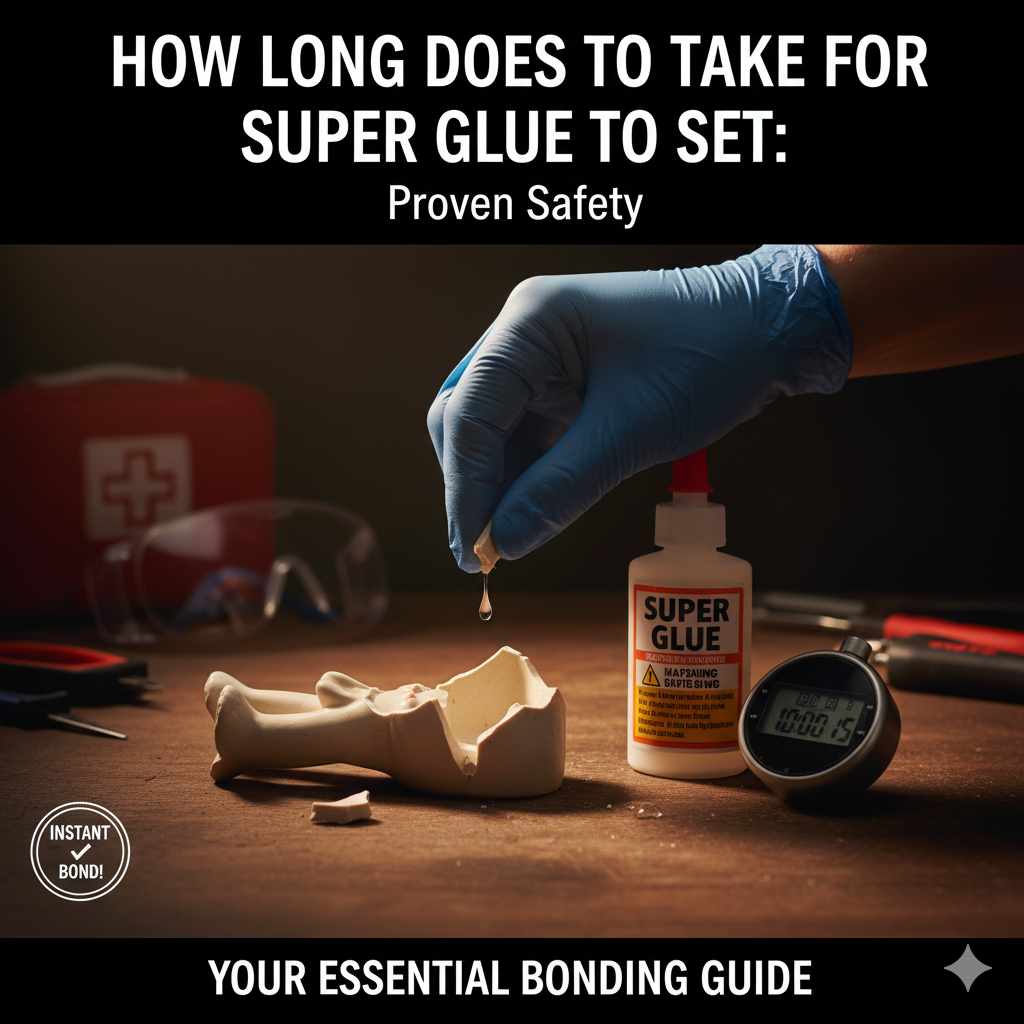
How Long Does It Take For Super Glue To Set: Proven Safety
Super glue typically sets within 15-60 seconds, but full curing, for maximum strength, can take 12-24 hours. Proper application and surface preparation are key for a strong, lasting bond.
Ever found yourself holding two pieces of wood (or something else!), a drop of super glue on one, and a nagging question about how long to hold them together? You’re not alone! Super glue, also known as cyanoacrylate, is incredibly handy. It’s fast, strong, and can fix countless things around the house. But its quick-setting nature can be a bit tricky. How long do you really need to hold those pieces? What does “set” even mean for super glue? We’ll get this sorted out, so you can get back to your projects with confidence, knowing you’re using this powerful adhesive the right way and, most importantly, safely.
Understanding Super Glue: More Than Just Snap
Super glue is a marvel of modern chemistry. It works through a process called anionic polymerization. When the thin liquid glue comes into contact with trace amounts of moisture on the surfaces you’re joining, it rapidly hardens, creating a strong bond. It’s this instant reaction that gives it its reputation for speed. However, there’s a difference between “setting” and “curing,” and understanding this is crucial for achieving the best results and ensuring safety.
Setting vs. Curing: What’s the Difference?
When we talk about how long super glue takes to set, we’re usually referring to the initial hardening process. This is when the glue becomes solid enough that you can usually let go of the pieces, and they’ll hold their shape. This typically happens very quickly.
Setting Time: This is the initial stage where the glue hardens and the pieces will stay in place when you release them. This is what most beginners are concerned about.
Curing Time: This is the complete hardening process. While the glue might be set enough to hold, it needs more time to reach its maximum strength and durability. For many applications, especially in woodworking or repairs that will endure stress, waiting for a full cure is essential. Think of it like baking a cake – it might solidify in the oven, but it needs to cool properly to reach its best texture and flavor.
How Long Does It Take For Super Glue To Set? The Quick Answer
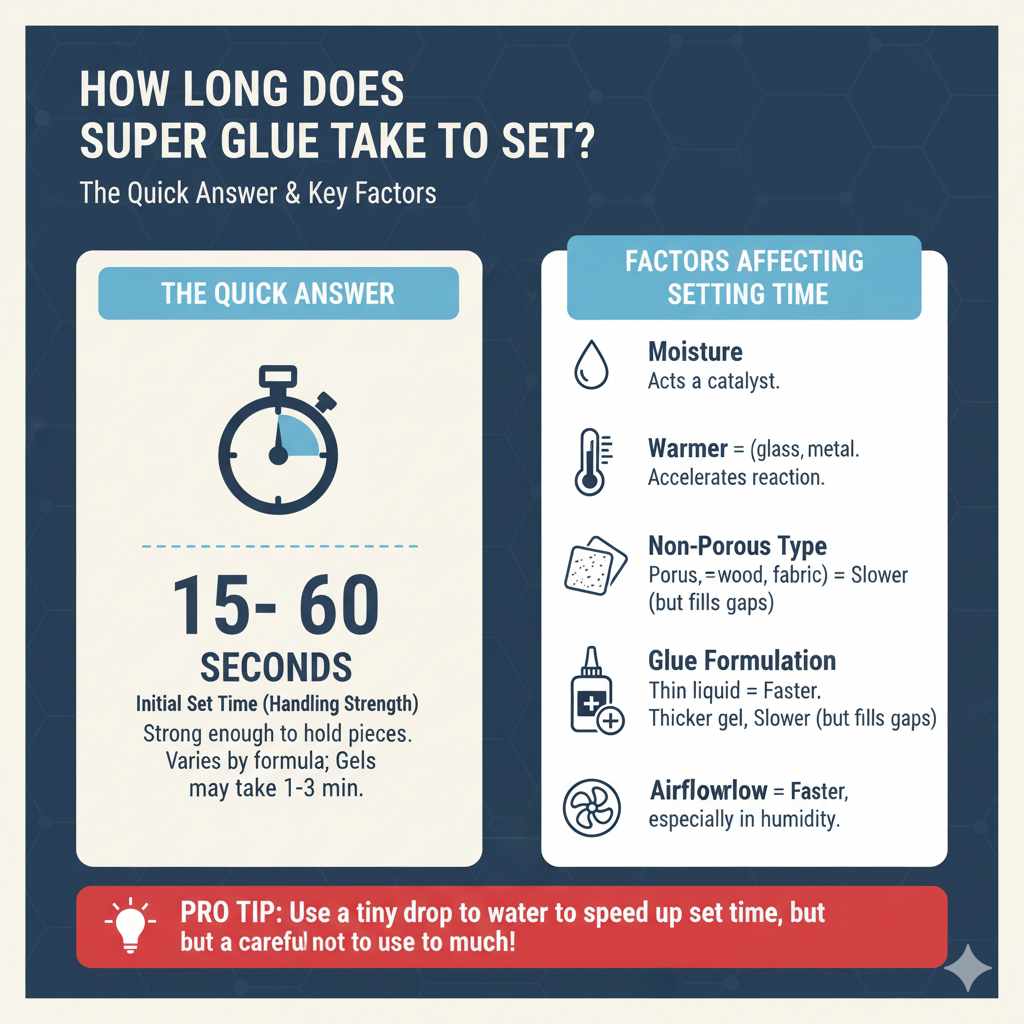
So, you’ve applied the glue, squeezed the parts together, and now you’re wondering, “How long do I hold this?” For most standard super glues, the initial setting time – the point where the bond is strong enough that you can release the pieces – is remarkably fast:
- 15-60 Seconds: This is the typical range for the glue to become solid enough to hold.
- 1-3 Minutes: Some thicker formulations or specific types might take a touch longer to feel truly “set.”
This rapid setting is why super glue is so popular for quick fixes and small repairs. You can often mend a broken ceramic handle, reattach a loose veneer piece, or secure a small component in seconds.
Factors Affecting Setting Time
While the advertised setting time is a good guideline, a few things can actually speed up or slow down how quickly your super glue hardens:
- Moisture: This is the catalyst! More moisture on the surface or in the air means faster bonding. Higher humidity can significantly reduce setting time.
- Temperature: Warmer temperatures generally accelerate the chemical reaction, leading to quicker setting.
- Surface Type: Porous surfaces (like unfinished wood or fabric) might absorb some of the glue, potentially requiring more glue or slightly affecting setting. Non-porous surfaces (like glass or metal) will have a more direct reaction.
- Glue Formulation: Thicker “gel” super glues tend to set a bit slower than the super-thin liquids, but they offer more control and can fill small gaps better.
- Airflow: Good airflow can help the polymerization process, especially in higher humidity.
The Full Curing Process: When is it Really Strong?
As mentioned, “set” isn’t “cured.” While your pieces might hold together after a minute, the bond is still developing its full strength. For critical joints or items that will experience any kind of stress, it’s vital to understand the curing timeline:
- 24 Hours: Most manufacturers recommend waiting at least 24 hours for the glue to fully cure and reach its maximum bond strength.
- 48 Hours (or more): For very large surface areas, heavily stressed joints, or in conditions with lower humidity or temperature, it might take up to two days for a complete cure.
This full cure is what gives super glue its reputation for durability. Before the full cure, the bond is strong enough to hold but can be brittle or prone to breaking under sudden impact or significant pressure. Always refer to the specific product packaging for the most accurate curing times.
Proven Safety When Using Super Glue
Super glue is incredibly effective, but it’s also a chemical adhesive. Responsible use is paramount to ensure your safety and prevent accidents. The most common accidents involve accidental bonding of skin, eyes, or even respiratory irritation from fumes. Here’s how to handle it safely:
Handling and Application Safety
Always work in a well-ventilated area. The fumes, while usually not acutely toxic in small amounts, can be irritating to your eyes and respiratory system, especially if you’re sensitive or using a lot of glue.
1. Ventilation is Key: Open windows or use a fan. This helps dissipate the fumes and can also aid in the curing process by managing humidity.
2. Protect Your Workspace: Super glue can bond to almost anything! Cover your work surface with old newspapers, cardboard, or a plastic sheeting. A single drop can ruin a finished table or a favorite shirt in seconds.
3. Wear Safety Glasses: Protect your eyes from accidental splashes or fumes. This is especially important when working overhead or with larger quantities.
4. Avoid Skin Contact: While super glue bonds skin very quickly, it’s not designed for direct contact. Nitrile gloves can prevent accidental bonding to your fingers. If skin does bond, don’t try to rip it apart forcefully. Warm, soapy water and gentle wiggling are usually best, or consult a medical professional if necessary. For more on this, the U.S. Food & Drug Administration (FDA) provides general information regarding adhesives like super glue.
5. Keep Out of Reach of Children: Super glue is not a toy and can cause injury if misused.
What to Do If You Bond Yourself or Something Else Accidentally
Skin Bonding:
- Don’t Panic!
- Soak in Acetone: Nail polish remover containing acetone is the most common household solvent that breaks down cyanoacrylate. Soak the bonded area in warm, soapy water, then gently try to peel or wiggle the skin apart. If that doesn’t work, immerse the bonded area in acetone-based nail polish remover.
- Be Gentle: Never pull bonded skin apart with force, as this can tear the skin.
- Seek Medical Help: If you can’t separate the skin easily or if it’s near your eyes or mouth, consult a doctor.
Bonding to Surfaces:
- Delicate Surfaces: For finishes like paint or varnished wood, carefully try to dissolve the glue with acetone or a specialized adhesive remover. Test in an inconspicuous area first.
- Fabric: Acetone is often effective here too, but again, test first. Freezing the fabric can sometimes help make the dried glue brittle and easier to chip off.
Step-by-Step: Perfecting Your Super Glue Application
Getting a strong bond with super glue isn’t just about speed; it’s about proper preparation and application. Follow these steps for the best results:
Preparation is Paramount
This is the most critical stage for a durable bond.
- Cleanliness is King: Ensure the surfaces you want to join are clean, dry, and free from dust, grease, oil, or any residue. Rubbing alcohol or a degreaser can be very effective for this, but make sure it evaporates completely.
- Ensure a Good Fit: Both pieces should fit together snugly without gaps. Super glue is excellent for thin bonds but doesn’t perform well when trying to fill large voids. For larger gaps, a wood glue or epoxy might be a better choice.
- Dry Surfaces: Excess moisture can interfere with the bonding process or speed it up too much, leading to a weaker joint.
Applying the Glue
Less is often more with super glue.
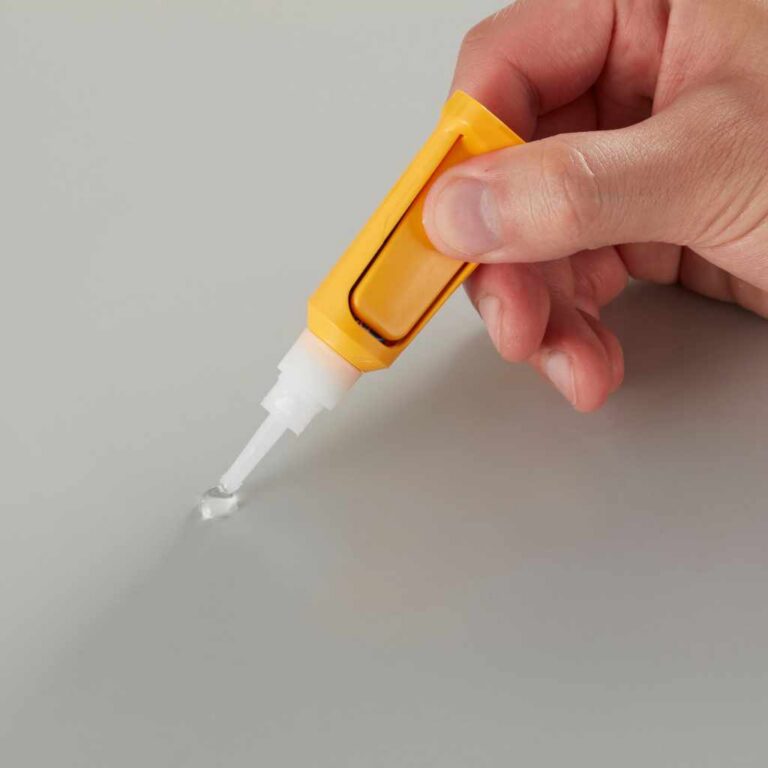
- Apply to One Surface: Place a small drop or thin bead of glue onto only one of the surfaces. You don’t need much – a little goes a long way. Too much glue will squeeze out, make a mess, and can actually weaken the bond.
- Consider Glue Types: Thin super glues are great for tight-fitting parts and wicking into small cracks. Gel super glues are better for vertical surfaces, porous materials, and give you a bit more working time and control.
Joining and Holding
This is where the speed comes in, but also where patience is needed.
- Quickly Align and Press: Immediately after applying the glue, bring the two pieces together and press them firmly.
- Hold Firmly: Hold the pieces in place for the recommended initial setting time. This is usually 15-60 seconds. Apply steady, firm pressure. Keep them perfectly still.
- Test the Bond (Gently): After the initial hold time, gently try to slide or twist the pieces. If they feel firmly attached and don’t move, you can usually release them. If they still shift, hold for another 30-60 seconds and test again.
- Allow for Full Cure: Even if the bond feels solid, remember the curing process. Avoid putting stress on the joint for at least 24 hours. For critical applications or outdoor projects, consider a stronger adhesive. For woodworking, especially structural elements, PVA wood glues (like Titebond) or epoxies are often preferred for their flexibility and strength over long periods, as outlined by resources like WoodworkingTalk, which highlights the differences.
When to Reach for Super Glue (and When Not To)
Super glue is a fantastic tool, but it’s not always the best solution for every woodworking or DIY task. Here’s a quick guide:
Ideal Uses for Super Glue:
- Small Repairs: Fixing broken plastic trims, reattaching small ceramic pieces, mending cracked wooden dowels.
- Veneer and Inlay Work: Quickly securing small pieces of veneer or decorative inlays before a more permanent adhesive is applied, or for very small, non-structural applications.
- Temporary Holds: Holding small parts in place while a stronger glue dries.
- Quick Fixes on Non-Porous Materials: Great for metal, plastic, and some ceramics where a fast, strong bond is needed.
When to Choose Another Adhesive:
- Structural Wood Joints: For anything that will bear significant weight or stress (like chair legs, table frames, or structural components), use a strong wood glue (PVA like Titebond) or epoxy. Super glue can be brittle and may fail under load over time.
- Large Gaps: Super glue relies on close-fitting surfaces. If there’s a gap larger than a hair’s width, it won’t bond effectively.
- High-Moisture Environments: While some super glues are formulated for moisture resistance, they generally don’t perform as well as specialized waterproof glues or epoxies in constantly wet conditions.
- Flexible Bonds: Super glue creates a rigid, hard bond. If you need flexibility (e.g., for fabric or rubber that will bend), a more appropriate adhesive is needed.
- Long Assembly Times: If you need to reposition pieces or have a complex assembly, super glue’s fast set time can be a hindrance.
Common Super Glue Problems and Solutions
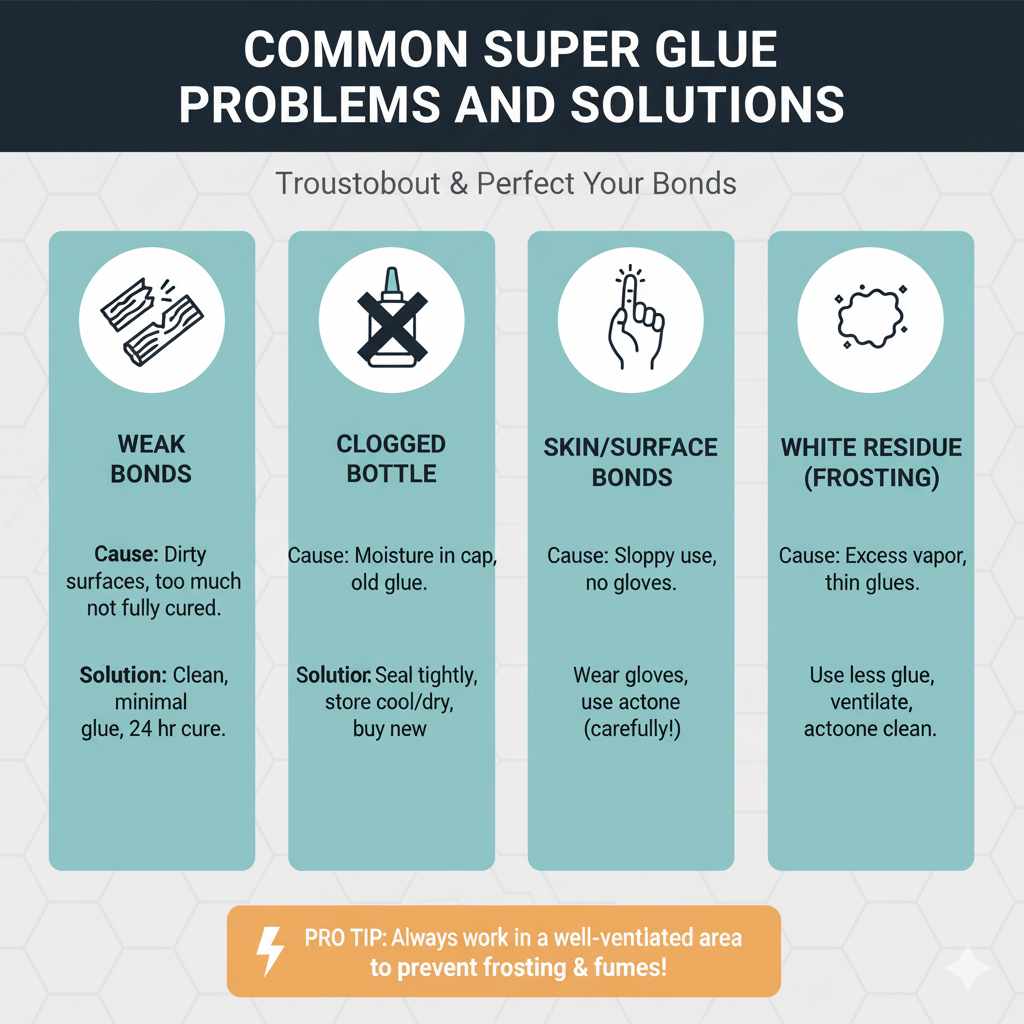
Even with the best intentions, you might run into a snag. Here are some common issues and how to fix them:
| Problem | Cause | Solution |
|---|---|---|
| Bond is weak or breaks easily | Surfaces weren’t clean or dry; too much glue used; joint experienced stress before full cure; incorrect adhesive for the material. | Clean surfaces thoroughly with alcohol; use minimal glue; allow at least 24 hours for full cure; re-glue with appropriate adhesive for the material and application. |
| Glue freezes up/clumps in applicator | Cap not sealed properly, allowing moisture ingress; old glue. | Ensure cap is on tightly after each use; store in a cool, dry place (refrigerator can sometimes help if sealed well); purchase fresh glue. |
| Accidental bonding of skin/surfaces | Sloppy application; not protecting work area. | Use precise application tips; wear gloves; use acetone for skin (carefully!); protect surfaces with protection. |
| Gap remains between glued parts | Parts didn’t fit tightly; too much glue used, creating a void. | Ensure tight fit before gluing; use very thin bead of glue; for gaps, consider epoxy or wood filler after initial bond. |
| White residue (frosting) around bond | Rapid bonding of excess vaporized cyanoacrylate (common with thin glues and porous materials). | Use less glue; use gel super glue for porous materials; ensure good ventilation; can often be cleaned off with acetone after cure. |
Frequently Asked Questions (FAQ)
Q1: How long do I need to hold the pieces together after applying super glue?
A1: For most standard super glues, hold the pieces firmly together for 15-60 seconds. The glue should be set enough that they will hold their position when you release them.
Q2: Can humidity affect how fast super glue sets?
A2: Yes! Higher humidity levels mean more moisture is available to initiate the bonding (polymerization) process, causing the glue to set faster.
Q3: Is super glue waterproof once cured?
A3: Most standard super glues are water-resistant, not fully waterproof. They can withstand occasional splashes but are not ideal for applications that will be submerged in water for extended periods. Look for specialized “waterproof” formulations if that’s a requirement.
Q4: My fingers are stuck together with super glue. What should I do?
A4: Don’t panic or try to rip them apart forcefully! Soak the bonded skin in warm, soapy water and gently try to wiggle them apart. If that doesn’t work, you can try soaking in acetone-based nail polish remover. Seek medical advice if separation is difficult or painful.
Q5: How long until super glue is at its strongest?
A5: While it sets in seconds, super glue needs about 12-24 hours to fully cure and reach its maximum bond strength. Avoid putting stress on the mend until then.
Q6: Can I use super glue on outdoor wood projects?
A6: Super glue is generally not recommended for structural outdoor wood projects because it can become brittle and break down with exposure to moisture and temperature fluctuations. A dedicated exterior wood glue or epoxy would be a much more durable choice. You can find guidance on selecting the right wood glues from sources like Popular Mechanics.
Q7: What’s the best way to remove dried super glue?
A7: For skin, acetone-based nail polish remover or soaking in warm, soapy water is best. For hard surfaces, try acetone or a specialized adhesive remover, always testing in an inconspicuous spot first. For wood, gentle scraping might be an option, but be careful not to damage the finish.
Conclusion: Mastering the Quick Bond for Lasting Results
Super glue is an indispensable tool in any DIYer’s arsenal, loved for its speed and strength. Understanding that it sets in seconds but cures over 12-24 hours is key to achieving a truly robust bond.