How Loud Is a Chainsaw? 88 dB Battery vs 102 dB Gas (Safe Times)
A gas chainsaw is rated around 102 dB(A) at the operator’s ear and a battery chainsaw around 88 dB(A). Both exceed the 85 dBA level where NIOSH says hearing damage begins over a work day, but the gas saw hits the limit in minutes, not hours. This guide gives the numbers, the safe run times, and what to wear.
What Hearing Protection Do You Need for a Chainsaw?
Best Chainsaw Earmuff Pick | |
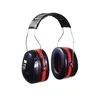 |
3M Peltor Optime 105 Over-the-Head Earmuffs (NRR 30 dB) Double-shell earmuffs with a stainless steel headband, listed for noise exposures up to 105 dBA, which covers a typical gas chainsaw.
|
As an Amazon Associate we earn from qualifying purchases. | |
For a gas chainsaw you want earmuffs or plugs with a noise reduction rating (NRR) of at least 25 to 30 dB. An NRR comes from lab testing with ideal fit, so treat a 30 dB rating as “meaningfully quieter,” not as a promise that 102 dB becomes 72 dB at your ear. If you can still hear the saw clearly through your protection, or your ears ring afterward, step up to muffs plus foam plugs.
For a battery saw, a properly fitted pair of muffs or plugs will bring you well under the 85 dBA line, but it still has to be worn. Gas saws are the loud ones because they run a combustion engine; our explainer on chainsaw engines covers how they work.
How Loud Is a Chainsaw in Decibels?
Manufacturers publish a sound level “at the operator’s ear,” and that is the number that matters for your hearing. Below are two spec-sheet values from Husqvarna’s own support pages, plus the general figures NIOSH gives for the tool class.
| Saw | Type | Sound level | Source |
|---|---|---|---|
| Husqvarna 435 (16 in. bar) | Gas | 102 dB(A) at operator’s ear | Husqvarna 435 support page |
| Husqvarna 120i (14 in. bar) | 40V battery (discontinued) | 88 dB(A) at operator’s ear | Husqvarna 120i support page |
| Chain saws in general | Mixed | 95 dBA or higher | NIOSH (CDC) |
| Lawn mowers, vacuums, power tools | Reference | About 85 to 90 dBA | NIOSH (CDC) |
The 14 dB gap between those two saws is bigger than most people expect. Every 3 dB is a doubling of sound energy, so the gas saw puts out roughly 25 times as much sound energy as the battery saw. It does not sound 25 times “louder” to your ear, because perceived loudness grows more slowly, but the hearing-damage clock runs about 25 times faster.
How Long Can You Run a Chainsaw Before Hearing Damage?
Two US standards use different math. NIOSH recommends an exposure limit of 85 dBA averaged over 8 hours and halves the allowed time for every 3 dBA increase. OSHA’s legal limit is 90 dBA for 8 hours and halves the time for every 5 dBA increase, with a hearing conservation program required from 85 dBA. The table applies each rule to steady noise at the levels above.
| Level at the ear | NIOSH limit (3 dB rule) | OSHA limit (5 dB rule) |
|---|---|---|
| 88 dB(A) (battery saw example) | About 4 hours | Full 8-hour shift |
| 94 dB(A) | About 1 hour | About 4.5 hours |
| 97 dB(A) | About 30 minutes | About 3 hours |
| 100 dB(A) | About 15 minutes | 2 hours |
| 102 dB(A) (gas saw example) | About 9 minutes | About 1.5 hours |
| 105 dB(A) | About 5 minutes | 1 hour |
These times are our own calculations from the published exchange rates, not figures printed by NIOSH or OSHA, and they assume constant noise. A real saw swings between idle and full throttle, and exposure adds up across the whole day, so treat the table as a guide to how far apart the two standards are. NIOSH describes occupational hearing loss as permanent but nearly always preventable, and the stricter NIOSH column is the safer one to plan around: a 102 dB(A) saw allows only minutes of unprotected time.

Gas vs Battery Chainsaw Noise
- Gas: louder at the ear (102 dB(A) in the Husqvarna 435 example), plus an engine and exhaust tone that carries a long way.
- Battery: 88 dB(A) in the Husqvarna 120i example. Much of what you hear is chain and cutting noise, so a battery saw never becomes silent.
- Myth to drop: “Electric means I can skip protection.” At 88 dB(A) you are still above NIOSH’s 85 dBA line.
Noise is only one reason people choose between the two. If you are weighing power, runtime, and price as well, our gas vs cordless chainsaw comparison covers those trade-offs.
How to Read a Chainsaw Noise Rating
Spec sheets can be confusing because the same saw may list more than one sound number. The one to use is the sound level at the operator’s ear, which is how Husqvarna words it on the pages above. Some manuals also list a higher sound power figure, which describes how much sound the machine gives off overall and is not what your ear receives, so do not compare a sound power number from one brand with an ear-level number from another.
Two other habits help. First, compare like with like: an ear-level rating for a 16 inch gas saw tells you little about a pole saw or a small pruning saw. Second, remember that a spec value is measured under a standard test, and real cutting in hardwood, with a dull chain or at full throttle, can differ from it.
Choosing Between Earmuffs and Earplugs
- Earmuffs: quick on and off, easy to fit correctly, and they go under a forestry helmet setup. Downsides are bulk and heat.
- Foam earplugs: cheap, light, and comfortable in summer, but the seal depends on inserting them properly every time.
- Both together: the option to reach for on a long day with a loud gas saw, or if you can still hear the engine clearly through muffs alone.
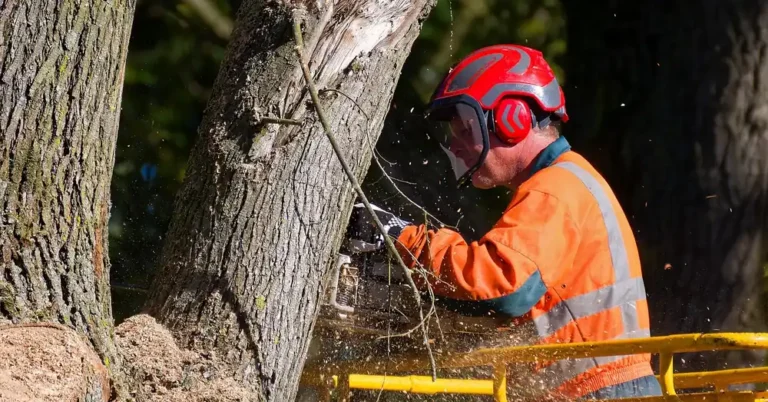
Whichever you choose, wear it for the whole time the saw is running, not only while the chain is in the cut. Fitting glasses or a face shield can break the muff seal, so check that nothing is lifting the cushion away from your head.
Ways to Cut Chainsaw Noise Exposure
- Wear muffs or plugs every time the saw is running, including when you only stand nearby.
- Keep the factory muffler on. A saw with the muffler removed or damaged is louder, and it is not a legitimate way to make it run better.
- Take breaks. Total time at the ear across the day is what counts.
- Use a battery saw for light limbing and small jobs, and save the gas saw for work that needs it.
- Keep bystanders and pets well back, since they hear the noise with no protection.
- If your ears ring or sounds seem muffled after a cutting session, treat it as a warning sign and consider a hearing test.
Frequently Asked Questions
How loud is a chainsaw?
A gas chainsaw such as the Husqvarna 435 is rated at 102 dB(A) at the operator’s ear, and NIOSH lists chain saws generally at 95 dBA or higher. A battery model such as the Husqvarna 120i is rated at 88 dB(A). Both are above the 85 dBA level where hearing damage becomes a risk over a work day.
Is a battery chainsaw quiet enough to skip ear protection?
No. The 88 dB(A) rating on one battery saw is still above NIOSH’s 85 dBA recommended limit for an 8-hour day, and NIOSH’s halving rule would cap unprotected exposure at about 4 hours at that level. A short cut is far less risky than with a gas saw, but muffs or plugs are still the safe habit.
How long can you run a chainsaw before it damages your hearing?
It depends on the saw. Using NIOSH’s rule of halving exposure time for every 3 dB, a 102 dB(A) gas saw reaches the daily limit in roughly 9 minutes, while an 88 dB(A) battery saw takes about 4 hours. OSHA’s looser rule allows about 1.5 hours at 102 dB(A).
Are chainsaws louder than lawn mowers?
Generally yes. NIOSH puts lawn mowers around 85 to 90 dBA and chain saws at 95 dBA or higher. Because decibels are logarithmic, that gap means a chainsaw delivers several times the sound energy, so it uses up a hearing dose much faster.
How far away can a chainsaw be heard?
There is no single reliable distance. Terrain, wind, trees, and background noise all change it, and sound fades with distance, but a running gas saw is usually easy to hear well beyond a typical property line. If you are worried about neighbors, check your local noise ordinance for permitted hours.
Conclusion
Chainsaw noise is measured at your ear, not across the yard: about 102 dB(A) for the gas saw and 88 dB(A) for the battery saw we checked. Buy a rated pair of earmuffs, wear them every time, and use the exposure table to see why a gas saw demands them.
Sponsored / affiliate links. As an Amazon Associate I earn from qualifying purchases. I may earn additional commission from eligible campaigns.
 Top Handle Gas Chainsaws, 20 Inch Bar Power Chain Saws, Cycle Gas Powered Chainsaw, Chainsaw 2 Stroke Handed Petrol Gasoline Chain with Tool Bag, Gas Chain Saw for Cutting Wood Pruning Branches(52cc)
 Electric Pole Saw, 6 Inch Battery Powered Tree Trimmer and Handheld Mini Chainsaw with Adjustable Extension Pole for Branch Limb Cutting,Pruning,Yard,Garden, Brushless Pole Saw