Why Does My Chainsaw Chain Keep Coming Off? (Cause Chart)
A chainsaw chain usually comes off because it is too loose, but a worn bar, worn drive sprocket, stretched chain, or wrong chain size can make it derail even at correct tension. A thrown chain can injure you, so shut the saw off first. This guide gives a symptom chart, the wear limits STIHL and Oregon publish, and a way to read your chain’s specs.
Best Bar and Chain Replacement When Your Chain Keeps Coming Off
Best 14-Inch Bar and Chain Pick | |
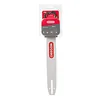 |
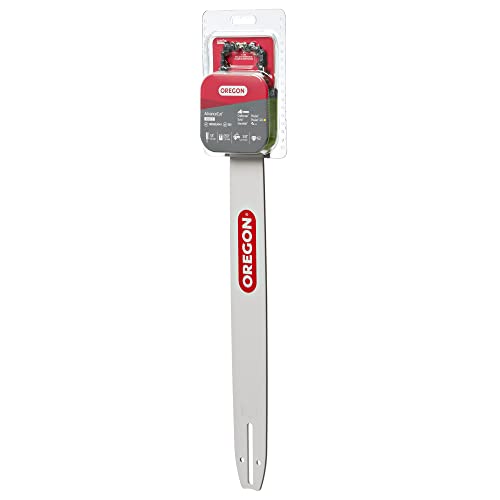
Oregon 14-Inch Bar and Chain Combo, 3/8″ Low Profile, .050″ Gauge, 52 Drive Links: $36.29 when checked A matched bar and chain for a saw whose old bar and chain are both worn. The listing states the pitch, gauge, and drive-link count, which are the three numbers this guide teaches you to check before you buy.
|
As an Amazon Associate we earn from qualifying purchases. | |
If the chart below points to a worn bar and a worn chain, replacing both at once is the cleanest fix, because Oregon notes that a chain leaning in a worn groove can wear a bar rail low and keep the problem alive in a new chain. Our pick is a 14-inch Oregon combo. The listing states 3/8″ low profile pitch, .050″ gauge, and 52 drive links, and names saws with a 14-inch bar such as the Echo CS310, Husqvarna 240, and Poulan PL3314 as fits, and says it is for saw sizes up to 42 cc. We have not run it ourselves; this is a spec-based pick, and a new bar and chain will not fix a worn drive sprocket.
Match your saw’s pitch, gauge, and drive links before ordering anything. If your saw has a different bar length or different numbers, the table on reading specs below shows how to find the right loop, and our guide to chain pitch classes covers the common mismatches.
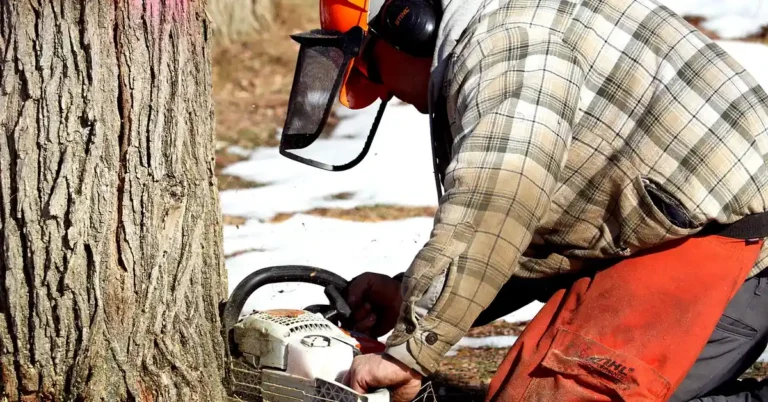
Safety Before You Touch a Chain That Has Come Off
Safety first
- Shut the engine off before you check or tighten the chain. STIHL’s MS 271/291 manual says to shut off the engine before retensioning, Oregon says to make sure the engine is off before tensioning, and Echo’s CS-310 manual has you disconnect the spark plug lead first.
- Wear protective gloves. Oregon, STIHL, and Echo all call for gloves when you handle or adjust the chain.
- On a cordless or electric saw, remove the battery or unplug it first, as STIHL’s UK guide instructs.
- Hot versus cold tensioning: Oregon says to tension only a cool chain, while STIHL’s chain saw manual allows retensioning at operating temperature if you slacken it again afterward. Follow the manual for your own saw (details below).
- A chain brake does not remove kickback risk. STIHL’s MS 271/291 manual says its brake reduces the risk of injury in certain situations but cannot prevent kickback.
Why this matters: the U.S. Consumer Product Safety Commission defines kickback as the rapid upward and backward motion of a saw when the chain along the bar tip touches an object, and lists chain brakes, nosetip guards, reduced-kickback bars, and reduced or low-kickback chains as the devices that help. A chain that is loose or derailing works against all of them. For workers, the OSHA logging standard 1910.266 requires a chain brake on saws put into service after its effective date and cut-resistant leg and foot protection for covered chain saw operators.
Why a Chainsaw Chain Keeps Coming Off: Symptom, Cause, and Fix
This chart starts from what you can see or feel. It draws on Husqvarna, Oregon’s troubleshooting pages, and the STIHL MS 271 and MS 291 manual.
| What you see or feel | Likely cause | What the makers say to do |
|---|---|---|
| Chain sags under the bar and drive links hang out of the groove | Loose tension | Retension until it is snug but pulls by hand. Oregon says incorrect tension causes more problems than any other single factor. |
| A new chain goes slack after a few minutes | Run-in stretch | STIHL says a new chain needs 2 to 3 minutes of run-in, then a tension check. Oregon says to check often in the first half hour. Husqvarna says new chains stretch during the first hours. |
| Slack returns after you adjusted it, or the bar looks shifted | Loose bar nuts or clutch cover | Husqvarna says to make sure the clutch cover is installed correctly and the bar nuts are tight. Oregon says to tighten the rear nut first, then the front. |
| Chain leans sideways in the bar, or one rail is worn low | Spread rails or worn groove | Oregon says to have the rails serviced by a dealer or replace the bar, and to replace the chain if wear is extensive. |
| Drive-link tangs are scraped or the chain rides low in the groove | Groove too shallow or worn sprocket | Oregon says to replace the bar, the sprocket, or both as the cause requires. STIHL gives minimum groove depths, shown below. |
| Chain climbs out at the engine end, or the drive links look rounded | Worn drive sprocket | Husqvarna says to inspect the sprocket whenever you replace the chain. Oregon says to replace it when wear is 1/64 inch deep, and its manual also says to replace it every two chains, or sooner. |
| The chain seems wrong from the first fit, or the adjuster runs out of travel | Wrong pitch, gauge, or drive-link count | Compare the numbers on your old chain to your saw’s spec. See the spec section below. |
| It jumps off during hard cuts, pinching, or while forcing a dull chain | Dull chain or sideways load | Oregon lists a dull chain among conditions that raise the risk of a chain throwing itself off the bar, and says never to force a dull chain to cut. |
| Bar rails look blue or the bar runs dry | Lubrication failure | Oregon says blue rails are soft and wear fast, so replace the bar. Clean the oil hole and keep the reservoir filled. |
How to Set Chain Tension So It Stays On
The sequence below follows Oregon’s published procedure for a saw with a screw-type tensioner. STIHL and Echo steps differ in details, and your own saw may have a tool-free tensioner, so your saw’s manual wins wherever it differs. Sources: Oregon maintenance manual, tension pages, Oregon chain tension guide, and STIHL UK, and the Echo CS-310 manual.
- Stop and secure the saw: engine off, battery removed on a cordless saw (or power disconnected on an electric one), and chain brake released before you adjust, per STIHL UK. Echo’s CS-310 manual also has you disconnect the spark plug lead. Wear gloves.
- Check your manual on temperature: Oregon says never tension right after cutting, because a chain tightened hot can cool and shrink until it is too tight. See the note on STIHL’s different instruction below.
- Loosen the bar nuts on the side cover.
- Lift the bar nose and turn the tension screw: on a solid-nose bar, until the bottoms of the lowest tie straps and cutters just touch the bottom of the bar rail. On a standard sprocket-nose bar, until they solidly contact it, then add a further quarter to half turn, because Oregon says sprocket-nose bars need more tension than solid-nose bars (Oregon’s current web guide says a quarter to half turn; its older maintenance manual says a quarter turn).
- Tighten the rear nut first, then the front, while still holding the nose up.
- Pull the chain by hand along the top of the bar from the engine to the tip. It should feel snug but still pull freely. STIHL UK adds that the chain should not lift more than around 5 mm at the middle of the bar when you lift it.
- On a sprocket-nose bar, do the snap test: pull the chain down at the bottom of the bar and let go. It should snap back against the bar.
- Recheck during the first half hour of use. If it loosens, stop, shut the engine off, let it cool, and readjust, per Oregon.
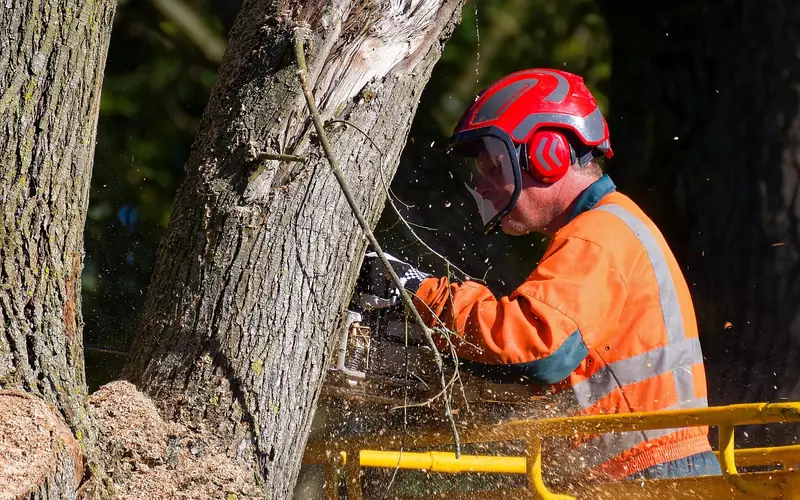
A point the makers handle differently. Oregon says to tension only a cool chain: its current web guide says the chain should only be tensioned while it is cool, not hot, and its manual says a chain tensioned hot can cool and shrink until it is too tight. STIHL’s MS 271/291 manual describes a cold check (snug against the underside of the bar but still movable by hand) and says that at operating temperature the chain stretches and sags, so the drive links must not leave the groove or the chain may jump off, and you retension. It then says to slacken the chain again after finishing work, because the chain contracts as it cools and can damage the crankshaft and bearings. Echo’s CS-310 manual gives no hot-or-cold rule. These instructions do not agree, so we cannot tell you which is right for your saw: follow your own saw’s manual, and never leave a chain that was tightened hot tight after it cools.
Worn Bar, Sprocket, and Chain: Limits You Can Measure
Generic advice says to replace worn parts but not how worn. These limits come from the makers’ documents.
| Part | How to check | Limit or rule | Source |
|---|---|---|---|
| Bar groove depth | Measure in the area used most for cutting (STIHL uses the scale on its filing gauge accessory) | Minimum: 4.0 mm for 1/4″ chain, 5.0 mm for 3/8″ P (Picco), 6.0 mm for 3/8″ and .325″ Rapid, 7.0 mm for .404″ | STIHL MS 271/291 manual |
| Bar groove lean | With the chain on, hold a straightedge against the bar body and a cutter side plate | A good groove leaves a small gap. If the chain leans until the straightedge sits flush, replace the bar | Oregon bar maintenance pages |
| Bar rails | Check weekly that rails are square; file off wire edges promptly | Rails spread or worn low: dealer service or replace the bar | Oregon bar troubleshooting |
| Drive sprocket | Check for wear before use and daily | Oregon: replace at 1/64 inch (about 0.4 mm) of wear depth, and every two chains or sooner. Husqvarna: inspect it whenever you replace the chain | Oregon sprocket pages, Husqvarna |
| Chain | Look for damaged drive links, excessive wear, bent or cracked parts | Replace the chain if you find them (Husqvarna) | Husqvarna |
A practical point from these pages: STIHL says to turn the bar over every time you sharpen or replace the chain, to avoid one-sided wear, and to clean the oil inlet hole, oilway, and groove regularly. Sources: STIHL, Oregon bar pages, and Oregon sprocket pages. See also how a chainsaw oiler works.
How to Read Chain Specs: Pitch, Gauge, and Drive Links
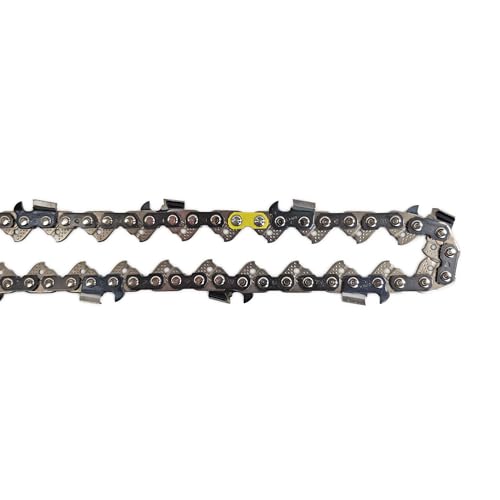
A chain that does not match the saw is a hidden cause of derailing. Oregon defines pitch as the distance between any three consecutive rivets divided by two, and gauge as the thickness of the drive link where it fits into the bar groove. The drive sprocket must have the same pitch as the chain, and so must the bar nose sprocket if there is one. STIHL says the drive-link gauge must match the groove width of the bar.
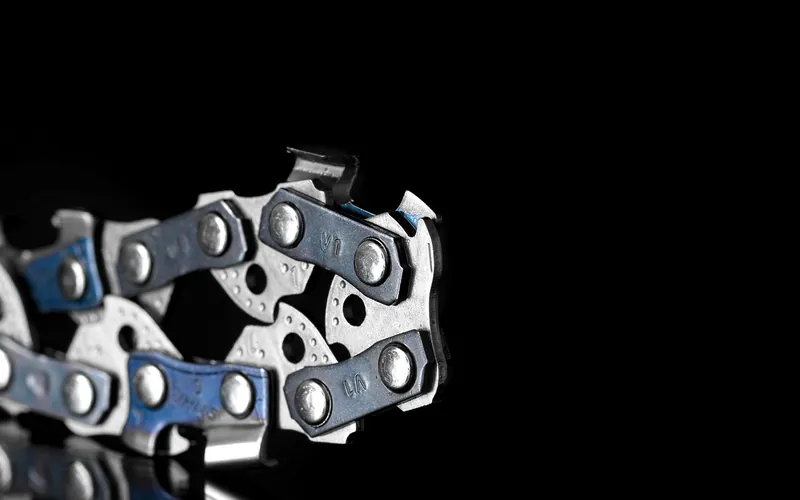
Oregon says to order by the number stamped on the drive link of your old chain, because gauge is hard to measure accurately on a worn chain. Oregon makes chain in gauges of .043″, .050″, .058″, and .063″. We removed the number-to-spec lookup table this page used to show: it came from an older Oregon maintenance manual and we could not confirm it against a current Oregon page, and a wrong gauge or pitch is exactly what makes a chain derail. Use the stamp on your old chain with Oregon’s current chart or its Part Finder, or ask a dealer.
This is the part most guides skip: two chains that both say 3/8 can be different. STIHL, for example, lists 3/8″ P (Picco) chain and 3/8″ chain as separate types with different minimum bar groove depths, so read the full designation, not just the fraction. Chain gauge must also match the bar groove: STIHL says the drive-link gauge must match the groove width of the guide bar.
Before ordering, write down your saw’s make and model, the bar length your saw’s manual lists, the stamp on your old chain’s drive links, and the drive-link count of your old loop. If you only have a link count to compare, our article on 70 versus 72 link chains explains why two bars of the same stated length can need different counts.
Other Causes: Bar Nuts, Dull Chains, and Pinching
- Loose bar nuts or clutch cover: Husqvarna lists both. If the bar can shift, the chain’s alignment with the sprocket changes.
- Chain installed wrong: Husqvarna says to verify the drive links sit in the bar groove and the chain runs in the correct direction. Our guides on which way the chain goes and a backwards chain show how to check.
- Dull chain: Oregon says a dull chain increases the risk of the chain throwing itself off the bar, and that you should never force one to cut. A sharp chain makes chips; a dull one makes fine dust. See our guide to chainsaw files for sharpening gear.
Frequently Asked Questions
Why does my chainsaw chain keep coming off?
Loose chain tension is the most common cause, and Oregon says incorrect tension causes more chain and bar problems than any other single factor. If tension is right, check for a worn or spread bar, a worn drive sprocket, loose bar nuts or clutch cover, a stretched or damaged chain, or a chain with the wrong pitch, gauge, or drive-link count for your saw.
How tight should a chainsaw chain be so it does not come off?
Snug against the underside of the bar, yet still able to be pulled along the bar by hand while you wear gloves. Oregon, STIHL, and Husqvarna all describe it that way. Check it with the engine off, and recheck often during the first half hour on a new chain. Oregon says to tension only a cool chain; STIHL’s saw manual allows retensioning when warm, so follow your saw’s manual.
Can a worn sprocket make a chain come off?
Yes. Husqvarna lists a worn drive sprocket as a cause of poor chain alignment and tells owners to inspect it whenever they replace the chain. Oregon says to replace a rim or spur sprocket when wear reaches 1/64 inch deep and not to run a new chain on an old sprocket.
Can a worn or bent guide bar cause the chain to derail?
Yes. Husqvarna names uneven rail wear, bent rails, and excessive groove wear as ways a bar lets the chain derail. Oregon adds that spread rails or a rail worn low let the chain lean over, and that the fix is dealer service or a new bar. Tightening the chain does not repair a worn groove.
Can the wrong chain size make it come off?
It can. STIHL says the chain pitch must match the drive sprocket and the bar’s nose sprocket, and the drive-link gauge must match the groove width of the bar. Match pitch, gauge, and drive-link count to your saw before you buy.
Is it safe to keep cutting with a chain that keeps coming off?
No. Oregon lists loose tension among conditions that raise a chain’s kickback energy and the risk of a chain throwing itself off the bar, and warns of severe injury if maintenance steps are skipped. Stop, shut the engine off, wait for the chain to stop moving, and find the cause before cutting again.
Start with the chart, set tension with the engine off and per your saw’s manual, and measure the bar and sprocket before you blame the chain. For related questions, see how much slack a chain should have, when to replace a chainsaw chain, and how to store a chainsaw.
Sponsored / affiliate links. As an Amazon Associate I earn from qualifying purchases. I may earn additional commission from eligible campaigns.