Gas vs Cordless Chainsaw: Which One Do You Actually Need?
Gas chainsaws deliver more raw cutting power and run for hours as long as you have fuel, while cordless chainsaws trade some of that power for push-button starts and zero exhaust fumes — but only for 30 to 60 minutes per charge. Gas wins for felling trees and cutting thick hardwood; cordless wins for pruning, firewood-sized limbs, and homeowners who don’t want to mix fuel. This guide covers power, runtime, noise, and which one to buy for your actual workload.
Gas vs Cordless Chainsaw: Spec Comparison
Best Cordless Chainsaw Pick
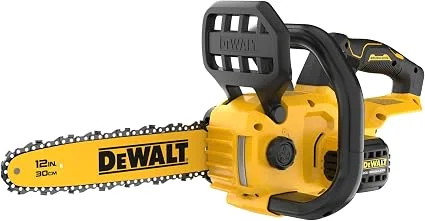 |
DEWALT 20V MAX 12″ Cordless Chainsaw (Tool Only) – $184.99 This is the type of cordless chainsaw this guide recommends for pruning and firewood-sized limbs — a 12-inch bar covers most homeowner cutting without gas mixing or pull-cord starts. It’s tool-only, so it needs a compatible 20V MAX battery (sold separately) if you don’t already own one.
|
| Factor | Gas Chainsaw | Cordless Chainsaw | Winner |
|---|---|---|---|
| Power | 2 hp (homeowner) to 8+ hp (pro models) | Improving, but still below gas at the same size | Gas |
| Runtime | Hours — limited only by fuel on hand | 30–60 minutes per charge | Gas |
| Weight/portability | Heavier — engine + fuel tank | Lighter, easier to carry and store | Cordless |
| Noise level | 100–115 dB | 85–95 dB | Cordless |
| Startup | Pull cord, choke, sometimes cold-start issues | Push a button | Cordless |
| Emissions | Burns gas/oil mix, produces exhaust | Zero emissions at point of use | Cordless |
| Best for | Felling trees, thick hardwood, storm cleanup | Pruning, small trees, firewood-sized limbs | Depends on job |
How Much Runtime Do You Actually Get on a Cordless Chainsaw?
A cordless chainsaw typically gives you 30 to 60 minutes of continuous cutting per battery charge, depending on the model and how hard the wood fights back. That’s usually enough for pruning a few trees or bucking up a fallen limb, but it’s not enough for felling multiple large trees or a full afternoon of firewood processing — for that volume of work, gas still wins on total output per hour of your time.
📊 Gas chainsaws average 100–115 dB of noise, compared to 85–95 dB for electric and cordless models — roughly the difference between a jackhammer and a lawnmower. Source: Lowe’s Electric vs. Gas Chainsaw Buying Guide
Which Chainsaw Should You Buy?
If you’re clearing storm damage, felling trees, or cutting through hardwood logs regularly, a gas chainsaw is still the better tool — it has the sustained power and runtime that a battery can’t match yet. If your work is pruning, trimming small trees, or cutting firewood-sized rounds a few times a season, a cordless chainsaw covers it without the fuel mixing, pull-cord starts, or exhaust fumes.
Maintenance Differences You Should Know Before Buying
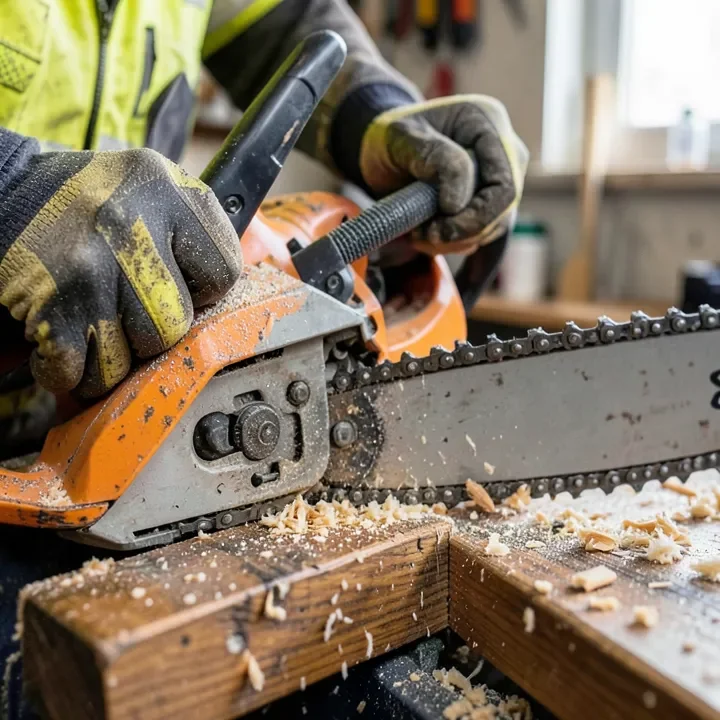
Gas chainsaws need regular carburetor cleaning, spark plug replacement, air filter checks, and a correctly-mixed fuel/oil ratio — skip any of these and the engine can flood or stall. Cordless chainsaws cut most of that maintenance out: no carburetor, no fuel mixing, no cold-engine warmup. What both types still need is a sharp chain and bar oil — a dull chain is the single most common reason either type of saw “loses power” that owners blame on the motor.
Frequently Asked Questions
Are cordless chainsaws powerful enough to cut down a tree?
Cordless chainsaws can fell small to medium trees, but for large hardwood trees or repeated felling work, a gas chainsaw’s sustained power and unlimited runtime (as long as you have fuel) still outperforms battery power.
How long does a cordless chainsaw battery last per charge?
Most cordless chainsaws run 30 to 60 minutes of continuous cutting per charge, depending on the battery size and how dense the wood is. Cutting thicker or harder wood drains the battery faster than pruning small branches.
Is a gas or cordless chainsaw safer for a beginner?
Cordless chainsaws are generally easier and safer for beginners — they start with a button (no pull-cord kickback risk), weigh less, and run quieter, which makes them easier to control on smaller jobs.
Do gas chainsaws need special fuel?
Most gas chainsaws require a specific gas-to-oil mix ratio (commonly 50:1) rather than straight gasoline — check your model’s manual, since using the wrong ratio can damage the engine.
Gas chainsaws still win on raw power and unlimited runtime; cordless chainsaws win on noise, weight, and low maintenance. Match the saw to the actual job — storm cleanup and felling call for gas, while pruning and occasional firewood work are exactly what modern cordless models were built for.
Sponsored / affiliate links. As an Amazon Associate I earn from qualifying purchases. I may earn additional commission from eligible campaigns.
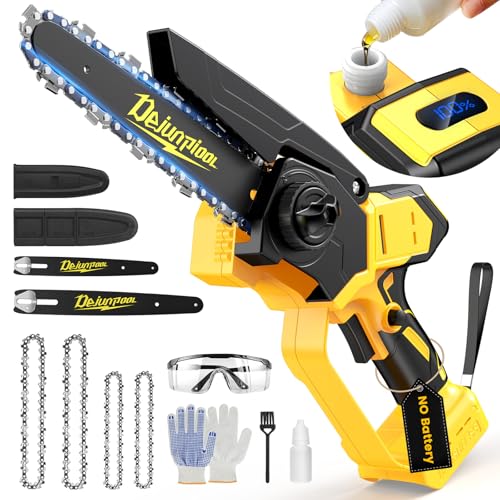 Cordless Mini Chainsaw Compatible with Dewalt 20V MAX Battery, 1200W 6 Inch & 8 Inch Small Electric Chainsaw Brushless, Auto Oiler, Handheld Pruning Tree Saw Gift for Men Husband Fathers (Tool Only)
 Fostex 6 Inch Cordless Mini Chainsaw, Handheld Electric Chain Saw with 2×2Ah Batteries & 2 Chains, Lightweight Battery Powered Saw for Tree Trimming, Branch Pruning, Gift for Men & Women (Yellow)