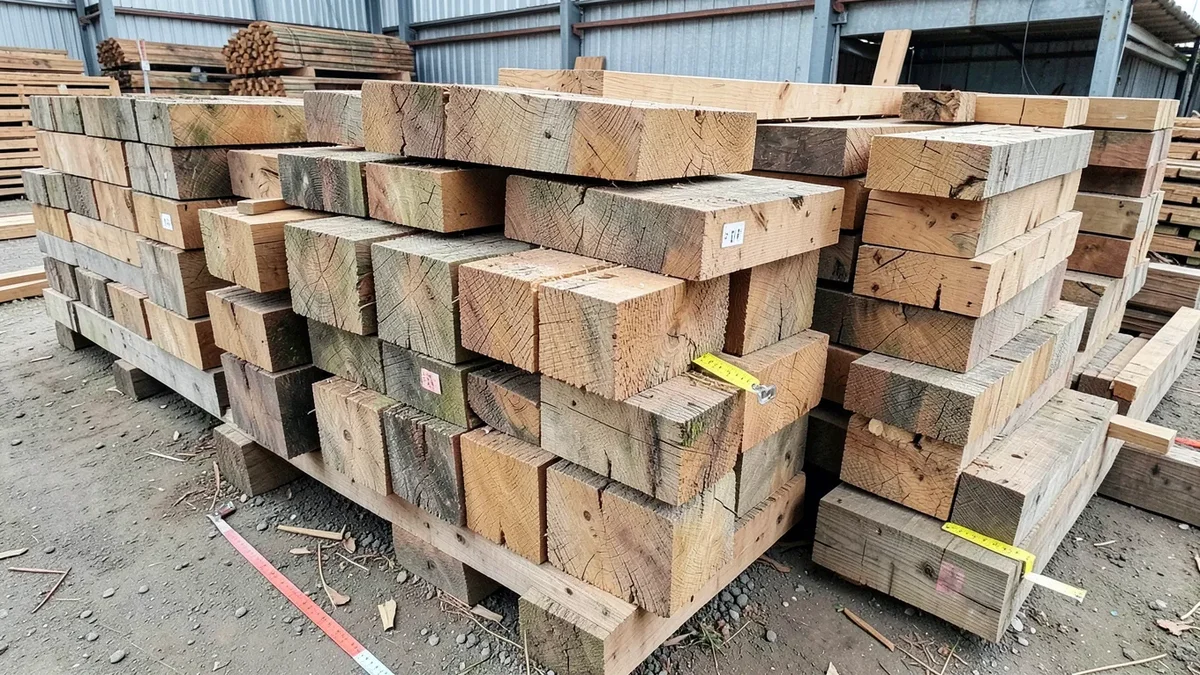
How Many Board Feet in an 8×8 (By Length, With the Real Formula)
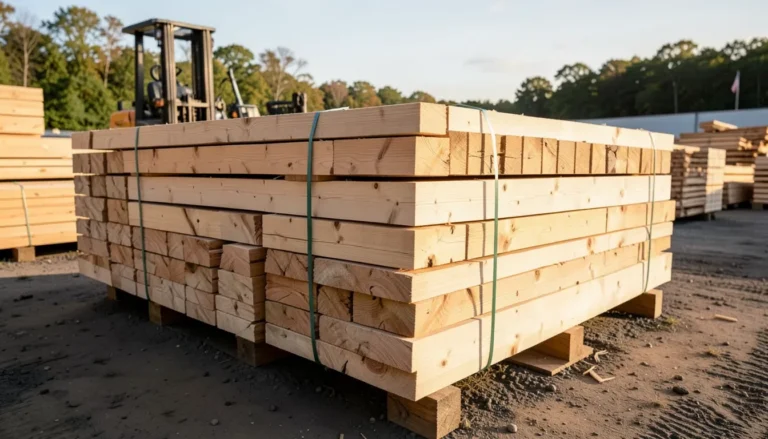
An 8×8 post that’s 8 feet long has 42.67 board feet. Change the length and the answer changes too — a 10-foot 8×8 has 53.33 board feet, and a 12-foot 8×8 has 64. “8×8” only tells you the cross-section; you always need the length to get a real answer.
The Board Foot Formula
One board foot is a volume of wood: 144 cubic inches, the same volume as a board 12 inches wide, 12 inches long, and 1 inch thick. The formula for any board:
Board feet = (Thickness in inches x Width in inches x Length in feet) ÷ 12
For an 8×8 post that’s 8 feet long, thickness and width are both 8 inches:
(8 x 8 x 8) ÷ 12 = 512 ÷ 12 = 42.67 board feet
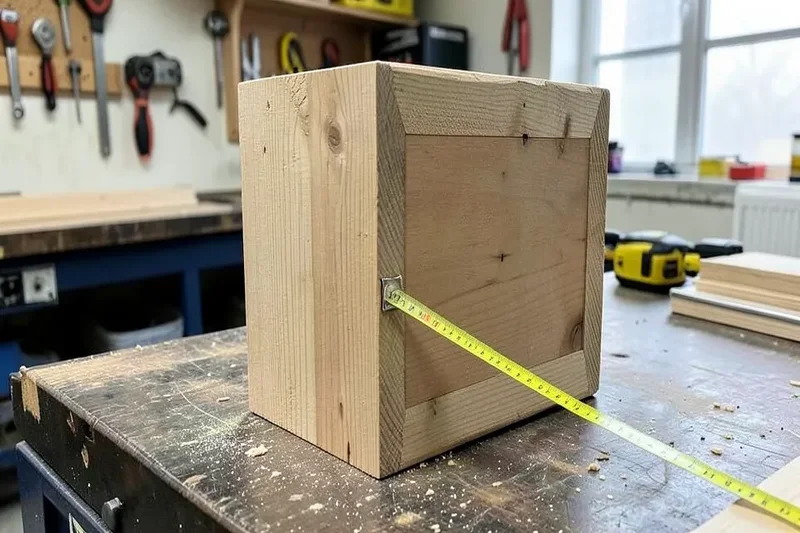
Board Feet in an 8×8 by Common Length
Since length is the missing variable, here’s the board footage for an 8×8 at the lengths lumber yards actually stock:
| Length | Board Feet |
|---|---|
| 6 feet | 32.00 |
| 8 feet | 42.67 |
| 10 feet | 53.33 |
| 12 feet | 64.00 |
| 16 feet | 85.33 |
Buying by the board foot rather than by the piece is standard for rough-sawn timbers and hardwood, so this table doubles as a quick way to sanity-check a lumber yard quote.
Nominal vs. Actual Size: Why “8×8” Isn’t Always 8 Inches
This is the detail most calculators skip. A rough-sawn timber sold as “8×8″ — the kind used for posts, beams, and landscaping timbers — is usually a true, full 8 inches by 8 inches, because it hasn’t been planed smooth. But a surfaced (S4S) 8×8 post, the kind sold for porch columns and finish carpentry, is typically planed down to around 7-1/4″ x 7-1/4” actual size, the same way a “2×4″ is really 1-1/2″ x 3-1/2”.
Here’s the part that trips people up: lumber is priced and sold by its nominal size, not its actual size. An S4S 8×8 post still gets billed as an 8×8 (42.67 board feet at 8 feet long) even though its true dimensions would only work out to about 35.5 board feet if you measured it with calipers. That’s not a mistake on the invoice — it’s just how the lumber industry has always priced dimensional lumber, and it’s worth knowing before you assume the board-foot math should match a caliper measurement exactly.
Common Mistakes That Throw Off the Math
- Mixing units: the formula needs length in feet but thickness and width in inches. Converting all three to inches and dividing by 144 also works, but plugging a length in inches into the divide-by-12 formula (or vice versa) is the single most common error.
- Forgetting the length entirely: “8×8” describes a cross-section, not a volume. Any answer given without a length attached is incomplete.
- Assuming board feet equals linear feet: this is only true for boards whose thickness times width equals exactly 12 (a 1×12, a 2×6, or a 3×4). For an 8×8, one linear foot is actually 5.33 board feet, not 1.
Frequently Asked Questions
How many board feet in a 1x8x8?
5.33 board feet. (1 x 8 x 8) ÷ 12 = 5.33.
How do I calculate board feet?
Multiply thickness in inches by width in inches by length in feet, then divide by 12: (Thickness x Width x Length) ÷ 12 = board feet.
How many board feet is a 4×8 sheet?
It depends on thickness, since a sheet’s board footage is its square footage times its thickness in inches. A 4×8 sheet is 32 square feet, so a 3/4-inch-thick sheet is 24 board feet, a 1/2-inch sheet is 16, and a full 1-inch-thick sheet would be 32. There’s no single right answer without knowing the thickness.
Is one linear foot always equal to one board foot?
No, only when the board’s thickness times width equals exactly 12 square inches, which is true for a 1×12, a 2×6, or a 3×4. For any other size, including an 8×8, you need the full board-foot formula rather than a 1-to-1 conversion.
Conclusion
An 8×8 has 42.67 board feet at 8 feet long, but the length always has to be part of the calculation; “8×8” alone only describes the cross-section. Use the formula (Thickness x Width x Length) ÷ 12, double-check your units, and remember that a surfaced 8×8 post is priced at its nominal size even though its actual dimensions are smaller.
Scaling this math up to a full order? See our guide to what 5000 board feet costs, weighs, and ships as.
Sponsored / affiliate links. As an Amazon Associate I earn from qualifying purchases. I may earn additional commission from eligible campaigns.