How MDF Board is Made: A Step-by-Step Process
Have you ever wondered about the magic behind the creation of MDF board? This everyday material is a staple in homes and offices, yet its creation process remains a mystery to many.
Understanding how MDF board is made not only satisfies your curiosity but can also enhance your appreciation for its versatility and value. MDF board is more than just wood; it’s a marvel of modern engineering, combining raw materials and technology to create something truly special.
Dive into this fascinating world and discover how science and craftsmanship come together to produce a product you use regularly. You’re about to uncover the secrets of MDF board production, and you won’t want to miss a single detail.
Raw Material Selection
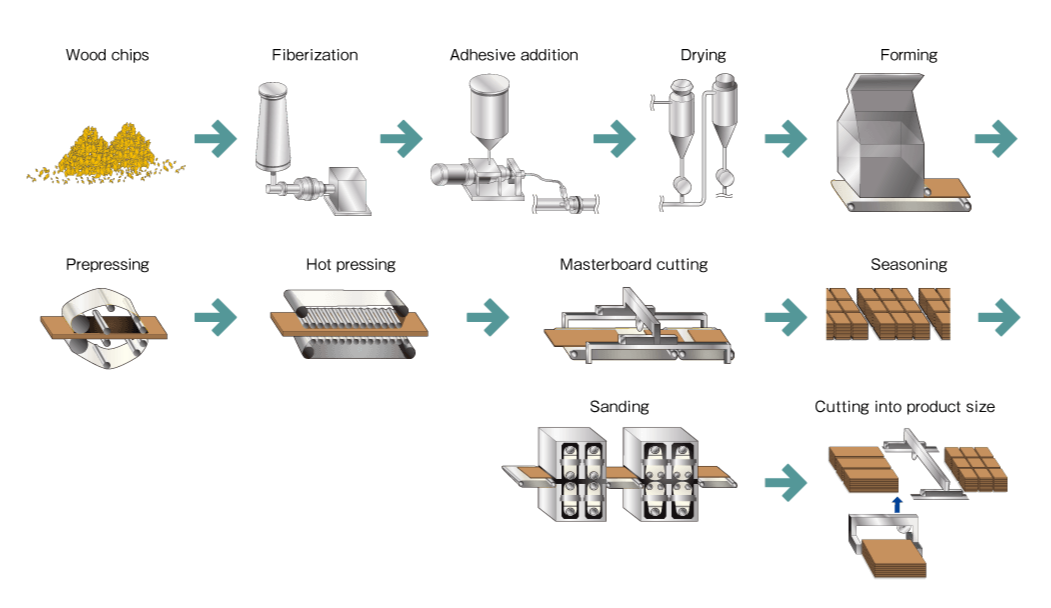
MDF boards are made using wood fibers. These fibers come from softwood trees like pine. Hardwood trees like birch are used too. The quality of wood is important. Good wood makes strong boards.
Wood is collected from forests. It is then cleaned and cut. The wood is then checked for defects. Only the best wood is used. This ensures high-quality boards.
Other materials are also needed. Resins and waxes are important. They help bind the fibers together. The right mix makes the board strong.
Wood Fiber Preparation
Trees have bark. Bark must be removed. Machines help with this. They peel the bark away. The wood becomes clean. Clean wood is better for boards.
Wood pieces are chipped. Chippers cut them small. Small chips are easier to use. Chips go through screens. Screens sort chips by size. Big chips are not used. Only the right size chips are needed.
Fiber Refining
The process begins with wood fibers. They are cleaned and sorted. Next, the fibers are refined into a pulp. Machines help in this step. They grind the fibers. This makes them smooth. Smooth fibers are important for MDF boards.
Steam heats the fibers. Heat makes fibers soft. Soft fibers mix well. They become a uniform pulp. This pulp is ready for the next step. Mixing with resin and wax is next. These materials help bind the fibers.
Refined fibers are the main part of MDF. They must be clean and smooth. Only then they can make strong boards. MDF boards are used in many places. Furniture and walls often use MDF boards.
Resin Application
Adhesive mixing is a key part of making MDF. Resin and hardener are mixed together. Machines do this to keep it even. This mix holds the fibers together. Too much resin can make the board heavy. Too little resin can make it weak. Mixing must be just right.
Fibers need a coat before pressing. Resin coats each fiber well. This coat makes the board strong and smooth. Machines spray the resin on the fibers. The fibers look shiny after this step. This process helps in making high-quality MDF boards.
Mat Formation
MDF boards start with the layering process. Wood fibers are spread out evenly. Machines help spread them in layers. Each layer is important. It adds strength to the board. Different layers have different fiber directions. This helps the board stay strong. It also prevents bending.
After layering, the board goes to pre-pressing. This step squeezes the layers together. It removes extra air. The board becomes flatter. Pre-pressing gets it ready for the next steps. It is very important. Without it, the board might not be strong.
Hot Pressing
Hot pressing is a key step in making MDF board. Heat and pressure work together to shape the board. Fibers are placed in a large press machine. This machine uses high heat. The heat makes the fibers stick. Pressure is also added. This makes the board strong and flat. The process is fast and efficient. It helps make smooth boards.
After hot pressing, the board needs to cool down. Cooling helps the board keep its shape. Fans blow cool air on the board. This makes the board hard and ready. The cooling phase is important. It helps finish the MDF board making process. The board is now ready for use.
Cutting And Trimming
Workers cut the MDF boards into panels. They use large machines for this. The machines are fast and sharp. Each panel must be the right size. If not, they will not fit well. The cutting process needs care. Mistakes can lead to wasted material. Precision is key.
Each panel must be the right thickness. Machines measure them carefully. Uniformity is important. Panels that are not the same will cause problems later. The machines adjust the panels. This ensures that every piece is the same size.
After cutting, edges need smoothing. Rough edges can hurt people. Machines smooth the edges quickly. This makes the panels safe to touch. Smoothing also helps them fit together better. Quality checks ensure all edges are smooth. This is important for the final product.

Credit: www.esshelf.com
Surface Sanding
Surface sanding makes the MDF board smooth. It removes rough parts and bumps. Machines help in this process. They use special sandpaper. The sandpaper is rough at first. It gets finer as the board becomes smoother. This process is important for a nice finish. A smooth board paints easily. It looks better too.
Dust is a big problem during sanding. Machines have vacuums to suck it up. Workers wear masks to stay safe. Sanding takes time and care. But it makes the MDF board perfect. A smooth surface is ready for the next steps.
Quality Control
MDF boards must meet high standards. Workers check every board closely. They use their eyes and hands. Feel is important. They look for cracks and smoothness. Machines help too. Special lights show hidden flaws. Each board gets a thorough check.
Boards face many tests. They need to be strong and sturdy. Workers press them hard. They bend them a bit. This checks the board’s strength. There are water tests too. Boards should not swell. Wet boards fail the test. All tests ensure top quality.
Credit: www.daiken-ad.com
Packaging And Distribution
MDF boards need careful wrapping. Protective films keep them safe. Plastic sheets cover the boards. This stops scratches. It also keeps moisture away. Wooden pallets hold the boards. Strong straps tie them. This stops movement. Everything stays neat and secure.
Trucks move MDF boards. They use large containers. Containers keep the boards safe. Drivers check routes. They choose the fastest paths. Tracking systems watch the journey. This ensures timely delivery. Warehouses store the boards. They keep them ready for sale.
Credit: www.handhillscabinets.com
Frequently Asked Questions
What Is The Process Of Making Mdf Board?
MDF board is made by breaking down wood fibers, combining them with resin, and applying heat and pressure. The fibers are bonded to form dense, uniform panels. The process results in a smooth, versatile material used for furniture and construction.
Is Mdf Stronger Than Plywood?
MDF is not stronger than plywood. Plywood offers better strength and durability. MDF is denser and smoother, suitable for painting. Choose plywood for structural projects; use MDF for interior applications.
How Is Mdf Made From?
MDF is made from wood fibers bonded with resin under heat and pressure. It uses recycled wood and sawdust. The mixture is compressed to form dense sheets. The process creates smooth surfaces ideal for painting and finishing. MDF is popular for furniture and cabinetry due to its durability and versatility.
How To Make Mdf Step By Step?
To make MDF, collect wood fibers and mix with resin. Compress the mixture under heat. Cut into desired sizes and sand for smoothness. Ensure even distribution of resin and fibers. Use quality control to check density and consistency.
Conclusion
Understanding the MDF board creation process reveals its versatility and efficiency. Wood fibers are transformed into a durable, smooth board. This makes MDF a popular choice for furniture and construction. Its affordability and ease of use add to its appeal.
MDF’s uniform structure allows for precision in cutting and shaping. This ensures consistent quality in finished products. Choosing MDF supports sustainable practices, as it utilizes recycled wood. Next time you see MDF, you’ll know the careful process behind it. Embrace its benefits for your next project.
MDF offers both functionality and environmental consciousness.