How Thick Should MDF Be for Countertops? (And the Moisture Problem No One Mentions)
3/4 inch (19mm) MDF works for a single-layer countertop with full support underneath, but most kitchen counters need two 3/4-inch sheets glued face to face to reach the standard 1.5-inch finished thickness that resists sagging over a sink cutout or overhang. Thickness isn’t the only thing that matters, though — standard MDF swells and falls apart when it gets wet, so any countertop use needs either moisture-resistant (MR) MDF or a fully sealed top layer like laminate or epoxy resin, regardless of how thick the board is.
Thickness by Use Case
- 1/2 inch: too thin for a standalone countertop under any real load; only appropriate as a backer layer under another rigid material.
- 3/4 inch, single layer: workable for a small, fully-supported surface like a bathroom vanity top or a desk, where the substrate sits on a continuous base cabinet with no unsupported span.
- 1.5 inches (two 3/4-inch sheets glued together): the standard for kitchen counters. This matches the visual thickness of typical laminate and solid-surface counters and gives enough rigidity to span a sink cutout or a foot of unsupported overhang without sagging.
- 2+ inches: used mainly for a thick “waterfall edge” look on an island, built up from three or more layers rather than a single thick sheet, since MDF isn’t manufactured in consistent quality above about 1.25 inches in one piece.
The Moisture Problem: Thickness Doesn’t Fix This
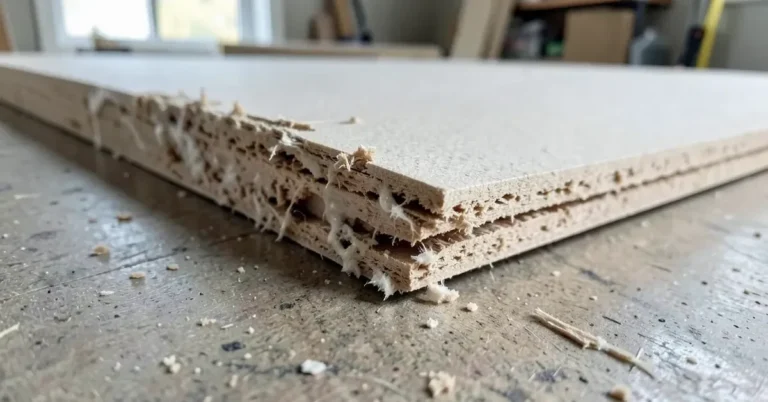
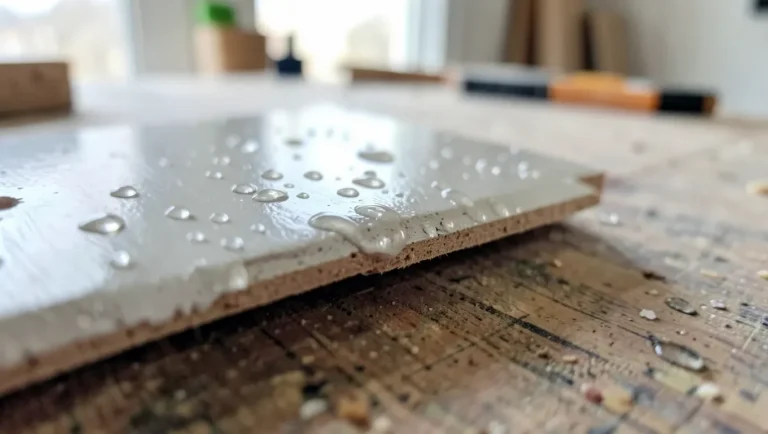
Standard MDF is made from wood fiber and resin with no water resistance built in — it swells, delaminates at the edges, and loses structural integrity when it stays wet, and a thicker board just takes slightly longer to fail the same way. For any countertop near a sink, always use MR-MDF (moisture-resistant, usually tinted green or blue by the manufacturer for identification) as the base, and seal every surface and edge, including the underside, before installing. On top of that substrate, use a genuinely waterproof finish layer — laminate, solid epoxy resin, or a quality marine-grade sealer with edge banding — since even MR-MDF is water-resistant, not waterproof, and isn’t rated for standing water contact.
Why Two Thin Layers Beat One Thick Sheet
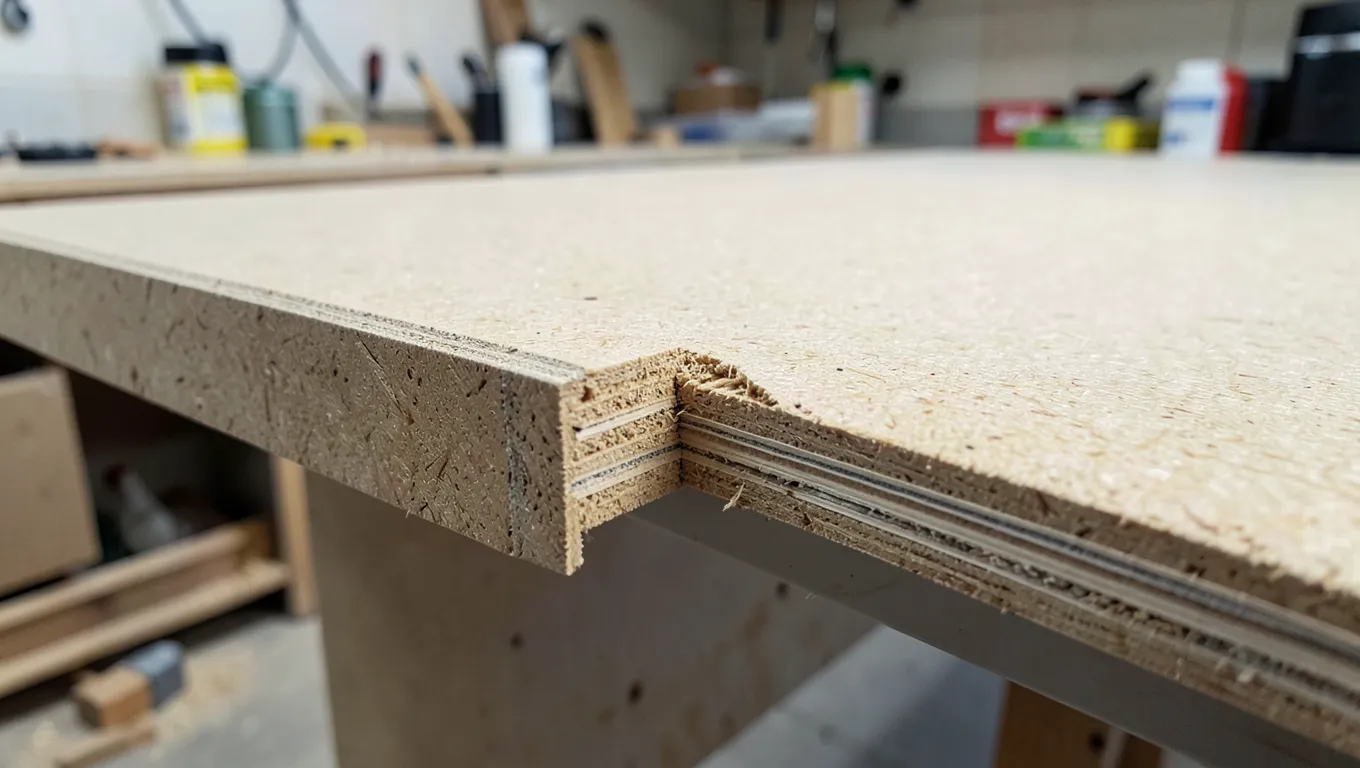
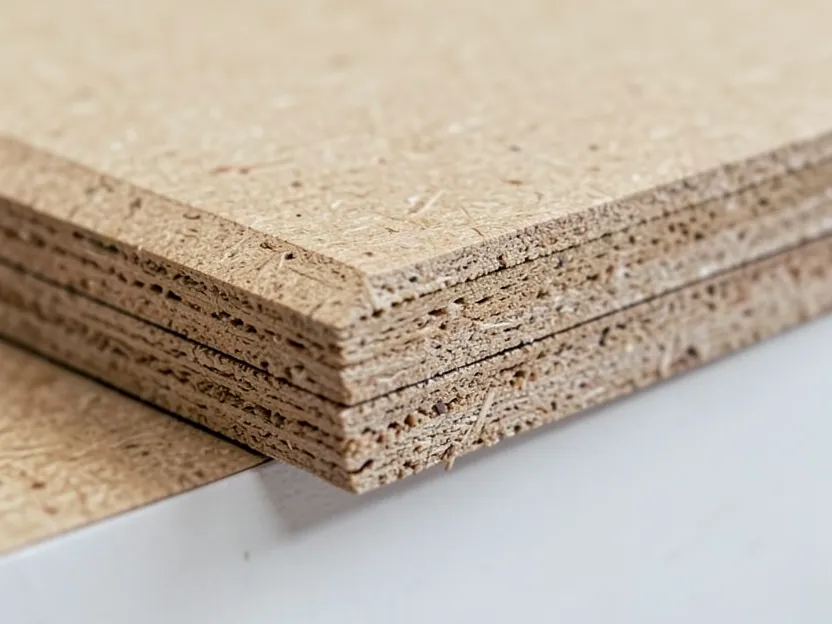
Gluing two 3/4-inch sheets face to face with wood glue and clamping under even pressure produces a flatter, more dimensionally stable panel than trying to source a single 1.5-inch MDF sheet, which is uncommon and more prone to internal density inconsistencies. The lamination also lets you build the visible front edge as a separate, thicker strip glued on afterward for a “waterfall” look, without needing the entire field of the countertop to be that thick.
Support Requirements by Thickness
A 3/4-inch single layer needs continuous support — no unsupported span longer than a few inches, such as over an open cabinet gap. At 1.5 inches (the standard doubled-up thickness), most installations can handle a sink cutout and up to roughly 6-10 inches of unsupported front overhang before needing a corbel or bracket underneath, though exact limits depend on the specific product’s density rating and how much weight regularly sits on the overhang. Any overhang meant to be sat or leaned on, like a breakfast bar, needs a steel or wood support bracket regardless of MDF thickness — the material isn’t rated to cantilever body weight on its own.
MDF vs. Plywood for This Job
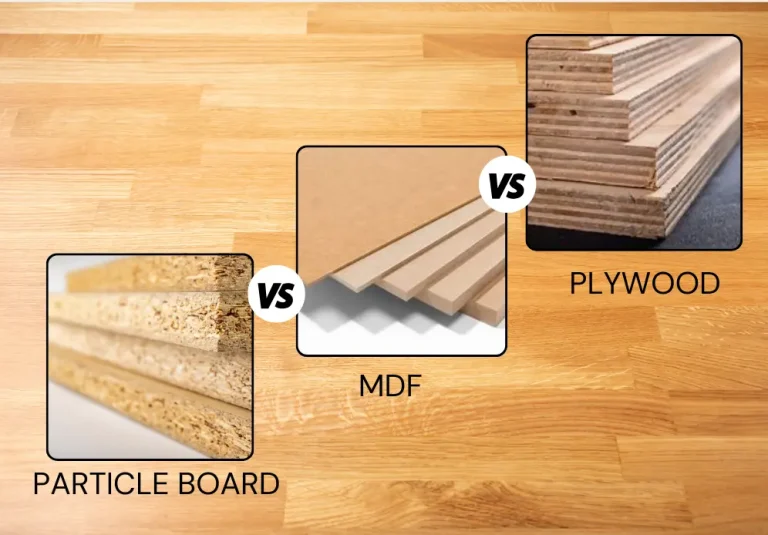
MDF has a smoother, more uniform surface with no grain telegraphing through paint or a resin pour, which is why it’s the substrate of choice under epoxy countertop projects. Plywood is lighter for the same thickness and holds screws at the edge better, but its layered grain can show through a thin finish coat. For a painted, laminated, or epoxy-topped countertop, MDF’s smoothness wins; for a countertop that needs to hold cabinet-mounting screws at the edge without pre-drilling and reinforcing, plywood is the more forgiving choice.
Bottom Line
Build kitchen counters to 1.5 inches using two glued 3/4-inch sheets, and treat moisture resistance as a separate requirement from thickness — use MR-MDF and seal every face and edge before topping it with a genuinely waterproof finish. Thickness solves sag and support; it does nothing for water damage.
Frequently Asked Questions
What thickness MDF should I use for a countertop?
3/4 inch works for a fully-supported, low-load surface, but most kitchen counters are built from two 3/4-inch sheets glued together to reach 1.5 inches, which matches standard countertop depth and resists sagging over a sink cutout or overhang.
Can you use MDF for a countertop?
Yes, but only moisture-resistant (MR) MDF, and only with every surface and edge fully sealed before adding a waterproof top layer like laminate or epoxy resin. Standard MDF swells and delaminates with water exposure regardless of thickness.
How thick should my MDF be for a countertop overhang?
At the standard 1.5-inch thickness, most installations handle roughly 6 to 10 inches of unsupported overhang before needing a corbel or bracket. Any overhang meant to be sat or leaned on, like a breakfast bar, needs a support bracket regardless of thickness.
Is MDF better than plywood for countertops?
MDF has a smoother, grain-free surface, which is why it’s preferred under epoxy or paint finishes. Plywood is lighter and holds edge screws better without extra reinforcement. Choose based on the finish you’re applying, not thickness alone.
Sponsored / affiliate links. As an Amazon Associate I earn from qualifying purchases. I may earn additional commission from eligible campaigns.