How Much Did Gorilla Glue Sell For? The Genius Deal Behind the Brand
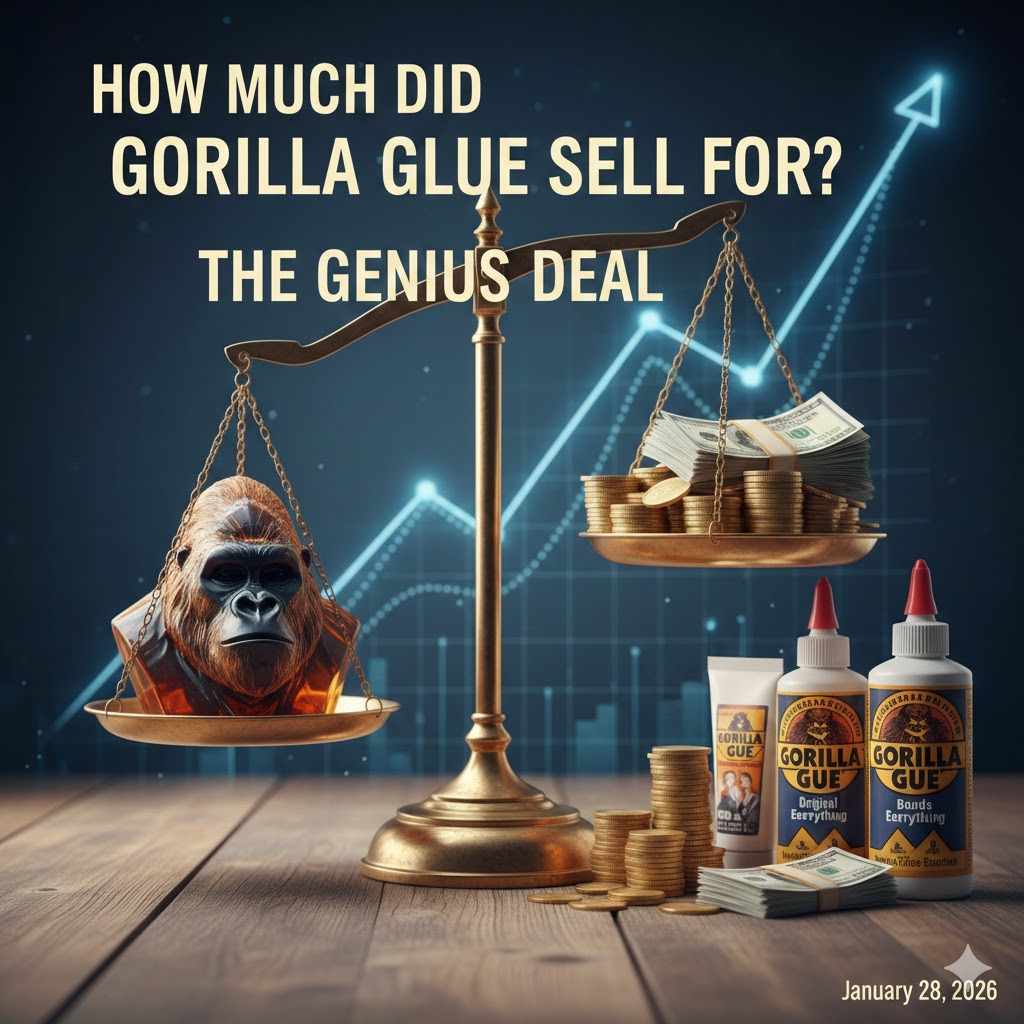
The Gorilla Glue company, officially known as The Lutz Tool Company, was acquired by H.B. Fuller in 2021 for an impressive $400 million. This landmark deal showcased the incredible value of a brand built on trust, strength, and a simple promise to be the toughest adhesive for any job.
Hello fellow crafters and DIYers! It’s Md Meraj here, your friend in the workshop. If you’ve ever built, fixed, or created anything, chances are you’ve reached for a bottle of Gorilla Glue. It’s a staple on my workbench, and probably on yours too. But have you ever wondered about the story behind this incredibly strong adhesive? It’s not just about fixing broken chairs; it’s a story of a brilliant business deal.
Many people ask, “How much did Gorilla Glue sell for?” The number is staggering, and the story behind it is even more fascinating. It’s a tale that proves how a simple, high-quality product can become a household name and a massive success. In this guide, we’ll break down the genius deal, explore why the brand became so valuable, and even draw some lessons we can apply right in our own workshops. Let’s dive in!
The Gorilla in the Room: Unpacking the $400 Million Deal
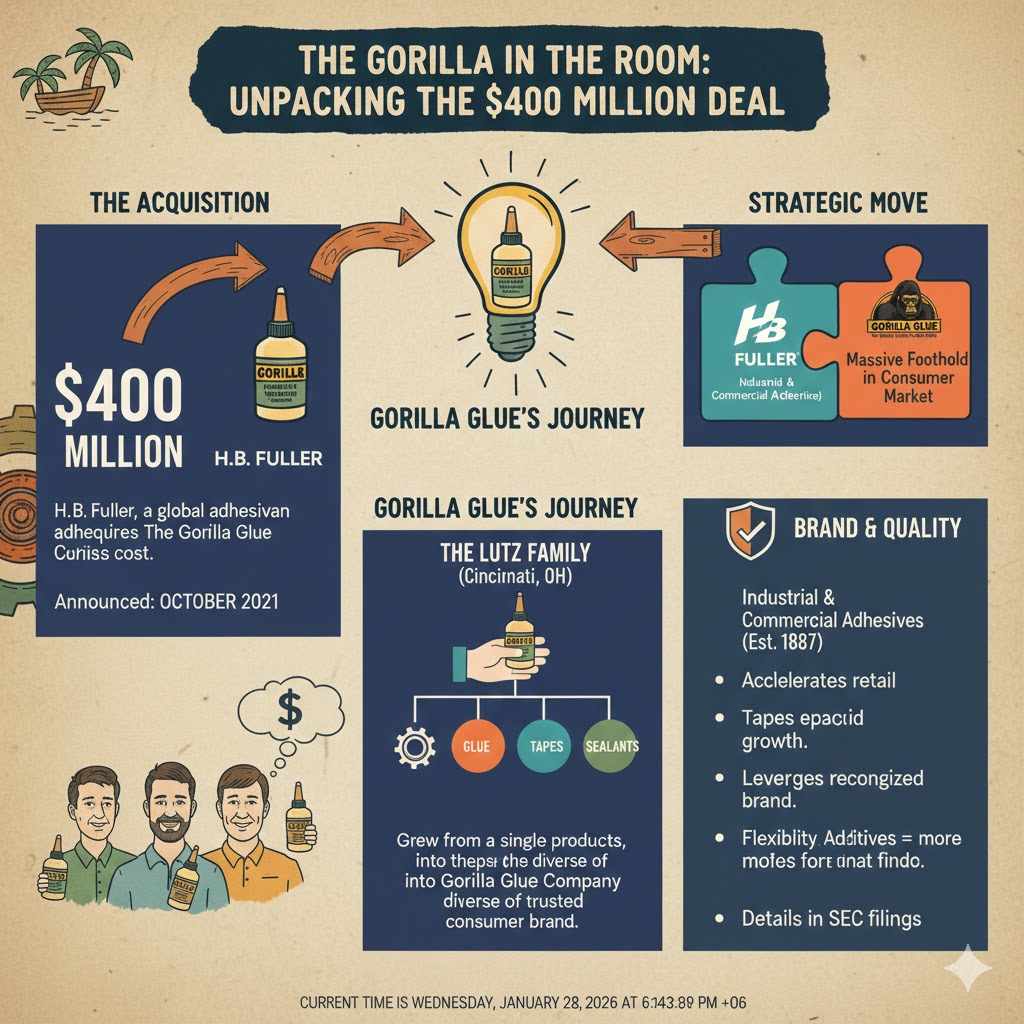
Let’s get straight to the big number. The Gorilla Glue Company was sold for $400 million. This wasn’t just a simple transaction; it was a major move in the adhesives industry that turned a lot of heads. The company that purchased Gorilla Glue is H.B. Fuller, a global giant in the world of industrial and commercial adhesives.
The deal was officially announced in October 2021. At the time, Gorilla Glue was owned by The Lutz Tool Company, a family-owned business based in Cincinnati, Ohio. For decades, the Lutz family had carefully nurtured the Gorilla Glue brand, growing it from a single product into a diverse line of tapes, epoxies, and sealants that DIYers everywhere trust.
H.B. Fuller, the buyer, has been around since 1887 and is a powerhouse in making adhesives for everything from packaging to construction. By acquiring Gorilla Glue, they instantly gained a massive foothold in the consumer market. It was a strategic move to bring one of the most recognized consumer brands under their huge corporate umbrella. According to official reports, the acquisition was seen as a way for H.B. Fuller to accelerate its growth in the profitable retail adhesives space. You can even find details of these major business moves in public filings, like those with the U.S. Securities and Exchange Commission (SEC), which oversees such transactions.
A Brief History: How Gorilla Glue Stuck to the Top
The story of Gorilla Glue doesn’t start in a fancy corporate lab. It begins, like many great discoveries, with a bit of luck and a lot of vision. The journey from a little-known product to a $400 million brand is a lesson in smart business and understanding what customers really need.
The Accidental Discovery
In the early 1990s, an American woodworker named Mark Singer was in Indonesia. While there, he noticed local craftsmen using a unique polyurethane adhesive. It was incredibly strong and versatile, but it wasn’t available back in the United States. He saw its potential immediately. Unlike traditional wood glues, this stuff could bond different materials together—wood to stone, metal to ceramic—and it was waterproof.
Mark brought the formula back to the U.S. and started selling it under the name “Gorilla Glue.” The name itself was brilliant. It instantly communicated strength and power. However, he was a woodworker, not a marketer, and the brand remained a niche product known only to a small circle of craftsmen.
The Lutz Family Takes the Reins
Everything changed in 1999 when the Lutz family, owners of a small tool company in Cincinnati, discovered Gorilla Glue. They saw what Mark Singer saw: a phenomenal product with massive potential. They purchased the company and set out to make Gorilla Glue a household name.
The Lutz family focused on a simple, effective strategy:
- Grassroots Marketing: They didn’t have a massive advertising budget at first. Instead, they took the glue to trade shows and gave out samples to woodworkers and handymen. They let the product speak for itself.
- Iconic Branding: They kept the “Gorilla Glue” name and the iconic gorilla logo. It was simple, memorable, and powerful.
- Clear Messaging: Their slogan, “For the Toughest Jobs on Planet Earth,” was a direct promise to the customer. It told you exactly what the glue was for.
This approach worked wonders. Word-of-mouth spread like wildfire. People who tried Gorilla Glue were amazed by its strength and the way it expanded to fill gaps, creating an unbreakable bond. Soon, it wasn’t just in small hardware stores; it was on the shelves of major retailers like Home Depot and Lowe’s.
Why Was Gorilla Glue Worth $400 Million?
So, what makes a glue company worth nearly half a billion dollars? It’s more than just a good formula. The value came from a combination of smart branding, customer loyalty, and a strong market position. Let’s break it down.
1. Unshakeable Brand Recognition and Trust
Think about it. When you need a super strong glue, what’s the first name that pops into your head? For millions of people, it’s Gorilla Glue. The brand became synonymous with strength and reliability. This kind of brand recognition is incredibly valuable. They didn’t just sell a product; they sold confidence. You bought Gorilla Glue because you were confident it would hold, no matter how tough the job was. This trust, built over two decades, was a primary driver of the company’s worth.
2. A Diverse and Loyal Customer Base
Gorilla Glue isn’t just for professional woodworkers. It’s for homeowners fixing a wobbly table leg, hobbyists building models, and outdoor enthusiasts repairing their gear. The company masterfully expanded its product line to meet different needs:
- Gorilla Wood Glue: A traditional PVA glue for classic woodworking.
- Gorilla Tape: An incredibly sticky and durable duct tape.
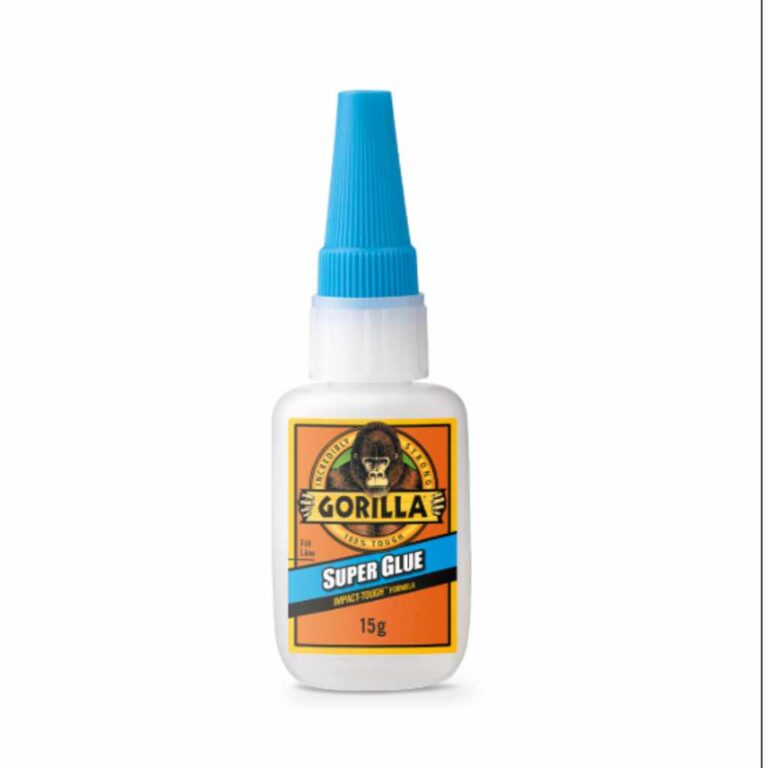
- Gorilla Super Glue: For quick, precise fixes.
- Gorilla Construction Adhesive: For heavy-duty building projects.
By offering a whole family of “Gorilla-tough” products, they captured a huge audience. Each new product benefited from the trust already established by the original glue. This loyal and diverse customer base meant consistent sales and a stable business.
3. A Powerful Retail Presence
You can’t sell a product if people can’t find it. The Lutz family did an incredible job of getting Gorilla Glue into virtually every major hardware and home improvement store in North America and beyond. Having prime shelf space in places like Walmart, Home Depot, Lowe’s, and Ace Hardware is a massive competitive advantage. It ensures that whenever someone has a project, a Gorilla Glue product is right there, ready to be purchased. This extensive distribution network was a huge asset included in the $400 million price tag.
Breaking Down the Numbers: A Closer Look at the Deal
When a large corporation like H.B. Fuller evaluates a company like Gorilla Glue, they look at many factors. The $400 million figure wasn’t pulled out of thin air. It was based on Gorilla Glue’s sales, profits, and future growth potential. At the time of the sale, Gorilla Glue’s annual revenue was reported to be around $110 million. The sale price was, therefore, roughly 3.6 times its annual sales, which is a strong valuation for a consumer goods company.
Here’s a simple table to summarize the key details of this genius deal:
| Aspect of the Deal | Details |
|---|---|
| Buyer | H.B. Fuller Company |
| Seller | The Lutz Tool Company |
| Acquired Brand | Gorilla Glue and O’Keeffe’s (a skincare brand also owned by Lutz) |
| Sale Price | $400 Million |
| Announcement Date | October 2021 |
| Key Asset Valued | Strong brand recognition, consumer loyalty, and retail market share |
What Does This Mean for You, the DIYer?
Whenever a beloved brand gets sold to a giant corporation, a common worry is: “Will the product change for the worse?” It’s a fair question. We’ve all seen companies cut corners on quality to boost profits. However, in this case, there are reasons to be optimistic.
H.B. Fuller is an adhesives expert. They have vast resources for research and development. The acquisition could lead to even more innovation and new, helpful products under the Gorilla brand. Think of it this way: the team that knew how to make a great product for the home workshop is now backed by a global leader in chemical engineering. This could be a win-win.
For us in the workshop, it likely means:
- Consistency: The core formulas that we trust are unlikely to change, as they are the reason the brand is so valuable.
- Innovation: We might see new types of adhesives and tapes designed to solve even more problems around the house and workshop.
- Availability: With H.B. Fuller’s global network, Gorilla products may become even easier to find, no matter where you live.
The essence of the Gorilla Glue you rely on should remain the same. The tough, reliable nature of the product is its identity, and the new owners are smart enough to know not to mess with a winning formula.
Lessons from the Gorilla Glue Story for Your Workshop
The story of Gorilla Glue is more than just a business case study. It holds some wonderful lessons that we can apply to our own woodworking and DIY projects. The principles that made the company a success are the same ones that lead to great craftsmanship.
Focus on Quality First
Gorilla Glue didn’t become famous because of flashy commercials. It became famous because it worked, and it worked incredibly well. The product was its own best advertisement. In your workshop, the same rule applies. Focus on making strong joints, using good materials, and applying a careful finish. A well-crafted piece will speak for itself for generations.
Start Small, Think Big
The brand started with a single, powerful product. They perfected it before expanding their line. As a beginner woodworker, this is a fantastic lesson. Don’t try to build a complex cabinet on your first day. Master a simple project, like a small box or a cutting board. Perfect your skills on a small scale, and you’ll build the confidence and ability to tackle bigger projects later on.
Build a Reputation for Reliability
Gorilla Glue built a reputation for being the most reliable adhesive on the shelf. In the same way, we should aim for reliability in our own work. When you build something for a friend or family member, you want them to know it’s solid and safe. Taking the time to do things right builds your own reputation as a capable and trustworthy craftsperson.
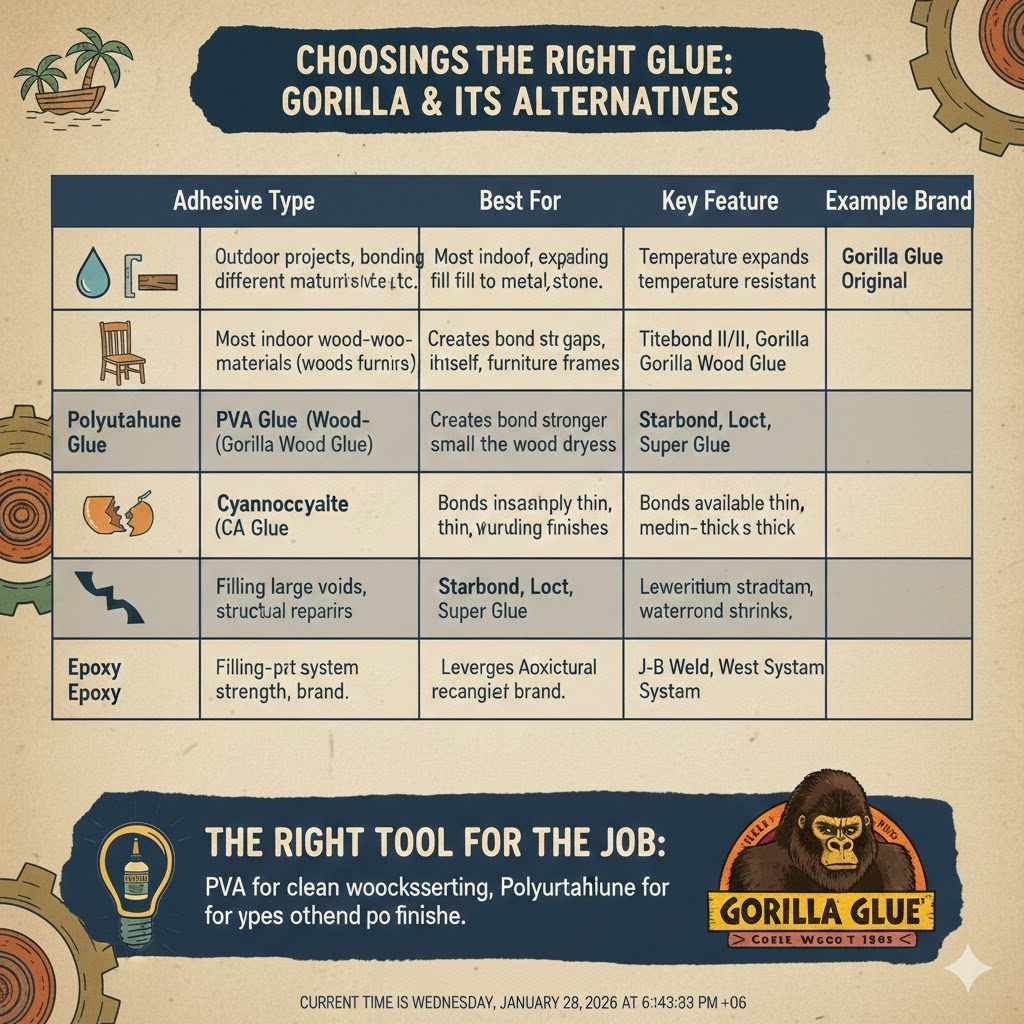
Choosing the Right Glue: Gorilla and Its Alternatives
While Gorilla Glue is fantastic, it’s not the only adhesive out there. A true craftsman knows which tool—or glue—is right for the job. The original Gorilla Glue is a polyurethane glue. It’s perfect for bonding dissimilar materials and is 100% waterproof. But its tendency to foam and expand means it’s not always the best choice for clean, tight wood joints.
Here’s a quick guide to some common adhesives and when to use them:
| Adhesive Type | Best For | Key Feature | Example Brand |
|---|---|---|---|
| Polyurethane Glue | Outdoor projects, bonding different materials (wood to metal, stone, etc.) | Waterproof, expands to fill gaps, temperature resistant | Gorilla Glue Original |
| PVA Glue (Wood Glue) | Most indoor wood-to-wood joinery (cabinets, furniture, frames) | Creates a bond stronger than the wood itself, sandable, easy cleanup | Titebond II/III, Gorilla Wood Glue |
| Cyanoacrylate (CA Glue) | Quick repairs on small items, holding pieces in place while other glue dries, woodturning finishes | Bonds almost instantly, available in thin, medium, and thick viscosities | Starbond, Loctite Super Glue |
| Epoxy | Filling large voids or gaps, structural repairs where maximum strength and rigidity are needed | Two-part system, extremely durable and waterproof, does not shrink | J-B Weld, West System |
For most of my fine woodworking projects, like making a tabletop or building a cabinet, I reach for a good PVA wood glue like Titebond II. It creates an invisible seam and a rock-solid bond without the messy foaming of polyurethane glue. But for an outdoor planter box where I need absolute waterproofing and gap-filling power, the original Gorilla Glue is my go-to choice.
Frequently Asked Questions (FAQ)
1. How much did the Lutz family sell Gorilla Glue for?
The Lutz family sold The Lutz Tool Company, which owned both Gorilla Glue and O’Keeffe’s skincare, to H.B. Fuller for $400 million in 2021.
2. Who owns Gorilla Glue now?
Gorilla Glue is now owned by H.B. Fuller, a large, publicly-traded global adhesives manufacturer based in Minnesota.
3. Is Gorilla Glue still a good product after the sale?
Yes. The core product that made the brand famous remains a top-tier adhesive. H.B. Fuller is an expert in adhesive technology, and their ownership could even lead to new and improved products in the future. There have been no indications of a drop in quality.
4. What was the original Gorilla Glue formula based on?
The original formula was a polyurethane-based adhesive that the founder, Mark Singer, discovered being used by craftsmen in Indonesia. Its unique ability to bond different materials and its waterproof nature made it special.
5. Why does the original Gorilla Glue expand and foam?
Original Gorilla Glue is a moisture-activated polyurethane adhesive. It needs moisture to cure. When it reacts with moisture from the air or the surfaces being glued, it creates a chemical reaction that releases carbon dioxide gas. This gas causes the glue to foam up and expand to about three times its original volume.
6. Is Gorilla Wood Glue the same as the original Gorilla Glue?
No, they are very different. The original Gorilla Glue is a brown, polyurethane-based glue that expands. Gorilla Wood Glue is a more traditional PVA (polyvinyl acetate) glue, similar to other wood glues on the market. It is specifically designed for wood-to-wood bonds, dries without foaming, and is easier to clean up with water.
Conclusion: The Lasting Bond of a Great Brand
The sale of Gorilla Glue for $400 million is more than just a big number; it’s the final chapter in an incredible success story. It’s a testament to the power of a great product, smart branding, and the vision of a family that saw potential in a unique, powerful adhesive. They built a brand that DIYers and professionals alike not only use but truly trust.
For us in the workshop, it’s a reminder of the core principles of good work. Start with quality, be reliable, and build something that lasts. The next time you clamp a project together with that familiar foaming glue, you’ll know the story behind it—a story of strength, persistence, and a truly genius deal.
Now, let’s head back to the workbench and put these lessons into practice. Happy building!