Spackling vs. Wood Filler: Why the Wrong One Cracks and Fails
Use spackling only on drywall and plaster; use wood filler on actual wood. The reason isn’t just tradition — spackling is a gypsum-based paste with almost no flexibility, and wood expands and contracts with humidity in a way drywall never does, so spackle in a wood gap tends to crack loose within a season.
Both products fill a hole and both sand smooth, which is why they get confused. But the material science underneath is different enough that using the wrong one causes a specific, predictable failure: spackle in wood cracks and pops out because it can’t move with the grain, and wood filler on drywall is needlessly hard to sand and won’t take wall paint sheen the same way spackle does. Here’s what’s actually happening chemically, and the one issue neither product’s packaging warns you about clearly: staining.
What’s Actually in Each Product
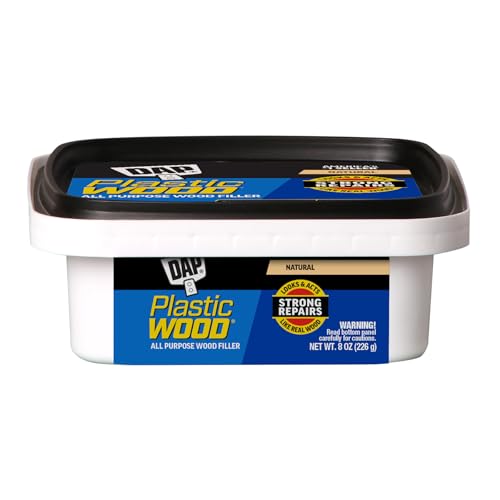
Best Wood Filler for Stainable Repairs
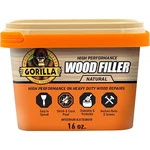 |
Gorilla All Purpose Wood Filler, 16 oz – $9.39 A water-resistant, sandable, stainable filler built for actual wood gaps rather than wall patching.
|
Spackling paste is built around gypsum (the same mineral in drywall itself) mixed with a binder and sometimes a bit of vinyl or acrylic for flexibility. It’s formulated to match drywall’s own composition, which is exactly why it bonds so well to walls and sands to a chalky, uniform finish that disappears under a coat of paint.
Wood filler comes in two very different families that get lumped under one name. Water-based wood putty (the cheap tubs, often labeled “wood filler” for interior trim) is mostly wood fiber or cellulose suspended in a latex binder — light, easy to sand, but softer and less weather-resistant. Solvent- or epoxy-based fillers (two-part products, or a heavier-bodied filler like the pick above) cure into something closer to hard plastic than compressed wood fiber — far more durable, water-resistant, and able to hold a screw, but noticeably harder to sand and usually needs to be applied slightly proud of the surface since it doesn’t shrink as it cures.
Why Spackle Fails on Wood (and Filler Fails on Walls)
Wood is hygroscopic — it absorbs and releases moisture with the seasons, expanding and contracting slightly even after it’s built into furniture or trim. Gypsum-based spackle has almost no give; it’s designed for drywall, which doesn’t move. Pack spackle into a wood gap and the wood around it keeps flexing while the spackle stays rigid, so it eventually shears loose at the edges — the classic “filled hole popped back out after a few months” complaint.
Run the mistake in reverse and wood filler on a drywall patch is simply harder work for no benefit: the epoxy or resin-heavy formulas sand far more slowly than soft gypsum, and some solvent-based fillers can even react poorly with certain wall primers. Drywall doesn’t need the extra durability wood filler is built for, so you’re paying in sanding time for a strength property the wall will never use.
The Staining Problem Nobody’s Packaging Mentions
Even the best wood filler has a known weak point: it doesn’t take wood stain the way real wood does, because stain color develops from pigment soaking into open wood cells and grain — a cured filler has no grain structure to absorb it the same way. The result is a filled spot that reads noticeably lighter or darker than the surrounding wood once stain goes on, even if the dry color looked like a close match. Two ways around this: use a filler tinted to match your final stained color rather than trying to stain over a natural-color filler, or fill with a color slightly darker than your target and blend by hand with a stain marker after the main coat. Test any filler-and-stain combination on a scrap piece of the same wood before committing to the actual repair — this single step avoids the most common wood filler complaint.
Drying, Sanding, and Cost at a Glance
| Spackling (gypsum) | Wood Filler (fiber/resin) | |
|---|---|---|
| Best surface | Drywall, plaster | Solid wood, plywood, MDF |
| Flexes with material movement | No | Better, especially epoxy types |
| Dry time (small repair) | ~30 minutes | 1-24 hours depending on formula |
| Sanding effort | Low, soft and chalky | Moderate to high, especially epoxy fillers |
| Takes stain evenly | N/A (paint only) | Rarely matches perfectly — test first |
| Typical cost | $5-$15 per tub | $8-$25 depending on formula |
Quick Application Steps for Each
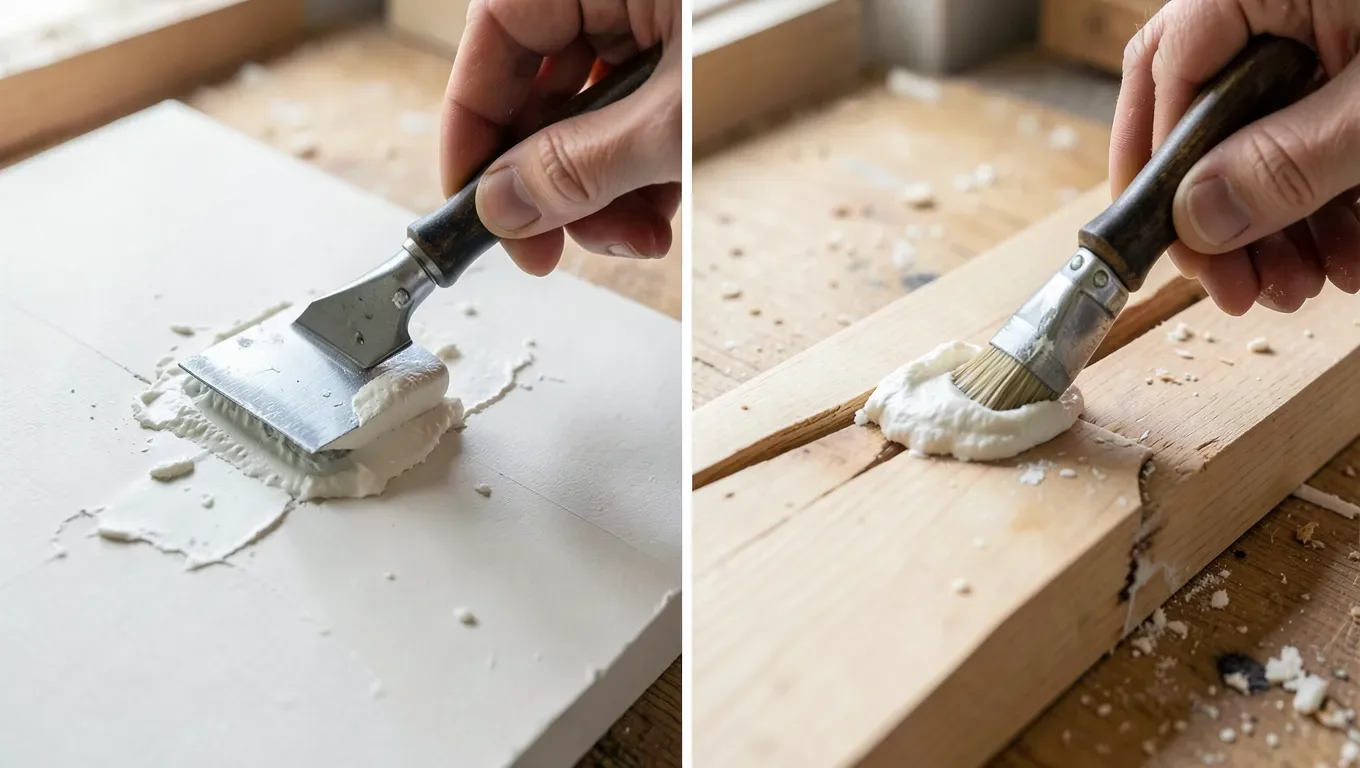
Spackling on drywall: clean dust from the hole, press paste in with a putty knife slightly overfilling, let it dry per the label (usually 30 minutes to a few hours for anything deeper than a nail hole), sand flush with fine-grit paper, then prime before painting — unprimed spackle patches often show through as a slightly different sheen (“flashing”) once painted.
Wood filler on wood: clean and lightly rough the gap for better grip, overfill slightly since some shrinkage is normal even in “no-shrink” formulas, let it cure fully (don’t rush an epoxy filler — full cure can take longer than it feels dry to the touch), sand starting with a coarser grit for resin-based fillers, then test stain or primer on scrap before finishing the actual piece.
Frequently Asked Questions
Should I use spackle or wood filler?
Use spackle for drywall and plaster repairs, and wood filler for actual wood. Spackle is gypsum-based and has almost no flexibility, so it tends to crack loose when packed into wood that naturally expands and contracts with humidity.
Can you use DryDex spackling on wood?
It will technically fill a small hole in wood, but it isn’t built to flex with wood’s natural movement the way a dedicated wood filler is, so it’s more likely to crack or pop loose over time, especially outdoors or in a humid room. For anything beyond a very shallow cosmetic nail hole, a real wood filler holds up better.
Why doesn’t wood filler match the stain color around it?
Stain color comes from pigment soaking into open wood grain; a cured filler has no grain structure to absorb stain the same way, so it reads lighter or darker even when the dry, unstained color looked like a match. Test the filler-and-stain combination on scrap wood first, or use a filler pre-tinted to your target color.
When should you not use spackle?
Avoid spackle on wood, on large structural holes, on flexible or load-bearing repairs, and on wet or exterior surfaces. It’s formulated for small, static drywall and plaster repairs and doesn’t hold up to material movement or moisture the way wood filler does.
Conclusion
The two products look interchangeable in the tub but behave completely differently once they’re in a gap: spackle is rigid gypsum built for a wall that never moves, wood filler is built (in varying degrees) to survive wood that does. Match the product to the material’s actual behavior, not just the size of the hole, and always test a stain over filler on scrap before trusting it on the real piece.
Sponsored / affiliate links. As an Amazon Associate I earn from qualifying purchases. I may earn additional commission from eligible campaigns.