How to Put On Drawer Fronts With Perfectly Even Gaps (Step-by-Step)
Most drawer fronts go on the same way: hold the panel up to the box, guess at the gap, drive a couple of screws through the front, and hope it lines up with the drawer next to it. It usually doesn’t – not the first try. If you’ve ever ended up with a drawer front sitting crooked, showing an uneven sliver of gap on one side, or worse, with visible screw heads punched through the face of a nice piece of wood, the problem almost never comes down to a bad measurement. It comes down to the order of operations. Professional cabinet installers attach drawer fronts from the inside of the box outward, using spacers to lock the gap in place before a single screw goes in – and that one change in sequence is what separates a front that looks factory-installed from one that looks hand-fitted by a beginner.
What You’ll Need
This is a short list on purpose – drawer front installation is more about technique than tools. Gather these before you start so you’re not stopping mid-install to dig through a toolbox:
| Tools | Materials |
|---|---|
| Cordless drill/driver | Drawer fronts |
| Combination square or speed square | Cabinet screws (coarse-thread, 1-1/4″) |
| Painter’s tape | Spacers (nickels, dimes, or a set of plastic spacer shims) |
| Hardware jig or drilling template (see below) | Pull/knob hardware |
Best Hardware-Placement Jig
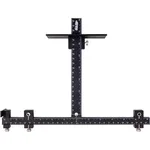 |
Kreg Cabinet Hardware Jig Pro (KHI-XLPULL) – $49.00 Templates pull and knob holes at a fixed, repeatable position so every drawer front in a row lines up – exactly the consistency check this guide’s install steps rely on.
|
A quick note before the steps: skip the wood glue for drawer fronts. Screws-only is standard practice here, specifically because it lets you remove and re-adjust a front later without destroying the finish – something you’ll appreciate the first time a front swells slightly in summer and needs re-aligning.
Measure the Opening, Then Measure the Front
Measure the drawer box opening width and height with a tape measure, then measure the front panel itself – the two numbers are rarely identical, and the difference is exactly what becomes your reveal (the visible wood border around the opening). Most overlay drawer fronts are cut about 1/2″ to 5/8″ larger than the box opening on each side, so the front overlaps the face frame or cabinet edge evenly all the way around. Write the numbers down rather than trusting memory, and mark the vertical and horizontal centerlines on the back of the drawer front in pencil – those centerlines are what you’ll register against the drawer box in the next step, and a front installed off-center by even 1/8″ is visible from across a kitchen.
The Technique Most Guides Skip: Drill From Inside the Box First
Here’s the sequencing change that makes the biggest visible difference, and it’s the one step most tutorials either skip or get backwards. Instead of holding the front in place and driving screws through the face of it into the drawer box – which risks a slipped drill bit blowing out through the front, and locks in any misalignment the instant the first screw bites – flip the order:
- Position the drawer front on the front of the open drawer box, using your spacers (more on those next) to hold an even gap on all sides.
- Tack it temporarily with two strips of painter’s tape so it can’t shift.
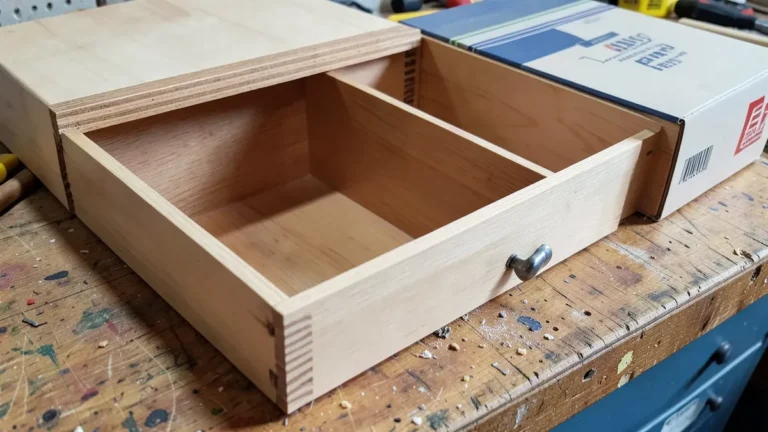
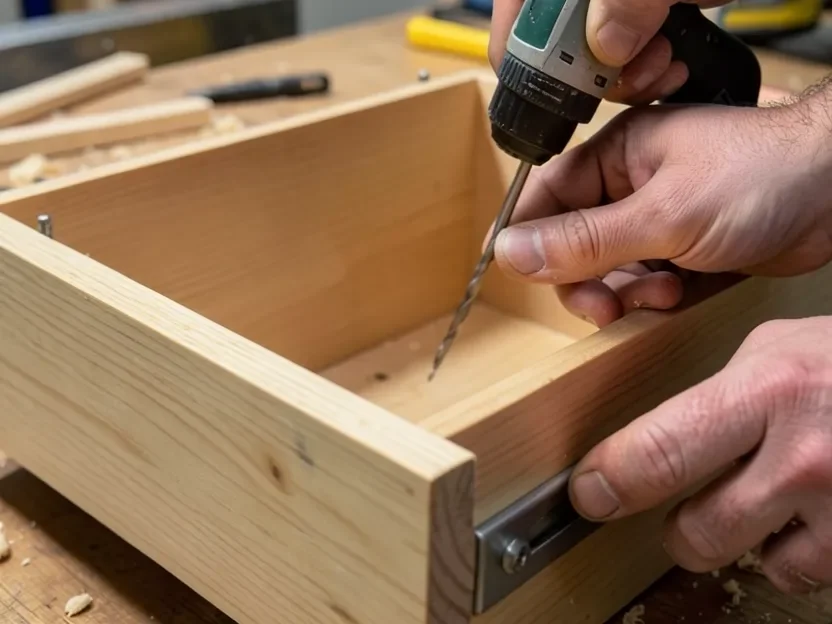
- Reach inside the drawer box and drill your pilot holes from the inside face of the box, through the box material only – stopping before you break through into the back of the front panel.
- Switch to a slightly larger clearance bit, finish the hole through the box, then drive the screw from inside the box into the back of the front.
Attaching from the inside out means every screw head ends up hidden inside the drawer, never visible on the face of the front. It also means the front stays locked in the exact position your spacers set it in, because you’re not applying downward drilling pressure to the panel from the outside – a common cause of a front creeping out of alignment right as the last screw goes in. This is standard practice among cabinet installers and refacing contractors, but it rarely makes it into general how-to content, which is exactly why it’s worth calling out here.
Getting an Even Reveal Gap on Every Side
The single biggest visual-quality tell on a drawer front installation is the reveal – the gap between the front and the cabinet frame, or between adjacent drawer fronts. Amateur installs almost always have a reveal that’s wider on one side than the other, even by a small amount, and the eye catches that inconsistency immediately, even from a distance. Professionals solve this with spacers, not eyeballing:
- Coins as improvised spacers: a nickel is almost exactly 1/12″ thick and a dime is thinner still – stacking two dimes gives a fast, free, repeatable 1/8″ gap. Slide them between the front and the face frame on both sides before taping the front in place.
- Dedicated spacer shims: plastic cabinet-hardware spacer sets (often sold alongside hinge jigs) come in fixed thicknesses like 1/8″ and 3/16″ and won’t compress or shift the way a stack of coins can under clamp pressure.
- Painter’s tape as a placeholder, not a fastener: once the spacers set the gap, tape only needs to hold the front from sliding while you drill – it’s not doing any structural work.
Set spacers on both sides and check top and bottom too if the front is tall. On a full run of drawers, install one front, confirm the gap and alignment against its neighbor, then move to the next – correcting drift one drawer at a time is much easier than trying to fix five drawers that have each crept slightly out of line.
Templating Pull and Knob Holes Across Multiple Drawers
If you’re installing more than one or two drawer fronts, don’t measure and mark each hardware hole by hand – small inconsistencies compound fast, and a pull that sits 1/16″ higher on one drawer than the next is one of the most common giveaways of a DIY install. A hardware jig (sometimes called a drilling template) clamps to the corner or edge of the front and holds a drill guide at a fixed, repeatable distance from the edge every time, so drawer three lines up with drawer one without you re-measuring anything. It’s a small investment for a project involving more than a couple of drawers, and it’s the difference between a row of drawers that reads as a matched set and one that reads as installed on different days.
Drill hardware holes before final installation whenever possible – it’s much easier to drill a front flat on a bench with a jig clamped to it than to drill it in place on the cabinet.
Step-by-Step Installation
- Dry-fit the front against the drawer box opening and confirm your centerlines line up top-to-bottom and side-to-side.
- Place spacers on both sides (and top/bottom if applicable) between the front and the adjacent surface to set the reveal.
- Tape the front in place over the spacers so it can’t shift.
- From inside the drawer box, drill pilot holes through the box front only, positioned to land in solid material on the back of the drawer front – not through any pre-drilled hardware holes.
- Drive cabinet screws from inside the box into the back of the front. Snug them until the front draws tight against the box – don’t overtighten, which can dimple soft woods or crack a thin front.
- Remove the spacers and tape, then step back and sight down the row of drawers to confirm the reveal reads even.
- Install pulls or knobs using your jig-marked holes, and do a final open/close check on the drawer slide before calling it done.
Troubleshooting Crooked or Sticking Fronts
If a front sits crooked after installation, don’t try to force it straight by over-tightening one screw – back both screws out slightly, re-set your spacers, and re-tighten evenly from the inside. A front that binds or drags when the drawer opens is usually a sign the drawer slide itself needs adjustment before the fault is really about the front; if you’re working through drawer hardware issues on the same project, it’s worth checking your undermount drawer slide installation alongside the front, since slide alignment and front alignment affect each other. A front that looks fine closed but shows a gap that widens toward the bottom usually means the drawer box itself is slightly out of square, which is worth correcting at the box before you fight it at the front.
Frequently Asked Questions
Should I glue drawer fronts on, or use screws only?
Screws only, no glue. Screws let you remove the front later to re-adjust alignment, replace hardware, or fix a gap that’s shifted with seasonal wood movement. Glue makes any future adjustment or repair much harder and isn’t necessary for a properly supported drawer front.
Why should I drill from inside the drawer box instead of through the front?
Drilling from inside the box keeps every screw head hidden inside the drawer instead of visible on the face of the front, and it lets the front stay locked in position from your spacers instead of shifting under drilling pressure. It’s the sequencing pros use, and it’s the main reason a professionally installed front looks cleaner than a front installed face-first.
What’s the best way to get an even gap around a drawer front?
Use spacers, not eyeballing. Stacked dimes or nickels work in a pinch for a quick 1/8″ gap, but a dedicated set of plastic cabinet-hardware spacer shims holds its thickness under pressure more reliably. Set spacers on every side before taping the front in place, and check the gap again after the screws are driven.
Do I need a jig to install drawer pulls, or can I mark holes by hand?
For a single drawer, marking by hand with a tape measure and square can work if you’re careful. For more than a couple of drawers, a hardware jig is worth using – it holds the drill guide at a fixed distance from the edge every time, so pulls end up at the identical height and position across every drawer instead of drifting slightly from one to the next.
Conclusion
Putting on drawer fronts isn’t complicated, but getting them to look intentional instead of hand-fitted comes down to two habits most guides leave out: setting the reveal with spacers before anything gets fastened, and driving screws from inside the drawer box outward instead of through the face. Combine that with a hardware jig once you’re installing more than a front or two, and you’ll get a row of drawers that reads as a matched, professionally installed set rather than a weekend project.
Sponsored / affiliate links. As an Amazon Associate I earn from qualifying purchases. I may earn additional commission from eligible campaigns.