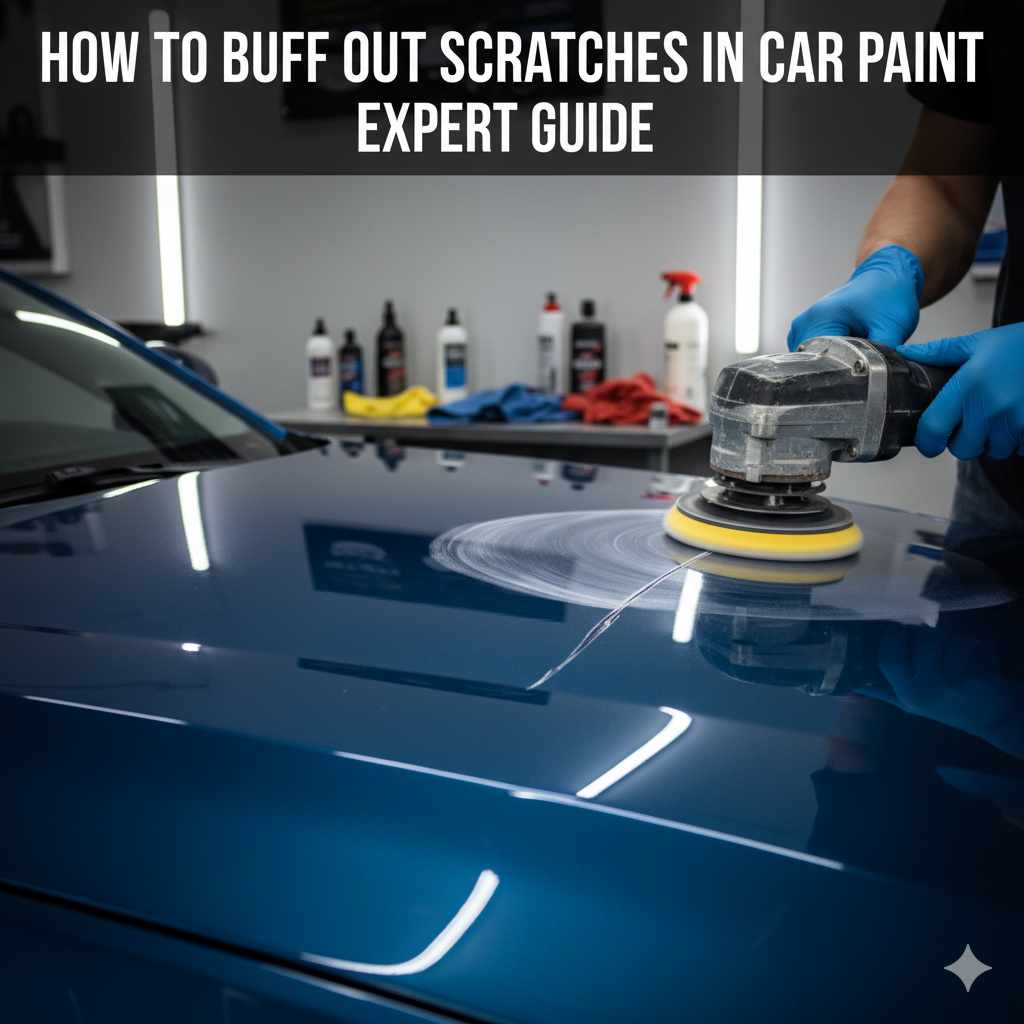
How To Buff Out Scratches In Car Paint: Expert Guide
Buffing out car paint scratches is achievable for beginners! With the right approach and tools, you can safely remove light scratches, restore shine, and protect your car’s finish. This guide breaks down the process step-by-step, ensuring a smooth, professional-looking result.
Let’s face it, finding a scratch on your car’s beautiful paint can be a real heartbreaker. Whether it’s a scuff from a rogue shopping cart, a light scrape from a tree branch, or just the everyday wear and tear, those visible lines diminish that showroom gleam. But before you rush to the expensive body shop, know this: many common scratches can be buffed out right in your own driveway. It might sound intimidating, but with a bit of patience and the right technique, you can tackle these imperfections and get your car looking its best. We’ll walk you through everything you need, from identifying the scratch depth to applying the final polish. Let’s reveal the secrets to a scratch-free finish!
Understanding Car Paint and Scratches
Before we grab any tools, it’s super helpful to understand how car paint is layered. Think of it like this:
- Primer: This is the base coat, like a foundation for your paint job.
- Base Coat: This is the actual color of your car.
- Clear Coat: This is the transparent, protective layer on top. It’s like a shield that protects the color and gives your car its shine.
Most minor scratches you’ll encounter only go through the clear coat. These are the ones we can easily buff out. Deeper scratches that reach the base coat or primer are more serious and might require professional attention or touch-up paint. Knowing this helps us choose the right method and products.
How Deep is the Scratch? The Fingernail Test
This is our first and most important step. It’s simple but very effective in telling us what we’re dealing with. Grab your fingernail and gently run it across the scratch.
- If your fingernail doesn’t catch: This usually means the scratch is only in the clear coat. Great news! These are generally buff-out-able.
- If your fingernail catches slightly: This might be a deeper clear coat scratch, or it might be just entering the base coat. We can still try buffing, but proceed with caution and be aware it might need more work or touch-up paint.
- If your fingernail catches significantly and you see a different color (like primer or the car’s original color peeking through): This scratch is too deep to buff out. You’ll likely need touch-up paint for this one. Trying to buff it will likely make it worse.
Are You Ready? Gathering Your Buffing Supplies
Having the right gear makes all the difference. Don’t worry, most of these items are affordable and can be found at your local auto parts store or online. Here’s what you’ll want to have on hand:
Essential Tools and Products:
- Microfiber Towels: You’ll need several clean, soft ones. They are gentle on paint and great for wiping away residue.
- Car Wash Soap and Bucket: A clean car is crucial!
- Clay Bar Kit (Optional but Recommended): This removes contaminants that washing alone won’t get, making your buffing more effective.
- Rubbing Compound or Swirl Remover: This is your primary scratch-removing agent. Start with a less abrasive one.
- Polishing Compound: This is a gentler abrasive that refines the finish after using the rubbing compound.
- Car Wax or Sealant: To protect your newly buffed paint.
- Applicator Pads: Foam or microfiber pads to apply the compounds and polish.
- Masking Tape (Painter’s Tape): To protect trim and edges.
- Gloves and Eye Protection: Safety first, always!
Choosing the Right Abrasive: Compound vs. Polish
This is where many beginners get a little confused. Both rubbing compound and polishing compound contain mild abrasives, but they differ in their grit:
| Product Type | Purpose | Abrasiveness | When to Use |
|---|---|---|---|
| Rubbing Compound | Removes deeper scratches, oxidation, and paint transfer. | More aggressive. | For clear coat scratches that catch your fingernail lightly. Use sparingly. |
| Polishing Compound | Removes fine scratches, swirl marks, and imperfections left by rubbing compound or the polishing process itself. Restores gloss. | Less aggressive. | After using rubbing compound, or for very light swirls and to enhance shine. |
Always start with the least aggressive product that you think will work. It’s easier to remove more later than to fix over-sanded paint!
Step-by-Step Guide: Buffing Out Scratches Like a Pro
Ready to get started? Follow these steps carefully. Remember, patience is key!
Step 1: Wash and Dry Your Car Thoroughly
This is non-negotiable. Any dirt or grit left on the paint surface could cause more scratches when you start buffing. Use a quality car wash soap and the two-bucket method (one for soapy water, one for rinsing your wash mitt) to minimize the risk of introducing new swirl marks. Rinse the car thoroughly and dry it completely with clean microfiber towels. Park your car out of direct sunlight; this prevents the products from drying too quickly and becoming difficult to work with.
Step 2: Decontaminate the Surface (Optional but Recommended)
Now, let’s get the paint super smooth. Using a clay bar kit is a fantastic way to remove embedded contaminants like industrial fallout, tar, and tree sap that washing alone can’t touch. Follow the instructions on your clay bar kit, typically involving spraying a lubricant and gently gliding the clay over the paint. The paint should feel glassy smooth afterward. If you skip this, your buffing might be less effective.
Step 3: Inspect and Tape Off the Area
Re-examine the scratch in good light. Make sure you’re clear on its depth. Use painter’s tape to mask off any surrounding trim, rubber seals, or plastic parts. These areas are often porous and can be easily damaged or discolored by polishing compounds. This also helps create a defined edge for your buffing work, ensuring you don’t accidentally buff areas you don’t intend to. For more information on auto detailing and paint care, resources like the EPA’s Green Vehicle Care can offer helpful context on environmentally friendly practices.
Step 4: Apply the Rubbing Compound (If Needed)
If your fingernail test indicated a scratch beyond the very lightest surface mark, it’s time for rubbing compound. Apply a small amount (about a dime-sized amount) of rubbing compound to a clean foam applicator pad. Working in a small, manageable area (about 1-2 square feet at a time is good), gently rub the compound over the scratch using back-and-forth or small circular motions. Don’t apply excessive pressure. Let the compound do the work.
Work the compound for about 30-60 seconds, then stop and wipe away the residue with a clean microfiber towel. Inspect your work. If the scratch is still visible but less deep, apply another small amount of compound and repeat. Be patient and avoid going over the same spot for too long, which can generate heat and potentially damage the paint. We’re trying to gently level the clear coat around the scratch.
Step 5: Remove Rubbing Compound Residue
Once you’ve worked on the scratch with rubbing compound and found it’s gone or significantly reduced, use a separate clean microfiber towel to gently wipe away all residue. You can use a dedicated automotive surface prep spray or isopropyl alcohol (diluted 50/50 with distilled water) on the towel to ensure all compound residue is removed. This step is vital to get a true picture of the results and to prepare the surface for the next stage.
Step 6: Apply Polishing Compound
Now, it’s time to bring back the shine. Polishing compound is less abrasive and will refine the finish, removing any faint hazing or micro-scratches left by the rubbing compound. Apply a small amount of polishing compound to a clean applicator pad (you might want to use a separate pad than the one used for rubbing compound). Using light pressure, work the polish over the same area you worked on with the rubbing compound, again in small sections. Use gentle, overlapping motions.
Wipe away the residue with another clean microfiber towel. You’ll notice the paint start to regain its gloss and depth. This step is crucial for restoring that deep, clear shine.
Step 7: Apply Car Wax or Sealant
You’ve worked hard to get your paint looking great! Now, protection is key. Apply a coat of your favorite car wax or sealant according to its product instructions. This not only enhances the shine but, more importantly, protects the clear coat from future damage and UV rays. Apply it evenly with an applicator pad and buff off with a clean microfiber towel until you achieve a deep, glossy finish. Waxing regularly is a cornerstone of maintaining your car’s paint, as recommended by many automotive detailing guides.
Dealing with Different Types of Scratches
Not all scratches are created equal. Let’s look at a few common scenarios:
Scenario 1: Light Swirl Marks
These are the fine, spiderweb-like scratches that appear when light hits the paint at an angle. They’re usually caused by improper washing techniques. For these, you might be able to skip the rubbing compound altogether and go straight to a good quality polishing compound. A machine polisher, like a dual-action (DA) polisher, can make quick work of swirls, but even by hand, a good polish and some elbow grease will make a significant difference.
Scenario 2: Scuff Marks
These often come from contact with another object, like a bumper or a wall. If the scuff is merely paint transfer from the other object onto your car’s clear coat, you might be able to remove it with a strong degreaser or diluted rubbing alcohol, followed by your polishing steps. If it’s a true scratch in the clear coat, proceed with the rubbing compound steps outlined above, starting with the least abrasive option.
Scenario 3: Deeper Scratches (Past the Clear Coat)
As we discussed, if your fingernail snags deeply or you see primer or the base color, buffing won’t fix it. For these, you’ll need to use touch-up paint. The process involves cleaning the scratch, carefully applying color and clear coat layers with a very fine brush or applicator, and then, once fully cured, using rubbing and polishing compounds to blend the touched-up area into the surrounding paint. This is a more advanced repair, and for very noticeable scratches, a professional detailer might be your best bet.
Tips for Success and Common Mistakes to Avoid
Even with the best guide, a few extra tips can elevate your results. And knowing what not to do is just as important!
Pro Tips:
- Work in Small Sections: Don’t try to tackle the whole car at once. Focus on a few square feet at a time.
- Use Plenty of Lubrication: When using a clay bar, don’t let it drag dry across the paint. Always use the recommended lubricant spray.
- Clean as You Go: Keep those microfiber towels clean. Switch to a fresh one often.
- Test in an Inconspicuous Area First: If you’re unsure about a product, try it on a hidden spot like the lower part of a door.
- Follow the Sun: If buffing by hand, move your polishing motions in the same direction as the sun usually hits the car (often front to back).
Mistakes to Avoid:
- Using Dish Soap: It strips wax and can dry out your paint’s protective layers. Always use a dedicated car wash soap.
- Working in Direct Sunlight or on a Hot Surface: Products will dry too fast, causing streaks and making them hard to remove.
- Using Old or Dirty Towels/Pads: This is a recipe for introducing more scratches.
- Applying Too Much Pressure: Let the product and the pad do the work. Overzealous rubbing can damage the paint.
- Using the Wrong Product: Starting with too aggressive a compound for a light scratch can create more problems.
- Not Protecting Trim: Black plastic trim can be easily stained by polishing compounds. Tape it off!
When to Call in the Professionals
While this guide empowers you to tackle many common scratches, there are times when professional help is the smart choice. If you encounter:
- Very deep scratches that go through the paint layers.
- Extensive damage from an accident.
- Scratches on delicate surfaces like matte paint or carbon fiber (if applicable).
- If you’re simply not comfortable proceeding after assessing the scratch.
Professional auto detailers have specialized tools, extensive knowledge, and advanced techniques, such as machine polishing with varying pad and compound combinations, that can achieve results beyond DIY capabilities. For a deeper dive into professional detailing standards, organizations like the International Surface Preparation Coalition often provide valuable industry insights on best practices.
Frequently Asked Questions (FAQs)
Q1: Can I really buff out any scratch on my car?
A: No, only scratches that are shallow enough to be within the clear coat layer can be buffed out. If a scratch goes down to the colored base coat or the primer, it will require touch-up paint or professional repair.
Q2: How long does it take to buff out a scratch?
A: For a single, minor scratch, it might take anywhere from 15 minutes to an hour, depending on the product used, your technique, and how many passes are needed. Larger areas or multiple scratches will naturally take longer.
Q3: How often should I wax my car after buffing?
A: After buffing and polishing, applying a good quality car wax or sealant is essential for protection. Depending on the product and environmental conditions, you should reapply wax every 1-3 months to maintain the shine and protection.
Q4: What’s the difference between rubbing compound and polishing compound?
A: Rubbing compound is more abrasive and is used to remove deeper scratches and imperfections. Polishing compound is less abrasive and is used to refine the finish after rubbing compound, remove lighter swirl marks, and restore gloss.
Q5: Can I use a power buffer instead of doing it by hand?
A: Yes, a dual-action (DA) orbital polisher can be very effective and faster than hand buffing, especially for larger areas or more numerous scratches. However, they require practice to avoid damaging the paint. Always start on a low speed and use a light touch.
Q6: How do I know if I’m rubbing too hard?
A: You’ll likely feel significant resistance, or the product might start to dry out very quickly. Also, if the paint feels excessively hot to the touch, you’re probably applying too much pressure or working the area for too long. It’s better to take multiple light passes than one aggressive one.
Conclusion: Your Car’s Shine is Within Reach
There you have it! Buffing out scratches on your car’s paint is a rewarding DIY task that can save you money and keep your vehicle looking its absolute best. By understanding your paint, using the right tools, and following these steps carefully, you can confidently tackle those annoying imperfections. Remember to start gentle, be patient, and always protect your freshly buffed finish with a quality wax or sealant. With a little practice, you’ll have your car gleaming like it just rolled off the dealership lot, and that feeling of accomplishment is truly priceless. Happy detailing!