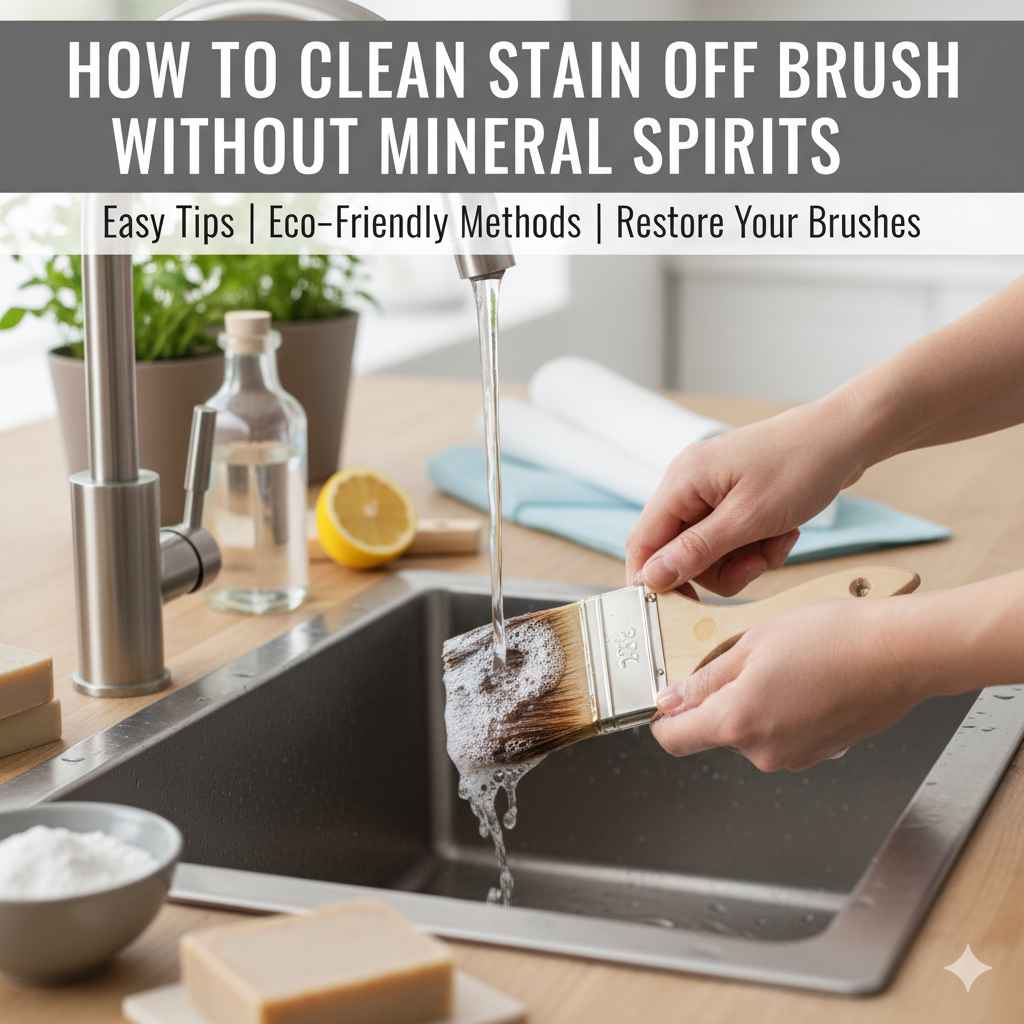
How to Clean Stain off Brush Without Mineral Spirits: Easy Tips
Ever found yourself staring at a paintbrush smeared with stubborn stains, wondering how on earth you’ll ever get it clean without resorting to mineral spirits? You’re not alone.
Many people struggle with this very dilemma. But what if I told you there’s an easier, more eco-friendly way to tackle those pesky stains? Imagine restoring your brush to its former glory without the harsh chemicals and pungent odors. Intrigued?
You’re about to discover simple, effective techniques that will not only save your brush but also keep your workspace free from toxic fumes. Ready to dive in and transform your cleaning routine? Let’s get started!
Natural Alternatives To Mineral Spirits
Cleaning paint brushes can be easy with natural alternatives. Vinegar is one such option. It helps to break down paint and clean brushes. Warm water mixed with baking soda works well too. It softens the bristles and removes stains. Olive oil can be useful for sticky paint residue. It is gentle on brushes and effective.
Using lemon juice can also help in cleaning. Its acidic nature removes tough stains. Soap and water is the simplest method. It cleans brushes without harmful chemicals. Keep your brushes clean and fresh with these natural methods. They are safe and eco-friendly.
Using Vinegar Solution
Mix equal parts of vinegarand warm waterin a bowl. Stir well to make sure they blend together. This creates a gentle cleaning solution for brushes. The vinegar helps to break down paint and stains. Warm water makes it easier for the vinegar to work.
Place the brush into the vinegar mixture. Make sure the bristles are fully covered. Let it soak for at least 30 minutes. This helps the vinegar clean deep into the bristles. It is important to give it enough time to work.
After soaking, rinse the brush with clean water. This removes any leftover vinegar and paint. Shake the brush gently to remove excess water. Lay it flat on a towel to dry. Make sure the bristles keep their shape while drying. The brush will be clean and ready for next use.
Baking Soda Paste Method
Credit: www.walmart.com
Baking sodais a great cleaner. Start with a small bowl. Add three tablespoons of baking soda. Next, pour in one tablespoon of water. Stir until it forms a thick paste. Make surethere are no lumps. This paste is ready for cleaning.
Spread the paste on the brush. Cover all the stained parts. Use your fingers or a spoon. Let the paste sit for 15 minutes. This helps the baking sodabreak down the stain. Be patient!
Rinse the brush under warm water. Rub the bristles gently. Watch the stain wash away. Repeat if needed. Dry the brush with a towel. Enjoy your clean brush!
Olive Oil Technique
Start by dipping the brush in olive oil. Make sure all bristles are covered. Olive oil helps loosen paint stains. It is gentle on brushes.
Use a clean cloth to wipe the brush. Gently remove the loosened paint. Repeat until no paint is visible. Make sure not to damage the bristles.
Rinse the brush under warm water. Remove any remaining oil. This helps keep the brush clean. Dry the brush with a towel. Ensure it is completely dry before storage.
Soap And Water Wash
Pick a mild soap. Dish soap works well. Avoid strong chemicals. These can hurt the brush. Use warm water with the soap. This helps remove stains. Cold water is not as effective.
Use your fingers to scrub. Be gentle but firm. Rub the bristles well. Make sure soap covers all parts. Repeat if the stain is stubborn. Patience is key here.
Rinse with warm water. Ensure all soap is gone. Check for any remaining stains. If needed, wash again. Let the brush dry completely. A clean brush is ready to use again.
Lemon Juice Cleaning
Lemon juice is very acidic
Pour lemon juice on the brush. Use enough to soak the bristles. Wait for a few minutes. This allows the juice to work. Gently scrub the brush with a toothbrush. Make sure to reach every corner. This removes the deep stains.
Rinse the brush under warm water. Ensure all lemon juice is gone. Check the brush for any leftover stains. Repeat the process if necessary. Dry the brush with a clean cloth. Store in a dry place.
Preventing Future Stains
Keep brushes clean to avoid stains. Use warm water and soap. This helps remove paint easily. Dry brushes completely after washing. Store them in a dry place. Avoid bending the bristles. This keeps them strong and ready for use.
Inspect brushes often. Look for damage or leftover paint. Clean them right away. This prevents stains from forming. Good maintenance makes brushes last longer. They will be ready for the next painting project.
Set a routine for cleaning brushes. After every use, wash them properly. This keeps them in good shape. Weekly checks are helpful. They ensure no paint is left on. This stops stains before they start. A regular schedule helps keep brushes clean and neat.

Credit: boldwallflowers.com
Frequently Asked Questions
What Is A Good Substitute For Mineral Spirits?
A good substitute for mineral spirits is denatured alcohol. It effectively cleans surfaces and removes paint. Another option is vinegar, which is eco-friendly and gentle. For stronger cleaning, try acetone or turpentine. Always test substitutes on a small area first.
How Do You Remove Stains From A Brush?
To remove stains from a brush, soak it in warm, soapy water for 10 minutes. Gently scrub the bristles with a toothbrush to loosen the stains. Rinse thoroughly under running water, then pat dry with a towel. Repeat if necessary for stubborn stains.
How To Get Polyurethane Off Brush Without Mineral Spirits?
Use warm, soapy water to clean polyurethane off the brush. Scrub gently with a brush comb. Rinse thoroughly. Repeat if needed until clean. Dry the brush completely before storing.
Can You Use Dawn Dish Soap To Clean Oil Paint Brushes?
Yes, you can use Dawn dish soap to clean oil paint brushes. It effectively removes oil paint residue. Rinse thoroughly to ensure all soap is removed from the bristles. Dawn’s grease-cutting formula helps maintain brush quality without damaging the bristles.
Conclusion
Cleaning your brush without mineral spirits is simple and effective. Use common household items for a safe solution. Soapy water works wonders for most paint stains. Vinegar is great for tougher, oil-based paints. Keep your brushes in top shape with regular cleaning.
This saves money and ensures better painting results. You don’t need harsh chemicals for clean brushes. Try these methods today for easy maintenance. Enjoy painting with clean tools every time. Remember, a little effort goes a long way in brush care.
Happy painting!