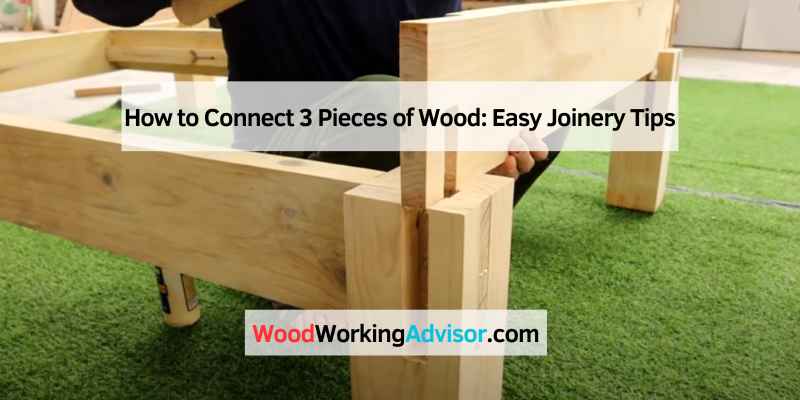
How to Connect 3 Pieces of Wood: Easy Joinery Tips
To connect three pieces of wood, use wood glue, screws, or dowels. Choose a method based on the project requirements and desired strength.
Connecting pieces of wood is a fundamental skill in woodworking and crafting. Whether you’re building furniture, constructing a frame, or creating decorative items, understanding how to join wood effectively is crucial. Various methods exist, including using wood glue for a seamless finish, screws for strength, or dowels for precise alignment.
Each technique has its advantages and is suited for different projects. Knowing how to connect wood securely not only enhances durability but also improves the overall aesthetic of your work. Mastering these techniques opens the door to countless woodworking possibilities, making your projects both functional and visually appealing.
Introduction To Wood Joinery
Connecting wood is a fundamental skill in woodworking. Joinery allows you to create strong and stable structures. Mastering this skill is essential for building furniture and other projects.
There are several basic methods to connect wood pieces. These include butt joints, dowel joints, and mortise and tenon joints. Each method offers unique strengths and weaknesses.
Butt joints are simple but may lack strength. Dowel joints use wooden dowels for added strength. Mortise and tenon joints provide a strong connection, ideal for heavy items.
Understanding these basics helps in choosing the right method for your project. A solid foundation in joinery leads to better craftsmanship.
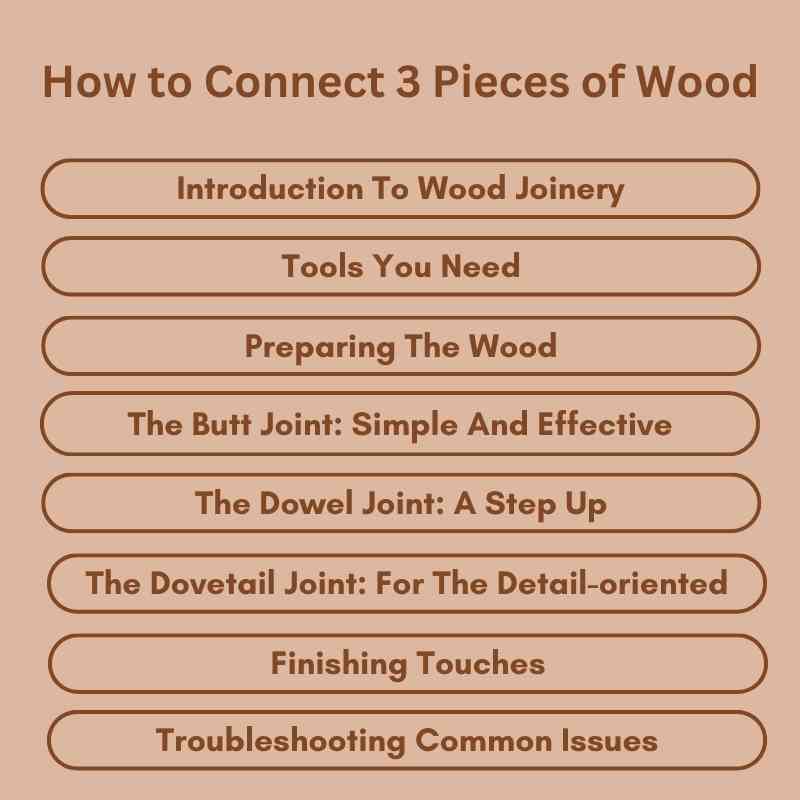
Tools You Need
To connect three pieces of wood, you need specific tools. Start with measuring and marking tools. A tape measure and a square help ensure accurate cuts.
For cutting and shaping, use a saw and a chisel. A jigsaw is great for curves. Sandpaper smooths rough edges.
Joining tools include wood glue and screws. A drill makes holes for screws. For finishing, use paint or varnish to protect the wood.
Preparing The Wood
Choose the right type of wood for your project. Softwoods like pine are great for beginners. Hardwoods like oak offer strength and durability.
Measure the wood pieces carefully before cutting. Use a saw to cut each piece to the desired length. Make sure to wear safety gear while cutting.
Sanding is essential for a smooth finish. Use sandpaper to smooth out rough edges. Start with coarse sandpaper, then switch to fine sandpaper for a polished look.
The Butt Joint: Simple And Effective
The butt joint is a very simple way to connect wood pieces. It involves placing two pieces of wood end to end. This creates a strong and effective connection.
To create a butt joint, align the edges of the wood. Use wood glue for a strong hold. Clamps can help keep the pieces together while the glue dries.
Securing the joint with screws or nails adds extra strength. Drill pilot holes first to avoid splitting the wood. This method works well for many projects.
Use a butt joint when you need a quick and easy connection. It is great for frames, shelves, and furniture. This joint is common in woodworking due to its simplicity.
The Dowel Joint: A Step Up
To create strong connections, specific tools are essential. A dowel jig helps align holes accurately. A drill with the right bit is also needed.
For drilling dowel holes, first mark the spots on each piece. Use the dowel jig to keep the drill straight. Drill to the correct depth for perfect fit.
After holes are ready, apply wood glue inside each hole. Insert the dowels carefully. Make sure they go all the way in.
Finally, use clamps to hold the pieces together. Let the glue dry completely for a strong bond. This method ensures a sturdy joint.
The Dovetail Joint: For The Detail-oriented
Marking dovetail joints requires precision. Start by drawing a baseline on your wood pieces. Use a square to ensure straight lines. Mark the tails and pins carefully to avoid mistakes.
Cutting dovetails involves using a saw and a chisel. Follow the marked lines closely. Cut the tails first, then the pins. A sharp chisel helps make clean cuts.
Fitting and finishing your dovetail joints is crucial. Test the fit by joining the pieces together. Sand any rough edges for a smooth finish. Apply wood glue for a strong bond.
Finishing Touches
Start by sanding the joints. Use a fine-grit sandpaper. This makes the surface smooth. It helps the wood fit well together.
Next, apply a finish to the wood. Choose a stain or varnish that you like. Apply it evenly using a brush or cloth. Let it dry completely before touching.
Finally, focus on the final assembly. Align the pieces carefully. Use wood glue or screws to secure them. Make sure everything is tight and stable.
Troubleshooting Common Issues
Misaligned joints can create weak connections. Check each joint carefully. Make sure they align perfectly for strength.
Weak joints often lead to unstable structures. Use wood glue or screws to reinforce them. This will improve overall stability.
To fix gaps, sand the edges of the wood. This helps pieces fit together better. Filling gaps with wood filler can also help.
Frequently Asked Questions
How Do I Join Three Pieces Of Wood?
To join three pieces of wood, consider using wood glue, screws, or dowels. First, align the pieces properly. Apply wood glue for a strong bond, or use screws for added stability. Dowels are great for clean, hidden joints. Ensure everything is clamped until the adhesive sets.
What Tools Do I Need For Connecting Wood?
Essential tools for connecting wood include a saw, drill, and clamps. A measuring tape ensures accurate cuts. A square helps align pieces correctly. Depending on the joint type, you may need a doweling jigs or screwdrivers. Keep safety gear, like goggles, handy while working.
Can I Use Nails To Connect Wood Pieces?
Yes, nails can effectively connect wood pieces. They are quick and easy to use. However, nails may not provide as strong a bond as screws or dowels. For better stability, pre-drill holes to avoid splitting the wood. Choose the right nail size for your project.
What Type Of Glue Works Best For Wood?
PVA glue, or wood glue, is ideal for bonding wood. It dries clear and forms a strong bond. For outdoor projects, consider waterproof glue like polyurethane. Always follow the manufacturer’s instructions for best results. Clamp the pieces together to ensure a strong, lasting connection.
Conclusion
Connecting three pieces of wood can be simple and rewarding. Whether you’re crafting furniture or a DIY project, using the right methods makes all the difference. Experiment with different techniques to find what works best for you. With practice, you’ll become more skilled and confident in your woodworking abilities.
Happy building!