Rubio Monocoat Accelerator Ratio: The Exact Official Mix
Rubio Monocoat’s own technical data sheet lists two different maximum accelerator ratios, not one — and mixing up which one applies to your product is the most common reason people either waste accelerator or end up with a tacky, slow-curing finish. Oil Plus 2C and Hybrid Wood Protector each have their own cap, and neither one is exactly the “3:1” figure that gets repeated everywhere online.
This guide walks through the exact percentages straight from Rubio Monocoat’s manufacturer documentation, how to measure them accurately for any batch size, and what actually goes wrong when the ratio is off.
Rubio Monocoat Accelerator Ratio: The Official Numbers
Genuine Rubio Monocoat Accelerator
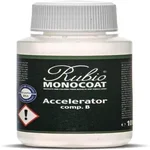 |
Rubio Monocoat Accelerator – Comp. B (100 mL) – $27.89 The exact accelerator this guide’s ratios are built around — the same bottle you’d mix with Oil Plus 2C or Hybrid Wood Protector at the ratios below.
|
According to Rubio Monocoat’s technical data sheet for the Accelerator – Comp. B (dated 11/03/2021, still the current published version as of this writing), the accelerator is only compatible with two products, and each has its own maximum:
- Rubio Monocoat Oil Plus 2C: add a maximum of 30% Accelerator – Comp. B, measured against the volume of Part A. For 100 ml of oil, that’s up to 30 ml of accelerator.
- Rubio Monocoat Hybrid Wood Protector: add a maximum of 10% Accelerator – Comp. B. For 100 ml of Hybrid Wood Protector, that’s up to 10 ml of accelerator — a much smaller dose than Oil Plus 2C.
Here’s the wrinkle: Rubio Monocoat’s own consumer-facing directions (printed on the Oil Plus 2C product listing) simplify this to “mix 3 parts Part A to 1 part Part B,” which works out to roughly 33% — slightly over the 30% cap in the technical data sheet. In practice that small difference isn’t going to ruin a project, but if you want to stay strictly inside the manufacturer’s documented maximum rather than the rounded consumer shorthand, measure to 30% (30 ml accelerator per 100 ml oil) rather than a flat 3:1. Both numbers come directly from Rubio Monocoat’s own materials; treat 30% as the ceiling and 3:1 as the everyday approximation.
One more number worth knowing before you mix anything: once combined, the oil-and-accelerator mixture has a pot life of 4 to 6 hours, depending on the temperature and humidity in your shop. Mix only what you can apply in that window — a bigger batch mixed “to save a trip” often means the back half goes to waste.
What the Accelerator Actually Does
Rubio Monocoat’s hardwax-oil finishes cure through a slow oxidative reaction — the oil molecules link together (polymerize) as they’re exposed to air, gradually hardening from a liquid into a durable, wood-penetrating finish. Left alone, Oil Plus 2C’s Part A takes about 21 days to reach a full cure. The accelerator, Comp. B, speeds up that same reaction chemically, cutting full cure down to roughly 5 days — a difference that matters a lot on a job site or a kitchen counter someone needs back in use.
Why It’s a Separate Bottle Instead of Built In
Some Rubio Monocoat kits, like the pre-packaged Oil Plus 2C sets, already include both Part A and Part B in the box, meant to be combined right before use. Buying the Accelerator – Comp. B separately makes sense when you’ve already got Part A on hand, when you’re refilling after using up your original kit’s Part B faster than Part A, or when you’re mixing a Hybrid Wood Protector batch, which isn’t sold as a pre-mixed 2C kit at all.
What Goes Wrong at the Wrong Ratio
Go over the maximum and the mixture starts curing faster than you can work it, which is what actually causes streaking — you’re literally trying to spread a partially-set finish. Skip the accelerator, or add too little, and the surface stays workable for longer than expected, which sounds harmless but actually means more time for dust, foot traffic, or a stray fingerprint to get pressed into a finish that hasn’t hardened yet.
How to Measure and Mix It Correctly
Measure by Volume, Not by Eye
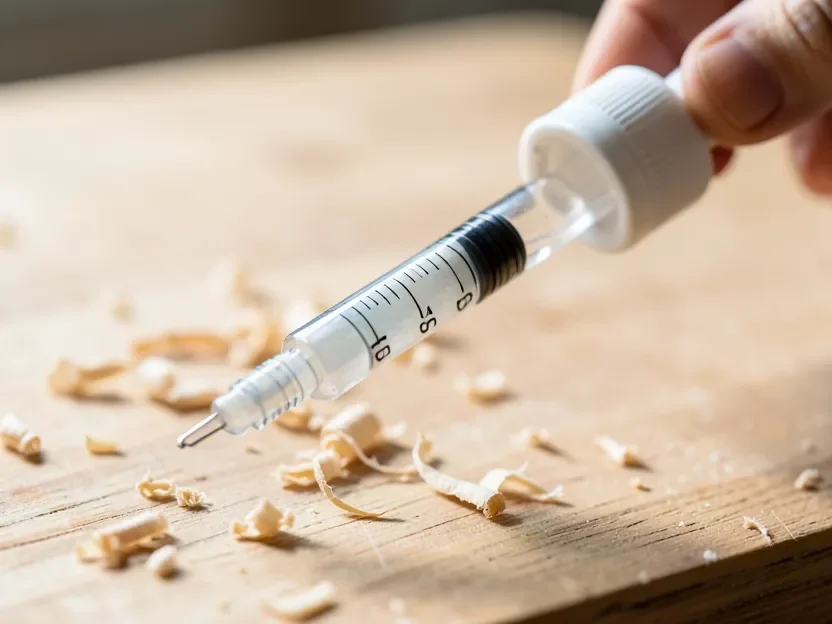
A kitchen measuring spoon isn’t precise enough for a 10% cap. For small batches, a graduated syringe or a small graduated cylinder (sold for resin and epoxy work) gets you close enough to matter. For larger jobs, a calibrated mixing container with clear volume markings works fine. A couple of real examples:
- 250 ml of Oil Plus 2C Part A: up to 75 ml of accelerator (30% cap)
- 250 ml of Hybrid Wood Protector: up to 25 ml of accelerator (10% cap)
- 500 ml of Oil Plus 2C Part A: up to 150 ml of accelerator
Pour the oil into a clean container first, then add the accelerator on top of it — not the other way around, which makes it harder to see whether you’ve hit your target volume. Stir for a full minute or two until the mixture looks completely uniform; Rubio Monocoat notes that stirring regularly afterward also helps keep the mixture’s viscosity stable while it sits in its pot-life window.
Applying the Mixed Finish and Wiping Off Excess
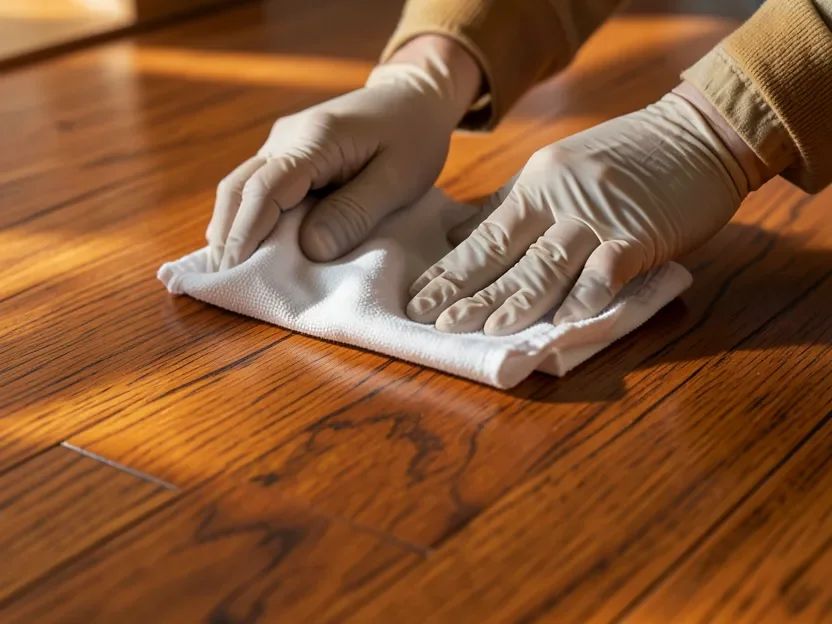
Sand the wood to a final grit of 120–150, then remove all dust before you touch it with the mixed oil — any dust left behind gets sealed under the finish permanently. Apply the mixture in manageable sections with a white non-woven pad, working it evenly into the grain. Let it sit for at least 5 minutes so it has time to penetrate, then wipe off every trace of excess with a clean, dry, lint-free cloth — ideally within 30 minutes of application, so the surface feels dry to the touch rather than tacky. This assumes you’re starting from bare, raw wood — if the piece is currently stained, Rubio Monocoat won’t bond over that stain at all, so strip it back to raw wood before you get anywhere near mixing the accelerator.
With the accelerator mixed in at the correct ratio, expect the surface to be dry enough for light use in about 24 hours, and fully cured — ready for heavy use, water exposure, or a second coat of a compatible product — within roughly 5 days. Without any accelerator, budget closer to 3 weeks for Oil Plus 2C to reach that same full cure.
Troubleshooting: What Off-Ratio Mixing Actually Causes
Streaky or Blotchy Finish
This almost always traces back to either an uneven mix (accelerator not fully stirred in) or too much accelerator causing parts of the surface to start setting before you’ve finished wiping. Keep a wet edge as you work across a large surface, and don’t apply a batch that’s already sitting near the end of its 4–6 hour pot life — it’s had time to start thickening unevenly.
Surface Stays Tacky for Days
A persistently tacky surface almost always means too little accelerator, no accelerator at all, or a cold shop — below roughly 50°F (10°C), the curing reaction slows down significantly even with the correct ratio mixed in. If you’re confident the ratio was right, the fix is usually just more time and, ideally, a warmer room with decent airflow rather than adding more accelerator after the fact.
Accelerator That’s Solidified in the Bottle
If a bottle of accelerator has been opened and exposed to air repeatedly, or stored somewhere cold, it can thicken or crystallize. Warming the sealed bottle gently in a bowl of warm water and stirring well will often bring it back to a usable liquid. If it stays lumpy or won’t fully dissolve after that, replace it rather than risk an inconsistent mix on a finished project.
Which Rubio Monocoat Products Actually Use This Accelerator
The Accelerator – Comp. B is only listed as compatible with two products: Oil Plus 2C and Hybrid Wood Protector. Other Rubio Monocoat lines, like SheenPlus or the Universal Maintenance Oil, aren’t formulated to use this accelerator at all, so there’s no ratio to look up for those — check the product’s own technical data sheet if you’re unsure which line you’re holding.
If you’re deciding between finishes in the first place rather than just mixing one you already bought, it’s worth comparing Odie’s Oil against Rubio Monocoat or reading through the full step-by-step application guide before you buy accelerator you may not need. And if cure time specifically is what’s driving the decision, the full breakdown of how long Rubio Monocoat takes to dry, with and without the accelerator, covers that in more depth than the numbers above. For flooring specifically, our guide to the best finish for hardwood floors covers how Rubio Monocoat’s hardwax-oil approach compares to polyurethane and other film-forming finishes.
Frequently Asked Questions
What is the Rubio Monocoat accelerator ratio for Oil Plus 2C?
A maximum of 30% Accelerator – Comp. B relative to the volume of Part A, per Rubio Monocoat’s technical data sheet — for example, up to 30 ml of accelerator per 100 ml of oil. The product’s own consumer directions round this to “3 parts oil to 1 part accelerator,” which is a close approximation slightly above the 30% cap.
What is the ratio for Rubio Monocoat Hybrid Wood Protector?
A maximum of 10% Accelerator – Comp. B — for example, up to 10 ml of accelerator per 100 ml of Hybrid Wood Protector. This is a much smaller dose than Oil Plus 2C, so don’t reuse the Oil Plus 2C ratio for this product.
What happens if I add too much accelerator?
The mixture starts curing before you can finish applying and wiping it, which typically shows up as streaks, blotches, or an uneven sheen. It can also shorten your usable working time well below the normal 4–6 hour pot life.
How long does the mixed oil and accelerator stay usable?
Roughly 4 to 6 hours after mixing, depending on your shop’s temperature and humidity. Mix only what you can realistically apply within that window rather than batching a full project’s worth at once.
Do all Rubio Monocoat finishes need the accelerator?
No. It’s only compatible with Oil Plus 2C and Hybrid Wood Protector, and even for those two, it’s optional — it speeds up curing but isn’t required for the finish to work. Other Rubio Monocoat product lines don’t use this accelerator at all.
Summary
Rubio Monocoat’s accelerator ratio isn’t one number — it’s 30% max for Oil Plus 2C and 10% max for Hybrid Wood Protector, both measured against the base oil’s volume, with a 4–6 hour window to use the mixture once combined. Measure by volume rather than eyeballing it, respect the pot life, and the accelerator does exactly what it’s meant to: cut a 21-day cure down to about 5 days without changing the color, sheen, or final durability of the finish.
Sponsored / affiliate links. As an Amazon Associate I earn from qualifying purchases. I may earn additional commission from eligible campaigns.