Cabot Gold vs Australian Timber Oil: Which Deck Finish Fits?
Cabot Gold and Cabot Australian Timber Oil are two different finishes, not two versions of the same one. Australian Timber Oil is a one-coat, 3-oil penetrating finish; Cabot Gold is a satin transparent finish that Cabot recommends applying in two coats. The right pick for your deck comes down to coats, coverage, sheen and cost, and this guide compares them using the numbers printed on Cabot’s own product pages.
One thing worth clearing up first. Because “gold” sounds like a shade, plenty of shoppers assume Gold is a color of Australian Timber Oil. It is not. It is its own product line with its own four colors, its own coat count and its own recoat rules.
Which One Should You Buy?
Best One-Coat Deck Oil Pick
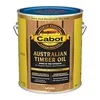 |
Cabot Australian Timber Oil, Natural, 1 Gallon, $55.98 The finish most deck owners are really asking about in this comparison: a transparent 3-oil formula that Cabot says needs only one coat.
|
Choose Australian Timber Oil if you want a single-coat job, a wider spread of wood tones, and the lower cost per square foot. Choose Cabot Gold if you want a satin sheen and are happy to do two coats. If you are still weighing whether to use an oil at all, our guide to the best deck stain covers the other main options.
Cabot Gold vs Australian Timber Oil: Specs Side by Side
Everything in this table comes from the two Cabot product pages. Where a page did not state something, such as VOC content for either product, it is left out rather than guessed.
| Spec | Australian Timber Oil | Cabot Gold |
|---|---|---|
| Product type | Penetrating 3-oil transparent finish | Oil-based transparent finish with a satin sheen |
| Colors | Natural, Honey Teak, Mahogany Flame, Jarrah Brown, Amberwood (5) | Sun-Drenched Oak, Sunlit Walnut, Moonlight Mahogany, Starlit Gray (4) |
| Coats | 1 coat only | 1 to 2 coats, two recommended |
| Coverage per gallon | 250 to 600 sq ft | 250 to 400 sq ft |
| Dry time | 24 to 48 hours | 24 to 48 hours |
| Recoat window | Not applicable (one coat) | After 24 hours; no later than 7 days |
| Application tools | Natural-bristle brush, stain pad, or sprayer (back-brush sprayed oil) | High-quality brush, working 2 to 3 boards at a time |
| Between coats | None | Sand rough spots with 220-grit |
| Cleanup | Mineral spirits | Mineral spirits |
| Sizes on Cabot page | 1/2 pint, 1 quart, 1 gallon, 5 gallon | 1 quart, 1 gallon |
The Myth That Gold Is a Color of Australian Timber Oil
Search results and forum threads often blur these two together, and older articles (including an earlier version of this one) described Gold as a finish that looks like gold. Cabot’s page describes it very differently: a satin sheen and protection against UV damage, temperature extremes, rain and moisture. The four Gold colors are Sun-Drenched Oak, Sunlit Walnut, Moonlight Mahogany and Starlit Gray, and the last of those is a gray tone that has nothing gold about it.
If you are hunting for a warm, honey-toned look, the closest match in Cabot’s lineup is Honey Teak in the Australian Timber Oil range. If you want a cooler gray, that is a Gold option.
Coats, Coverage and What a Deck Really Costs
Coat count changes the math more than the sticker price. Using the Amazon prices we saw in September 2026 (Natural Australian Timber Oil at $55.98 per gallon and Sunlit Walnut Gold at $62.98 per gallon, both of which move around) and Cabot’s stated coverage, here is what one gallon buys:
- Australian Timber Oil, one coat: about $0.09 to $0.22 per square foot ($55.98 spread over 600 down to 250 sq ft).
- Cabot Gold, two coats: about $0.32 to $0.50 per square foot ($62.98 spread over 400 down to 250 sq ft, doubled for the second coat).
For a 300 sq ft deck, that works out to roughly 0.5 to 1.2 gallons of Australian Timber Oil for the one required coat, versus roughly 1.5 to 2.4 gallons of Gold for two coats. These are calculated estimates from the manufacturer ranges, not measured results. Coverage swings widely with wood density and age, so dense, dry, smooth boards sit at the high-coverage end and rough, thirsty boards at the low end. Buy a little extra for railings and stair treads, which soak up more than you expect.
Gold’s lower ceiling of 400 sq ft per gallon compared with Australian Timber Oil’s 600 is the main reason it costs more to cover the same deck. That is the price of the satin look, not a flaw.
Look and Feel of the Finish
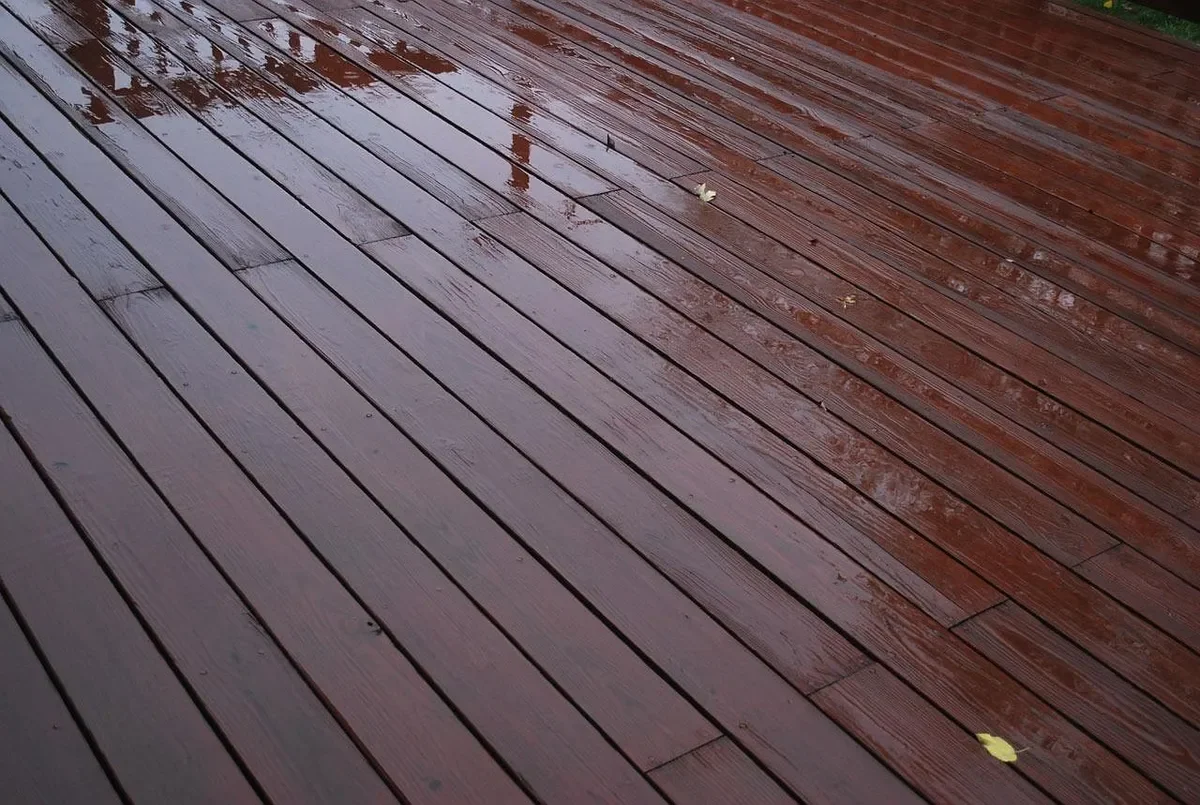
Both are transparent, so the grain stays visible rather than being hidden the way a solid stain would. The difference is the sheen. Cabot describes Gold as a satin finish, so expect a slightly polished surface. Australian Timber Oil’s page does not name a sheen; it stresses deep penetration and superfine pigments that resist brush marks. Check a sample board in your own light before committing, because color on a screen or a can lid rarely matches real wood.
If your decision is really about opaque versus see-through coverage rather than these two products, read our comparison of Cabot semi-solid and solid stain. And if you are also considering another brand, our Olympic vs Cabot comparison is the place to start.
Prep, Weather and Timing
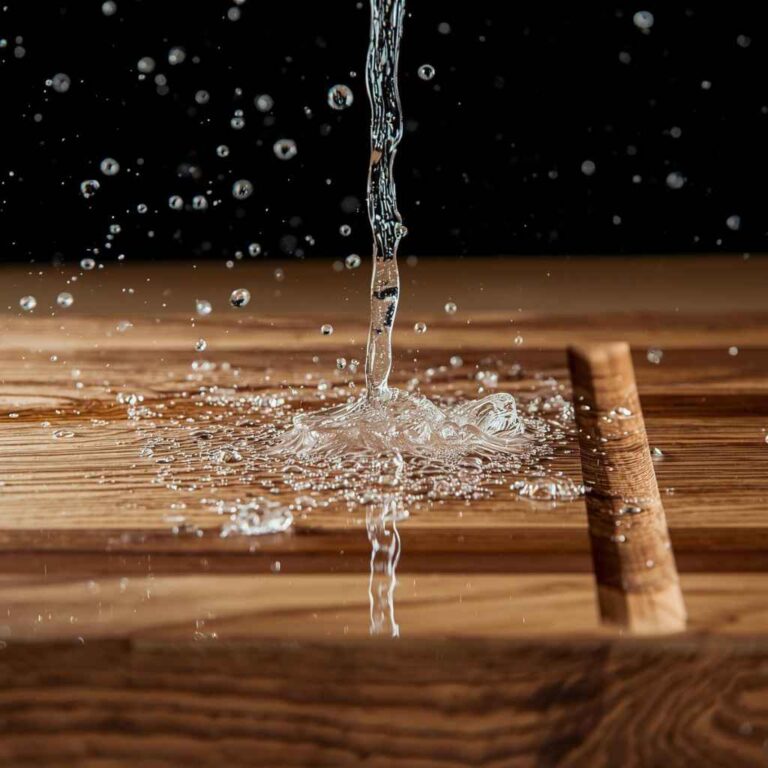
Prep is where most failed deck finishes start, and Cabot’s instructions for both products agree on the basics. New lumber should dry in the open air for 3 to 5 days before finishing. Cabot suggests a simple water drop test: sprinkle a few drops on the surface, and if they are absorbed quickly, the wood is ready. If the drops bead up, the surface is sealed by mill glaze or an old finish and needs more prep. For pressure-treated lumber and other wet wood, see our guide on how long a deck should dry before staining.
- Temperature: Cabot’s Australian Timber Oil page says to apply when air and surface temperatures are between 50 and 90 degrees F. The Gold page we read did not list a range, so check the can before you start.
- Work in small sections: Cabot tells you to work 1 to 3 boards at a time with Australian Timber Oil and 2 to 3 boards with Gold, keeping a wet edge to avoid lap marks.
- Stir: Cabot says to shake and stir Australian Timber Oil thoroughly before and during use, and to stir Gold thoroughly. If you use more than one can of Gold, blend them together for a uniform color.
Oil finishes also take a while to dry; see how long oil-based stain takes to dry if you are planning around weather. Applying in cold weather brings its own problems, covered in staining wood in cold weather.
How to Apply Each Finish
Australian Timber Oil
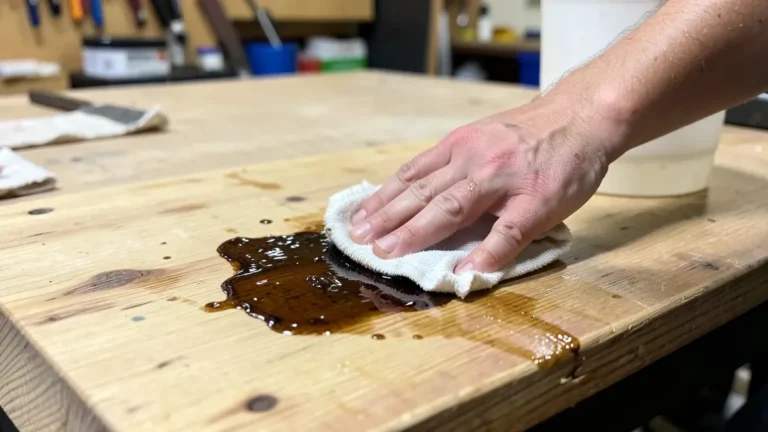
Cabot lists a natural-bristle brush, stain pads or spray equipment. If you spray, back-brush the oil into the wood afterward. Apply one coat only, working a few boards at a time from end to end so you never leave a dry edge. Clean tools with mineral spirits.
Cabot Gold
Use a high-quality brush and work 2 to 3 boards at a time. The first coat penetrates, and Cabot says the second coat adds dimension as it seals. Wait at least overnight, and no more than 7 days, before the second coat. If the first coat raised any rough spots, Cabot suggests sanding them with 220-grit paper before recoating.
Safety: Oily Rags Can Ignite
This is the part people skip. Both Cabot pages carry the same warning: rags, steel wool and other waste soaked with the product may spontaneously catch fire if improperly discarded. Place them in a sealed, water-filled metal container, and never leave a balled-up rag on the deck or in a trash bin. Follow your local hazardous waste guidance for final disposal.
Which Finish Fits Your Project?
- Want the fewest steps: Australian Timber Oil, since the label calls for one coat.
- Want the lowest cost per square foot: Australian Timber Oil, going by Cabot’s coverage figures and the prices above.
- Want a satin sheen and a gray option: Cabot Gold.
- Want the widest tone range for warm wood colors: Australian Timber Oil, with five tones including Honey Teak and Mahogany Flame.
- Have dense exotic hardwood: Cabot specifically says Australian Timber Oil penetrates dense exotic hardwoods in one coat. Its Gold page lists no wood-type restrictions but makes no equivalent claim.
Whichever you choose, test on a hidden board first and let it dry fully before judging the color.
Frequently Asked Questions
Is Cabot Gold the same as Cabot Australian Timber Oil?
No. They are two separate Cabot products. Australian Timber Oil is a one-coat 3-oil penetrating finish sold in five tones, while Cabot Gold is a satin transparent finish sold in four tones with one to two coats recommended. Gold is not a color of Australian Timber Oil.
How many coats of Australian Timber Oil should I apply?
Cabot’s product page says to apply one coat only. A second coat is not part of the manufacturer’s instructions, so follow the label rather than layering more oil on the wood.
How many coats of Cabot Gold do I need?
Cabot lists one to two coats and recommends two. The first coat penetrates and the second adds depth while it seals. Wait at least overnight between coats and recoat within seven days.
How long should new wood dry before I apply either finish?
Cabot’s instructions for both products say to let new wood dry in the open air for 3 to 5 days. A water drop test helps: if drops soak in quickly, the surface is ready for the finish.
How do I dispose of oily rags safely?
Cabot warns that rags, steel wool and other waste soaked with either product can catch fire on their own if discarded improperly. Place them in a sealed, water-filled metal container.
Sponsored / affiliate links. As an Amazon Associate I earn from qualifying purchases. I may earn additional commission from eligible campaigns.