Poulan Chainsaw Won’t Start? 9 Fixes (Flooded-Engine Trick)
A Poulan chainsaw that won’t start is almost always stale fuel, a clogged carburetor, or a flooded engine — not a dead engine block. Chasing replacement parts before ruling out these three wastes hours and money on a carburetor you probably didn’t need. This guide covers the fuel and spark plug checks, the exact flooded-engine restart sequence, and when a cheap air filter or carburetor swap is the real fix.
Quick Answer
Most Poulan chainsaws that won’t start have one of three problems: stale or wrong-ratio fuel, a fouled spark plug, or a flooded cylinder from over-priming. Check the fuel first, then the spark plug. If the engine sputters but won’t catch, it’s likely flooded — open the choke, hold the throttle wide, and pull the cord 10–15 times before touching any parts.
Common Reasons a Poulan Chainsaw Won’t Start
Best Poulan Won’t-Start Fix Pick
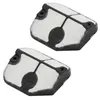
Poulan Genuine OEM Air Filter (2-Pack) – $12.99
A caked, gray air filter is one of the easiest no-start causes to rule out — this OEM 2-pack matches the filter inspection step above so you always have a clean spare on hand.
- Best for: a torn or heavily caked air filter that won’t clean up
- Why we picked it: genuine OEM Poulan fit, no aftermarket guesswork
- Main drawback: only fixes airflow issues, not fuel or spark problems
Compare more Poulan won’t-start repair parts
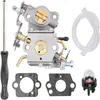 Option 1 Direct-Fit Carburetor for P3314/P3416 – $14.99
|
 Option 2 2-Cycle Small Engine Spark Plug – $12.95
|
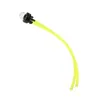 Option 3 Primer Bulb & Fuel Line Repair Kit – $9.29
|
As an Amazon Associate we earn from qualifying purchases.
Before pulling anything apart, run through the short list below. Poulan chainsaws are simple two-stroke engines, and starting failures almost always trace back to one of five things:
- Empty or stale fuel
- Wrong fuel-to-oil ratio (check the correct Poulan fuel mix ratio for your model)
- A fouled or worn spark plug
- A clogged air filter or fuel filter
- A flooded engine from over-priming or repeated failed pull-starts
Safety first: disconnect the spark plug boot before touching the carburetor, air filter, or spark plug, wear gloves and eye protection, and work in a ventilated area — two-stroke fuel vapor builds up fast in a closed garage.
Check the Fuel Mix and Fuel Lines First
A Poulan chainsaw runs on a gas-and-oil mix, not straight gasoline — running it on the wrong fuel or on fuel that’s sat in the tank over a season is the single most common reason it won’t start. Drain any fuel older than 30 days; ethanol-blended gas absorbs moisture and breaks down fast in small two-stroke engines.
- Turn the saw off and let it cool, then remove the fuel cap.
- Smell and look at the fuel — if it smells sour or varnish-like, or looks cloudy, drain the tank completely.
- Refill with a fresh 2-cycle mix at the ratio printed on your model’s fuel cap (commonly 40:1).
- Check the fuel filter inside the tank (on the end of the fuel line) for a dark, hardened look — replace it if it doesn’t look clean and flexible.
- Inspect the fuel line itself for cracks or a dry, brittle feel, and blow compressed air through it to clear any debris.
📊 Fuel-related failures account for up to 70–80% of small engine problems reported with ethanol-blended (E10/E15) gas, according to outdoor power equipment retailers — a big share of “won’t start” chainsaw calls are really a fuel problem, not a mechanical one. Source: Outdoor Power Equipment Institute (OPEI)
Inspect the Spark Plug and Air Filter
A fouled spark plug is the second most common no-start cause. If the tip is black and sooty or coated in oil, it won’t fire a strong spark even with fresh fuel.
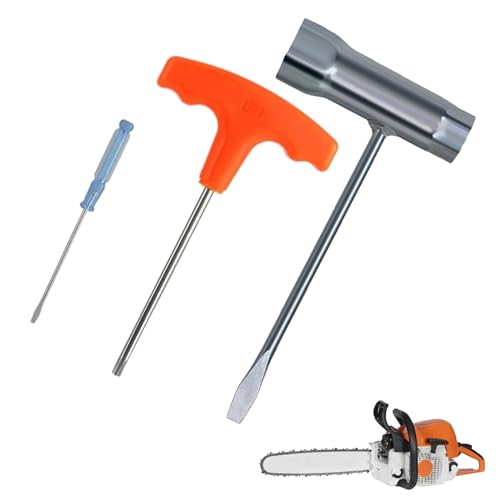
- Remove the spark plug with a spark plug wrench and look at the electrode tip.
- If it’s black, wet, or crusted with carbon, clean it with a wire brush or swap in a new plug — plugs are cheap enough that replacing rather than cleaning is usually the better call.
- Check the gap with a feeler gauge against the spec on the saw’s manual (commonly 0.025″).
- Reinstall the plug, reconnect the boot firmly, and confirm you get a visible spark when the cord is pulled with the plug grounded against the cylinder.
- Pull the air filter cover, remove the filter, and check for a gray, caked-on layer of dust — wash with mild soap and water or replace if it’s torn.
If the spark plug is fine but there’s no spark at all, the ignition coil itself may be bad — test it with a spark tester before assuming the coil needs replacing.
How to Fix a Flooded Poulan Chainsaw (Do This Before Replacing Any Part)
A flooded engine is a cylinder that has too much raw fuel in it to ignite — it happens when the choke is left closed too long, the primer bulb is pressed too many times, or the starter cord is pulled repeatedly with the choke on. It looks identical to a “dead” saw from the outside, which is why it gets misdiagnosed as a bad spark plug or carburetor more than almost any other cause.
- Switch to ON: confirm the ignition/stop switch is in the running position, not OFF.
- Open the choke: push the choke lever to the OFF/RUN position — the opposite of what most people try first when a saw won’t start.
- Hold the throttle wide open: squeeze and hold the throttle trigger fully while you pull.
- Pull in short, brisk pulls: expect 10 to 15 pulls before it catches — the engine will often sputter once or twice before it actually starts.
- If it still won’t fire after 15 pulls: remove the spark plug, pull the cord 5–6 more times with the plug out to air out the cylinder, wipe the plug dry (or swap it), reinstall, and repeat step 3.
If the flooded-engine sequence gets the saw running, let it idle for a minute before cutting — this burns off the extra fuel still sitting in the crankcase and prevents it from flooding again on the next start.
“In the shop, the flooded-engine sequence above solves more ‘dead’ Poulan saws than any part I’ve ever replaced. Most of them sat over winter with the choke left closed, and a few too many pulls the next spring is all it takes to flood the cylinder — not a failed carburetor.”
Clean or Replace the Carburetor
If fuel, spark plug, air filter, and the flooded-engine sequence all check out and the saw still won’t start, the carburetor itself is the next suspect. Fuel left in the tank over time leaves a sticky varnish residue that clogs the small internal passages.
- Remove the air filter cover and air filter, then locate and remove the carburetor.
- Spray carburetor cleaner into the internal passages, paying attention to the smallest jets.
- Reassemble and reinstall the carburetor, air filter, and cover.
- If cleaning doesn’t restore starting, re-check the carburetor adjustment screws before assuming the carburetor itself is dead — a misadjusted mixture screw can mimic a clogged carburetor.
- If it’s still clogged or visibly cracked/warped, replace the carburetor with a direct-fit part for your saw’s model number.
Ignition Coil, Muffler, and Compression: Deeper Mechanical Checks
These issues are less common than fuel or spark plug problems, but worth ruling out if nothing above has worked.
- Ignition coil: use a spark tester to confirm there’s a visible spark when the engine is cranked. No spark with a known-good plug points to a failed ignition coil.
- Muffler and exhaust: a carbon-clogged muffler restricts airflow enough to prevent starting. Remove the muffler cover and clear any carbon buildup or debris from the exhaust port.
- Compression: pull the spark plug, thread in a compression gauge, and pull the starter cord. A reading well below the manufacturer’s spec (check your model’s manual) points to worn piston rings — a repair that usually costs more than the saw is worth on an older Poulan.
Check the Stop Switch and Wiring
A stuck or corroded stop switch can cut power to the ignition coil even when everything else is working. Check that the switch moves freely and shows no visible corrosion or debris, and inspect the wiring for loose or frayed connections between the switch, coil, and spark plug.
Maintenance Tips to Prevent This Again
- Run the tank dry or add fuel stabilizer before storing the saw for more than 30 days.
- Clean the air filter after every few tanks of fuel, more often in dusty conditions.
- Check the spark plug and chain tension at the start of each cutting season.
- Store the saw somewhere dry, and keep the chain bar cover on to protect the bar and chain.
When to Call a Professional
If you’ve checked fuel, spark plug, air filter, the flooded-engine sequence, and the carburetor and the saw still won’t start, it’s likely a compression or internal engine problem that’s not worth DIY repair on most consumer Poulan models. A small engine repair shop can diagnose it in minutes with a compression tester — and note that opening the engine yourself can void any remaining warranty.
Frequently Asked Questions
What are the most common reasons a Poulan chainsaw won’t start?
The most common reasons are stale or wrong-ratio fuel, a fouled spark plug, a clogged air filter, and a flooded engine from over-priming. Checking these four in order resolves the large majority of no-start cases before any parts need replacing.
How do you fix a flooded Poulan chainsaw?
Turn the switch to ON, open the choke to the OFF/RUN position, hold the throttle wide open, and pull the starter cord 10 to 15 times. If it still won’t fire, remove the spark plug, pull the cord 5 to 6 more times to air out the cylinder, dry or replace the plug, and try again.
Why does a Poulan chainsaw start then die immediately?
A saw that starts then dies right away usually has the choke still closed after starting, a partially clogged carburetor, or a dirty air filter restricting airflow once the engine tries to run at idle. Open the choke fully once it catches, and check the air filter and carburetor if it keeps happening.
How do you know if a Poulan chainsaw has no spark?
Remove the spark plug, reconnect the plug wire, ground the plug’s metal body against the cylinder, and pull the starter cord while watching the electrode gap. No visible blue spark means a bad spark plug, a loose connection, or a failed ignition coil — test with a dedicated spark tester to narrow it down.
Can old gas stop a Poulan chainsaw from starting?
Yes. Ethanol-blended gas breaks down within about 30 days and absorbs moisture from the air, which can gum up the carburetor and prevent starting even if every other part is in good condition. Drain and replace fuel that’s been sitting longer than a month.
When should I take my Poulan chainsaw to a repair shop instead of fixing it myself?
Take it to a shop once you’ve ruled out fuel, spark plug, air filter, the flooded-engine sequence, and the carburetor and it still won’t start. At that point it’s likely a compression or internal engine issue that needs a compression tester and specialized tools to diagnose correctly.
Conclusion
Most Poulan chainsaws that won’t start aren’t actually broken — they’re running on bad fuel, a fouled plug, or a flooded cylinder. Work through the fuel, spark plug, and flooded-engine checks above in order before you spend money on a new carburetor, and check our other Poulan chainsaw repair and buying guides for related fixes like the normal starting procedure or cranking technique for a cold saw.
Sponsored / affiliate links. As an Amazon Associate I earn from qualifying purchases. I may earn additional commission from eligible campaigns.