How to Fix Stained Wood: Expert Tips for Perfect Restoration
Fixing stained wood is a common task for many homeowners. It can seem challenging, but it’s manageable with the right steps.
Stained wood can lose its charm over time. Whether it’s due to watermarks, spills, or general wear, these blemishes can diminish the beauty of your furniture or floors. Fortunately, restoring stained wood to its former glory is possible. This guide will walk you through effective techniques to fix stained wood.
With patience and the right tools, you can revive wood surfaces, making them look fresh and new again. Ready to tackle those stains? Let’s get started!
Credit: thecraftsmanblog.com
Identifying Wood Stains
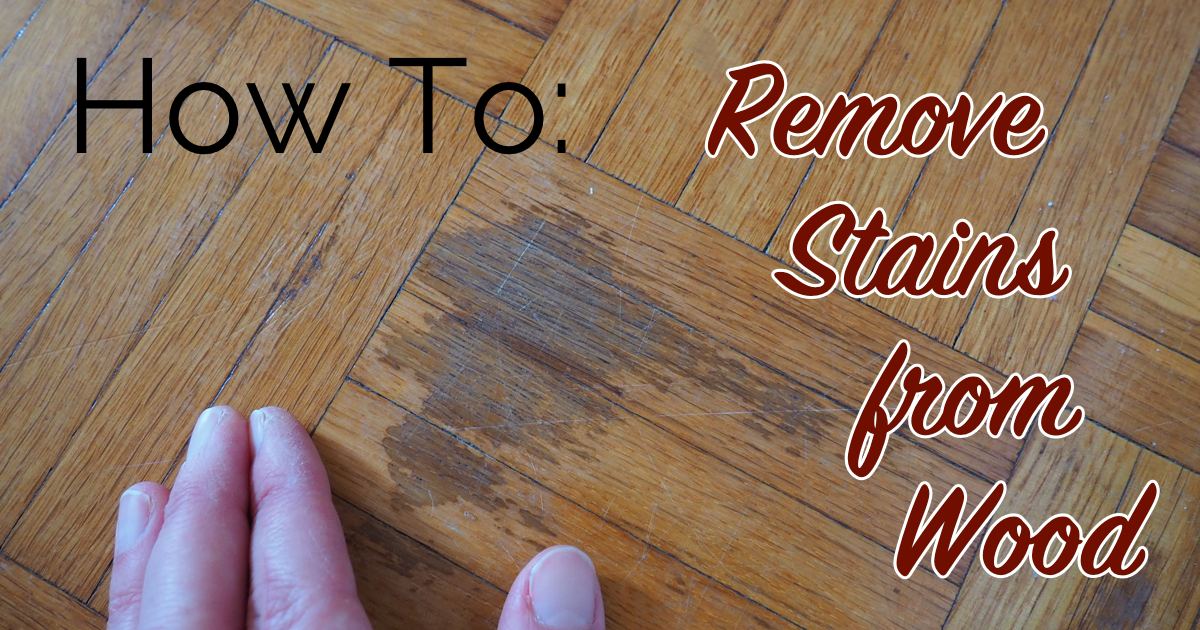
Wood can get stained from many things. Water stains leave white marks. Food stains might be dark. Grease stains feel sticky. Ink stains are often blue or black. Pet stains can be tricky. Knowing the type helps in choosing the right fix.
Check if the stain is on the surface. Deep stains need more work. Light scratches can be sanded. Deep scratches might need filling. Mold stains need special care. Use a flashlight to see better. Make sure the wood is dry. Wet wood can warp. Dry wood is easier to fix.

Credit: m.youtube.com
Preparing The Workspace
Get all the needed items before starting. You will need sandpaper, wood stain, a brush, rags, and gloves. Make sure you have a clean cloth to wipe the wood. Always wear gloves to protect your hands. Use sandpaper to smooth the wood.
Choose a safe place to work. Make sure the area is well-ventilated. Cover the floor with a drop cloth. This will protect it from stains. Keep all supplies within reach. Ensure good lighting to see the wood clearly.
Cleaning The Wood Surface
Start by wiping the wood with a dry cloth. This removes loose dust. Next, use a soft brush to clear out small bits of debris. Pay close attention to corners and crevices. These areas gather more dirt. It’s important to keep the wood free from dust. This helps with further cleaning steps.
Choose a wood cleaner that matches your wood type. Apply the cleaner using a soft cloth. Gently rub the surface in circular motions. Avoid using too much cleaner. A small amount goes a long way. Rinse the cloth with water and wipe the wood again. This removes any cleaner residue.
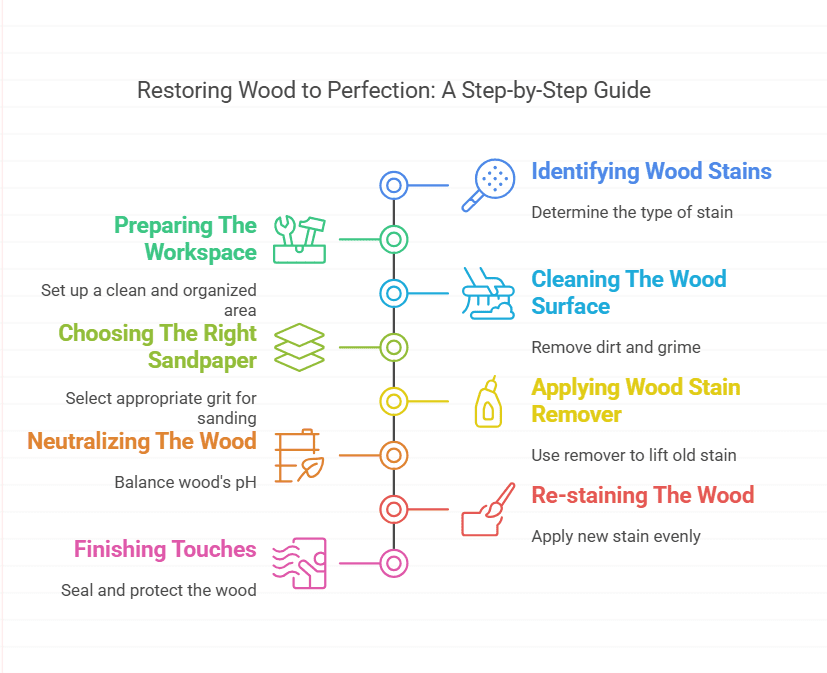
Choosing The Right Sandpaper
Sandpaper comes in different grits. Grit is the roughness of sandpaper. Lower grit means rougher paper. Higher grit means smoother paper. 40-60 grit removes old stains. 80-120 grit smooths wood. 180-220 grit finishes the wood. Use higher grit for light sanding. Use lower grit for heavy sanding.
Sand along the grain of the wood. Sanding against the grain leaves scratches. Use light pressure. Heavy pressure damages wood. Check the wood often. Stop when it feels smooth. Clean the wood after sanding. Use a damp cloth to remove dust.
Applying Wood Stain Remover
There are many types of wood stain removers. Some are liquid, some are gel. Liquid removers spread easily. Gels stick to surfaces better. Choose one based on your project needs.
Wear gloves to protect your hands. Apply the remover with a brush. Spread it evenly. Let it sit for the time given in instructions. Scrape off the old stain with a scraper. Clean the wood with a damp cloth after scraping.
:max_bytes(150000):strip_icc()/remove-a-water-mark-from-wood-furniture-1976384_V1-ae5f581cf2374eeaa9a6372770ac204d.png)
Credit: www.thespruce.com
Neutralizing The Wood
Mix a cup of vinegar with a cup of water. Dip a cloth into the mixture. Wring out the cloth so it’s damp, not wet. Wipe the stained wood gently. The vinegar solution helps neutralize the stain. The acidity in vinegar works well on wood stains. Be careful not to soak the wood.
Rinse the wood with a clean, damp cloth. This removes any vinegar residue. Dry the wood with a soft towel. Leave the wood to air dry for an hour. This ensures all moisture is gone. Proper drying prevents new stains. Keep the wood in a dry place.
Re-staining The Wood
Refresh stained wood by sanding the surface gently to remove old stain. Apply new stain evenly for a smooth, refreshed look. Finish with a protective coat to ensure durability.
Selecting Stain Color
Pick a stain color that matches your wood. Test it on a small, hidden spot first. Make sure you like the color before applying it everywhere. Darker stains can hide flaws better. Lighter stains show the wood’s natural beauty. Choose wisely based on your needs.
Applying Stain Evenly
Stir the stain well before use. Use a clean cloth or brush to apply. Apply the stain in the direction of the wood grain. This helps it soak in evenly. Wipe off extra stain with a clean cloth. Allow the wood to dry completely. Check for any missed spots and reapply if needed.
Finishing Touches
Use a good wood sealer to protect your wood. Apply it evenly with a brush. Let it dry completely before adding a second coat. Two coats are often enough. This helps to protect the wood from moisture and damage. Make sure to seal every part of the wood. This includes edges and corners.
Use a fine cloth to polish the wood. Apply a small amount of polish. Rub it in with gentle, circular motions. This will give the wood a nice shine. Polishing also helps to keep the wood clean. Regular polishing can keep the wood looking new. It also adds an extra layer of protection.
Frequently Asked Questions
How To Fix Messed Up Stained Wood?
Sand the stained wood lightly. Apply a wood conditioner. Re-stain the wood evenly. Seal with a clear finish.
Can You Repair Stained Wood?
Yes, stained wood can be repaired. Sand the affected area, apply wood filler, and then re-stain for a smooth finish.
Can You Fix Stain On Wood?
Yes, I can fix stains on wood. Sand the area, apply stain remover, and refinish to restore its look.
How To Fix Stain Blotches?
To fix stain blotches, apply a mixture of baking soda and water. Gently scrub the area with a soft brush. Rinse with clean water and let it dry. If needed, repeat the process until the stain is gone.
Conclusion
Fixing stained wood can be simple with the right steps. Clean, sand, and apply a fresh stain for a renewed look. Always follow product instructions for best results. Patience is key for a smooth finish. Your wood can look beautiful again with a bit of effort.
Keep practicing these techniques for better results each time. Enjoy the process and the outcome!