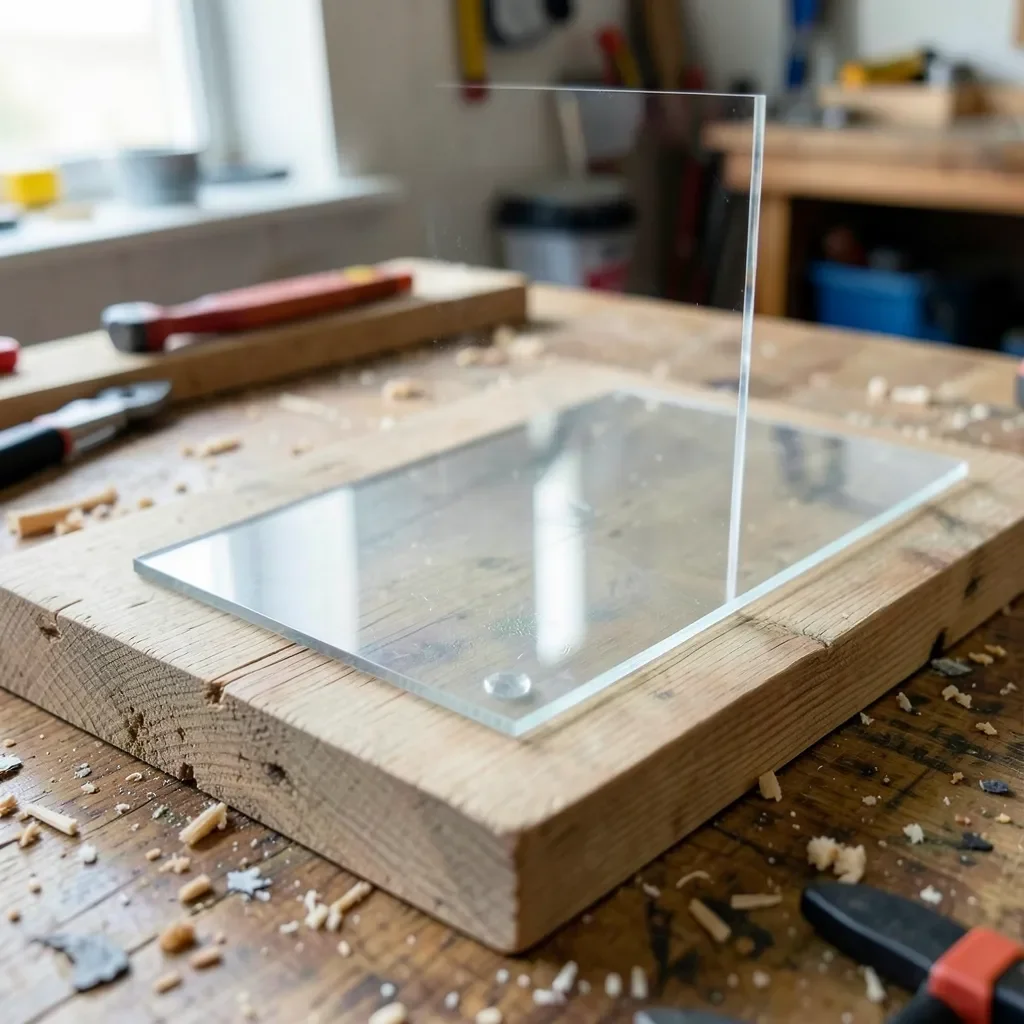
How to Glue Perspex to Wood: Best Adhesive & Bonding Steps
Two-part epoxy bonds perspex (acrylic) to wood better than any other adhesive, because solvent-based acrylic cements only weld plastic to plastic and won’t grip a porous wood surface. Reach for cyanoacrylate instead on anything larger than a small trim piece and thermal expansion will crack the joint within a season. This guide covers the right adhesive, surface prep, clamping technique, and the mistakes that crack acrylic sheets during bonding.
Why Epoxy Is the Right Adhesive for Perspex-to-Wood Joints
Perspex is a trade name for cast or extruded acrylic sheet (PMMA) — a rigid, non-porous plastic. Acrylic solvent cements (sold as “weld-on” or “acrylic cement”) work by chemically melting and fusing two acrylic surfaces together; they do nothing on wood because there’s no matching plastic surface to dissolve and re-bond. A two-part epoxy skips that chemistry entirely and instead forms a mechanical and adhesive bond to both materials, which is why it’s the adhesive that actually works across the joint.
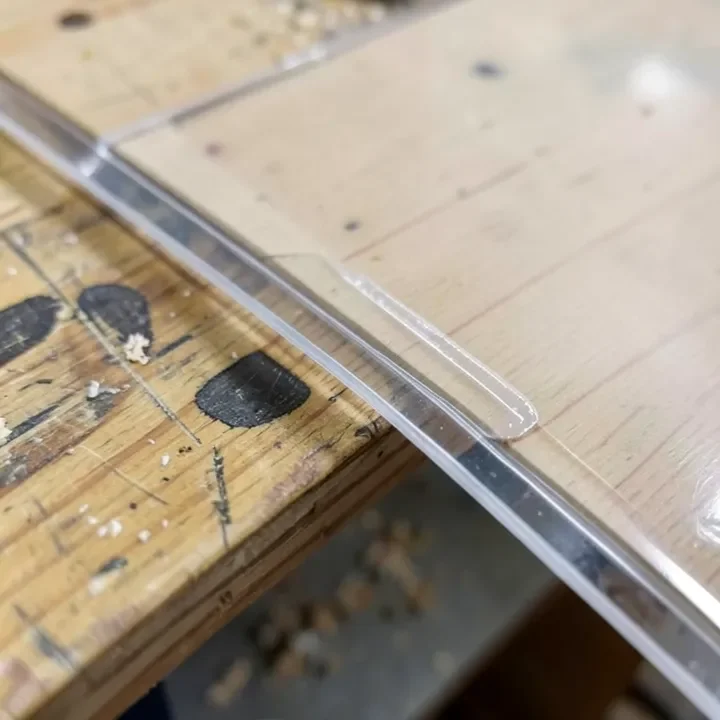
📊 A 5-minute epoxy reaches an initial handling set in about 5 minutes, but doesn’t reach full bond strength for 24 to 48 hours — clamped joints need to stay undisturbed for the full cure window, not just the initial set. — Source: TAP Plastics, Best Glue For Plexiglass
Best Perspex-to-Wood Epoxy Pick
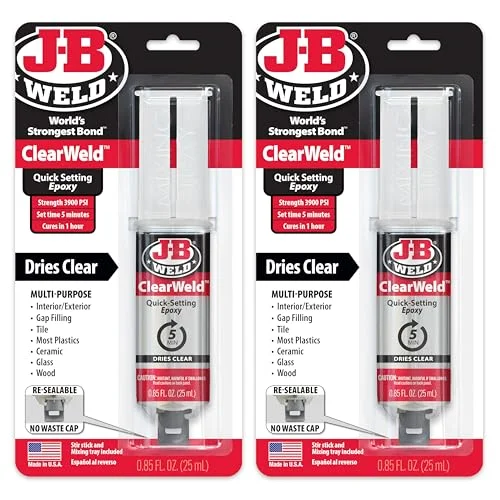 |
J-B Weld ClearWeld 5-Minute Epoxy (2-Pack) – $11.14 A clear two-part epoxy like this is exactly the adhesive type this guide recommends over solvent cement or super glue for bonding acrylic to wood.
|
How to Glue Perspex to Wood (Step-by-Step)
- Clean both surfaces: wipe the acrylic and the wood with isopropyl alcohol to remove dust, oils, and the acrylic’s protective-film residue.
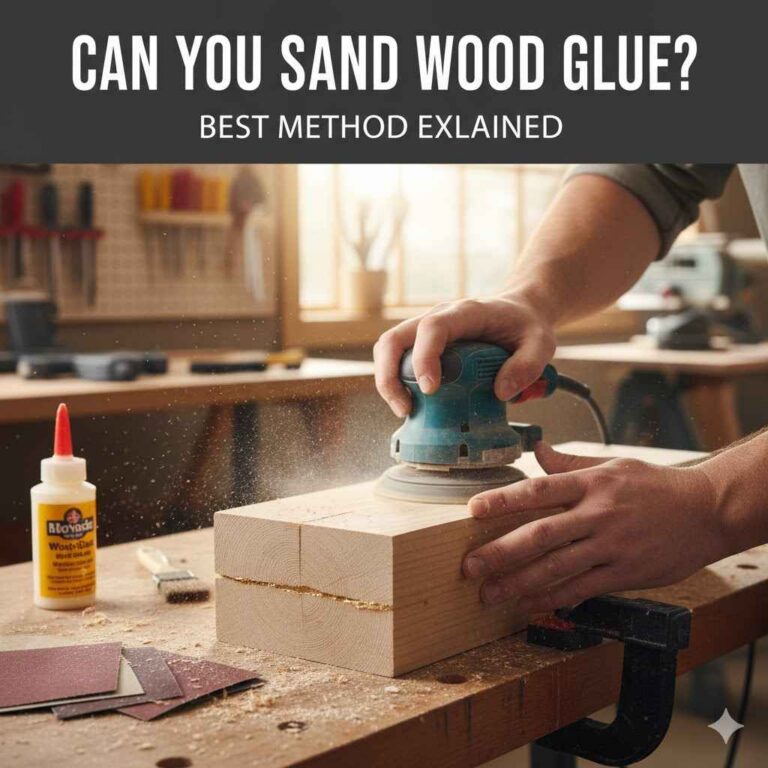
- Lightly sand the acrylic: scuff just the bonding area with 120- to 150-grit sandpaper, then wipe away the dust — this gives the epoxy something to mechanically grip.
- Mix the two-part epoxy: combine equal parts resin and hardener and mix thoroughly for the full working time listed on the packaging, in a ventilated space (see wood glue safety and toxicity for what the fumes from different adhesive types mean for indoor use).
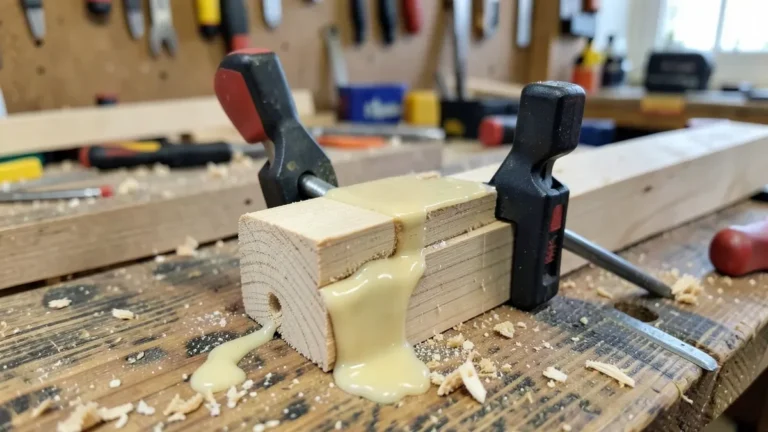
- Apply a thin, even layer: coat both surfaces, not just one. Excess epoxy that squeezes out under clamping pressure can craze (stress-crack) the acrylic.
- Clamp with even, light pressure: use a flat wood caul or block to spread the clamp’s force — a single concentrated clamp point can crack the sheet.
- Let it cure undisturbed for 24 to 48 hours: handling strength arrives within minutes, but full bond strength takes a full day or two.
Best Adhesives for Bonding Perspex to Wood
| Adhesive | Strength | Best For |
|---|---|---|
| Two-part epoxy | Very strong, gap-filling | Structural joints, furniture, most projects |
| Polyurethane glue | Strong, foams to fill gaps | Rough or uneven wood surfaces |
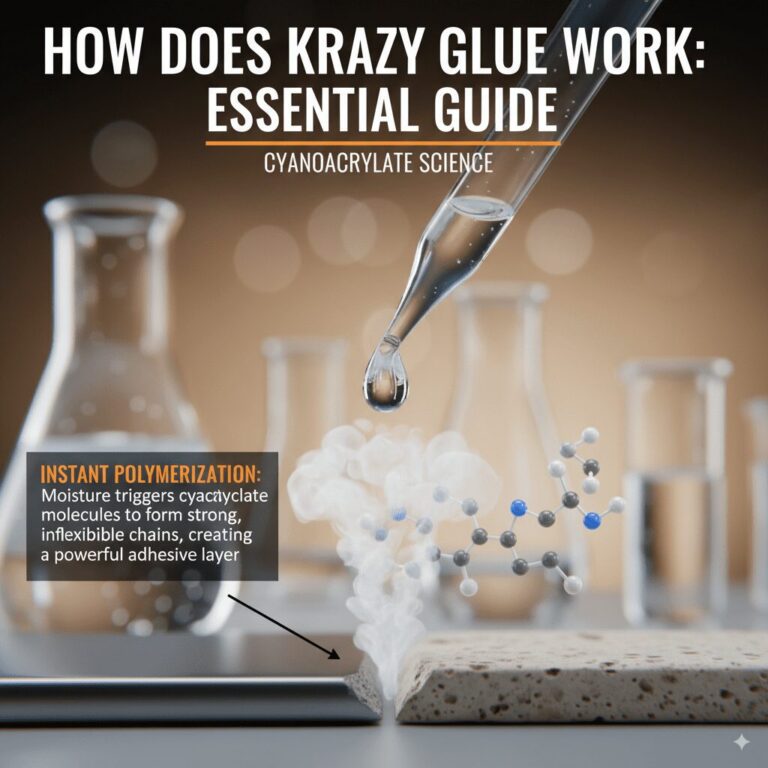
| Cyanoacrylate (super glue) | Fast but brittle over time | Small trim pieces, quick non-structural repairs |
| Silicone sealant | Flexible, lower strength | Joints that need to flex or see moisture |
| Acrylic solvent cement | None on wood | Acrylic-to-acrylic only — will not bond to wood |
Common Mistakes When Bonding Perspex to Wood
- Using acrylic solvent cement on wood: it only welds plastic to plastic and leaves the wood side completely unbonded.
- Skipping the sanding step on the acrylic: the sheet’s smooth mold-release finish blocks adhesion until it’s scuffed.
- Over-tightening clamps: concentrated pressure at a single point cracks or crazes acrylic sheet.
- Ignoring thermal expansion on large panels: acrylic moves more than wood with temperature swings — a wall-sized panel outdoors or near heat needs some fastening flexibility, not glue along every inch of the edge.
- Using super glue on a load-bearing joint: cyanoacrylate sets fast but turns brittle, so it’s fine for a small trim piece and a poor choice for anything structural.
Frequently Asked Questions
Can super glue bond perspex to wood?
Only for small, low-stress pieces. Cyanoacrylate sets in seconds but becomes brittle over time, so a larger panel or a load-bearing joint needs two-part epoxy instead.
Do I need to sand perspex before gluing it to wood?
Yes, lightly. Acrylic sheet has a smooth mold-release finish that blocks adhesion; scuffing the bonding area with 120- to 150-grit sandpaper gives the epoxy a surface to mechanically grip.
How long does epoxy take to fully bond perspex to wood?
A 5-minute epoxy reaches initial handling strength quickly, but full cure strength takes 24 to 48 hours. Keep the joint clamped and undisturbed for the full window, not just the initial set.
Will clear epoxy stay clear on a perspex-to-wood joint?
Most clear two-part epoxies cure water-clear and resist yellowing for years, though basic hardware-store epoxy can amber slightly over time in direct sunlight. For a visible glue line on clear acrylic, use a product labeled specifically for optical or UV-resistant clarity.
Two-part epoxy is the adhesive that actually bonds perspex to wood — sand the acrylic lightly, clean both surfaces, apply a thin even coat, and clamp with spread-out pressure for the full 24- to 48-hour cure. Skip the acrylic solvent cement, which only works plastic-to-plastic, and save cyanoacrylate for small, non-structural trim pieces.