Husqvarna Chainsaw Won’t Start? 8 Causes and How to Fix Each One
A Husqvarna chainsaw that won’t start is almost never a mystery — it’s one of eight identifiable faults, and most of them take five minutes to check without a single tool. Husqvarna’s X-Torq engines run a tight fuel-air mixture straight from the factory, so a fouled plug, three-week-old gas, or a primer bulb that never fully compresses is enough to keep the engine from firing even once. Work through the causes below roughly in the order they actually happen, starting with the two-minute checks, before assuming the saw needs a shop visit.
Quick Diagnosis: Check These Four Things First
Before pulling anything apart, run through this 90-second check. First, is there fuel in the tank that’s less than 30 days old? Second, does the primer bulb feel firm and visibly fill with fuel when you press it 6-8 times? Third, is the choke set correctly for the engine’s temperature — full choke for a cold start, half or no choke for a warm restart? Fourth, does the plug produce a visible blue spark when you ground the boot against bare metal on the cylinder with the plug threaded back into the cap? These four checks catch the large majority of Husqvarna no-start cases before you ever need a wrench.
Our Pick For This Fix
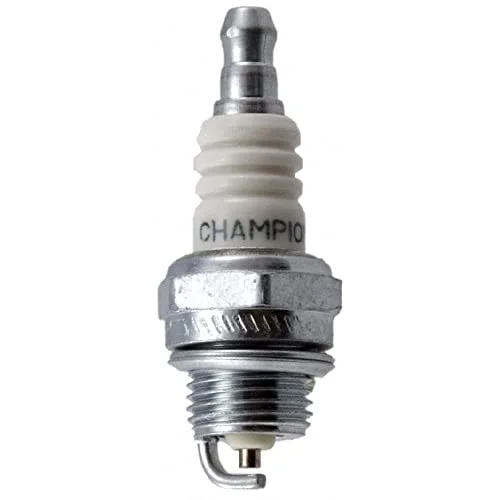 |
Champion RCJ7Y Copper Plus Spark Plug (4-Pack) – $13.90 A fouled or worn plug is the #2 cause on this list — keeping a spare on hand means Cause 2 below is a 5-minute swap instead of a trip to the hardware store.
|
Cause 1: A Flooded Engine
A flooded engine is the single most common reason a Husqvarna chainsaw won’t start, and it’s almost always self-inflicted. Pulling the starter cord repeatedly with the choke fully closed pushes more raw fuel into the cylinder than the engine can burn, which washes fuel past the piston rings and soaks the spark plug. You’ll usually smell raw gasoline near the muffler, and the plug will come out visibly wet if you pull it.
To clear a flooded engine: switch the ignition off, remove the spark plug and wipe it dry with a rag, then pull the starter cord 5 to 6 times with the plug out and the choke pushed fully open. This vents the excess fuel-air mixture without trying to ignite it. Reinstall the plug, leave the choke open, and try a normal start with the throttle held wide open on the first pull. If it still won’t catch, let the saw sit for 15 to 20 minutes so the remaining fuel can evaporate before trying again.
Cause 2: A Fouled or Worn Spark Plug
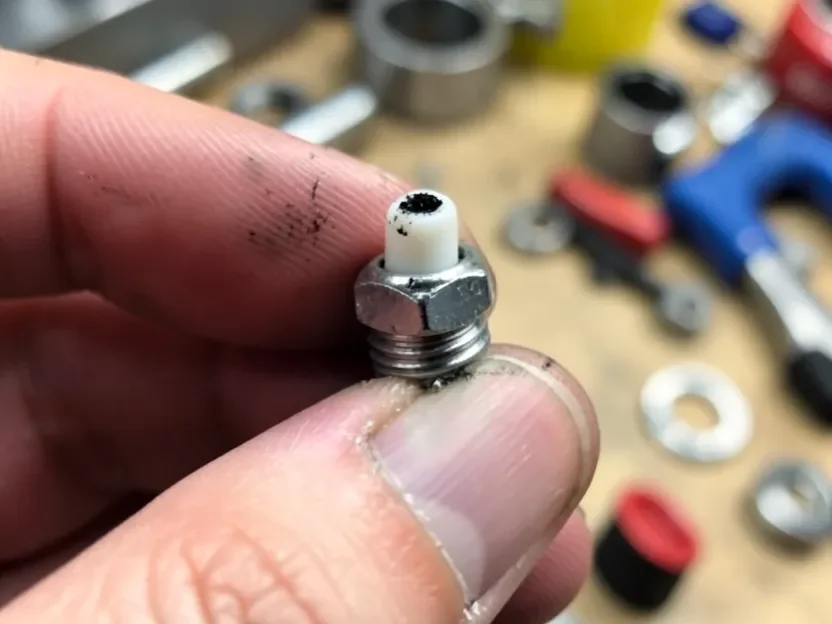
A dirty, worn, or incorrectly gapped spark plug is the second most common no-start cause, and it’s the easiest one to confirm visually. Pull the plug and look at the electrode: black, sooty carbon buildup means the engine is running (or has been running) too rich, while a wet, fuel-soaked tip usually points back to a flooded engine rather than the plug itself. A cracked ceramic insulator or a badly worn electrode means the plug needs replacing outright, not cleaning.
Most Husqvarna gas chainsaw engines spec a Champion RCJ7Y or NGK BPMR7A equivalent plug gapped to roughly 0.5mm (0.02 in) — check your specific model’s manual, since a handful of larger-displacement saws use a wider gap. A plug that looks clean but is more than one full season old is still worth swapping; the electrode erodes gradually, and a worn gap weakens the spark long before it looks obviously bad.
Cause 3: Old or Stale Fuel
Gasoline starts losing its ability to ignite reliably within 30 to 60 days of being mixed, and ethanol-blended fuel (the standard at most pumps) degrades faster than that once it’s exposed to air inside a partially full tank. Stale fuel doesn’t just fail to ignite — as it breaks down it leaves a gummy varnish residue that clogs the carburetor’s tiny jets, which is why a saw that sat all winter with old gas in it often still won’t start even after you drain the tank and add fresh fuel.
If your Husqvarna has been sitting for more than a month, drain the old fuel completely, run the carburetor dry, and refill with a fresh mix made within the last few weeks at your model’s specified ratio. For a saw that sits between uses for long stretches, adding a fuel stabilizer to every tank prevents this from becoming a recurring problem.
Cause 4: The Primer Bulb Isn’t Priming
The primer bulb’s job is to pull fuel from the tank into the carburetor before you ever pull the starter cord, and a bulb that’s cracked, hardened, or not fully returning to shape after each press won’t do that job even if everything else on the saw is fine. Press the bulb 6 to 8 times; you should feel resistance and see it fill visibly through the clear plastic.
If it stays collapsed, feels mushy, or you can see fuel leaking around its base, the bulb itself (or the small check-valve fitting underneath it) has failed and needs replacing — this is a cheap, commonly stocked part for Husqvarna models. If the bulb is priming correctly but you still don’t smell fuel at the carburetor, the fuel line between the tank and the carburetor is likely blocked or has come loose, which is covered next.
Cause 5: Wrong Choke Position for the Temperature
Choke position is the most common starting-technique mistake, and Husqvarna’s saws are more sensitive to it than some other brands because the X-Torq carburetor is tuned lean to meet emissions standards. Full choke is only for a genuinely cold engine that hasn’t run in hours; using full choke on a saw that’s already warm floods it within two or three pulls.
The correct sequence is: full choke and closed throttle for a cold start, then move the choke to the half or “run” position as soon as the engine fires even once (even if it doesn’t keep running), and use no choke at all for a restart within 10-15 minutes of the saw last running. If you’re consistently flooding the saw on restarts, the fix is almost always choke discipline, not a mechanical fault.
Cause 6: Clogged Fuel Filter or a Cracked Fuel Line
The fuel filter sits inside the tank at the end of the fuel line and is easy to forget about because you can’t see it without draining the tank. Over a season or two it accumulates enough dirt and fine debris to restrict fuel flow to a trickle, which starves the carburetor even though the tank itself is full.
Fish the filter out with a bent wire hook through the fuel cap opening, and if it looks dark and hardened, or the fuel line attached to it feels stiff and cracked rather than pliable, replace both together rather than just the filter — a cracked line downstream of a fresh filter will just let air into the system and cause the same symptom. If you haven’t dealt with your saw’s fuel line before, our full walkthrough on replacing a Husqvarna chainsaw fuel line covers the exact routing for common models.
Cause 7: A Dirty Air Filter
An engine needs air in roughly the same proportion it needs fuel, and a clogged air filter starves it of oxygen the same way a clogged fuel filter starves it of gas — except a dirty air filter is far more common simply because sawdust is the environment the saw works in. Pop the air filter cover, pull the filter, and hold it up to a light source; if you can’t see light through it clearly, it’s restricting airflow enough to affect starting.
Most Husqvarna filters can be tapped out, brushed clean, or rinsed (check your model’s manual for whether yours is washable or foam), but a filter that’s cracked, torn, or saturated with bar oil overspray should just be replaced — they’re inexpensive, and this is a five-minute fix.
Cause 8: Bad Ignition Coil or Kill Switch
If you’ve worked through fuel, air, and the plug and the saw still shows no spark at all, the problem has moved from consumables to electrical components — most often the ignition coil or the kill switch. The ignition coil generates the voltage that fires the plug, and it can fail gradually (weak, inconsistent spark) or all at once (no spark ever). A stuck or corroded kill switch can also cut ignition even though everything else on the saw is fine, and it’s worth ruling out first since it costs nothing to check — cycle the switch a few times and inspect the contacts for corrosion.
Testing a coil properly needs an ohmmeter or a dedicated spark tester rather than just pulling the cord and looking for a visible spark, since a genuinely weak coil can still throw a faint spark that isn’t strong enough to fire the plug under compression. Our guide to testing a chainsaw ignition coil walks through the actual meter readings to look for.
The Correct Husqvarna Starting Sequence, Step by Step
Most of the causes above only become a problem when they’re combined with an incorrect starting sequence, so getting the sequence itself right prevents several of them from ever happening. This is the order Husqvarna specifies for a cold start on its X-Torq gas models:
- Engage the chain brake by pushing the front hand guard forward.
- Set the ignition (stop) switch to the “on” or start position.
- Press the primer bulb 6 to 8 times until you feel resistance.
- Pull the choke to the full “cold start” position.
- Hold the saw firmly on the ground with your foot through the rear handle, and pull the starter cord sharply until the engine fires once, even just a brief pop — don’t keep pulling with full choke past this point.
- Push the choke to the half or “run” position and pull again until the engine starts and runs, even roughly.
- Let the engine idle for 10-15 seconds, squeeze the throttle briefly to clear it, then release the chain brake before cutting.
Skipping step 6 and continuing to pull with full choke engaged is the single most common technique error, and it’s what turns a saw that was one pull from starting into a flooded one that now needs the clearing procedure described in Cause 1 above.
When to Stop Troubleshooting and Call a Dealer
Everything above is something most owners can check and fix themselves with basic hand tools in under 30 minutes. A few symptoms are worth taking to a Husqvarna dealer instead of continuing on your own: the engine turns over with no compression at all (the pull cord feels unusually easy with no resistance), you find metal shavings in the fuel or oil, the carburetor needs more than a cleaning (visible cracks or a stripped adjustment screw), or you’ve replaced the plug, fuel, and filters and still get zero spark after testing the kill switch. Those point to internal engine or carburetor rebuild work, where the cost of guessing wrong is higher than a diagnostic fee.
Frequently Asked Questions
How Many Times Should I Pull the Cord to Clear a Flooded Husqvarna Chainsaw?
Pull the cord 5 to 6 times with the spark plug removed and the choke pushed fully open. This vents the excess fuel-air mixture from the cylinder without trying to ignite it. Reinstall the plug and attempt a normal start with the choke open; if it still won’t catch, let the saw sit for 15-20 minutes to let the remaining fuel evaporate.
Why Won’t My Husqvarna Chainsaw Start After Sitting All Winter?
Gasoline breaks down within 30-60 days and leaves a gummy varnish residue that clogs the carburetor’s small jets. Drain any old fuel, run the carburetor dry, and refill with a fresh fuel mix. If it still won’t start on fresh fuel, the carburetor jets are likely still gummed up and need a cleaning.
What Spark Plug Gap Does a Husqvarna Chainsaw Need?
Most Husqvarna gas chainsaw engines use a Champion RCJ7Y or NGK BPMR7A equivalent plug gapped to about 0.5mm (0.02 in), though a few larger-displacement models spec a wider gap. Check your specific model’s manual before adjusting, since the gap varies by engine size.
How Do I Know If My Husqvarna Chainsaw’s Ignition Coil Is Bad?
A bad coil typically produces no spark at all, or a spark too weak to fire the plug under compression even though everything looks fine with the plug out of the engine. Testing it accurately requires an ohmmeter or a dedicated spark tester rather than just watching for a visible spark, since a weak coil can still throw a faint one that won’t actually start the saw.
Sponsored / affiliate links. As an Amazon Associate I earn from qualifying purchases. I may earn additional commission from eligible campaigns.