How to Plane Short Pieces of Wood Safely: Hand & Power Planer Techniques
To plane short pieces of wood safely, never hand-feed a board shorter than your machine’s minimum length through a power planer or jointer – secure it to a full-length planer sled or glue it to a longer carrier board first, and always keep a push block between your hands and the cutterhead. Short stock is genuinely more dangerous than long stock: with less material riding on the infeed and outfeed rollers, a short board can tip up, stall, or get thrown straight back at you the instant the cutterhead catches an edge.
Why Short Stock Is a Real Kickback Risk
Best Push Block Set for Short-Stock Safety
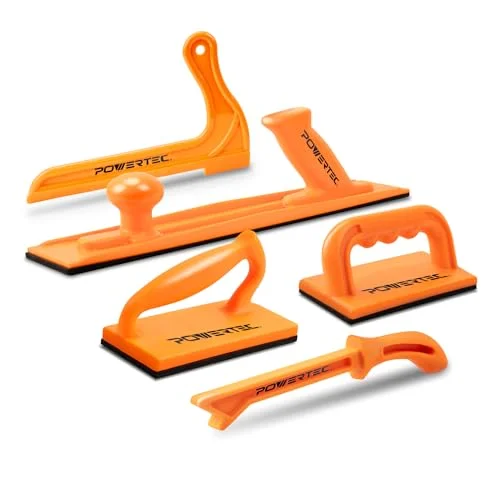 |
POWERTEC 5-Piece Push Block & Push Stick Set – $22.24 This is the push block and stick set built for keeping your hands off short stock at the jointer, planer, and table saw.
|
A planer or jointer cutterhead spins at several thousand RPM, and it relies on the workpiece staying flat and supported the entire time it passes under the knives. A long board bridges the infeed and outfeed rollers (or the infeed/outfeed tables on a jointer) for most of the cut, so it stays stable. A short board doesn’t – there’s a moment where it’s only touching one roller, or no roller at all, and that’s when it can tilt, chatter, or get grabbed and fired back out the front of the machine. This is a real, well-documented failure mode, not a theoretical one, which is why manufacturers publish a minimum board length for every thickness planer they sell.
The Minimum Board Length Rule (Check This Before You Flip the Switch)
Every benchtop thickness planer has a minimum stock length, and it isn’t arbitrary – it’s set by the distance between the centers of the infeed and outfeed rollers, plus a couple of inches of margin. As a rule of thumb, that works out to roughly 11-12 inches on a typical 12-15 inch benchtop planer, though you should always check your own machine’s manual, since it varies by model. Feed anything shorter than that by hand and you risk the board dropping into the gap between rollers, bouncing, or snapping back toward the infeed side.
Jointers follow the same logic for a different reason: with nothing supporting the far end of a short piece as it crosses the cutterhead, your hand ends up passing directly over spinning knives to keep the workpiece moving. If a piece is shorter than about 12 inches, don’t run it across a jointer freehand – use one of the carrier methods below instead.
Building a Planer Sled for Short or Thin Boards
The safest way to run a short board through a benchtop planer is to never feed the short piece by itself. Build a simple sled: a flat piece of plywood or MDF cut long enough that its rails extend a few inches past both ends of your workpiece. That extra length is what keeps the sled engaged with the infeed and outfeed rollers the whole time, even after your actual workpiece has cleared them, which eliminates the tipping and snipe problem entirely.
Secure the short board to the sled with double-sided carpet tape, a couple of toggle clamps, or thin stop blocks screwed to the sled at each end – anything that keeps it from shifting sideways as it’s fed in. Run the sled through the planer exactly as you would a normal board, taking light passes. When you’re done, pop the workpiece off the sled and set the sled aside for next time; it’s worth keeping a couple of standard sled sizes on hand if you plane small pieces often.
Hand-Planing Short Pieces Safely
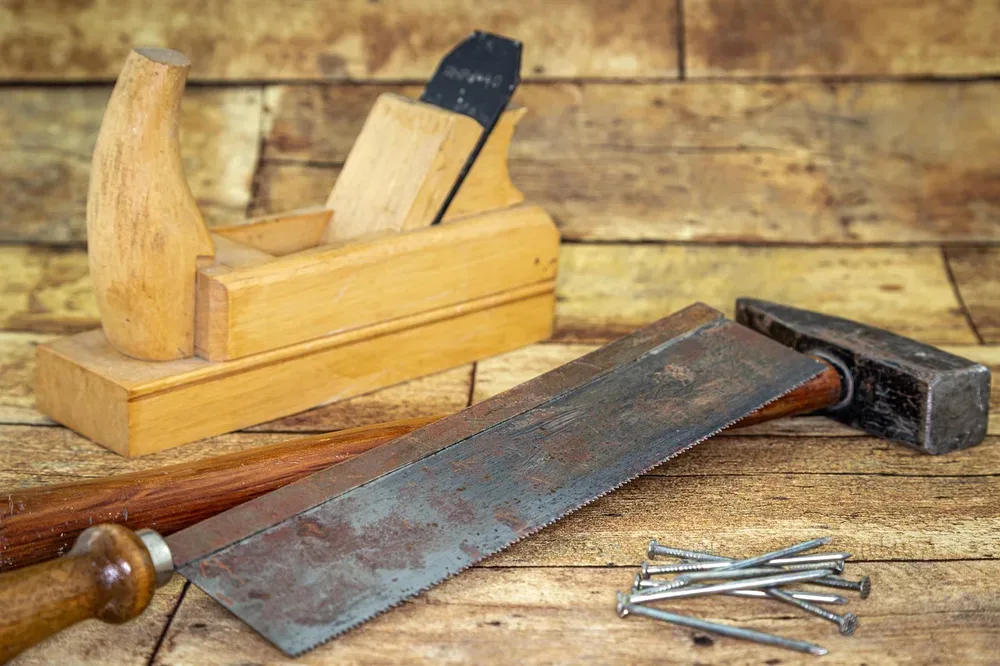
For hand tools, a block plane is the right choice for short stock – it’s compact, easy to control one-handed, and designed for exactly this kind of small, precise work. Clamp the workpiece to your bench with a vise, bench dogs, or a simple bench hook rather than trying to hold it steady with your free hand while the other hand runs the plane; a piece that’s only a few inches long has almost nothing to grip safely once your other hand is occupied.
Always plane with the grain, not against it – run your fingers lightly along the board first to feel which direction the grain lies smooth versus catches, since planing against the grain on a short piece causes tear-out fast and gives you almost no length to recover from a mistake. Take thin, even passes rather than one aggressive cut, and check the surface often. A shooting board is worth building if you plane end grain or small pieces regularly – it registers the workpiece against a fence and guides the plane on its side, which keeps both the cut and your hands exactly where you expect them.
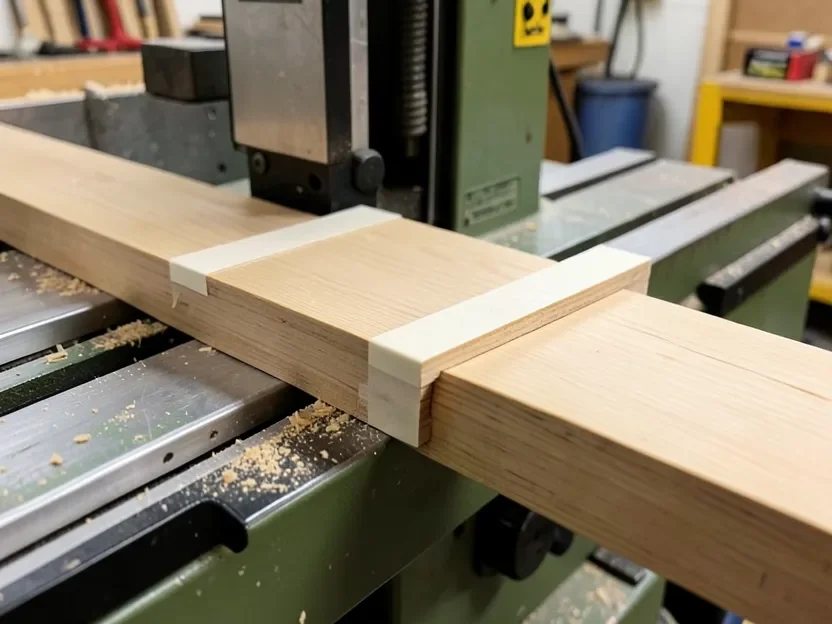
Jointing a Short Piece: The Carrier Board Method
If you need to flatten a face or true an edge on a piece too short to run safely over a jointer by itself, glue it to a longer scrap board first. A few dabs of hot melt glue along the joint line will hold the short piece firmly to a carrier board that’s well past your jointer’s minimum length – run the combined assembly over the jointer as one long piece, then pop the workpiece free of the carrier with a chisel or a sharp rap once you’re done (hot glue releases cleanly with a little heat or a firm tap). This keeps your hands well clear of the cutterhead the entire time and gives the jointer’s infeed and outfeed tables the length of material they need to keep the cut flat.
Common Mistakes That Cause Kickback or a Ruined Piece
The single biggest mistake is hand-feeding a board shorter than the machine’s minimum length because it “looks like it’ll be fine” – it’s the single most common way a short board gets thrown back out of a planer. Right behind that: keeping your hands directly in line with the feed path instead of standing slightly to the side, so that if a piece does kick back, it doesn’t come straight at you. Also common: planing against the grain on a short piece (tear-out with almost no material left to fix it), using a dull blade (which grabs and tears instead of slicing cleanly, especially on short grain), and skipping the push block on a jointer or router table because “it’s just one quick pass.” None of these mistakes are complicated to avoid – they’re just easy to skip when a piece feels too small to bother.
Tool and Gear Checklist for Short-Stock Work
- Block plane – the standard hand tool for short pieces and trimming edges.
- Shooting board – for controlled, repeatable hand-plane cuts on small or end-grain pieces.
- Planer sled (shop-made from plywood or MDF) – lets a benchtop planer safely handle boards shorter than its rated minimum.
- Push blocks and push sticks – keep your hands off the workpiece and away from any spinning cutterhead.
- Hot melt glue – for the carrier-board method when jointing short pieces.
- Double-sided tape or toggle clamps – to secure a short board to a sled without marring it.
If you don’t already have push blocks in your shop, they’re inexpensive and worth having at every station that has a spinning cutterhead – not just your planer or jointer, but your table saw and router table too. A shop-made push block works fine if you’d rather build your own.
Frequently Asked Questions
How Short Is Too Short to Hand-Feed a Planer?
Check your planer’s manual, but as a general rule, anything shorter than about 11-12 inches on a typical benchtop planer is below or close to the machine’s minimum stock length. Below that, hand-feeding risks the board dropping between the rollers or kicking back. Use a planer sled instead once you’re near that limit.
Do I Really Need a Planer Sled for Short Boards?
If the board is shorter than your planer’s rated minimum length, yes. A sled with rails extending past both ends of the workpiece keeps the assembly engaged with the feed rollers the whole time, which is what prevents the tipping, snipe, and kickback that a short board causes on its own.
Can You Joint a Short Piece of Wood?
Yes, but not freehand if it’s shorter than about 12 inches. Glue the short piece to a longer carrier board with hot melt glue, run the combined assembly over the jointer as one piece, then separate them afterward. This keeps your hands clear of the cutterhead the entire pass.
What’s the Safest Way to Hand-Plane a Small Piece of Wood?
Clamp it to your bench with a vise, bench dogs, or a bench hook rather than holding it with your free hand. Use a block plane, work with the grain, and take thin, even passes. A shooting board adds extra control if you’re planing end grain or working with small pieces often.
Conclusion
Short pieces of wood aren’t harder to plane because the technique is different – they’re harder because the margin for error is smaller and the machine has less material to keep things stable. Know your planer’s minimum board length, build a sled or carrier board once and reuse it, keep a push block in hand any time your fingers get close to a cutterhead, and a short piece is no more dangerous to plane than a long one.
Sponsored / affiliate links. As an Amazon Associate I earn from qualifying purchases. I may earn additional commission from eligible campaigns.